When Politics Breaks the Airport: The DHS Shutdown, Unpaid TSA Workers, and the Dangerous Normalization of Travel Chaos

Over the past several weeks, the United States has once again offered the world a strikingly self-inflicted lesson in institutional fragility. What should have been a routine spring travel period turned into a vivid demonstration of how quickly a modern transport system can unravel when political actors treat critical public infrastructure as leverage rather than as a national obligation. The Department of Homeland Security shutdown, and the resulting decision to leave Transportation Security Administration personnel unpaid, has done far more than generate operational inconvenience. It has exposed a deep structural weakness in the American model of governance, a dangerous tolerance for dysfunction, and an alarming willingness on both sides of the political aisle to instrumentalize frontline workers and traveling citizens in a broader partisan confrontation.

This is not merely a story about airport lines. It is a story about governance credibility, labor dignity, operational resilience, and the basic obligations of a serious economy. Airports are not symbolic assets. They are part of the country’s commercial bloodstream. When airport security becomes unstable, the consequences cascade quickly: passenger delays, missed connections, operational disruption for airlines, reputational damage for airports, financial hardship for workers, and reduced confidence in the reliability of the national transport system. To allow that instability to fester for political signaling is not strategy. It is negligence.

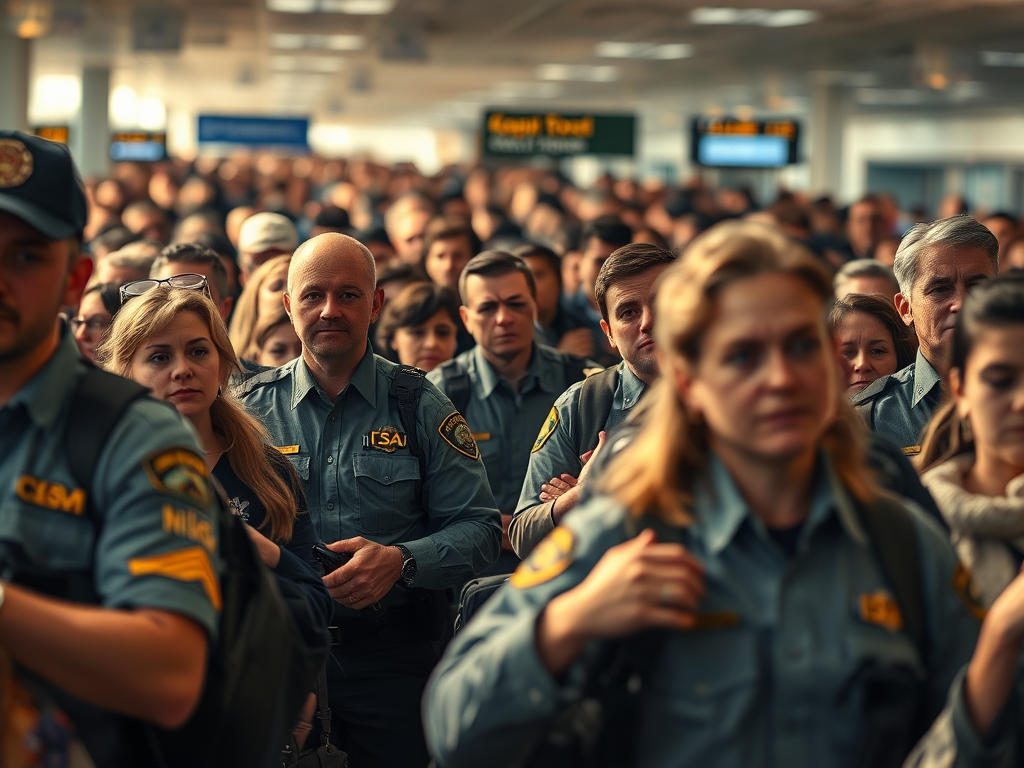
What has made this episode especially troubling is that the dysfunction was not hidden. It was visible, measurable, and entirely predictable. TSA officers were asked to continue reporting to work without pay. Attrition rose. Call-outs surged. Passenger wait times expanded dramatically in several major airports. Smaller airports began to look particularly vulnerable. Meanwhile, elected leaders continued treating the standoff as a contest of narrative positioning rather than as an urgent operational crisis requiring immediate resolution.

In that context, one of the more striking reactions came not from Washington, but from the airline industry itself. Delta Air Lines, under Ed Bastian’s leadership, chose to suspend special travel services previously extended to members of Congress. That decision mattered far beyond its immediate operational scope. It represented an unusually clear corporate statement: if lawmakers are prepared to tolerate disruption for everyone else, they should not expect to be insulated from its consequences. It was a rare example of executive accountability being asserted from outside government, and it resonated because it reflected a principle many travelers and workers already understood intuitively: privilege cannot continue uninterrupted while the system supporting ordinary passengers is being starved.

The Real Problem Was Never Just the Shutdown Itself

Government shutdowns in the United States have become so recurrent that they are often discussed as if they were unfortunate but normal features of the political landscape. That normalization is itself part of the problem. A shutdown affecting the Department of Homeland Security is not a routine budget event. It strikes directly at airport security, border operations, emergency preparedness, and the infrastructure of domestic mobility. Treating that as just another round in Washington’s procedural warfare fundamentally misunderstands the economic and operational centrality of DHS functions.

The TSA sits at the very heart of that exposure. Commercial aviation cannot operate at scale without reliable, adequately staffed, professionally managed checkpoint operations. Airlines can adjust schedules, airports can reconfigure passenger flows, and travelers can be urged to arrive earlier, but these are coping mechanisms, not solutions. The actual dependency remains the same: without enough trained people at checkpoints, the entire system begins to fail in ways that are highly visible and quickly contagious.

That is what made the decision to leave TSA officers unpaid so indefensible. Security personnel are not optional labor. They are essential workers whose presence underpins the legal, operational, and psychological viability of air travel. Asking them to absorb prolonged financial hardship while simultaneously expecting flawless performance under public pressure is not only unfair; it is strategically absurd. No serious executive would design a workforce model this way. Yet that is effectively what the political system imposed on one of the country’s most visible frontline workforces.

Even more troubling, the consequences were foreseeable. Anyone with a basic understanding of labor economics and airport operations could have predicted rising absenteeism, resignations, morale collapse, and degraded passenger experience. Once employees miss paychecks, especially in a profession not characterized by extraordinary compensation, the impact is immediate. Rent, childcare, transportation, food, and debt obligations do not pause for political theater. When those workers begin stepping away from the checkpoint, the system does not fail abstractly. It fails in public, in real time, with thousands of witnesses and millions of dollars of downstream cost.

The Human Cost Was the First Failure

The first and most important point is often the one most quickly lost in institutional debates: unpaid TSA personnel were not a talking point. They were people. They were workers expected to continue ensuring the functioning of a national security and transport interface while their own financial stability deteriorated. That arrangement is morally questionable and operationally reckless.

There is a persistent tendency in U.S. political life to speak about essential workers in heroic language while managing them through disposable assumptions. The rhetoric emphasizes service, sacrifice, and patriotism. The lived reality, too often, is delayed pay, public abuse, rising stress, and indifference from decision-makers until the disruption becomes impossible to ignore. This latest shutdown fit that pattern perfectly.

For TSA officers, the issue was not only the absence of pay. It was the message encoded in that absence. It signaled that their labor was indispensable enough to be demanded but not respected enough to be protected. It told them that the system could continue asking for discipline, professionalism, and public-facing performance even while failing its most basic reciprocal obligation. Once a workforce internalizes that message, the damage exceeds the immediate crisis. Retention worsens. recruitment becomes harder. Cynicism deepens. Institutional trust erodes.

That is why this episode should concern anyone thinking beyond the next news cycle. Essential workforces cannot be sustainably managed through episodic coercion. If the United States wants resilient airport security, it needs a labor compact that reflects reality rather than convenience. Security cannot be treated as mission-critical one day and fiscally expendable the next. Workers notice the contradiction, and so does the market.

The Passenger Experience Was the Most Visible Symptom

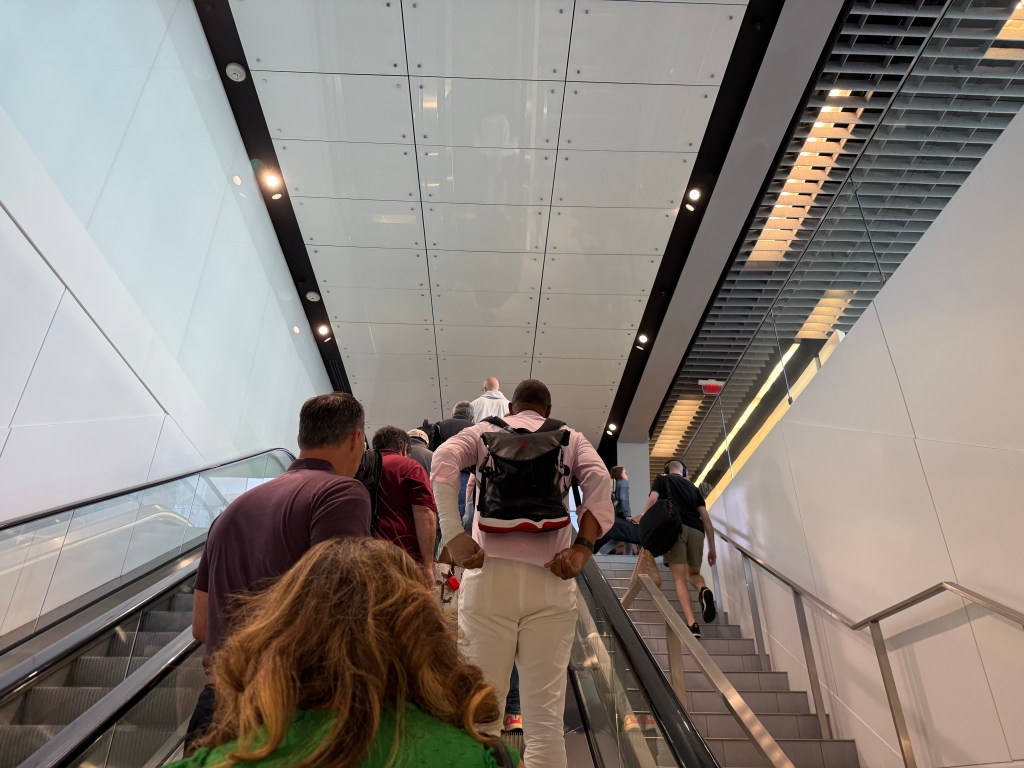
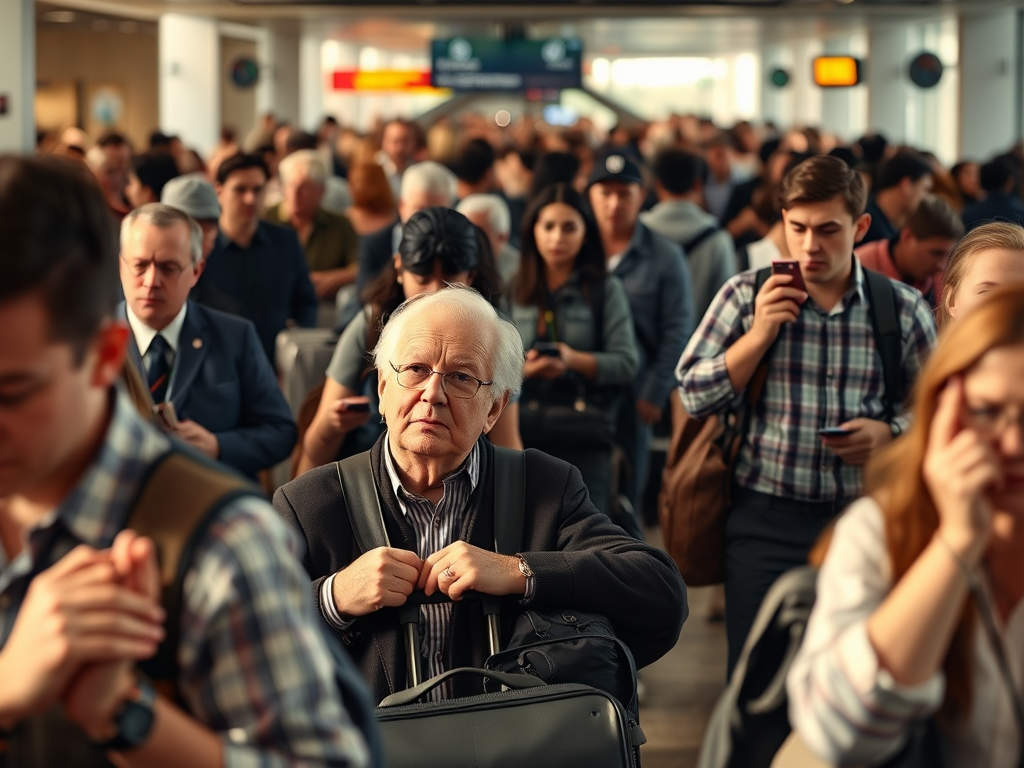
Travelers experienced the shutdown not through budget language, but through chaos. Longer lines, uncertainty at checkpoints, airport advisories urging earlier arrival times, and growing anxiety about whether routine travel could still be relied upon all became part of the passenger experience. For business travelers, that meant lost time, reduced productivity, and greater trip friction. For leisure travelers, especially families traveling during spring break periods, it meant added stress and a diminished sense of control. For airlines and airports, it meant operational noise injected into an already complex system.

The modern air travel chain is a tightly coordinated sequence. Schedule integrity, staffing models, baggage processing, gate management, customer service, crew legality, aircraft rotations, and connection flows are all interconnected. Security checkpoints are one of the most visible and least flexible parts of that chain. Once they become unstable, every downstream actor inherits the disruption. Planes may still depart, but the customer journey deteriorates sharply, and the reputational damage spreads far beyond the original cause.

This is where the political discourse often becomes disingenuous. Policymakers tend to describe such episodes as temporary inconvenience. That language systematically understates the cumulative cost. A major airport delay is not a minor consumer annoyance. It can mean missed client meetings, disrupted family events, additional hotel costs, missed cruise departures, lost onward international connections, and reduced confidence in domestic travel planning. In aggregate, these consequences carry real economic weight.

There is also a broader demand effect. When travelers perceive the system as unreliable, some discretionary trips are delayed or canceled. Corporate travel managers build in larger buffers. Travelers shift behavior toward perceived lower-risk options. The result is not a collapse in aviation demand overnight, but a reduction in system efficiency and customer confidence that weakens overall travel performance.

The Business Consequences Extended Far Beyond the Checkpoint

One of the persistent weaknesses in public debate around shutdowns is the failure to discuss them in management terms. If a private company knowingly deprived a mission-critical frontline workforce of pay, accepted rising absenteeism, watched service quality deteriorate, and then insisted that the customer impact was manageable, markets would punish it brutally. Yet in government, the same pattern is often framed as normal bargaining friction.

For airlines, the shutdown imposed real costs. Operational planning had to adjust around uncertain checkpoint throughput. Customer service teams had to absorb frustration for a problem they did not create. Irregular operations risk increased as travelers missed check-in windows or arrived at gates late. Brand perception became exposed to an externality outside airline control. Even when carriers were not directly responsible, they still occupied the front line of customer disappointment.

Airports faced similar pressure. Airport operators can optimize queue management, revise signage, increase communication, and coordinate with carriers, but they cannot replace federal security staffing. That makes them highly exposed to the reputational consequences of a system they do not fully control. In practical terms, passengers do not always distinguish between airline failure, airport failure, and government failure. They remember only that their travel day went badly.

The wider travel ecosystem also absorbs the shock. Hotels see more distressed arrivals and no-shows. ground transportation providers must cope with fluctuating demand peaks. Meeting schedules are disrupted. Event attendance becomes less reliable. Corporate travel budgets absorb hidden inefficiencies. The notion that a DHS shutdown is somehow compartmentalized within Washington finance politics is simply false. It is transmitted directly into the real economy.

There is also a serious competitiveness issue. The United States already presents a paradox in travel: it remains one of the world’s most important aviation markets, but the traveler experience often suffers from aging infrastructure, fragmented operational ownership, and avoidable policy volatility. Each episode like this reinforces a perception of unreliability. For a country that depends heavily on business mobility, tourism, and global connectivity, that is not a trivial reputational problem.

The Weaponization of Essential Services by Both Parties Is Unacceptable

The most uncomfortable but necessary conclusion is that both Republicans and Democrats deserve criticism for allowing this situation to become a mechanism of leverage. The exact legislative arguments differ. The rhetorical framing differs. The constituency management differs. But the operational outcome was the same: essential airport security personnel were left in the middle of a partisan struggle, and travelers became collateral damage.

Republicans cannot credibly position themselves as champions of order, security, and economic normalcy while tolerating a prolonged state in which airport security workers go unpaid and checkpoint performance deteriorates. If an issue is truly critical to public safety and economic continuity, it should be funded and insulated with urgency. To do otherwise is to turn one’s own stated priorities into bargaining chips.

Democrats, meanwhile, cannot credibly claim to defend workers while accepting a strategy that leaves frontline federal personnel without pay in the name of broader policy objectives. Even when the underlying substantive disagreements may be serious, the chosen mechanism matters. Once the tactic involves prolonged harm to essential workers and public-facing disruption, it becomes difficult to maintain the moral high ground.

This is where the political class often loses touch with institutional responsibility. There is a difference between taking a hard negotiating position and weaponizing the functioning of basic national systems. Airport security, like air traffic management, emergency response, or core public health operations, should sit on the protected side of that line. Once both parties become comfortable crossing it, the country drifts into a permanently unstable operating model where essential continuity depends on political mood rather than governance discipline.

That is not democratic toughness. It is institutional immaturity.

Why Ed Bastian and Delta Got This Mostly Right

Against that backdrop, Delta’s decision to suspend special services for members of Congress stood out because it carried symbolic precision. It did not amount to grandstanding without cost. It connected the privileges of political decision-makers to the consequences of the crisis they had allowed to continue. That linkage matters.

Ed Bastian has often positioned himself not only as the leader of a major airline, but as an executive willing to speak directly about system-level issues affecting travel. In this case, Delta’s response did something rare in corporate America: it moved beyond generic statements of concern and imposed a modest but meaningful accountability mechanism on a political class that is often insulated from the operational pain it creates.

The decision was strategically smart for several reasons. First, it aligned Delta with public frustration and worker reality rather than elite privilege. Second, it reinforced the airline’s brand as one prepared to defend operational integrity. Third, it signaled that travel companies need not quietly absorb political dysfunction while continuing to facilitate special treatment for the very people enabling it.

Importantly, this was not an anti-government gesture. It was a pro-accountability one. Members of Congress were not denied travel. They were simply told, in effect, that while frontline workers and ordinary passengers were enduring the consequences of Washington’s failure, they would no longer enjoy a parallel universe of convenience. That is an entirely defensible position.

More airline leaders should be willing to articulate similar clarity. The industry has every right to demand that essential aviation and security functions be protected from future shutdown politics. When airlines are expected to maintain reliability while the federal government undermines one of the foundations of that reliability, silence becomes a form of passive acceptance.

The Industry Response Showed a More Serious Understanding of Risk Than Washington Did

One of the more revealing aspects of this episode was that airline executives often appeared to understand the stakes more clearly than elected officials. From an airline management perspective, the situation was obviously untenable. A critical operational dependency was degrading in real time. Customer trust was at risk. Airport throughput was becoming uncertain. Media narratives were shifting from inconvenience to institutional breakdown. Any competent executive reading those signals would escalate immediately.

That is precisely why the response from aviation leaders carried weight. Their message was not ideological. It was operational. Pay the workers. End the standoff. Stop turning airport security into a political football. That is not partisan analysis. It is business realism.

The contrast with Washington was stark. Too many political actors behaved as though the crisis remained abstract until complete airport paralysis occurred. That is a remarkably poor threshold for action. Good management intervenes before the full-blown failure state. It does not wait until the queue is wrapping through terminals and public confidence is visibly cracking.

This difference in posture should be studied carefully. It suggests that industry leaders, despite their own incentives and limitations, may now be more attuned than policymakers to the fragility of the travel system. That is not necessarily because they are more virtuous. It is because they are closer to the real operating consequences. They see how thin the margin can become between a strained system and a broken one.

The Substitution Logic Was a Warning Sign

One of the more disturbing dimensions of the crisis was the apparent comfort with stopgap substitution logic: if enough TSA workers are absent, perhaps other federal personnel can be deployed to fill pieces of the gap. Whatever tactical rationale may be offered in the moment, that instinct should worry anyone concerned with institutional integrity.

Modern security systems depend not only on bodies in space, but on training, role clarity, procedural rigor, and professional legitimacy. The idea that one can casually patch over a security workforce crisis through improvised redeployment reflects a dangerously shallow understanding of operational specialization. It also sends a damaging signal to the affected workforce: your expertise is treated as interchangeable right up until it is urgently needed.

Even if temporary support measures are operationally necessary in a crisis, they do not solve the underlying problem. They merely mask it. And when masking becomes politically convenient, resolution gets delayed. That is exactly what should not happen in a function as visible and consequential as airport security.

The deeper lesson is simple: resilience is not the same as improvisation. A resilient system has protected funding, credible staffing pipelines, strong retention, and clear continuity protocols. An improvisational system lurches from crisis to workaround and congratulates itself for not completely collapsing. The United States should aspire to the former, but too often settles for the latter.

What This Reveals About the American State Capacity Problem

This travel disruption is not an isolated policy embarrassment. It is one expression of a broader state capacity problem. The U.S. remains capable of enormous scale, extraordinary innovation, and deep institutional reach. Yet it repeatedly demonstrates an inability to protect core functions from predictable political self-sabotage. That contradiction is increasingly central to the lived experience of citizens and businesses alike.

In practical terms, state capacity is not measured by the number of agencies or the volume of public spending. It is measured by whether a system can perform essential functions reliably under pressure. Can it keep airports functioning during a political dispute? Can it protect frontline workers from becoming bargaining instruments? Can it sustain public confidence in basic continuity? During this episode, the answer was plainly unsatisfactory.

This matters for more than travel. Once a government repeatedly shows that essential functions may be destabilized by partisan brinkmanship, every dependent sector begins pricing in dysfunction. Companies build workarounds. Citizens lower expectations. Workers disengage. The long-term result is not merely frustration. It is a decline in institutional ambition. People stop expecting competence and start optimizing around its absence.

That is one of the most corrosive effects of repeated shutdown politics. It teaches society to normalize poor governance rather than to demand better governance. And in sectors like travel, where coordination and trust are foundational, that normalization carries significant economic and reputational cost.

What a Serious Reform Agenda Would Look Like

If policymakers and industry leaders genuinely want to learn from this episode, the response cannot be limited to reopening government and moving on. The system needs structural reform that prevents essential travel security from being used this way again.

First, compensation continuity for essential security personnel should be automatic. No TSA officer, air traffic-related employee, or similarly critical operational worker should ever face unpaid status because of a congressional impasse. The legal and fiscal architecture should make that impossible.

Second, DHS operational continuity rules should be tightened for travel-critical functions. If the country accepts that aviation security is indispensable, then its funding protection should reflect that status. Essentiality must mean more than rhetorical importance.

Third, Congress should face stronger direct consequences when it allows these disruptions to continue. Delta’s symbolic move was effective precisely because it touched comfort and privilege. Institutional reform should explore similar logic more formally. If lawmakers can permit system failure while remaining insulated from it, incentives remain badly misaligned.

Fourth, the aviation industry should use this moment to push for a broader resilience compact with government. Airlines, airports, airport labor representatives, and federal agencies should define clearer escalation protocols and public transparency standards for security staffing crises. Better foresight will not eliminate political dysfunction, but it can reduce the degree to which passengers and workers are left in the dark.

Finally, public debate must become more adult. It is possible to hold strong positions on immigration, border enforcement, labor rights, or executive power without taking airport security workers hostage in the process. A mature political system knows how to separate substantive conflict from operational destruction. The U.S. political class too often behaves as though it does not.

The Bigger Strategic Lesson for Business Leaders

There is also a broader lesson here for private-sector executives far beyond aviation. The DHS shutdown demonstrates that political risk in the United States can no longer be treated as a distant regulatory variable. It now has immediate operating consequences in customer experience, workforce stability, logistics, and reputation. That means leaders in travel, hospitality, retail, events, and any business dependent on mobility must upgrade how they think about public-sector fragility.

In the past, many companies assumed that basic federal continuity would hold even amid partisan noise. That assumption is becoming harder to defend. Strategic planning now requires more explicit consideration of how political deadlock can impair frontline national infrastructure. This is not merely a public affairs issue. It is an enterprise resilience issue.

Executives should also recognize that moments like this create leadership tests. Customers, employees, and investors notice whether companies remain passive, issue bland statements, or speak with clarity. Delta’s move gained attention precisely because it reflected a clear point of view. In a period when institutions increasingly blur responsibility, there is reputational value in identifying where accountability actually belongs.

That does not mean every company should become performatively political. It means they should be willing to defend the operational and ethical foundations of their industries. For airlines, that includes insisting that airport security workers are paid. For hospitality companies, it may mean speaking about the economic consequences of transport instability. For business leaders more generally, it means understanding that silence is not always neutrality. Sometimes it is acquiescence to dysfunction.

Conclusion: The Airport Is a Mirror of the State

Airports are one of the clearest mirrors of state effectiveness. They are where policy, labor, infrastructure, security, technology, and public expectation meet in a highly compressed environment. When that system runs well, it signals competence. When it begins to crack under avoidable political pressure, it signals something more troubling: that the country is losing the ability to protect core functions from self-inflicted disruption.

The DHS shutdown and the unpaid status imposed on TSA workers were not just unfortunate byproducts of legislative disagreement. They were evidence of a deeper governance failure. Both Republicans and Democrats allowed essential personnel and ordinary travelers to become leverage points in a broader political contest. That is unacceptable on ethical grounds, indefensible on operational grounds, and costly on economic grounds.

At the same time, this episode also clarified where some of the stronger leadership came from. Airline executives, and particularly Ed Bastian, showed a greater willingness than many elected officials to name the absurdity of the situation and respond in a way that connected privilege to accountability. Suspending congressional perks did not solve the shutdown, but it made an important point: those who create public dysfunction should not be buffered from experiencing any of it.

The United States cannot continue managing essential travel infrastructure through a combination of worker sacrifice, passenger frustration, and political indifference. A serious country does not leave airport security officers unpaid while pretending the damage is temporary. A serious political class does not weaponize national mobility systems in pursuit of narrative advantage. And a serious reform agenda does not merely reopen the government; it ensures that the same failure cannot be repeated so easily.

The real issue is not whether this shutdown will eventually end. It will. The real issue is whether the country learns anything durable from it. If the answer is no, then the next crisis is already in preparation, and the next airport line is simply waiting for its turn.

Key Takeaways

  • The DHS shutdown turned airport security into a public example of governance failure, not merely a budget dispute.
  • Leaving TSA officers unpaid was both ethically indefensible and operationally reckless.
  • Travel disruption rapidly spread beyond checkpoints into airline operations, airport reputation, business travel efficiency, and the broader travel economy.
  • Both Republicans and Democrats bear responsibility for weaponizing essential public services as leverage.
  • Delta and Ed Bastian were right to suspend special congressional travel services and make accountability more tangible.
  • The deeper issue is state capacity: a serious economy cannot repeatedly allow critical mobility infrastructure to be destabilized by partisan brinkmanship.
  • The long-term answer is structural reform, including automatic pay continuity for essential aviation-security personnel and stronger protections for travel-critical operations.

When Loyalty Stops Rewarding Loyalty: How the U.S. Airline and Credit Card Ecosystem Broke Frequent Flying

For decades, airline loyalty was built on a simple compact. Fly often, spend time in the air, concentrate your business with one carrier, and the airline would recognize your value. Status, upgrades, lounge access, and faster mileage accumulation were not gifts. They were the economic return on repeat purchasing behavior. They were the mechanism that turned a customer into a loyalist.

That compact has now been fundamentally broken in the United States.

What has replaced it is not a better version of loyalty, nor a more sophisticated one. It is a financialized ecosystem in which the most rewarded customer is increasingly not the person who flies the most, but the person who swipes the right card the most. The center of gravity has moved away from butt-in-seat behavior and toward credit card economics. At the same time, premium travel benefits that were once scarce and meaningful have been diluted by mass distribution. Lounge access is the clearest example: what was designed as a differentiated sanctuary for premium travelers and top elites has become, in many airports, a mass-market entitlement attached to financial products.

The result is a surreal inversion of the original model. Frequent flyers who spend tens of thousands of dollars a year on airfare can find themselves less rewarded than consumers who spend heavily on groceries, dining, and everyday purchases using co-branded cards. Travelers who earned lounge access through years of business travel now queue outside overcrowded clubs filled with members who arrived through credit card channels. Airlines continue to market loyalty as a travel proposition, but the underlying economics increasingly resemble consumer finance, data monetization, and yield management.

This is not a marginal irritant for aviation enthusiasts. It is a structural shift with major implications for airline profitability, customer segmentation, brand equity, and the future of premium travel. It also raises a larger question that many U.S. airlines now seem reluctant to confront directly: if loyalty programs no longer reward loyalty to flying, what exactly are they rewarding?

The Original Promise of Airline Loyalty

Historically, frequent-flyer programs were designed to shape behavior. Airlines needed customers to choose them repeatedly in a commoditized and cyclical market. Routes overlapped, fares moved constantly, and service quality was often uneven. Loyalty programs created switching costs. The traveler who was 20 flights away from requalifying for status was less likely to defect. The corporate road warrior who had accumulated upgrade instruments and lounge access was more likely to remain within one ecosystem.

The brilliance of the classic model was that it aligned the airline’s commercial priorities with the traveler’s perceived fairness. More flying generated more rewards. Premium cabin spend generated faster progression. Status signaled a traveler’s economic importance to the airline. The program was not perfect, but it was legible. Its logic made sense.

Even the excesses of mileage running and status chasing reflected the power of the model. Travelers adjusted behavior because the reward structure was clear enough, aspirational enough, and valuable enough to justify incremental purchasing. Airline loyalty became one of the few consumer relationships where devotion felt measurable and cumulative.

That logic has been steadily eroded for years through devaluations, dynamic pricing, tighter upgrade inventory, and increasingly opaque redemption structures. But the latest phase is different in nature, not just degree. The system is no longer merely less generous. It is being redesigned around a different customer and a different revenue engine.

From Airline Loyalty to Financial Engineering

The modern U.S. airline loyalty program is increasingly a financial product disguised as a travel benefit. Airlines sell billions of dollars of miles to banks, which use those miles to attract cardholders, stimulate spend, and justify annual fees. The bank gains acquisition and spending volume. The airline receives a remarkably attractive stream of cash, often more stable and higher margin than its flying business. Everybody in the ecosystem benefits except, increasingly, the traveler whose primary form of engagement is actually boarding planes.

This is the core contradiction of the current system. Airlines still speak the language of travel loyalty, but their incentives increasingly point elsewhere. A frequent flyer who travels often but uses a competitor’s card is economically less attractive than a less frequent traveler who channels large volumes of everyday spend into an airline portfolio. The airline may still value the frequent flyer operationally and symbolically, but the balance sheet increasingly rewards the cardholder.

In strategic terms, this is understandable. Airline revenue is cyclical. Fuel prices are volatile. Labor costs are structurally higher. Aircraft delivery uncertainty persists. Credit card economics offer a more stable, high-margin annuity-like stream of income that softens shocks and smooths earnings. Loyalty programs have evolved from customer retention tools into major profit engines and, in some cases, quasi-financial assets.

But what makes sense for near-term earnings can corrode long-term trust. Once the customer realizes that the airline’s most important loyal behavior is not flying but spending on plastic, the emotional foundation of loyalty weakens. The relationship starts to feel transactional in the wrong way: less like recognition and more like extraction.

The New Hierarchy: Swipe More, Fly Less

The most striking symptom of the broken system is the emergence of a new hierarchy of value. In theory, top-tier status should be a proxy for intense travel frequency, premium cabin contribution, or both. In practice, many U.S. programs now create faster pathways to meaningful rewards through credit card activity, shopping portals, dining programs, hotel booking platforms, mortgage partnerships, subscription offers, and retail tie-ins than through actual flying.

This is where the absurdity becomes visible. A traveler can spend week after week in airports, tolerate irregular operations, sit through delays, and route business to one carrier, only to discover that another member has climbed the same ladder largely through non-flight activity. The original social contract of frequent-flyer status starts to collapse because the signal no longer clearly identifies the truly frequent flyer.

This matters operationally as well as emotionally. Upgrade queues become more crowded. Elite pools become more diluted. Priority lines become less meaningful. Service recovery becomes less personalized because there are simply too many people carrying some variant of a premium credential. Airlines then respond by layering further segmentation, introducing invite-only tiers, premium lounges within lounges, and increasingly baroque bundles of exceptions. The system becomes more exclusive at the very top and more congested everywhere else.

Instead of solving the dilution problem, the industry has often chosen to commercialize around it. If too many people have access, build a more premium tier. If general lounge access becomes crowded, create a separate business-class lounge. If elite status loses distinction, create hidden statuses, one-time premium passes, or monetized fast tracks. In other words, every erosion of value becomes the pretext for selling a new layer of access.

Lounges as the Clearest Symbol of Devaluation

Nowhere is the dysfunction more visible than in U.S. airport lounges.

Lounge access was once one of the clearest manifestations of airline loyalty. It provided comfort, productivity, and refuge during the most stressful parts of the journey. It was also legible as a premium benefit because it was scarce. There was a threshold to enter: elite standing, paid membership, premium-class travel, or a narrowly distributed corporate entitlement.

That scarcity has vanished.

Today, access to lounges is distributed through an ever-expanding network of airline cards, premium transferable-points cards, bank lounge networks, authorized-user privileges, guest entitlements, premium ticket bundles, and status-matching campaigns. The result is predictable. The club is no longer a sanctuary for a relatively contained premium segment. It is a crowded extension of the terminal for a broad swath of affluent or fee-tolerant consumers.

The problem is not that more people can enjoy a better airport experience. The problem is that the promise of exclusivity and ease has been sold far beyond the capacity of the product. Once a lounge has waitlists, entrance queues, seat scarcity, food depletion, and noise levels comparable to the concourse, the benefit is no longer performing its intended brand function. It becomes a symbol of false premiumization: marketed as elevated, experienced as over-subscribed.

Airlines and card issuers are now trying to reverse this through guest restrictions, spending thresholds, visit caps, time limits, and separate premium facilities. But these are corrective measures for a problem of their own making. The industry over-distributed access to monetize aspiration, and now it is forced to re-ration access in order to restore enough scarcity to preserve perceived value.

How We Reached Peak Lounge Inflation

The lounge problem did not emerge by accident. It emerged because three separate trends converged.

First, airlines and card issuers discovered that lounge access was one of the most marketable premium benefits in consumer finance. It translated immediately in advertising. It photographed well. It made annual fees easier to justify. It appealed to both true frequent travelers and aspirational ones. As a result, lounge access became a core acquisition hook for high-fee cards.

Second, the post-pandemic premium travel boom changed the composition of airport demand. Airlines leaned harder into premium segmentation, affluent leisure travelers spent more aggressively, and many consumers who had accumulated savings or shifted spending priorities were more willing to pay for premium cards and premium travel experiences. Lounges became part of that lifestyle proposition.

Third, the barriers to entry softened at precisely the moment demand surged. Authorized users gained access. Transferable-points ecosystems multiplied. Card portfolios proliferated. Lounge networks expanded, but not nearly fast enough to absorb the growth in eligible users.

The result is that many lounges now suffer from the classic pathologies of over-distributed premium membership models. The acquisition funnel expanded faster than the underlying capacity base. The industry solved for sign-ups before it solved for service delivery.

This is a familiar error beyond aviation. Hotels, retail memberships, and streaming subscriptions all face versions of it. But in the airline context, it is particularly damaging because airport stress magnifies every gap between promise and reality. A crowded lounge is not merely a less pleasant experience. It is a live demonstration that status inflation has overtaken service design.

The Delta Case: Restricting Access After Encouraging It

Delta is perhaps the most visible example of this tension. Over the last several years, the airline built one of the most powerful premium ecosystems in the market, closely intertwined with American Express. That strategy helped produce enormous value. It also contributed to one of the most public lounge crowding problems in the U.S. industry.

The airline’s response has been telling. Rather than retreating from the card-led model, Delta has tried to rebalance it. Lounge access through key American Express products now comes with limits, and unlimited access increasingly requires very high annual card spend. The implication is unmistakable: access still matters, but it must now be rationed more aggressively because the product was previously made too available.

This is a highly revealing moment. It shows that the airlines understand the devaluation dynamic. They know that lounge overcrowding weakens premium perception. They know that once a benefit becomes too common, it stops functioning as a differentiator. But instead of re-centering loyalty on actual flying, the correction often takes the form of new spending thresholds and product complexity.

In other words, even the fix remains financialized. The lesson drawn is not that the frequent flyer should matter more again. The lesson drawn is that the cardholder should be segmented more finely.

United and the Open Prioritization of Cardholders

United’s recent moves make the strategic shift even more explicit. The airline has made clear that co-branded cardholders will receive superior mileage-earning treatment compared with non-cardholders. From a corporate standpoint, this is perfectly rational. It encourages card adoption, deepens customer engagement, and reinforces a profitable bank partnership.

From a loyalty philosophy standpoint, it is devastatingly revealing.

It says, in effect, that two customers on the same plane, paying similar fares, can generate meaningfully different future value not because of how much they travel, but because one of them is also a financial-services customer in the right ecosystem. The frequent-flyer program is no longer merely rewarding travel behavior. It is steering customers toward a broader commercial stack.

This changes the meaning of airline loyalty. The airline ceases to ask, “How much do you fly with us?” and increasingly asks, “How much of your wallet can we capture beyond the flight?” Those are not the same strategic question. One is about travel loyalty. The other is about ecosystem monetization.

Again, the business logic is real. But the customer experience logic is corrosive. The more directly airlines privilege card-linked spend over flying, the more they risk alienating the very travelers who gave these programs their original legitimacy.

American Airlines and the Gamification of Status

American Airlines took another route by broadening the pathways through which customers can accumulate meaningful progress via Loyalty Points. This has made the program feel more modern and accessible, and it offers the airline more ways to engage customers across channels. On paper, it looks innovative. In practice, it reinforces the same structural shift.

Status progression becomes less about travel intensity and more about gaming a broad commercial ecosystem. Shopping portals, partner activity, card spend, and non-flight behaviors become central to the program’s logic. The traveler who understands the mechanics can optimize aggressively without ever approximating the travel pattern that frequent-flyer status once signaled.

There is a strategic upside here. Broader engagement creates more touchpoints, more monetization, and more customer data. But there is also a cost: the symbolic meaning of status degrades. If an “elite” customer may or may not actually be a frequent flyer in any traditional sense, then elite recognition becomes harder to operationalize and less credible socially.

That credibility matters more than airlines sometimes admit. Loyalty programs are partly economic systems, but they are also status systems. And status only works when the hierarchy feels earned, intelligible, and relatively fair.

The Great Devaluation of Benefits

The central consumer complaint about U.S. loyalty programs today is not simply that earning is harder or redemptions are pricier. It is that benefits have become both less valuable and less trustworthy.

Miles buy less. Award prices move unpredictably. Upgrade rates feel weaker. Elite recognition is diluted. Lounges are more crowded. Boarding groups are swollen. Priority lines are longer. Customer service differentiation is inconsistent. The traveler is asked to spend more, subscribe more, optimize more, and carry more products, all while receiving less certainty in return.

This is textbook benefit devaluation. And it is especially dangerous because loyalty programs depend on future-oriented psychology. Customers tolerate friction today because they believe accumulated value will matter tomorrow. Once that faith weakens, the whole machine becomes less effective.

Frequent flyers are particularly sensitive to this because they encounter the product repeatedly. They see the queue lengths. They experience the waitlists. They notice the shrinking upgrade windows, the tighter award availability, the increasingly complex terms, and the multiplication of monetized exceptions. What was once a loyalty system begins to feel like a permanent negotiation against the house.

In that environment, cynicism replaces aspiration. And cynicism is poison for loyalty economics.

The Hidden Tax of Premium Credit Card Proliferation

Credit cards have become the dominant intermediary between airlines and customer rewards. That shift has not just changed who gets rewarded. It has changed who pays.

The modern airline-card ecosystem is funded partly through interchange economics, annual fees, revolving credit behavior, and merchant acceptance costs. In practical terms, the lavishness of premium rewards is not a free-market miracle. It is subsidized by a broader payments system in which merchants absorb fees, prices incorporate those costs, and all consumers participate indirectly whether or not they are optimizers.

This is why the loyalty debate is bigger than aviation. The current system effectively redistributes value toward cardholders who are affluent enough, informed enough, and financially positioned enough to extract outsized benefit from premium products. Travelers who do not use those products, cannot qualify for them, or simply prefer not to play the optimization game are increasingly disadvantaged within the travel ecosystem.

That creates a striking tension. Airlines present these programs as democratized access to premium travel, but their real architecture often amplifies stratification. The winners are those who understand and can fund the system. The losers include not only non-cardholders but also the genuinely frequent flyer whose travel pattern no longer guarantees proportionate recognition.

Why Airlines Keep Doing It Anyway

If the model is so visibly frustrating customers, why do airlines continue to push it? Because financially, it works.

Co-branded credit card relationships are among the most attractive revenue streams in the airline sector. They provide cash flow that is less exposed to fuel volatility, weather disruptions, operational meltdowns, and short-term softness in domestic demand. They increase switching costs across a broader set of behaviors. They also create a powerful acquisition and retention loop in partnership with some of the largest banks in the country.

For management teams, the appeal is obvious. Building a more resilient earnings profile is a rational objective in an industry that has historically destroyed capital and punished shocks. Loyalty monetization through cards has become one of the few areas where airlines can generate premium multiples from what is otherwise still a cyclical transportation business.

The challenge is that what works for quarterly stability can create strategic fragility if overextended. Once a loyalty program becomes too detached from the core product, its brand credibility can weaken. Once too many benefits are over-issued, perceived scarcity collapses. Once frequent flyers conclude that their real loyalty is under-recognized, the airline risks eroding the highest-intensity customer relationship it has.

The paradox is this: airlines have used loyalty programs to reduce the volatility of the airline business, but if they undermine the meaning of loyalty too far, they may also weaken one of the industry’s strongest tools for preference formation.

The Premiumization Trap

U.S. airlines are now deeply committed to premiumization. More premium seats, more segmented ground products, more premium lounges, more premium pricing architecture, and more premium card tie-ins. This strategy has clear logic. It targets higher-yield demand, strengthens margins, and aligns with the post-pandemic resilience of affluent consumers.

But loyalty inflation creates a premiumization trap.

As more customers gain access to premium-coded benefits through financial products, the premium experience itself becomes less premium. The airline then needs to create new layers of exclusivity to defend the proposition. That means new business-class lounges, new invitation-only tiers, new same-flight-only rules, new guest restrictions, new spending hurdles, and new monetized bundles. Premium becomes a staircase with ever more steps because each lower step has been over-filled.

This can work for a while, especially in a strong demand environment. But it creates structural complexity and customer fatigue. It also increases the risk that consumers eventually re-rate the entire proposition. If too many “premium” benefits feel crowded, limited, or conditional, the customer may simply decide the annual fee, the loyalty effort, or the airline concentration is no longer worth it.

Why the Most Frequent Flyers Feel Betrayed

The word most often heard among serious travelers is not inconvenience. It is betrayal.

That may sound melodramatic to outsiders, but it captures something real. Frequent flyers made decisions over many years on the basis of an implied exchange. They accepted less convenient routings, paid fare premiums, absorbed irregular operations, and concentrated spend because they believed long-term recognition would justify those choices. Now many of them feel that the basis of the relationship has been rewritten without candor.

They are told loyalty still matters, but they can see that other behaviors matter more. They are told lounges are premium spaces, but they spend time in entrance lines. They are told elite status signals value, but they are one of dozens on the upgrade list. They are told programs are richer than ever, but actual redemption utility is less predictable. The rhetoric has remained emotionally familiar while the economics have shifted underneath it.

This is the hallmark of a broken loyalty architecture: the brand promise survives in language longer than it survives in customer reality.

What a More Rational System Would Look Like

The answer is not to abolish airline credit card partnerships. That would be unrealistic, financially destructive, and strategically backward. The answer is to restore balance and honesty.

First, airlines should re-anchor top-tier recognition more explicitly in flying behavior and premium-ticket contribution. Card spend can accelerate engagement, but it should not overwhelm the signaling function of true frequent travel. The customer who spends 120 nights away from home for work should not feel interchangeable with the customer who optimized household spend from a kitchen table.

Second, lounge access needs to be redesigned around real capacity economics. If a lounge is marketed as premium, it must be managed as a scarce operating asset, not as an endlessly distributable marketing perk. That requires tighter eligibility, better forecasting, more investment, and more willingness to say no before the experience collapses.

Third, airlines should simplify benefit structures and make trade-offs more explicit. Complexity is not value. It is often a way to obscure devaluation. Customers can accept tougher qualification rules more readily than they can accept opaque ones.

Fourth, programs should protect a meaningful gap between broad participation and true elite recognition. Not every engaged customer needs the same set of benefits. Trying to make everyone feel premium often results in nobody actually feeling premium.

Finally, loyalty should again reward friction endured, not just financial product usage. The traveler who actually flies through delays, reroutings, and overnight connections is still taking the operational risk of the airline’s product. That customer deserves a differentiated logic of recognition.

The Regulatory and Political Overhang

Another reason this debate matters now is that the airline-card model is no longer operating in a purely commercial vacuum. The economics of interchange, consumer credit, and rewards funding are under increasing public and political scrutiny. If the economics of premium card rewards come under pressure, airlines could find that a material part of their profit architecture is more exposed than it appears.

This is not merely a regulatory side note. It underscores how far loyalty programs have drifted from flying. When a loyalty program’s future is shaped as much by payments policy and consumer-finance regulation as by route networks and service quality, the transformation is complete. What used to be an airline retention tool has become infrastructure in a much larger financial system.

That may be lucrative. It may not be durable in its current form.

The Strategic Risk for Airline Brands

The deepest long-term risk is not that customers will complain on social media or in enthusiast circles. It is that airline brands may quietly lose the emotional premium they have spent decades constructing.

Loyalty programs do more than allocate rewards. They translate frequency into belonging. They help a customer feel known, recognized, and prioritized in a stressful category. If that psychological mechanism weakens, price sensitivity tends to increase. Once loyalty feels synthetic, consumers become more willing to shop around, split behavior, and defect for convenience or fare.

The irony is that the airlines most successful at monetizing loyalty may also be the ones with the most to lose if its meaning empties out. Card revenue can cushion the near term. It cannot fully replace authentic brand attachment in the long term.

Conclusion: A Loyalty System That Now Rewards Almost Everything Except Loyalty

The U.S. airline loyalty system is not broken because it has become more commercial. It was always commercial. It is broken because it increasingly rewards the wrong behaviors relative to the promises it continues to make.

It tells customers that frequency matters while designing programs around card economics. It sells premium access while distributing it too broadly to preserve quality. It expands pathways to status while weakening the meaning of status. It offers richer ecosystems while reducing clarity and confidence in the value delivered to the traveler who actually flies.

The frequent flyer today often faces a strange reality: fly more, receive less certainty; spend more on a credit card, receive more attention. That is not loyalty in the classic sense. It is ecosystem monetization dressed in the language of loyalty.

For airlines, the immediate economics are compelling. For customers, the growing disillusion is unmistakable. And for the industry, the central question is no longer whether these programs are profitable. It is whether they can remain credible.

A loyalty system can survive devaluation. It can survive complexity. It can even survive some unfairness. What it cannot survive indefinitely is a widespread loss of belief in what it is supposed to reward.

That is the real problem facing U.S. airlines today. The benefits have not merely become harder to access. The system has become conceptually incoherent. And once loyalty stops rewarding loyalty, the entire premise begins to unravel.

Key Takeaways

The U.S. airline loyalty model has shifted decisively from rewarding frequent flying to rewarding credit card engagement and broader ecosystem participation. That shift has made loyalty programs more valuable to airline balance sheets, but less intuitive and less fair to many actual frequent flyers.

Lounge access has become the clearest symbol of benefit devaluation. By distributing access through too many premium cards and affiliated channels, airlines and banks undermined the scarcity and service quality that once made lounges genuinely premium.

Status inflation, upgrade dilution, and growing program complexity have weakened the trust that underpins loyalty economics. Customers will tolerate strict rules more readily than opaque ones, but they struggle when the logic of recognition no longer aligns with real travel behavior.

The next phase for the industry should not be to abandon loyalty monetization, but to restore balance. Airlines need to protect the distinction of true frequent travel, redesign lounge access around capacity realities, and be more candid about what their programs are actually optimizing for.

Hospitality Management Has a Leadership Problem: Why Michelin Stars and Industry Awards Must Be Stripped from Abusive Operations

The hospitality industry has long sold a seductive story about excellence. It is a story of precision, artistry, obsession, sacrifice, and transcendence. In its highest form, it presents restaurants and hotels not merely as businesses, but as cultural institutions. Michelin stars, global rankings, special awards, chef lists, and “best of” distinctions all reinforce that mythology. They turn operators into icons, dining rooms into pilgrimage sites, and management teams into untouchable symbols of prestige.

But prestige has a dangerous side effect when it is disconnected from leadership accountability. It becomes a shield. It allows investors, media, customers, and even employees to rationalize conduct that would be unacceptable anywhere else. It creates a world in which abusive behavior can be reframed as intensity, humiliation can be mistaken for standards, fear can be confused with discipline, and burnout can be packaged as the price of greatness.

The recent renewed scrutiny around chef René Redzepi and Noma is therefore not just another chef scandal. It is a governance moment for the broader hospitality industry. The issue is not whether one celebrated restaurant has already evolved, apologized, or changed parts of its model. The deeper issue is that the global ecosystem of stars, awards, lists, and accolades remains structurally incapable of punishing abusive leadership in a meaningful way. That is the real management failure.

For years, hospitality has been willing to separate product excellence from management excellence. A restaurant could be revered for what it plated while remaining deeply flawed in how it treated people behind the pass. That separation is no longer defensible. If a business is deemed culturally important enough to receive stars, awards, or global rankings, then its leadership practices should be part of the evaluation. And if credible, serious allegations of abuse emerge or abusive conduct is established, the consequences should be immediate and severe: stars suspended, awards withdrawn, rankings removed, and honors stripped until independent review demonstrates that the business deserves to be recognized again.

The industry does not need another round of soul-searching. It needs a governance reset.

The Noma Case Is Bigger Than Noma

Noma occupies a very particular place in modern hospitality. It is not just a restaurant. It has been an intellectual brand, a talent factory, a culinary reference point, and a business model influencer. For more than two decades, it helped define what cutting-edge fine dining looked like: hyper-local sourcing, deep fermentation work, foraging, intense research and development, dramatic storytelling, seasonal reinvention, and a near-military commitment to execution.

That influence matters because culture travels downstream. When a restaurant at the top of the hierarchy normalizes punishing intensity, repetition without dignity, emotional volatility, or the romanticization of suffering, those behaviors do not remain isolated. They diffuse across the sector. Young chefs imitate them. ambitious operators internalize them. investors tolerate them. media narratives aestheticize them. diners unknowingly fund them.

This is why the renewed spotlight on allegations linked to Noma and René Redzepi matters so much. It is not only about one operator. It is about whether the global fine-dining ecosystem is prepared to admit that some of its most celebrated institutions may have been rewarded not despite dysfunctional management cultures, but while those cultures were hiding in plain sight.

That distinction is essential. The industry has historically treated workplace cruelty as an unfortunate side story to culinary innovation. Yet from a management perspective, leadership culture is never a side story. It is the operating system. It affects retention, training quality, decision-making, psychological safety, succession planning, guest consistency, brand resilience, and legal risk. If the operating system is broken, the product should not be decorated as though it emerged from excellence alone.

The Fine-Dining Myth That Has Protected Bad Management

Hospitality still suffers from one of the most persistent myths in modern business: that exceptional output justifies exceptional behavior. In restaurants, that myth is often expressed through the language of craft. Kitchens are framed as intense by nature. Perfectionism is glorified. Emotional hardness is marketed as seriousness. Hierarchy is defended as tradition. Endless hours are treated as apprenticeship. Repetition is packaged as discipline. Public humiliation is dismissed as a tough-learning environment. Exploitation is hidden under the rhetoric of passion.

None of this is good management.

It is weak management disguised as cultural sophistication. Strong leaders do not need volatility to produce excellence. Strong systems do not depend on fear to enforce quality. Strong brands do not require human depletion to deliver consistency. When a hospitality business can only create greatness by leaning on intimidation, unpaid or under-rewarded labor, or a normalized erosion of human dignity, the problem is not that the work is elite. The problem is that the model is defective.

The fine-dining world has been especially prone to this distortion because prestige creates narrative cover. The more acclaimed a chef becomes, the easier it is for outsiders to assume that the system beneath the acclaim must be legitimate. Stars and awards create an aura of institutional endorsement. They make it harder for junior employees to challenge power and easier for the market to excuse warning signs.

This is precisely why stripping honors matters. Awards do not merely reflect reputation; they manufacture it. They shape demand, pricing power, talent pipelines, media relevance, and investment attractiveness. If the award system contributes to commercial and symbolic power, then it also carries responsibility for withdrawing that power when leadership standards collapse.

The Management Lesson Hospitality Still Refuses to Learn

In nearly every mature industry, leadership conduct is now understood as material to enterprise performance. Investors review governance. boards assess culture. regulators evaluate compliance. customers examine ethics. employers track engagement and retention. Yet in hospitality, especially at the luxury and fine-dining end, there remains a stubborn tendency to isolate the guest-facing product from the employee experience that produces it.

That is not just outdated. It is strategically irrational.

Hospitality is one of the most people-dependent industries in the world. Service quality, culinary precision, timing, memory, coordination, ambiance, emotional intelligence, and consistency all rely on human systems. A restaurant or hotel cannot industrialize away leadership quality. There is no real separation between culture and output. The guest experience is the visible consequence of the employee experience.

From that perspective, abusive leadership is not a moral footnote. It is an operational risk. It creates hidden costs everywhere: turnover, absenteeism, informal resistance, silent disengagement, damaged employer brand, shrinking internal trust, inconsistent execution, and a gradual decline in resilience. In luxury hospitality, where the promise is controlled excellence, these are not minor issues. They are core business threats.

The industry frequently claims that hospitality is about caring for people. But many leadership systems still act as though that principle begins only when the guest enters the room. That is not hospitality. That is performance.

True hospitality begins backstage. A company that serves beauty to the customer while normalizing humiliation for the workforce is not a premium business. It is a contradiction with excellent lighting.

Why Michelin and Other Awards Bodies Are No Longer Neutral Observers

For decades, awards organizations have benefited from the perception that they merely recognize excellence rather than shape industry behavior. That is convenient, but no longer credible.

Michelin stars affect pricing, reservation demand, tourism flows, staffing prestige, media attention, investor appetite, landlord leverage, and international reputation. Rankings such as The World’s 50 Best Restaurants do the same in a more global, culture-driven way. These institutions are not passive commentators. They are market-makers.

That means they cannot credibly argue that workplace culture falls outside their remit. The moment an award changes a business’s economics and legitimacy, the awarding body becomes part of the governance environment around that business.

And yet the dominant industry logic still treats culinary awards as if they exist in a vacuum. Food quality can be judged. service can be judged. wine programs can be judged. concept originality can be judged. sustainability can sometimes be judged. But leadership culture, employee treatment, and managerial conduct are too often considered externalities.

That framework is obsolete.

Awarding bodies must stop hiding behind the narrowness of legacy criteria. A restaurant is not a painting. It is not a sculpture. It is not an abstract creative object detached from labor conditions. It is a managed enterprise, and its management systems are inseparable from its brand and output. If a business is outstanding on the plate but corrosive in the workplace, then it is not outstanding in any meaningful executive sense.

The same principle already applies in other sectors. Public companies can post strong numbers and still face leadership consequences when governance fails. universities can have famous faculty and still lose credibility if institutional culture is abusive. sports teams can win and still dismiss coaches for toxic conduct. Hospitality should not be uniquely exempt from modern accountability.

The Core Problem: Awards Reward the Product, Not the System

The hospitality awards economy still overwhelmingly rewards the visible product rather than the invisible system. Diners experience a meal. inspectors observe service. critics evaluate technique. voters remember spectacle. But the management architecture behind that experience often receives little to no structured assessment.

This is why dysfunctional operations can remain celebrated for years. A broken system can still produce moments of brilliance. In fact, some broken systems are specifically engineered to produce brilliance through overextension, fear, and human sacrifice. The guest receives transcendence. The team absorbs the cost.

That model is unsustainable, and more importantly, it is no longer socially acceptable. Yet because most awards are not designed to evaluate leadership rigorously, they can inadvertently certify businesses whose internal cultures are at odds with the values modern hospitality claims to represent.

This problem becomes even more acute in fine dining, where scarcity and mystique amplify institutional power. Once a restaurant reaches a certain altitude of acclaim, it develops a protective halo. Employees feel the brand matters more than their experience. aspiring chefs accept conditions they would reject elsewhere. journalists tread carefully. fans defend the genius narrative. the broader market assumes the institution must know what it is doing.

That halo is precisely what rigorous sanctions are supposed to interrupt. If stars and awards remain untouched when serious leadership failures surface, then the signal to the industry is clear: abuse is regrettable, but not disqualifying. And that is the wrong signal.

Why Stripping Stars and Awards Is Not Excessive but Necessary

There will be predictable objections to a tougher accountability regime. Some will say culinary recognition should stay focused on food. Others will argue that allegations should not trigger reputational penalties before full due process. Some will insist that chefs and restaurant groups can reform, and that punishing the whole business could harm innocent employees. These concerns deserve to be taken seriously, but none of them justifies inaction.

The correct answer is not permanent cancellation without procedure. The correct answer is structured suspension and revocation mechanisms that reflect the seriousness of leadership misconduct.

If credible allegations of abuse, coercion, retaliation, or dangerous workplace practices emerge, an awarding body should be able to place the business under immediate review. During that review, stars, awards, rankings, and distinctions should be provisionally suspended from promotional use. If independent investigation substantiates the core concerns, the honors should be withdrawn. Reinstatement should require evidence of governance reform, leadership change where relevant, independently verified workforce protections, and a sustained period of compliance.

This is not radical. It is normal governance.

Suspending recognition does not presume guilt forever. It recognizes that prestige is itself a form of market power, and market power should not remain fully intact while a business faces serious questions about its leadership environment. In other words, stripping or suspending awards is not merely punitive. It is protective. It protects employees, the credibility of the awards system, and the integrity of hospitality as a profession.

Crucially, it also protects the many operators who are trying to build high-performance cultures without cruelty. Those businesses are currently forced to compete in a market where some of the most celebrated players may have benefited from standards enforced through fear or imbalance. That is not a level field.

Michelin’s Structural Blind Spot

Michelin remains the most powerful symbolic institution in high-end dining. That is precisely why its blind spots matter more than anyone else’s.

The guide has built its authority on consistency, anonymity, discipline, and the idea that technical excellence can be rigorously assessed across markets. It has also done a remarkable job preserving the mystique and relevance of its stars in an age of fragmented media. But its historical strength has become part of its modern weakness: its framework was built to judge the plate, not the enterprise.

That may once have seemed sufficient. It no longer is.

If Michelin wants to preserve its legitimacy in a world more attuned to labor ethics, governance, and management quality, then it must evolve its model. A star cannot continue to function as a pure culinary endorsement when the restaurant receiving it is also a workplace, a cultural employer brand, and a public-facing business institution. The narrower Michelin’s criteria remain, the more exposed it becomes to the criticism that it is rewarding excellence selectively while ignoring the human conditions that make that excellence possible.

This does not mean Michelin inspectors should become employment lawyers. It means Michelin needs a parallel compliance and conduct framework tied to recognition. Culinary assessment can remain culinary. But stars should be contingent on basic leadership legitimacy.

Without that addition, Michelin risks preserving a hierarchy that still sends one of the industry’s worst messages: that what happens in the kitchen matters only when it reaches the dining room.

The Problem Is Larger Than Michelin

Michelin is the most obvious symbol, but it is far from the only one. Global rankings, regional rankings, hospitality media awards, chef of the year honors, destination accolades, innovation prizes, sustainability distinctions, and sponsored ceremonies all play a role in constructing status. Too many of these systems focus on narrative and influence rather than managerial integrity.

The World’s 50 Best Restaurants, for instance, is hugely important in shaping international restaurant prestige. It is culturally powerful precisely because it does not function like a purely technical inspection system. It is built on expert opinion, global travel, and the shared judgments of industry insiders and tastemakers. That gives it reach and dynamism. But it also raises a governance question: if a list is powerful enough to elevate restaurants into global icons, should it not also have explicit principles for downgrading or excluding operations linked to abusive leadership cultures?

The answer should be yes.

Prestige cannot remain one-directional. It cannot be easy to award and nearly impossible to remove. Any serious recognition ecosystem must be able to say not only “this restaurant is extraordinary,” but also “this institution no longer represents the standards that justify public honor.”

Until that principle is embedded across hospitality rankings and awards, the entire prestige structure will remain vulnerable to the charge that it is aesthetically sophisticated but managerially unserious.

Luxury Hospitality Has the Same Problem Beyond Restaurants

It would be a mistake to isolate this debate within fine dining. The same leadership contradictions exist across hotels, resorts, clubs, cruise operators, and luxury experience brands. Hospitality often markets emotional warmth, personalized service, and memorable care while relying internally on unstable staffing, hierarchical pressure, burnout, and inconsistent frontline support.

The underlying issue is the same: brands are rewarded for how they make customers feel, not always for how they make employees live and work.

That disconnect is especially dangerous in luxury environments, where surface polish can conceal organizational fragility for a long time. A great room, a famous chef, an elegant check-in sequence, or a beautifully choreographed tasting menu can distract from weak managerial systems. Because the guest sees the edited version of the operation, dysfunctional cultures can endure longer than they would in less theatrical industries.

This is why the Noma discussion matters well beyond Copenhagen or elite gastronomy. It is a warning about what happens when symbolic excellence outruns management accountability. Every hospitality leader should recognize the lesson: if prestige systems continue to reward visible brilliance without examining invisible culture, they will keep strengthening businesses that are less healthy than they appear.

The Economic Case for Tougher Sanctions

This debate is often framed as moral, reputational, or cultural. But there is also a hard business case for stricter sanctions.

Hospitality already faces labor constraints, retention pressure, rising payroll costs, and evolving workforce expectations. In that environment, leadership quality is not optional. It is a determinant of operating stability. Businesses that burn talent, normalize fear, or rely on symbolic status to compensate for weak management are not strategically strong. They are simply spending human capital faster than they can replenish it.

In a market where retention remains difficult, the industry should be building incentives for better leadership, not continuing to glamorize institutions whose cultures raise serious questions. Awards influence where ambitious workers choose to go. They shape the talent market. If top honors continue to flow to operations associated with harmful management norms, then the industry is effectively steering the next generation toward unhealthy workplaces.

That is not just ethically problematic. It is commercially destructive.

Recognition systems should help reprice the market toward sustainable excellence. That means rewarding businesses that can deliver innovation, consistency, and distinction without managerial dysfunction. It means signaling that world-class standards and humane leadership are not competing priorities but the same priority. And it means making clear that prestige can be lost when leadership fails.

What a Modern Accountability Framework Should Look Like

If the hospitality industry is serious about reform, it needs more than statements of concern. It needs institutional mechanisms. A modern framework for stars and awards should include at least five pillars.

First, every major awarding body should publish a conduct and leadership eligibility standard. That standard should define the kinds of behavior that place a business at risk of suspension or removal from recognition. It should cover substantiated abuse, retaliation, dangerous workplace practices, repeated labor violations, and systematic failures in management oversight.

Second, there should be a formal review trigger. Credible investigative reporting, legal findings, regulatory actions, whistleblower patterns, or independently corroborated complaints should be enough to initiate review. The process must not rely on criminal conviction thresholds, because many workplace harms never reach that stage and yet remain deeply material.

Third, provisional suspension should become standard practice during serious reviews. Businesses under active examination for severe leadership failures should not continue marketing themselves uninterrupted under the halo of stars and awards.

Fourth, reinstatement should require more than apology. It should require evidence: external audits, governance changes, leadership coaching where appropriate, strengthened HR mechanisms, documented employee protections, and sustained operating improvement over time.

Fifth, the industry should stop treating chef charisma as a substitute for management capability. The more powerful a founder or chef becomes, the more robust the governance around that individual should be. Prestige should trigger stronger oversight, not weaker scrutiny.

The End of the “Genius Exception”

The hospitality industry has been unusually tolerant of what might be called the genius exception: the idea that extraordinary creative leaders deserve broader behavioral latitude because their output is rare. This logic has damaged more than restaurants. It has distorted fashion, film, media, technology, advertising, and finance. But in hospitality, it has been especially persistent because the product itself is experiential, emotional, and heavily tied to the mythology of the creator.

That era needs to end.

There is no managerial justification for exempting celebrated chefs or iconic operators from standards that would apply to any other executive. In fact, the reverse is true. The greater the cultural power, the higher the obligation. A chef whose restaurant shapes global culinary aspiration should be held to a more demanding leadership standard, not a looser one.

The genius exception survives because markets enjoy the results of extraordinary ambition while outsourcing the human cost to workers. Awards reinforce that arrangement when they preserve honor without interrogating leadership. Stripping stars and distinctions is therefore not an overreaction. It is one of the few tools capable of breaking the exception.

Once excellence is made conditional on how people are led, the mythology begins to change. The industry stops asking whether cruelty can coexist with greatness and starts asking why it was ever permitted to define it.

What Hospitality Leaders Should Take Away Right Now

For executives, owners, investors, boards, and operating leaders, the lessons are immediate.

First, culture is now part of the value proposition whether operators like it or not. A restaurant or hotel cannot rely indefinitely on guest delight to offset questions about employee treatment. Information travels faster, workforce expectations are changing, and reputational forgiveness is narrower than it used to be.

Second, recognition without governance is a liability. If a brand accumulates prestige faster than it builds leadership maturity, the eventual reckoning becomes larger, not smaller. The higher the pedestal, the sharper the fall.

Third, leadership systems must be designed rather than assumed. high-performance hospitality does require standards, urgency, and discipline. But those attributes must be operationalized through coaching, structure, staffing models, role clarity, and accountability frameworks, not through fear, volatility, or martyrdom.

Fourth, boards and investors in hospitality should begin treating cultural due diligence with the same seriousness as financial due diligence. A famous concept with a weak management foundation is not a premium asset. It is a hidden-risk asset.

Finally, the industry must stop pretending that reform is incompatible with excellence. The most important hospitality brands of the next decade will not be the ones that best preserve the old mythology of suffering in pursuit of perfection. They will be the ones that prove premium performance can coexist with managerial maturity.

Conclusion: No More Honors Without Accountability

The renewed scrutiny around René Redzepi and Noma should be treated as a turning point, not merely another controversy in the long history of chef culture. The real question is not whether one acclaimed figure can apologize, evolve, or defend his current organization. The real question is whether the institutions that manufacture prestige in hospitality are finally willing to update their own standards.

They must.

Michelin stars, major rankings, and industry awards should no longer function as isolated endorsements of food, service theater, or culinary innovation. They should represent a broader standard of hospitality leadership. And when that standard is seriously compromised, the honors should be stripped, suspended, or withdrawn.

The old model allowed the industry to celebrate brilliance while ignoring the people who paid for it. The new model must be stricter. No restaurant should be able to claim the highest form of recognition if the management system behind the experience is built on fear, degradation, or exploitation.

Hospitality, at its core, is not just about serving beautifully. It is about leading responsibly. The industry’s most prestigious honors should finally reflect that truth.

Key Takeaways

Hospitality has historically separated product excellence from leadership excellence, and that separation is no longer sustainable. The renewed scrutiny around Noma shows how dangerous it is when awards systems continue to elevate operations without adequately considering workplace culture and management behavior. Michelin stars, global rankings, and other top distinctions are not neutral decorations; they are powerful market signals that shape demand, pricing, talent flows, and institutional legitimacy.

That power creates responsibility. When credible allegations or substantiated evidence point to abusive leadership, retaliatory cultures, or exploitative labor practices, the appropriate response should not be symbolic concern alone. It should include formal review, suspension, and where warranted, removal of stars, awards, and rankings. Reinstatement should depend on independently verified reform rather than narrative rehabilitation.

The broader business lesson is clear: in hospitality, culture is not adjacent to performance. It is performance. And the brands that define the next era of the industry will be the ones that understand excellence as a combination of product, service, and the way human beings are led behind the scenes.

Air France-KLM FY2025 Results: The “French Engine” Outperforms Expectations—and Rebalances the Group’s Narrative vs Europe’s Majors

Air France-KLM’s FY2025 results confirm a strategic inflection point: the Group is no longer “only recovering” from the post-COVID shock—it is rebuilding a structurally more profitable model. The most surprising element is not the Group’s performance alone, but the clear outperformance of Air France inside the house, with an operating margin reaching 6.7%, while KLM remains stuck in a lower-margin reality at 3.2%. This is not a vanity comparison: it reshapes investor confidence, labor narratives, the funding capacity for fleet renewal, and the Group’s ability to play offense in a consolidating European market.

This article breaks down what Air France-KLM delivered in 2025, why the French airline is showing unexpectedly strong “business health” in the Group, what KLM needs to accelerate, and how these results compare with the other two European majors—IAG and Lufthansa Group—from a business model standpoint (margin structure, premium exposure, cost transformation, and multi-brand complexity).


Table of contents


1) FY2025 headline: Air France-KLM breaks the €2bn operating profit level

FY2025 is the kind of year that changes the tone of a Group. Air France-KLM delivered:

  • Revenue: €33.0bn (+4.9% YoY)
  • Operating result: €2.004bn (up +€403m YoY)
  • Operating margin: 6.1% (up +1.0pt YoY)
  • Passengers carried: 102.8m (+5.0% YoY)
  • Capacity (ASK): +4.9% YoY
  • Load factor: 87.2% (slightly down vs 87.8% in 2024, reflecting capacity growth)
  • Recurring adjusted operating free cash flow: €1.0bn (materially improved)
  • Cash at hand: €9.4bn
  • Net debt / current EBITDA: 1.7x

Those are not just “recovery numbers.” They are indicators of structural progress: margin expansion, improved cash conversion, a healthier leverage profile, and (most importantly) a segmented portfolio where multiple engines contribute—Passenger Network, Maintenance, and Loyalty—while lower-cost operations are being repositioned (Transavia at Orly).

In plain terms: Air France-KLM is now much closer to behaving like an industrial airline group with diversified profit pools—similar in spirit (not identical in structure) to what IAG and Lufthansa have been monetizing for years.


2) The surprising story: Air France emerges as the Group’s primary profitability engine

The core of your question is in the internal split of performance.

In FY2025, Air France delivered:

  • Revenues: €20.242bn (+5.3% YoY)
  • Operating result: €1.362bn (up +€382m YoY)
  • Operating margin: 6.7% (up +1.6pt YoY)
  • Capacity change: +4.9% YoY

Why is this “surprising good health” relative to prior narratives?

  • Because Air France historically carried a reputation of structural fragility (labor rigidity, higher cost base, and periodic social tension). FY2025 confirms that the airline can now operate with a margin profile that is not “anomaly-driven,” but supported by a mix and unit revenue story.
  • Because the margin is not achieved through shrinking: capacity is up, premium exposure is increasing, product investments continue, and Maintenance is scaling. This is a “growth with margin” pattern—harder to execute than “cut-to-profit.”
  • Because the airline is benefiting from the right combination of levers: premiumization and long-haul strength, operational execution, fleet renewal trajectory, and monetization of group assets (MRO, loyalty, partnerships).

Air France’s FY2025 margin is particularly meaningful in the European context: it places the French airline closer to “major group standards” than many observers would have expected—even if it remains behind the most structurally advantaged peers on certain geographies and cost regimes.


3) The other side: KLM stabilizes but must accelerate transformation

KLM’s FY2025 results are not “bad,” but they tell a different story—one of stabilization rather than step-change.

In FY2025, KLM delivered:

  • Revenues: €13.205bn (+3.9% YoY)
  • Operating result: €416m (broadly stable: +€1m YoY)
  • Operating margin: 3.2% (down -0.1pt YoY)
  • Capacity change: +5.0% YoY

The investors presentation is explicit in its storyline: “continued improvement at Air France; KLM needs to accelerate further transformation.”

What typically explains this kind of divergence inside the same Group?

  • Different hub constraints and network economics: Schiphol’s capacity and slot dynamics, combined with operational constraints, can make growth less elastic and cost absorption harder.
  • Different labor and productivity trajectories: stabilization can still be insufficient when peers are compounding productivity gains and scaling premium revenues faster.
  • Different exposure to competitive lanes: depending on long-haul mix, North Atlantic exposure, and the balance between point-to-point vs connecting flows.

Bottom line: KLM remains profitable, but at a margin that does not yet match the Group’s ambition. If Air France is now pulling the Group forward, KLM must ensure it is not becoming the “profitability ceiling.”


4) Premiumization: from marketing narrative to measurable mix and yield effects

“Premiumization” is often used loosely in airline communication. In Air France-KLM’s FY2025, it is operationally visible:

  • Group unit revenue (at constant currency): +1.0%
  • Passenger Network unit revenue (at constant currency): +2.0%
  • Air France margin expansion: +1.6pt YoY to 6.7% (explicitly tied to passenger network premiumization and maintenance contribution)

Premiumization here is not only “more premium seats.” It is a broader revenue quality strategy:

  • Cabin segmentation and pricing architecture: better monetization of willingness-to-pay (Business, Premium, Comfort products).
  • Product investment flywheel: higher perceived quality supports yield, which funds continued investment (lounges, cabins, ground experience), which reinforces brand preference.
  • Network optimization: focusing capacity where premium demand and long-haul economics can carry margin.

Air France’s “surprising health” is strongly correlated with its ability to execute premiumization with credibility. In Europe, the premium airline narrative is often fragile if operational reliability and ground experience do not match. The FY2025 margin suggests Air France is increasingly delivering the full chain, not just the seat.


5) Maintenance (MRO): the “hidden champion” with industrial-scale economics

One of the most underappreciated assets in Air France-KLM is Maintenance—a business whose economics can resemble industrial services more than airline seat selling.

FY2025 Maintenance delivered:

  • Revenues: €2.307bn (+10.6% YoY)
  • Operating result: €267m (up +€97m YoY)
  • Operating margin: 4.8% (up +1.5pt YoY)
  • External order book: $10.7bn

Why does this matter for the Group’s resilience?

  • Diversification: MRO profits are not perfectly correlated with passenger yield cycles.
  • Cash profile and visibility: long-term contracts create backlog and predictability (rare in airlines).
  • Strategic leverage: Maintenance scale supports fleet renewal execution and can reinforce partnerships (technical cooperation, supply chain leverage, and even alliance dynamics).

In European comparisons, this is where Air France-KLM starts to look closer to Lufthansa Group (which historically monetized MRO at scale through its own platforms). The difference is that Air France-KLM is clearly accelerating this engine now, and the order book indicates strong external demand for its capabilities.


6) Transavia: temporarily penalized by strategic capacity transfers

Transavia is one of the most “misread” lines in the FY2025 story. Its FY2025 performance is explicitly described as temporarily hampered, largely due to operational takeovers at Orly.

FY2025 Transavia delivered:

  • Capacity: +14.9%
  • Unit revenue (constant currency): -1.7%
  • Revenues: €3.451bn (+12.3% YoY)
  • Operating result: -€49m (down -€52m YoY)
  • Operating margin: -1.4% (down -1.5pt YoY)

What’s the strategic logic behind “short-term pain”?

  • Orly repositioning: absorbing Air France leisure operations into a lower-cost platform can improve the Group’s structural cost position over time—even if integration creates a temporary profitability dip.
  • Cost curve modernization: building a robust leisure/low-cost platform is not optional in Europe; it is a defensive necessity against ultra-competitive short-haul markets.
  • Brand architecture clarity: premiumization on the mainline side is stronger when leisure point-to-point is clearly priced and costed in a dedicated vehicle.

In other words: Transavia’s FY2025 is a transition year. The question for 2026 is not “will it recover?” but “will it scale without eroding unit revenue further?”


7) Cargo: normalization after peaks—yet still strategically valuable

Cargo is no longer in the “pandemic supercycle.” FY2025 reflects a normalization:

  • Group Cargo unit revenue (constant currency): broadly stable on the year, but weak in Q4 as expected
  • Operational constraints existed on full freighter capacity due to scheduled and unscheduled maintenance (per the press release)
  • Yet the platform is evolving: digital booking adoption reached very high levels (notably 91% of bookings through digital channels)

Strategic value of cargo in a diversified airline group:

  • Network economics: belly cargo improves long-haul route contribution and supports frequency decisions.
  • Customer intimacy in B2B: cargo relationships (forwarders, integrators, key industries) create network defensibility.
  • Operational optionality: in downturns, cargo can stabilize widebody utilization decisions.

In European peer comparisons, cargo quality is often a swing factor: not a permanent profit engine every year, but a critical stabilizer and a strategic lever when capacity is tight and yields behave cyclically.


8) Flying Blue: loyalty as a high-margin operating asset

In FY2025, Flying Blue is not presented as a “marketing function,” but as an economic engine with very strong margin characteristics:

  • Revenues: €886m (+9.2% YoY)
  • Operating result: €218m (+€18m YoY)
  • Operating margin: 24.6% (stable)

That margin profile is meaningful for three reasons:

  • It validates the portfolio model: airlines that monetize loyalty well can sustain brand investment even when seat cycles soften.
  • It funds premiumization: loyalty economics reinforce the product flywheel (more premium customers, more engagement, better partner monetization).
  • It strengthens alliances and partnerships: loyalty interoperability can be a negotiation lever in joint ventures and commercial partnerships.

In the IAG vs Lufthansa vs AF-KLM comparison, loyalty scale and quality are often a silent differentiator of “who can keep investing through the cycle.” FY2025 confirms Flying Blue’s role as an asset—not a cost center.


9) Cash, leverage, and financing: what “good health” really means

Airline results can look strong while balance sheets remain fragile. FY2025 suggests Air France-KLM is improving its financial resilience:

  • Recurring adjusted operating free cash flow: €1.0bn
  • Cash position: €9.4bn
  • Leverage: Net debt / current EBITDA at 1.7x
  • Financing activity: the Group refinanced and optimized its instrument mix, including actions on subordinated instruments and bond placements (per press release)

Why this matters specifically for Air France’s “good health” narrative:

  • Premium product investment requires capital: cabins, lounges, digital, and ground operations are capex-intensive.
  • Fleet renewal is expensive—but changes unit costs: especially on long haul, newer aircraft can reduce fuel burn and maintenance intensity.
  • Strategic optionality requires liquidity: the Group is actively shaping its portfolio (see SAS, WestJet stake, etc.). Liquidity is what allows a carrier to act before competitors do.

In short: Air France is not merely “posting a good year.” The Group is building the financial capacity to keep upgrading the product and pursuing consolidation opportunities.


10) Network lens: where the Group is winning (and where it’s exposed)

Air France-KLM’s FY2025 shows the classic European long-haul playbook working when executed with discipline: strong hubs (CDG/AMS), powerful alliance/JV economics, and improved product monetization.

Key network signals embedded in the FY2025 narrative:

  • Passenger Network revenue quality: unit revenue +2.0% at constant currency for the year
  • Long-haul performance emphasis: Q4 highlights positive passenger unit revenue driven by premium cabins and long haul
  • Load factor remains strong: 87%+ despite capacity growth

Where the exposure typically sits for a group like AF-KLM:

  • North Atlantic competitiveness: yields can swing quickly with capacity cycles and US carrier strategies.
  • Short-haul structural pressure: the low-cost/ultra-low-cost environment forces constant cost repositioning (hence the strategic importance of Transavia).
  • Operational reliability: premiumization only works sustainably if operations keep pace—delays, baggage performance, and disruption handling are “premium killers.”

Air France’s improved margin suggests it is currently winning on the premium long-haul equation. The question for 2026 is whether that strength can be maintained if macro demand softens or if competitive capacity returns aggressively on key corridors.


11) Fleet renewal & product upgrades: investments that change the cost curve and the brand

FY2025 communication continues to reinforce an investment thesis: Air France-KLM is not choosing between “profit now” and “product later.” It is trying to do both—because in Europe, product quality and cost curve are deeply intertwined.

Fleet renewal is strategically important because it:

  • Reduces fuel intensity and emissions intensity (critical under European regulatory pressure and ETS economics).
  • Improves reliability and maintenance profile (which also ties back to MRO scale and planning discipline).
  • Enables cabin densification and segmentation (premiumization, comfort products, revenue management flexibility).

Product upgrades (cabins, lounges, premium ground experience) matter because the Group is competing against:

  • US majors on the North Atlantic (where corporate travel remains a key profit pool)
  • Middle East carriers on connecting long-haul flows
  • European peers that have raised the bar in business class and lounges over the last decade

Air France’s improved operating margin indicates that its investments are translating into revenue quality—not only into “brand statements.”


12) Sustainability: progress, constraints, and credibility management

The sustainability section in the press release emphasizes “collective responsibility” and advocacy for a level playing field—language that reflects a real industry constraint: airlines can move faster operationally than the SAF ecosystem can scale.

A tangible indicator reported:

  • GHG intensity per RTK: 913 gCO₂eq/RTK in 2025, down 1.6% vs 2024

What matters strategically is not only the metric, but the credibility management framework:

  • Investments and actions (fleet renewal, operations, intermodal products)
  • Policy positioning (level playing field, industry-wide transformation)
  • Customer-facing decarbonization pathways (corporate programs, SAF claims, transparency)

In Europe, sustainability is not only a reputational topic—it is a cost topic. AF-KLM’s ability to keep improving intensity while maintaining margin matters for long-term competitiveness.


13) Comparison vs Europe’s other majors: IAG and Lufthansa Group

When comparing Air France-KLM to the two other European major airline groups, the goal is not to “rank” them based on a single year. It is to understand their profit pool architecture and the strategic choices that create structural advantage.

A) Air France-KLM vs IAG: premium exposure and margin structure

IAG (British Airways, Iberia, Aer Lingus, Vueling, LEVEL) has historically benefited from:

  • Strong premium exposure (especially British Airways on the North Atlantic and key business corridors)
  • Portfolio balance (Iberia’s improved cost discipline, plus leisure/low-cost presence via Vueling)
  • Madrid and London hub economics that can monetize connectivity at scale

What AF-KLM’s FY2025 suggests is that Air France is now operating closer to that “premium-led playbook.” The difference is that AF-KLM still has more visible transformation asymmetry (Air France improving faster than KLM), while IAG tends to show a more stable “group-wide margin narrative” because its portfolio is structured differently.

Key takeaway: AF-KLM is closing the narrative gap versus IAG on premium credibility, but it must ensure KLM does not remain structurally under-margined relative to Group ambition.

B) Air France-KLM vs Lufthansa Group: multi-brand complexity and industrial diversification

Lufthansa Group (Lufthansa, SWISS, Austrian, Brussels Airlines, Eurowings) is defined by:

  • Multi-brand complexity with a historically strong premium franchise (notably SWISS)
  • Industrial diversification where MRO and aviation services can be meaningful contributors
  • A constant tension between premium mainline economics and short-haul/low-cost repositioning (Eurowings)

AF-KLM’s FY2025 highlights a similar logic emerging more clearly:

  • Maintenance is scaling fast (strong revenue growth, margin expansion, very large external order book)
  • Low-cost repositioning is explicit (Transavia absorbing Orly leisure operations despite short-term losses)
  • Premium mainline is strengthening (Air France margin expansion tied to premiumization)

Key takeaway: AF-KLM is increasingly playing the “European airline group” model that Lufthansa has long embodied—diversified profit pools plus premium hub economics—while still needing to complete the transformation of one of its two main hubs (KLM/AMS) to raise the floor.


14) What this implies for 2026–2028: consolidation, partnerships, and execution risks

FY2025 is not only a “results story,” it is a strategic platform. The Group’s actions around portfolio and partnerships reinforce that:

  • SAS: the Group announced its intent to initiate proceedings to take a majority stake (moving to 60.5% if conditions are met). This is a consolidation move that strengthens the Group’s Nordic position and adds strategic depth to its European network and SkyTeam coherence.
  • WestJet stake: Air France-KLM purchased a stake as part of a broader transaction involving partners, reinforcing a transatlantic partnership ecosystem and connectivity footprint.

Why does Air France’s stronger health matter here?

  • Because consolidation requires credibility: regulators, partners, and labor stakeholders look at the “core” airline’s economics to assess execution risk.
  • Because consolidation requires capital: stronger margin and cash generation expand strategic optionality.
  • Because consolidation is happening with or without you: in Europe, scale and portfolio optimization are increasingly necessary to remain competitive against US carriers and Gulf carriers on long-haul economics.

Execution risks remain real:

  • Operational reliability (premiumization is fragile if disruption handling is weak)
  • Labor negotiations (productivity gains must be sustained without triggering destabilizing conflict)
  • Competitive capacity cycles (especially on the North Atlantic)
  • Low-cost unit revenue pressure (Transavia must scale without structurally eroding yield)

15) My 12-point watchlist for the year ahead

If you want to track whether FY2025 represents a one-off “good year” or a durable structural shift, here are the indicators that matter most in 2026:

  1. Air France premium cabin unit revenue trend (is premiumization still compounding?)
  2. KLM productivity and unit cost trajectory (does transformation accelerate?)
  3. Transavia margin recovery path after Orly integration effects normalize
  4. MRO external revenue growth and margin sustainability
  5. Flying Blue partner monetization (and redemption economics discipline)
  6. North Atlantic competitive capacity (especially summer scheduling intensity)
  7. Operational reliability metrics (IRROPS handling, baggage, customer recovery time)
  8. Fleet delivery and retrofit execution (does capex translate into product on-time?)
  9. Fuel and hedging impact (and ability to offset volatility through pricing)
  10. Regulatory cost exposure (ETS and broader European policy effects)
  11. SAS integration timeline and synergy realization feasibility
  12. Balance sheet discipline (leverage, liquidity, and refinancing strategy)

Conclusion: a European consolidation thesis with a stronger French core

Air France-KLM’s FY2025 results confirm a Group moving from recovery to structural rebuild. The headline is strong: €33.0bn revenue, €2.0bn operating result, 6.1% margin, and improved cash generation. But the most strategic signal is internal: Air France is now the profitability engine with a 6.7% operating margin, driven by premiumization and the scaling of Maintenance—while KLM remains profitable but under-margined at 3.2%, needing faster transformation.

Compared with Europe’s other majors, Air France-KLM is increasingly behaving like a mature airline group with diversified profit pools (MRO, loyalty, network) and a clear low-cost repositioning strategy—even if it still needs to raise the floor at one of its two hubs.

If 2024 was the year the European airline industry stabilized, 2025 is the year Air France-KLM demonstrated it can compete structurally. The next test is whether it can sustain premium-led economics through the cycle—and whether KLM can close the margin gap fast enough to turn a “two-speed Group” into a “two-engine Group.”

The Great Retail Customer Service Pivot Since COVID: Why Policies Are Tightening Everywhere (and What Costco’s Shift Really Signals)

Since COVID, retail customer service has been quietly rewritten. The “always say yes” era (frictionless returns, endless exceptions, generous goodwill credits) is being replaced by a more controlled model: shorter return windows, stricter eligibility, more verification, more self-service, and less discretionary flexibility in-store. Costco—historically the poster child of ultra-lenient satisfaction guarantees—tightening its approach is a watershed moment, not an anecdote.


Why this matters now

Retail leaders spent decades treating customer service as a brand amplifier: remove friction, absorb exceptions, and let frontline staff “make it right.” COVID changed the economics underneath that philosophy. The shift wasn’t ideological—it was structural:

  • E-commerce acceleration pushed return rates up (and made reverse logistics a core P&L line, not an operational footnote).
  • Labor constraints and churn increased the cost of service delivery while reducing the experience consistency customers used to take for granted.
  • Inflation forced margin defense, and customer service policies became a margin lever.
  • Fraud, “policy arbitrage,” and abuse scaled with digital receipts, marketplaces, and social sharing of loopholes.
  • Shrink + ORC (organized retail crime) broadened the security lens: verification, controls, and exception governance.

The result is a new customer service doctrine: “yes, but with guardrails.” And those guardrails are spreading across mass retail, specialty retail, and even luxury—segments that used to differentiate precisely through leniency.


The Costco signal: when the most forgiving retailer stops being forgiving

Costco has long benefited from a near-mythical customer promise: satisfaction guaranteed, with a reputation for unusually flexible returns and minimal interrogation. That reputation is also a magnet for edge cases—returns that feel more like “rental behavior” than dissatisfaction resolution.

According to recent reporting, Costco members are observing a tightening of the experience: more frequent requests for proof of purchase, more scrutiny, and signals that the warehouse is narrowing what qualifies under the broad satisfaction umbrella. The emotional reaction (“the easy days are over”) matters because it shows something deeper than a policy tweak:

  • Costco is protecting the membership model (value perception for paying members depends on controlling abuse and costs).
  • Costco is normalizing verification (proof, history checks, and consistency across stores—less frontline discretion, more system rule).
  • Costco is treating returns as a managed risk domain, not a marketing message.

In parallel, the wider industry context is stark: retail returns represent an enormous cost pool, and return/claims fraud is measured in the tens (and hundreds) of billions. Once you accept those numbers as real, policy tightening becomes less a “customer service choice” and more a “business continuity choice.”


From “delight at any cost” to “service as a controlled operating system”

Pre-COVID, customer service was often a brand theater: the store manager could override; exceptions were part of the charm; a generous policy signaled confidence. Since 2020, the playbook is shifting toward a controlled operating system with five recurring moves:

1) Shorter windows and tighter eligibility

The easiest way to reduce return cost is to reduce the time (and condition variability) of what comes back.

  • Shorter refund windows (30 days becomes the new default in many categories).
  • Category exclusions (electronics, high-theft items, consumables, seasonal goods).
  • Condition enforcement (packaging, tags, “unused,” hygiene rules).

2) More verification, less discretion

Verification is replacing trust-by-default.

  • Receipt/proof requirements are more consistently enforced.
  • Identity verification for returns (especially no-receipt returns).
  • System flags for unusually frequent returns (“pattern detection”).

3) Monetary friction: fees, restocking, and store credit

Retailers learned that customers respond to small friction. Not enough to kill conversion—but enough to discourage bracketing and impulse over-ordering.

  • Mail return fees for online orders.
  • Restocking fees for large items or electronics.
  • Store credit beyond a certain window, rather than original tender refunds.

4) Self-service everywhere (and fewer humans when it’s “non-value add”)

Service has been “productized” into flows, portals, kiosks, and chat.

  • Portals for returns, cancellations, and order changes.
  • Chatbots for triage (humans reserved for escalations).
  • Appointments for high-touch categories (beauty consultations, luxury repairs, alterations).

5) A new metric stack: margin + abuse control + customer lifetime value

The metric conversation is maturing. “NPS at all costs” is being replaced by segmentation and lifetime value logic:

  • Different rules for different tiers (memberships, loyalty levels).
  • Exceptions are governed, documented, and audited.
  • Service recovery is still possible—but increasingly conditional.

Segment-by-segment: how the pivot looks in mass, specialty, and luxury

Mass retail: tightening at scale without breaking trust

Mass retailers must preserve convenience because they compete on frequency and breadth. Their challenge is to tighten policies without triggering a perception of hostility.

What’s changing most visibly:

  • Returns as an “industrial process”: automation, scanning, routing, liquidation optimization.
  • More “policy clarity” signage: fewer ambiguous promises, more standardized rules.
  • Membership and account economics: perks remain, but increasingly sit behind a login, a tier, or an identity check.

Strategic rationale: mass retail can’t out-luxury luxury—but it can out-operate everyone. Returns and customer service are now part of operational excellence, not just store friendliness.

Specialty retail: where returns, try-ons, and “bracketing” collided

Specialty retail (apparel, beauty, consumer electronics, sporting goods) is ground zero for the post-COVID returns debate. Digital shopping made try-on behavior explode, and social media normalized bracketing (“buy three sizes, return two”).

Common moves:

  • Reduced windows (especially for beauty and electronics).
  • More rigid “used vs unused” definitions.
  • Mail return friction and incentives to return in-store (because it’s cheaper and can save the sale).
  • Exchange-first flows (“store credit” nudges, bonus credit, faster exchange shipping).

Strategic rationale: specialty retailers often live in lower gross margin reality than consumers assume—especially once shipping, promotions, and reverse logistics are counted.

Luxury: the most surprising pivot—because “exception” used to be the product

Luxury customer service traditionally weaponized flexibility: you weren’t buying a product, you were buying reassurance, relationship, and effortless problem resolution. So why tighten now?

  • Higher ticket fraud risk: returns and chargebacks become materially expensive, materially fast.
  • Grey market leakage: returns and exchanges can be exploited to move product into resale channels.
  • Brand protection: condition standards, authenticity chain-of-custody, and packaging rules become stricter.
  • Clienteling modernization: service is increasingly tied to profiles, purchase history, and relationship ownership.

Luxury isn’t “becoming mass retail.” It is becoming more explicit about what was previously implicit: service is exceptional when the relationship is real, and controlled when behavior looks transactional or abusive.


The hidden engine behind stricter policies: reverse logistics economics

Returns are not just “items coming back.” They are a multi-step cost cascade:

  • Inbound shipping or carrier consolidation
  • Receiving labor
  • Inspection and grading
  • Repackaging / refurb / cleaning
  • Re-stocking or re-routing
  • Markdown risk (inventory aging)
  • Liquidation / secondary market recovery
  • Fraud investigation and dispute handling

And the critical insight: many returned items cannot be resold at full price—or at all. For categories like cosmetics, intimate apparel, seasonal fashion, and certain electronics, the resale value drops sharply. Generous return policies were effectively a silent subsidy—one that looked acceptable when growth was the primary story, and looks unacceptable in a margin-defense era.


Customer expectations didn’t shrink—so the “service contract” is being renegotiated

Here’s the tension: customers got used to frictionless everything during the pandemic years—easy returns, liberal exceptions, quick refunds, free shipping, and instant support. Retailers can’t fully sustain that model anymore, but they also can’t revert to “old retail” without losing loyalty.

So we’re watching a renegotiation of the service contract built around three ideas:

1) Transparency beats surprise

Customers will tolerate stricter rules if they’re clearly stated at the right moment (product page, checkout, receipt) and enforced consistently.

2) Good friction is targeted friction

Friction should deter abuse, not punish legitimate customers. That requires segmentation and data—not blanket policies applied bluntly.

3) Membership is the new “exception engine”

Retailers are increasingly saying: if you want the “old world” of ease, enroll. Memberships (paid or loyalty-based) are how companies fund better service and keep it economically rational.


What the best retailers are doing instead of just saying “no”

The strongest operators aren’t simply tightening. They’re replacing generosity with smarter design:

  • Pre-purchase confidence tools: sizing intelligence, fit prediction, richer product data, better photography, reviews you can trust.
  • Exchange-first UX: make the “keep the customer” path smoother than the “refund” path.
  • Instant credit for compliant returns: faster store credit when rules are followed; slower refunds when risk is higher.
  • Human support for high-value moments: premium SKUs, loyalty tiers, complex issues—humans where it matters.
  • Fraud prevention that doesn’t feel accusatory: quiet controls, not public conflict at the counter.

This is the pivot in one sentence: design out returns and disputes, instead of absorbing them.


A practical framework: how to tighten policies without destroying your brand

If you run retail, here is a pragmatic blueprint I see working across segments:

Step 1: Segment customers and incidents

  • Separate high-LTV customers from one-time opportunists.
  • Separate defect-related returns from preference-related returns.
  • Separate “new condition” from “degraded condition” pathways.

Step 2: Define a clear “exception governance” model

  • Who can override policies?
  • When should they override?
  • How is it recorded and audited?

Step 3: Make compliance easy

  • Simple instructions, QR codes, proactive reminders.
  • In-store return lanes and clear receipts.
  • Instant resolution when the customer follows the rules.

Step 4: Add friction only where abuse concentrates

  • No-receipt returns
  • High-risk SKUs
  • High-frequency returners
  • Unusual claims patterns

Step 5: Communicate the “why” in customer language

Cost, fairness, member value, safety, and sustainability resonate more than “policy changes.”


My take: Costco is not “becoming harsh”—it’s becoming economically honest

Costco’s brand has always been built on trust and value. Tightening return behavior enforcement doesn’t contradict that—if it’s executed well. In fact, there’s an argument that it protects the promise for the majority of members by preventing a minority from subsidizing their lifestyle through policy loopholes.

The winners in the next retail chapter will be the companies that manage a delicate balance:

  • Firm rules that protect the business
  • Fast resolution for compliant customers
  • Selective humanity when the moment justifies it

Customer service isn’t disappearing. It’s being redesigned—from a discretionary art to an engineered system.

America Is Rebuilding Intercity Rail: Faster Trains, Better Corridors, and a New Decade of Reliability

For decades, U.S. intercity passenger rail has lived in a paradox: a globally competitive product on a handful of corridors (hello Northeast Corridor), and a fragile, delay-prone experience almost everywhere else—largely because passenger trains share constrained infrastructure with freight, and because “state of good repair” got deferred too long.

That’s changing—slowly, unevenly, but materially. Over the last five years, the U.S. has stacked three forces on top of each other:

  • Unprecedented federal rail funding (and new program structures) under the Infrastructure Investment and Jobs Act / Bipartisan Infrastructure Law (IIJA/BIL).
  • A corridor-centric strategy (Corridor ID) designed to turn “nice ideas” into bankable, phased intercity rail programs.
  • A long-overdue fleet refresh that starts to modernize the customer experience at scale (NextGen Acela, Airo—and more to come).

This article looks back at the most important initiatives of the past five years—and, more importantly, what the next ten years could deliver if the U.S. executes on the hard parts: infrastructure, dispatching, maintenance facilities, and operating models.


Table of contents


Why this is happening now

The IIJA/BIL created a funding environment passenger rail advocates have been chasing for decades: multi-year, programmatic money at a national scale. But money alone isn’t the story. The bigger shift is structural: the U.S. is moving from “one-off projects” to “corridor development” as the unit of delivery—where service plans, capital packages, phased upgrades, and operating agreements get developed together.

In plain terms: the U.S. is building the bureaucracy and financing rails needed to behave (a bit more) like countries that routinely deliver incremental upgrades into a coherent network.


The fleet revolution: new trains as a “confidence signal”

Rail is one of the rare transport sectors where the hardware is part of the trust contract. Riders don’t read grant announcements. They notice:

  • whether the seats are ergonomic
  • whether the restrooms are usable (and accessible)
  • whether power outlets and lighting work
  • whether the train feels like it belongs in this decade

NextGen Acela: modernizing the flagship

Amtrak’s high-speed brand is being refreshed through the NextGen Acela program—new trainsets, higher capacity, and a more modern onboard experience on the Northeast Corridor. It’s a foundational upgrade to the corridor’s premium offer and an important signal that Amtrak intends to keep growing NEC ridership against air and car alternatives.

Airo: the “regional train” finally becomes a product

The most consequential fleet story for the broader network is Amtrak Airo: a large-scale replacement of aging equipment with trains designed around modern accessibility, better interiors, and a calmer, more ergonomic experience.

Based on the recent public previews and reporting, Amtrak plans to roll out Airo service starting with the Cascades in the Pacific Northwest, then expand across corridors from North Carolina to Maine, with plans to integrate Airo into Northeast Regional service by 2027. The details that matter are not “luxury”—they are the basics executed well: reliable power, thoughtful tray design, spacious and touchless restrooms, and accessibility integrated into the experience rather than bolted on.

Strategic point: Fleet modernization does two things at once: it improves the experience and strengthens the political and financial case for infrastructure upgrades. Trains are visible proof that rail investment isn’t theoretical.


Corridors, not slogans: the program machinery that matters

Corridor development is unglamorous—but it’s the “operating system” for passenger rail expansion. Over the past five years, the U.S. has pushed toward a model where corridors are advanced as programs: early-stage planning and governance, then incremental infrastructure and service upgrades, then repeat. This is how you get from “we should have trains” to “here is a credible service plan, capital plan, phasing, and operating agreement.”

Why it matters: the U.S. historically struggled with a missing middle—projects were either too early to fund or too under-defined to execute. A corridor-based pipeline is meant to standardize the path from concept into delivery.


The Northeast Corridor: megaprojects that unlock reliability

The NEC is where intercity rail already competes with air on door-to-door time for many city pairs. But the NEC is also the most fragile: century-old tunnels, bridge bottlenecks, constrained capacity, and cascading delays that ripple across the whole system.

Hudson River tunnel capacity: the single biggest choke point

New York–New Jersey rail capacity (and resilience) hinges on adding and modernizing tunnel capacity under the Hudson River. This is not just a New York project; it is a Northeast economy project. In reliability terms, it’s the difference between a resilient network and a network where one aging asset can trigger region-wide disruption.

Baltimore tunnel replacement: speed + resilience

Baltimore’s long-standing tunnel constraints are another classic “small geography, huge impact” problem. Tunnel replacement and alignment improvements are the kind of infrastructure that riders don’t celebrate—but that quietly make the timetable trustworthy.

What these projects really do: they don’t just shave minutes. They reduce cascading delays—turning rail from “sometimes great” into “predictably reliable,” which is what converts car and short-haul air demand.


State corridors: the quiet winners (Midwest, Southeast, Virginia)

If the NEC is the flagship, the real volume story is in state-supported corridors: incremental frequency, improved schedules, and better stations—often at modest top speeds (79–110 mph) but with strong door-to-door competitiveness.

Midwest: “more trains” is the killer feature

One of the smartest corridor tactics is simply adding useful frequency on routes where demand already exists. A second daily round trip can change a corridor from “nice idea” to “practical default,” especially for business travel, weekend travel, and students.

Virginia: a blueprint for passenger rail expansion on shared tracks

Virginia has demonstrated a pragmatic model: invest in capacity, negotiate operating realities, and deliver incremental service improvements without waiting for a moonshot high-speed program. It’s not glamorous, but it’s how you build ridership—trip by trip, timetable by timetable.

Southeast Corridor: the Raleigh–Richmond logic

The Raleigh–Richmond market (and broader Southeast corridor) is one of the most strategically logical intercity rail plays in the U.S.: population growth, highway congestion, and short-haul air friction create the conditions where reliable rail can win—if the corridor is treated as a program, not a press release.


Private intercity rail: Brightline (Florida + West)

Brightline matters because it proves there is U.S. consumer willingness to adopt modern intercity rail when the product is easy to use and reasonably frequent. It also shows the power of good stations, clear branding, and a travel experience that feels designed rather than inherited.

Florida: Miami–Orlando as a real mode-shift experiment

Florida demonstrates what happens when intercity rail is treated as a mainstream product: clear schedules, clear stations, and a service cadence that makes the train a “default option” rather than a special occasion.

Brightline West: the highest-profile “new-build” intercity project

Brightline West (Las Vegas to Southern California) is the most visible attempt to deliver a new high-speed-ish intercity corridor outside the NEC. If execution holds, it could become a national proof point for new-build delivery—especially on a market where driving is painful and flying is short but inefficient door-to-door.


True high-speed rail: California’s long arc

California’s high-speed rail effort remains the most ambitious U.S. attempt at true HSR scale. Progress is real—but so are structural challenges of cost, governance, right-of-way complexity, and sustained funding. Whether it becomes the backbone of a statewide network or a high-quality “initial segment” depends on the next decade’s delivery discipline.

Regardless of the final form, California is already functioning as a national learning program for American HSR delivery: procurement, labor, environmental clearance, utility relocation, and complex civil works at scale.


Customer experience: what “modern rail” actually means

“Better trains” is not just speed. It’s a bundle of reliability + comfort + accessibility. The new generation of intercity rolling stock is pushing toward a baseline that travelers increasingly consider non-negotiable:

  • Accessible boarding and interiors designed for real mobility needs
  • Modern restrooms that are touchless, spacious, and usable (including family needs)
  • Seat-level power, lighting, and work-friendly tray solutions
  • Clear wayfinding and calmer interior design choices
  • Operational consistency (the same experience on Tuesday as on Saturday)

This is how rail wins back travelers from cars and short-haul flights: not by being “cool,” but by being dependable, comfortable, and human-centered.

Trenitalia’s Frecciarossa Executive class is probably one of the best high speed product in Europe

What could still derail the rail comeback

This is the part most “rail renaissance” narratives underweight: rail’s constraints are operational and institutional as much as they’re financial.

1) Infrastructure is necessary but not sufficient

Without dispatching priority (or at least enforceable on-time performance regimes) on shared freight corridors, new trains will still sit behind long freights. Track upgrades must come with operating agreements that protect passenger reliability.

2) Maintenance facilities and workforce readiness

New fleets require upgraded maintenance bases, parts supply chains, and technician pipelines. If facilities lag, availability collapses and “new trains” become “stored trains.”

3) Funding continuity and political volatility

Multi-year rail programs need multi-year political commitment. Stop-and-go funding adds cost, delays, and contractor risk premiums—exactly the opposite of what rail needs.

4) Station experience and first/last-mile integration

Intercity rail wins when the station is an asset (central, safe, connected). It loses when stations are peripheral, unpleasant, or disconnected from local mobility.


The 10-year outlook (2026–2036): what a realistic win looks like

Let’s define “win” in a way that matches how transportation systems actually shift behavior.

What success likely looks like by the mid-2030s

  • Northeast Corridor reliability step-change through tunnel and key segment renewals (Hudson + Baltimore region), enabling tighter schedules and higher frequency.
  • Fleet renewal at scale across multiple corridors, making “modern train” a default expectation rather than a novelty.
  • 10–20 corridors upgraded into true “frequency networks” with more daily round trips and better span of service.
  • At least one headline new-build high-speed corridor outside the NEC becoming operational or meaningfully de-risked (Brightline West and/or a California initial segment).
  • More state-led wins where 90–110 mph + frequency beats 2-hour highway slogs.

The reachable prize

Make intercity rail the default choice in a growing set of 200–500 mile markets by combining frequency, reliability, and a modern onboard product—then let demand justify the next wave of upgrades.


Conclusion: a “new era of rail” is real—if the U.S. stays disciplined

The new trains are exciting not because they’re futuristic, but because they’re normal—normal for what intercity rail should feel like in 2026.

The next decade is where the U.S. either turns today’s funding moment into durable corridor systems—or repeats the historical cycle of big announcements, partial delivery, and degraded assets.

My take: the ingredients are finally on the table. The winners will be the corridors that combine (1) capital discipline, (2) operating agreements, (3) service frequency, and (4) customer experience that people actually want to repeat.

From “No Frills” to “Choice Architecture”: How Low-Cost Carriers Are Redesigning Customer Experience — and What Southwest’s Assigned-Seating Turbulence Reveals

Low-Cost Carriers (LCCs) and Ultra Low-Cost Carriers (ULCCs) didn’t just lower fares. They rewired the “customer experience” model: fewer bundled promises, more explicit tradeoffs, and a digitally mediated journey where control is available—at a price. Southwest Airlines’ rocky transition to assigned seating is a live case study of what happens when an airline changes its CX operating system while the rest of the product (bins, boarding, family seating expectations) still behaves like the old one.

Table of contents

  1. The great CX rewrite: what LCCs/ULCCs changed (and why it stuck)
  2. Unbundling as a CX design principle (not just a pricing trick)
  3. The “self-service airline”: digital first, humans last
  4. The new battleground: fairness, transparency, and “bin economics”
  5. Southwest’s assigned seating: a controlled experiment with real passengers
  6. Overhead bins as the hidden constraint that breaks the experience
  7. Families, adjacency, and the reputational cost of “random assignment”
  8. The strategic tradeoff: efficiency vs. monetization vs. brand identity
  9. A CX playbook for airlines navigating the LCC/ULCC era
  10. What happens next: the next wave of airline CX competition

The great CX rewrite: what LCCs/ULCCs changed (and why it stuck)

For decades, “airline customer experience” meant a fairly stable bundle: one ticket, a seat (implicitly), a carry-on expectation, some level of assistance, and a set of policies that felt like part of the brand’s promise. LCCs and ULCCs reframed that model with a blunt proposition:

  • We’ll sell the transportation efficiently.
  • Everything else becomes a choice. (Seat, bag, priority, flexibility, comfort, snacks, even “less uncertainty.”)
  • And choices have prices.

The result is not simply “worse service.” It’s a different architecture: a base product optimized for cost and utilization, plus a menu of paid options designed to match distinct willingness-to-pay. This is why the model persisted even as some customers complained: it aligns cost structure, revenue levers, and operational standardization.

But the deeper change is psychological. LCCs/ULCCs normalized the idea that the passenger is not buying an “experience bundle.” They are assembling an experience—step by step—through decisions, fees, and digital flows. That changes what customers expect from every airline, including “hybrids” like Southwest.

Unbundling as a CX design principle (not just a pricing trick)

In mature LCC/ULCC models, unbundling is a form of experience design. It forces clarity—sometimes brutally:

  • Priority becomes a product (early boarding, better seat, faster service recovery).
  • Certainty becomes a product (assigned seating, guaranteed overhead space, change flexibility).
  • Comfort becomes a product (extra legroom, blocked middle, “preferred” zone).

Airlines that master unbundling do two things well:

  1. They define the base experience with discipline. The cheapest fare is intentionally spartan, but coherent.
  2. They engineer “upgrade moments” along the journey. The customer is repeatedly offered ways to reduce friction—at a price—often when anxiety peaks (check-in, boarding, disruptions).

When it works, customers don’t feel “nickel-and-dimed.” They feel in control: “I paid for what matters to me.” When it fails, the experience feels like a trap: the base product is engineered to be uncomfortable, and upgrades look like ransom.

A quick maturity model

Unbundling maturityCustomer perceptionTypical outcomes
Ad hoc fees“They’re charging me for everything.”Complaints spike; loyalty weakens
Structured menu“I can choose what I want.”Ancillary growth; better NPS segmentation
Experience engineering“I can buy less stress.”Higher conversion, fewer service calls
Operationally synchronized“It just works.”On-time performance + revenue lift + fewer conflict points

The “self-service airline”: digital first, humans last

LCCs/ULCCs pioneered a digital operating model that legacy airlines later adopted—sometimes reluctantly:

  • Apps as the primary interface: rebooking, vouchers, upsells, boarding pass, “service recovery” messaging.
  • Policy-driven automation: fewer discretionary exceptions, more consistent enforcement (which can feel harsh).
  • Lean airport footprint: fewer agents, more kiosks, more self-tagging, more “gate is the new customer service desk.”

This shifts the definition of customer experience from “how friendly are the people?” to “how predictable is the system?” In other words: the UX of policies and digital flows becomes the brand.

That’s also why transitions are perilous. When you change one major system component—like seating allocation—you must re-tune the entire journey: check-in rules, boarding logic, bin availability, family seating policies, staff scripts, and escalation pathways.

The new battleground: fairness, transparency, and “bin economics”

Once airlines monetize “certainty” (seat selection, priority boarding, extra legroom), the core CX question becomes fairness. Not moral fairness—perceived fairness.

Passengers will accept fewer freebies if the rules are clear and outcomes feel logical. They revolt when outcomes feel random or inconsistent—especially when money or loyalty status is involved.

The hidden economics of overhead bins

Cabin storage is a finite resource that is poorly “priced” and inconsistently enforced across the industry. In open seating models, early boarding implicitly secured bin space. In assigned seating models, customers expect the seat they paid for (or status they earned) to correlate with a reasonable chance of storing a bag near that seat.

When that correlation breaks, you trigger a specific kind of anger: “I did everything right and still lost.” That’s the emotional core of Southwest’s current friction.

Southwest’s assigned seating: a controlled experiment with real passengers

Southwest’s shift away from its iconic open seating is more than a tactical tweak. It is a strategic migration toward the industry norm: seat choice as a monetizable product, and boarding as a hierarchy informed by fare, status, and paid add-ons.

Southwest publicly framed the decision as aligned with customer preference and modernization. But modernization is not a single switch. It’s a system redesign—and the first weeks of operation revealed where the system is brittle.

What passengers are reporting (and what the airline acknowledges): assigned seating can produce outcomes that feel misaligned with expectations—especially when the “premium” customer ends up separated from their bag, their travel party, or the experience they believed they purchased.

Importantly, Southwest is not a typical ULCC. Its brand equity historically came from simplicity: a distinctive boarding culture, a perception of “less gotchas,” and an airline that felt human. When you introduce monetized hierarchy, you must manage the cultural shock—because customers are not only buying a seat. They’re buying what the brand used to represent.

Overhead bins as the hidden constraint that breaks the experience

The most telling issue surfacing in early feedback is not the assigned seat itself—it’s overhead bin access. Customers in forward rows (including loyalty members and extra-legroom purchasers) report storing bags far behind their seats because early boarders fill the front bins first.

Why this matters:

  • It breaks the “premium promise.” If a customer pays for a better seat, they expect fewer hassles, not a scavenger hunt for storage.
  • It slows the operation. Walking bags backwards (and later walking forward against the flow) degrades boarding and deplaning time.
  • It creates conflict. Bin disputes are high-emotion, public, and contagious—exactly what airlines try to avoid.

What LCCs/ULCCs learned earlier

Many ULCCs reduced carry-on expectations by charging for larger cabin bags, incentivizing smaller personal items and shifting volume to the hold. Whether you like it or not, it is a coherent operational response to finite bins. Southwest is now experiencing a version of that physics: once boarding hierarchy changes, bin scarcity becomes visible and political.

Core insight: You can’t redesign seating without redesigning the storage “contract.” If the passenger’s mental model is “my seat implies nearby storage,” then your process must support that—or you must explicitly sell/guarantee storage as a product.

Families, adjacency, and the reputational cost of “random assignment”

Another flashpoint is family seating—particularly cases where children are assigned seats away from parents when the family declines paid seat selection. Even if the airline ultimately resolves such cases at the gate, the reputational damage occurs before resolution: the customer experiences stress, social judgment, and uncertainty.

This is where customer experience intersects with public policy debates and brand risk. A few principles have emerged across the industry:

  • Family adjacency is not just “a nice to have.” It is a safety, ethics, and PR issue.
  • Gate-based fixes don’t scale. They create delays and put frontline staff in conflict with passengers.
  • Algorithmic assignment must encode adjacency rules. If you sell seat choice, you still need baseline protections for minors traveling with guardians.

LCC/ULCC carriers have experimented with multiple approaches—some better than others. The best approaches are explicit: clear policies, clear boundaries, and predictable outcomes.

The strategic tradeoff: efficiency vs. monetization vs. brand identity

Why is this happening now—across the industry? Because airline economics increasingly depend on ancillary revenue and product segmentation, even as capacity, labor costs, and operational complexity rise.

Southwest’s transition highlights a broader truth: customer experience is not the opposite of revenue optimization. In modern airlines, CX is the mechanism through which revenue optimization is delivered—via choices, tiers, and “paid certainty.”

But there is a brand identity risk

Southwest’s brand historically signaled:

  • “We’re different.”
  • “We’re simple.”
  • “We’re fair (enough).”

Assigned seating and monetized hierarchy can still be consistent with those values—but only if the airline makes the system feel transparent, coherent, and operationally smooth. Otherwise, the airline risks becoming “like everyone else,” without the premium network advantages that larger carriers have.

The LCC/ULCC lesson for everyone

The winners are not the airlines that offer the most perks. They are the airlines that offer the cleanest tradeoffs:

  • If you pay, the benefit is real and reliable.
  • If you don’t pay, the base product is still workable and predictable.
  • Rules are enforced consistently, with minimal discretionary drama.

A CX playbook for airlines navigating the LCC/ULCC era

Here is a practical set of moves airlines can apply when shifting CX “operating systems” (seating, boarding, tiers, fees):

1) Treat overhead bins as a product and a process

  • Define the storage promise. Is bin space “best effort,” or tied to fare/seat?
  • Align boarding to storage logic. If premium customers sit forward, then premium boarding must protect forward bin availability.
  • Enforce bag size consistently. Inconsistent enforcement destroys perceived fairness.

2) Encode family adjacency into assignment algorithms

  • Guarantee adjacency for minors with guardians within reasonable constraints.
  • Prefer pre-assignment solutions over gate interventions.
  • Communicate clearly before purchase and at check-in.

3) Reduce “surprise moments”

In modern airline CX, surprises are the enemy. Customers tolerate constraints; they do not tolerate feeling tricked.

  • Show seat outcomes earlier.
  • Explain why a seat is what it is (fare tier, late check-in, aircraft change).
  • Offer a “fix” path inside the app, not at the gate.

4) Make upgrades feel like value, not ransom

  • Bundle upgrades around customer jobs-to-be-done: certainty, speed, comfort, flexibility.
  • Keep the base product coherent. If base is punitive, social media will do the marketing for you—in the worst way.

5) Script the frontline experience

When systems change, frontline staff become the UX. Equip them:

  • Clear rules + escalation paths
  • Short, consistent explanations
  • Discretionary tools for edge cases (especially families)

6) Measure the right things

MetricWhat it revealsWhy it matters now
Boarding time varianceProcess stabilityVariance indicates conflict points (bins, scanning, group logic)
Gate interventions per flightSystem failures that humans must patchHigh levels predict delays and staff burnout
Seat-change requestsMismatch between assignment logic and customer needsEspecially important for families and status customers
Complaint clustering (social + direct)Reputation riskClusters often precede mainstream media stories
Ancillary conversion by journey momentWhere customers buy certaintyGuides UX improvements without harming trust

What happens next: the next wave of airline CX competition

The next phase of airline customer experience competition is not about adding amenities. It’s about reducing friction through system design while preserving profitable segmentation.

Expect the industry to double down on:

  • More explicit tiering: basic fares that are truly basic, and premium economy-like zones on narrowbodies.
  • Paid certainty bundles: seat + boarding + storage guarantees packaged together.
  • Algorithmic personalization: upsells tuned to traveler context (family, business trip, tight connection).
  • Operationally aware CX: real-time messaging and re-accommodation that prevents lines and gate chaos.

Southwest’s assigned-seating turbulence should be read as a signal, not an anomaly. When an airline changes a foundational ritual (like open seating), it must redesign the “physics” around it—bins, boarding, family adjacency, and fairness cues. LCCs/ULCCs taught the market how to monetize choice. Now the strategic challenge is doing so without eroding trust.

Bottom line: In 2026, the winning customer experience is not the most generous. It’s the most legible—where rules are clear, outcomes make sense, and paid upgrades reliably remove stress rather than merely shifting it onto someone else.

Disney’s New CEO in a Soft Tourism Cycle: The Stakes for Josh D’Amaro

Disney just picked a Parks operator—Josh D’Amaro—to run a company whose brand power was historically built on storytelling. That choice is logical (Parks/Experiences is the cash engine), but it is also risky: if global tourism demand is cooling and discretionary spend is under pressure, Disney can’t “price its way” through the next cycle without eroding trust. D’Amaro’s mandate is therefore not simply to keep building rides—it’s to rebuild the guest value equation while protecting margins, modernize the Parks operating model without turning the experience into a spreadsheet, and re-balance a company where the creative engine and the monetization engine must re-learn how to collaborate.


Table of contents

  1. A softer tourism backdrop changes the CEO playbook
  2. Why Disney picked a Parks CEO—why it makes sense
  3. Why Parks fans are anxious (and why it matters financially)
  4. The microtransaction problem: when “yield management” becomes distrust
  5. The $60B question: investment discipline vs. creative ambition
  6. Brand erosion is real: “Disney killed Kermie” and the symbolism problem
  7. Hotels & cruise: growth engines—or experience liabilities?
  8. Operating model: the org chart won’t save you—product governance might
  9. A pragmatic 100-day plan for D’Amaro
  10. Three scenarios for Disney Experiences through 2026–2028

1) A softer tourism backdrop changes the CEO playbook

When demand is strong, theme parks can behave like premium airlines: push price, segment aggressively, and monetize convenience. When demand softens—even modestly—the same playbook becomes fragile. The guest is more price-sensitive, less tolerant of friction, and far more likely to compare Disney not to “other theme parks” but to every other discretionary spend option: a beach week, a cruise, a long weekend in New York, or simply staying home.

That’s why the “new CEO stakes” are unusually high in 2026. D’Amaro inherits a Parks ecosystem that has optimized for monetization under capacity constraints—while simultaneously training guests to feel nickel-and-dimed. In a weak demand cycle, the elasticity changes: you can protect revenue short term, but you risk accelerating long-term brand and loyalty degradation.

Translation: the next CEO’s success will be judged less by headline attendance and more by the quality of demand—repeat intent, satisfaction, net promoter score, spend composition (ticket vs. add-ons), and whether families still see Disney as “worth it.”


2) Why Disney picked a Parks CEO—why it makes sense

Disney is telling the market something with this succession choice: Experiences is the ballast. Parks, resorts, cruise, and consumer products are where the company can still deliver predictable cash generation at scale—especially as linear TV continues its structural decline and streaming economics remain a work-in-progress.

D’Amaro also brings two CEO-grade traits that Hollywood leaders sometimes don’t:

  • Operational cadence: daily execution at industrial scale (crowds, labor, safety, uptime, food & beverage, hotels, transport).
  • Capital deployment discipline: multi-year capex programs, ROI sequencing, capacity modeling, and construction risk management.

Disney’s board is effectively betting that the next era requires a builder-operator who can keep the cash engine stable while the entertainment machine adapts.

But there’s a catch: an operator CEO can over-optimize the measurable (throughput, utilization, ARPU) at the expense of the emotional contract (magic, spontaneity, delight). In a soft tourism cycle, that emotional contract becomes the differentiator.


3) Why Parks fans are anxious (and why it matters financially)

Fan anxiety isn’t noise—it’s an early-warning system for brand health. The critique is consistent: Disney has moved from “premium but fair” to “premium and transactional.” Two symbolic examples circulating in the Parks community illustrate the point:

  • “Disney killed Kermie”: the decision to remove Muppet*Vision 3D—Jim Henson’s final completed work—from Disney’s Hollywood Studios, replacing it with a Monsters, Inc.-themed attraction. For many fans, that reads as “historical trust and craft are expendable if a more monetizable IP fits the spreadsheet.”
  • “Avengers Campus is a travesty”: a perception that major new lands can feel like concrete retail districts—strong logos, weak atmosphere—built to monetize IP rather than transport guests into a world.

These critiques aren’t just about taste. They point to a strategic risk: if Disney becomes “a very expensive theme park that also sells you line-skipping,” then Disney loses its moat. Plenty of companies can build rides. Fewer can build deep emotional belonging.


4) The microtransaction problem: when “yield management” becomes distrust

The sharpest complaint today is not prices alone—it’s friction + price + opacity. Historically, Disney’s FastPass system (and its evolution) created a feeling of earned mastery: guests who learned the system could have a better day. The newer era replaces that with a pay-to-reduce-friction model that can feel punitive.

Some of the current guest-facing pain points:

  • Pay-to-skip becomes default behavior, not an occasional upgrade—especially when standby waits are long and itinerary planning feels mandatory.
  • Layered paid products (multi-pass, single-pass, premium passes) create decision fatigue and a sense that the “real Disney day” is behind a paywall.
  • Smartphone dependency converts a vacation into a booking competition—refreshing, scheduling, and optimizing rather than wandering and discovering.
  • Perception of engineered scarcity: guests suspect the system is designed to make the baseline experience worse to sell relief.

In strong demand, Disney can absorb this criticism. In soft demand, it becomes a conversion killer—especially for first-time or occasional families who feel they can’t “do Disney right” without paying extra and studying a playbook.

The CEO-level challenge: D’Amaro must protect yield without letting monetization become the experience. The path forward is not “cheaper Disney.” It’s cleaner Disney: fewer layers, more transparency, less planning tax, and a baseline day that still feels generous.


5) The $60B question: investment discipline vs. creative ambition

Disney has telegraphed large-scale investment ambitions for Parks. That is necessary—new capacity, new lands, new cruise ships, refreshed hotels. But capex doesn’t automatically buy love. In fact, in a soft tourism cycle, capex has to clear a higher bar:

  • Capacity that improves the baseline (more things to do, shorter waits, better flow), not just new monetization nodes.
  • World-building quality that feels timeless, not “IP slapped on architecture.”
  • Operational resilience: weather, staffing variability, maintenance, and guest recovery when things go wrong.

D’Amaro’s risk is building the wrong kind of new. The Parks fan critique is essentially a product critique: “We can feel when cost-cutting and monetization came first.” That perception, once established, is hard to reverse.

What success looks like: new investments that visibly improve the whole day, not just the headline attraction. Think shade, seating, acoustics, crowd pinch points, transportation, hotel arrival experience, food value, and the “small magic” that doesn’t show up in a quarterly deck but determines repeat intent.


6) Brand erosion is real: why “Disney killed Kermie” is more than nostalgia

The Muppets example matters because it’s symbolic: it frames Disney as willing to erase a piece of cultural heritage for IP optimization. Even if the business logic is defensible, the decision communicates something about priorities.

Brand health at Disney is not just a marketing issue. It is a pricing power issue. Guests accept premium pricing when they believe the company is a steward of wonder. When they believe the company is a steward of extraction, they become transactional—and price sensitivity rises sharply.

D’Amaro’s leadership test is therefore cultural as much as financial:

  • Can Disney honor legacy while modernizing the product?
  • Can it scale IP without turning every creative choice into an ROI spreadsheet?
  • Can it restore the feeling that Imagineering is trusted, not throttled?

One of the most important “soft” levers a CEO has is what the organization celebrates. If the heroes are only the people who monetize, you get a monetization company. If the heroes include craft, story, and guest recovery, you get Disney.


7) Hotels & cruise: growth engines—or experience liabilities?

Disney’s resorts and cruise lines are often framed as growth engines—more rooms, more ships, more bundled spend. But in a soft demand cycle, they can also become liabilities if product quality doesn’t match price positioning.

Two risks stand out:

  • Hotel “premiumization” without premium detail: if renovations and refreshes feel generic, guests quickly compare Disney resort pricing to luxury and upper-upscale competitors that deliver sharper design, better bedding, better F&B, and fewer hidden fees.
  • Cruise expansion outpacing service culture: ships are floating cities. Growth is not just hulls—it’s training, entertainment quality, culinary consistency, maintenance, and guest recovery at sea.

The opportunity is real, though. If Disney can make the resort and cruise experience feel like a coherent extension of storytelling—not a lodging product attached to a ticket funnel—then it becomes a defensible premium ecosystem even in softer cycles.


8) Operating model: the org chart won’t save you—product governance might

Disney’s structural tension is obvious: the creative engine (studios, storytelling, characters) and the monetization engine (Parks, consumer products) have to move in lockstep without one cannibalizing the other.

D’Amaro’s advantage is that he understands the monetization engine intimately. His risk is assuming the creative engine will “just deliver content” that the Parks machine can monetize. In reality, the best Disney eras were when:

  • Imagineering had trust and autonomy within guardrails
  • Creative leaders obsessed over detail and continuity
  • Commercial discipline existed, but not as the only language

A CEO can’t personally manage every creative choice, but he can build governance that prevents predictable failure modes:

  • Greenlight criteria that include guest emotion, not only projected spend
  • “No friction by design” rules for park-day products (planning burden is a product defect)
  • Experience integrity reviews that flag “IP wallpaper” and insist on world-building standards

9) A pragmatic 100-day plan for D’Amaro

If I were advising D’Amaro entering this role in a softer tourism environment, I’d push for a 100-day plan that signals: “We will protect the business and the magic.”

9.1 Fix the value narrative (without pretending prices will drop)

  • Simplify the line-skipping / planning products into fewer tiers with clearer value.
  • Publish plain-language explanations: what is paid, what is included, what you can expect.
  • Guarantee a baseline “good day” experience: fewer moments where the guest feels punished for not paying.

9.2 Reduce the planning tax

  • Re-balance inventory so spontaneity is possible (especially for families).
  • Design for “walk-up joy”: streetmosphere, mini-shows, shade, seating, and low-wait capacity.
  • Measure success by phone time per guest and make that KPI go down.

9.3 Announce a creative trust signal

  • Publicly empower Imagineering with a clear mandate: “detail matters again.”
  • Protect at least one heritage/legacy asset as a symbol of stewardship.
  • Choose one near-term project to “overdeliver” on craftsmanship and atmosphere—make it a statement.

9.4 Labor and service culture: don’t squeeze the last ounce

  • In soft demand cycles, service becomes the differentiator.
  • Invest in frontline training, empowerment, and recovery tools.
  • Reduce policies that create conflict at the point of service (complex rules create angry moments).

9.5 Build a tourism-cycle dashboard

  • Track forward bookings, cancellation behavior, mix shifts, and guest intent.
  • Act early with targeted value offers that don’t cheapen the brand (bundled perks, not deep discounting).
  • Use dynamic pricing thoughtfully—but avoid making the guest feel like a mark.

10) Three scenarios for Disney Experiences (2026–2028)

Scenario A: “Value Reset” (best case)

D’Amaro simplifies the monetization stack, reduces friction, and invests in high-craft additions that improve the full-day experience. Guest sentiment recovers, repeat intent rises, and Disney protects premium pricing because the experience feels premium again.

Scenario B: “Margin Defense” (base case)

Disney maintains layered add-ons and pushes yield management harder. Attendance holds but guest sentiment continues to deteriorate. The company remains profitable, but the brand becomes more transactional. It works—until a sharper downturn exposes elasticity.

Scenario C: “Extraction Spiral” (risk case)

In a weak demand environment, Disney doubles down on microtransactions, reduces perceived generosity, and under-invests in atmospheric quality. Fans become critics, occasional guests drop out, and pricing power erodes. Recovery becomes expensive and slow.


Conclusion: the CEO bet is not “Parks vs. Entertainment”—it’s trust vs. friction

Disney didn’t pick Josh D’Amaro because it wants a theme park manager. It picked him because it needs a leader who can stabilize the most dependable cash engine while the rest of the company adapts. But in a soft tourism cycle, the Parks engine can’t run on pricing power alone. It needs trust.

If D’Amaro can rebuild the guest value equation—simpler products, less friction, higher craft, clearer generosity—he will earn the right to keep Disney premium. If he can’t, the company may protect margins for a while, but at the cost of the one asset that actually compounds: belief.

My take: this is a rare moment where operational excellence and creative stewardship must be fused at the CEO level. D’Amaro’s upside is that he already understands the machine. His challenge is to make it feel like Disney again—especially when families are watching every dollar.

Travel Demand 2026: Resilient Globally, Uneven in North America — What Marriott’s FY2025 Results Reveal

Today’s Marriott FY2025 announcement is a useful “industry barometer” because Marriott sits across almost every chain scale and geography: luxury to select-service, business transient to leisure, global gateway cities to secondary markets. The headline is not “travel is collapsing.” The story is more nuanced—and more strategic:

  • Worldwide demand is still resilient (especially cross-border), but it softened toward year-end in several markets.
  • North America is becoming K-shaped: premium holds up; value-oriented demand is more fragile.
  • Pricing power is increasingly segmented: luxury and experience-led destinations outperform while select-service faces pressure.
  • 2026 is shaping up as a “moderation year”: lower growth, higher dispersion, and sharper execution requirements.

This article breaks down the current state of travel/hotel demand worldwide with a focus on North America—using Marriott’s FY2025 results as the starting point, and then zooming out to what the data implies for operators, investors, destinations, and travelers.


1) The global picture: travel demand is still structurally strong

Globally, the travel engine is still running. International tourism continued to grow in 2025, supported by improved air connectivity, the continued rebound of Asia-Pacific destinations, and ongoing appetite for experiences—even with inflation in tourism services and a challenging geopolitical backdrop.

Two macro signals matter here:

  • Cross-border travel remains the “growth flywheel”, particularly for gateway cities and resort corridors that benefit from long-haul and premium leisure.
  • Spending is increasingly “value-optimized”: travelers still travel, but they trade off (length of stay, booking window, destination choice, and product tier) more actively than in the post-pandemic rebound surge.

Strategic takeaway: Global demand is not falling off a cliff. But “easy growth” is over. The industry is moving from rebound mode to competitive allocation mode: which segments, channels, and destinations win the next marginal traveler?

Sunlit hotel lobby with guests
Global travel is still “on”, but the demand mix is changing—fast. (Image: Unsplash)

2) Marriott’s FY2025 results: strong platform, uneven demand mix

Marriott’s FY2025 release confirms the pattern many operators have been feeling on the ground: growth exists, but it is increasingly uneven by region and chain scale.

Key read-across from Marriott’s announcement

  • Full year 2025: worldwide RevPAR increased ~2%, and net rooms grew ~4.3%, illustrating continued expansion of branded supply and the strength of the fee-based model.
  • Q4 2025: worldwide RevPAR rose ~1.9%, with international RevPAR up ~6% while U.S. & Canada were roughly flat.
  • Luxury outperformed (RevPAR up ~6%+), while performance moderated down the chain scales—a polite way to describe softness in more price-sensitive segments.
  • Development remained a growth engine: a global pipeline near ~610k rooms reinforces that owners still value the distribution + loyalty stack.

What makes Marriott especially useful as a lens is that their portfolio spans the “travel income distribution.” When Marriott says luxury is outperforming and select-service is under pressure, they are effectively describing a consumption reality: high-income travel demand is intact; lower- and middle-income demand is more constrained.


3) North America: travel demand is not weak — it’s fragmented

In North America, the best way to describe travel/hotel demand right now is: fragmented.

A K-shaped travel economy is showing up in hotels

North America is increasingly a tale of two travelers:

  • Affluent leisure continues to buy premium experiences (luxury resorts, iconic urban luxury, “special trips”), supporting ADR and premium upsell.
  • Budget-conscious travelers are more elastic: they shorten trips, shift dates, drive instead of fly, choose lower tiers, or delay discretionary travel.

Marriott’s own mix commentary reflects this: select-service in the U.S. saw declines while luxury grew, pointing to a widening performance gap across chain scales.

Business travel: stable, but cautious and “optimized”

Business travel in North America is not disappearing, but it is structurally more scrutinized than pre-2020:

  • More trip approval discipline; fewer “nice-to-have” trips
  • Shorter stays; tighter meeting agendas; more shoulder-night optimization
  • Higher expectations of ROI (customer outcomes, deal velocity, project delivery)

When business travel softens, it does not uniformly hit all markets. It hits weekday urban cores more than destination leisure, and it hits midscale/select-service differently than upper-upscale/luxury.


4) The U.S. hotel demand baseline: “flat-ish” volume, pressure on occupancy, ADR doing the heavy lifting

Across the U.S., the industry’s recent pattern can be summarized as:

  • Room nights are not collapsing, but growth is harder.
  • Occupancy is under pressure in several markets (especially where supply and alternative lodging compete aggressively).
  • ADR remains the primary lever—but only where the product is differentiated enough to sustain price integrity.

This matters because it changes how hotels should run their revenue strategy:

  • In a rebound, “rate up, volume follows.”
  • In a moderated cycle, “rate integrity versus share capture” becomes a daily trade-off.

5) The shadow competitor: short-term rentals keep reshaping demand

Short-term rentals are no longer a niche. They are a mainstream substitute—and in many markets, they are absorbing a meaningful share of leisure demand that historically fed hotels.

This is not just a leisure story. It’s also about:

  • Space arbitrage (families and groups choosing kitchens / multi-bedroom options)
  • Length-of-stay economics (weekly rates, cleaning fee structures, “work-from-anywhere” patterns)
  • Location convenience (neighborhood travel vs. central business districts)

Strategic takeaway: Hotels that win against short-term rentals are not the cheapest. They are the ones that make the “hotel value proposition” undeniable: consistency, service recovery, loyalty value, and experience design.


6) International markets: the growth story Marriott is pointing to

Marriott’s international RevPAR outperformance highlights where demand is still expanding more cleanly:

  • Europe (EMEA): strong cross-border flows and high willingness-to-pay in key destinations
  • APEC: continuing recovery and renewed momentum in major travel corridors
  • Premium long-haul leisure: travelers who “saved up” for major trips keep supporting higher-tier products

The implication: global network effects matter again. Brands with broad footprints, loyalty ecosystems, and multi-market negotiating power with owners have a structural advantage in capturing cross-border demand.


7) A simple dashboard: what the industry is signaling right now

SignalWhat it suggestsWhy it matters
Luxury outperformingAffluent demand remains intactPricing power exists—but is concentrated at the top
Select-service softnessBudget-conscious travelers are trading down or reducing tripsPromotions and loyalty offers become essential, but risk rate dilution
International RevPAR strongerCross-border travel is still the growth leverGateway assets and global brands capture disproportionate upside
Business travel cautiousTrips are optimized, not eliminatedWeekday/urban performance depends on events and corporate confidence
Alternative lodging pressureHotels compete for leisure share more directlyProduct differentiation and experience design become core strategy

8) What this means for hotel operators: execution beats macro

If you operate hotels in North America right now, the winners are typically not those with the best “macro story.” They are those with the best execution system. Here are the playbooks that matter in a fragmented demand environment:

(A) Segment precision in revenue management

  • Stop treating “leisure” as one segment: separate affluent leisure, value leisure, group leisure, event-driven leisure.
  • Use more dynamic offer design: bundles (breakfast/parking), value-adds, and targeted fenced offers.
  • Protect rate integrity in premium tiers; use tactical value levers in lower tiers without breaking the long-term ADR curve.

(B) Loyalty economics as a demand stabilizer

  • In a moderated cycle, loyalty is not just marketing; it is demand insurance.
  • Use member-only rates strategically, but ensure you are not simply shifting OTA demand into discounted member demand.
  • Invest in on-property recognition: if the experience is flat, loyalty becomes a commodity.

(C) Operational excellence is now a commercial strategy

  • When pricing power tightens, service recovery and consistency protect review scores—and review scores protect conversion.
  • Labor pressures remain real; smart scheduling and productivity tooling matter.
  • Food & beverage is either a margin drag or a differentiation lever—rarely both. Be intentional.

9) What this means for owners and investors: dispersion is the opportunity

The biggest investment mistake in 2026 is to think in averages. A “low-growth” year can still produce excellent outcomes if you are positioned in the right micro-markets with the right product.

Where outperformance is more likely

  • Experience-led leisure destinations with sustained demand drivers
  • Gateway cities where cross-border travel is strong and event calendars are dense
  • Luxury and upper-upscale assets with defensible pricing power
  • Well-branded conversions where distribution + loyalty can quickly lift performance

Where risk is higher

  • Undifferentiated select-service corridors with heavy supply and price-sensitive demand
  • Markets reliant on a single corporate driver (especially where office recovery is weak)
  • Assets competing head-to-head with short-term rentals without a clear hotel advantage

10) What this means for travelers: expect “better deals” in the middle, not at the top

If you are booking travel in 2026, the market structure suggests a clear pattern:

  • Luxury will stay expensive in top destinations because affluent demand is still there.
  • Upper-midscale and upscale will be promotional in many markets—especially in shoulder periods and weekends in business-heavy cities.
  • Flexibility is a superpower: shifting dates by a few days can dramatically change pricing in a fragmented demand environment.

Practical traveler tactics:

  • Use loyalty programs for targeted value (breakfast, late checkout, upgrades), not just points.
  • For North American cities: watch weekends for deals in business-heavy downtowns.
  • For resort/leisure: book earlier for premium inventory; last-minute is less reliable.

11) The 2026 outlook: moderation + volatility + big events

Marriott’s guidance implies a “moderate growth” year ahead. That aligns with the broader reality:

  • Demand is stable, but not accelerating in North America.
  • International flows remain important—and can swing quickly with policy, sentiment, and connectivity.
  • Event-driven spikes (major sports, conventions, destination festivals) will matter more than ever for market-level results.

My view: 2026 will reward operators and brands that manage dispersion—by segment, by channel, by market, by week. The “average traveler” is no longer the center of gravity. The winners will be those who design offers and experiences for specific travelers—and do it repeatedly, with discipline.


Conclusion: Marriott is not warning about demand collapse—it’s warning about demand composition

Marriott’s FY2025 results are fundamentally a composition story:

  • Global travel continues to grow, but the post-rebound “everyone travels everywhere” dynamic has normalized.
  • North America is not weak; it is fragmented and more price-sensitive at the bottom of the income distribution.
  • Luxury and international travel are carrying the industry’s growth narrative.
  • In 2026, execution is the strategy: segmentation, loyalty economics, and operational consistency will separate winners from everyone else.

If you are a hotel operator: segment ruthlessly and protect rate integrity.
If you are an owner/investor: focus on micro-market fundamentals and brand-enabled demand engines.
If you are a traveler: look for value in the middle tiers and in date flexibility—don’t expect luxury to get cheaper.

Summer 2026 Transatlantic Strategy: Business Class Overcapacity Risk, Premium-Leisure Playbooks, and the Air France New York Signal

For the last three summers, the transatlantic market has been the airline industry’s cash engine: high load factors, strong yields, and a premium cabin that kept surprising on the upside. Summer 2026, however, looks like a more complex equation. Capacity is still climbing, premium seat counts are structurally higher than they were pre-2020, and corporate travel—while healthier than in 2021–2022—remains more volatile and more “optional” than it used to be.

The biggest strategic risk is not “transatlantic demand collapsing.” It’s more subtle: Business Class overcapacity on key city pairs during peak weeks, causing discounting pressure, dilution via upgrades, and a forced pivot toward leisure-oriented premium demand (“premium leisure” / “affordable luxury” / “treat-yourself travel”).

And then, Air France drops a signal that matters: up to 11 daily flights between Paris-CDG and New York (JFK + Newark), including a stronger Newark schedule with a second daily frequency in June–October 2026, deployed on A350-900 aircraft featuring the latest Business seat with a sliding door—explicitly framed as flexibility for business travelers and leisure customers alike. This is not a timid bet; it’s a calibrated bet. And it captures the Summer 2026 playbook in one move: more frequency, more premium product consistency, and more leisure-friendly scheduling.


Key Takeaways (If You Only Read One Section)

  • Premium capacity is structurally up (fleet gauge, cabin densification, premium-economy growth, and more business-class seats per aircraft) while demand signals are normalizing compared to post-pandemic peaks.
  • Business Class overcapacity risk is highest on high-frequency trunk routes (NYC–London/Paris, BOS–Europe, IAD/EWR–Europe) during shoulder weeks and late-booking windows.
  • Airlines are mitigating via premium leisure stimulation: sharper segmentation, bundles, co-branded card levers, loyalty/status accelerators, corporate-lite products for SMEs, and “experience-led” premium differentiation.
  • Network strategy is shifting from pure growth to quality growth: frequency and schedule convenience, rather than just new dots on the map, to protect yields.
  • Premium Economy is the pressure valve: it absorbs aspirational demand, protects Business pricing integrity, and offers inventory management flexibility.

1) Why Summer 2026 Is Different: The Overcapacity Setup

1.1 Premium seat counts have quietly exploded

Premium capacity is not just a function of “how many flights.” It’s increasingly a function of seat mix. Many carriers have moved to:

  • More 1-2-1 Business Class cabins (often with more seats than older layouts).
  • Rapid expansion of Premium Economy (which changes the upsell ladder and protects long-haul economics).
  • Higher premium density on new-generation widebodies (A350, 787) and retrofits.

This is rational: premium seats are where the margin lives, especially when fuel, labor, and airport costs remain elevated. Industry macro outlooks have also highlighted resilient premium demand as a yield-supporting factor in 2026 projections. Still, resilience does not mean immunity—especially when supply rises faster than willingness-to-pay on marginal trips.

1.2 Demand is strong, but “less irrationally strong”

By early 2026, multiple travel-data narratives point to a scenario airlines know too well: capacity up modestly while bookings soften for peak Summer 2026 compared to Summer 2025 on certain transatlantic flows—an early warning that pricing power could weaken if inventory is not managed aggressively.

In other words: the market is not “bad.” It’s just returning to being a market—where revenue management must work for its living again.


2) The Air France New York Move: A Micro-Case Study of the Macro Strategy

Air France’s announcement is a perfect case study because it bundles together the three levers airlines are prioritizing for Summer 2026: frequency, premium product, and premium leisure relevance.

2.1 Up to 11 daily flights: frequency as a premium product

Air France will offer up to 11 daily flights between Paris-CDG and New York, split between JFK and Newark, together with Delta within the transatlantic joint venture. On JFK alone, Air France is positioned at up to 6 daily frequencies, with multiple flights operated by 777-300ER aircraft equipped with La Première, and JV complementarity through Delta-operated flights.

Strategic point: In premium, frequency is a product. Convenience drives share, and share protects yields.

2.2 Newark strengthened June–October: leisure-friendly schedule design

The Newark route is strengthened from June 1, 2026, with up to two daily flights rather than one, operated by A350-900 aircraft with the latest cabins, including the Business seat with a sliding door—explicitly marketed to both business travelers and leisure customers. Flight timings are also “day-shape” friendly for leisure (and for premium customers who value predictable departure windows).

Strategic point: Newark is not just about corporate contracts. It is also a premium leisure gateway, and schedule design can stimulate higher-yield leisure demand (especially for couples/families who will buy premium when it is convenient and framed as a “once-a-year upgrade”).

2.3 The Cannes Lions Nice flights: event-driven premium leisure

Air France also highlights special flights between New York-JFK and Nice for Cannes Lions in June 2026—an example of event-driven premium leisure where willingness-to-pay is temporarily elevated and inventory can be managed as a scarcity product.

Strategic point: When premium overcapacity looms, airlines manufacture “peak willingness-to-pay moments” through targeted capacity and storytelling.

Source: Air France corporate release (Feb 9, 2026). Summer 2026: Air France strengthens its New York service


3) Where Business Class Overcapacity Hits First

Overcapacity rarely shows up evenly. It usually appears in predictable pockets:

  • Trunk premium corridors: NYC–London, NYC–Paris, NYC–Frankfurt, BOS–London/Paris, EWR–Europe hubs.
  • Shoulder weeks inside “peak season”: early June and late August/September patterns where leisure still travels but corporate is inconsistent.
  • Late-booking windows: when the “business traveler last-minute premium purchase” is weaker than forecast, leaving a premium cabin with seats that must be monetized.
  • Competitive JV markets: where joint ventures rationalize capacity to a degree, but each brand still wants share and visibility.

The challenge is amplified because premium cabins are not like economy: you cannot “hide” a lie-flat seat. If you don’t sell it, you either (a) upgrade into it, (b) discount it, or (c) accept spoilage. Every option impacts yield quality and brand signals.


4) The Summer 2026 Mitigation Playbook: How Airlines Stimulate Leisure Business Class Demand

4.1 Precision segmentation and “premium leisure personas”

Airlines are getting sharper at identifying leisure segments that behave like corporate segments:

  • Affluent couples traveling for milestone trips (anniversaries, bucket list).
  • Family premium (one parent buys up for comfort/health reasons; family follows via upgrades or points).
  • SME / “corporate-lite” travelers (self-booking founders/partners who want Business but lack managed programs).
  • Bleisure extensions (corporate ticket + leisure add-on where one leg upgrades).

Instead of generic “sale fares,” airlines increasingly deploy targeted offers through CRM, loyalty, and distribution partners—protecting brand integrity while moving inventory.

4.2 Bundling and soft-fencing (protecting list price optics)

To avoid blatant Business Class discounting, airlines use:

  • Bundles (seat + lounge + chauffeur/transfer + flexible change) that justify price while improving perceived value.
  • Fare families (semi-flex leisure premium vs full-flex corporate) to separate willingness-to-pay.
  • Ancillary inclusion (Wi-Fi, premium dining, lounge upgrades) to reduce “price-only” comparisons.

4.3 Loyalty levers: points, status, and upgrade marketplaces

Loyalty programs have become the “liquidity engine” for premium cabins:

  • More dynamic award pricing to match demand conditions.
  • Upgrade auctions / paid-upgrade prompts to monetize empty J seats late in the booking curve.
  • Status accelerators and co-branded card promos aimed at aspirational premium travelers.

In overcapacity scenarios, loyalty is not only a reward mechanism; it is a yield management tool that monetizes seats without publicly collapsing price anchors.

4.4 Premium Economy as the shock absorber

Premium Economy is the “pressure valve” that helps airlines:

  • Capture aspirational demand that won’t pay for Business.
  • Create a credible step-up ladder (Economy → Premium Economy → Business).
  • Limit Business dilution by offering an attractive alternative.

From a strategy lens, Premium Economy reduces the need to dump Business fares at the margin.

4.5 Schedule and frequency optimization (the underrated lever)

Air France’s NYC move illustrates this: airlines can protect premium revenue not only by “adding routes” but by adding the right departures at the right times, maximizing convenience and recapture. Frequency is a hedge against corporate volatility because it also sells strongly to leisure customers who value flexibility.


5) Network Strategy for Summer 2026: Growth, but with Guardrails

Transatlantic is still strategically attractive, but carriers are becoming more selective about where they grow and how they present that growth.

5.1 Joint ventures: disciplined on paper, competitive in practice

JVs (e.g., immunized alliances) can coordinate capacity and pricing more effectively than pure competitors. Yet each member still fights for brand preference, distribution strength, and loyalty capture. Summer 2026 will test JV discipline, especially when one partner has more premium capacity exposure than another.

5.2 Secondary cities: premium leisure gold, but fragile economics

New or expanded services to secondary European cities can be profitable when they unlock premium leisure (think “direct-to-destination” travel). However, they can also be the first to suffer if load factors soften. Expect airlines to:

  • Use narrowbody long-range aircraft where viable (risk containment).
  • Seasonalize more aggressively.
  • Prioritize destinations with event-driven peaks and strong inbound tourism.

5.3 Product consistency: doors, Wi-Fi, lounges, and the premium narrative

Premium leisure customers are more influenced by “product story” than traditional managed corporate. Hence the focus on:

  • Suite-like Business seats (doors, privacy).
  • Connectivity as a default expectation.
  • Lounge upgrades and curated ground experiences.

6) The Real Battlefield: Revenue Management Under Premium Pressure

When Business Class demand is uncertain, airline profitability hinges on three RM principles:

  • Protect the price anchor: avoid public fare collapses that retrain customers to wait.
  • Control dilution: upgrades are inevitable, but unmanaged upgrades destroy the perceived scarcity of premium.
  • Exploit micro-peaks: holidays, events, shoulder-week patterns, and city-level demand asymmetries.

Expect Summer 2026 to deliver more visible “deal cycles” in premium—but increasingly through private channels (targeted offers, loyalty pricing, bundles) rather than billboard sales.


7) What This Means for Airlines: A Strategic Scorecard

7.1 Winners will do “quality growth”

The best Summer 2026 strategies will not be the ones that grow the most ASKs. They will be the ones that:

  • Grow frequency where it increases premium share.
  • Use Premium Economy to protect Business integrity.
  • Deploy loyalty and CRM as inventory monetization tools.
  • Invest in the premium narrative (hard + soft product) that persuades leisure travelers to pay up.

7.2 Losers will chase volume and then “sell their way out”

Overcapacity is not fatal. Poor discipline is. Airlines that chase share without guardrails often end up discounting Business, over-upgrading elites, and eroding their own premium willingness-to-pay for future seasons.


8) What This Means for Travelers (and Why This Matters)

  • If you’re a traveler paying cash: expect more targeted premium deals (but less obvious public discounting).
  • If you’re a loyalty traveler: Summer 2026 may offer better upgrade opportunities and more dynamic award inventory on certain weeks.
  • If you’re corporate/SME: airlines will keep building “corporate-lite” propositions (flexibility bundles, SME programs) to stabilize premium demand.

9) Conclusion: Air France’s NYC Expansion Is a Signal, Not an Outlier

Air France increasing New York frequency for Summer 2026 is not a simple capacity story. It is a strategic statement: transatlantic remains the arena where premium product, schedule convenience, and leisure-driven demand stimulation converge.

Summer 2026 will likely reward airlines that accept a new reality: Business Class demand is broader than corporate—but it must be activated. The carriers that master premium leisure stimulation without destroying price anchors will protect margins. The others will discover, again, that premium overcapacity is not a capacity problem—it’s a strategy problem.