
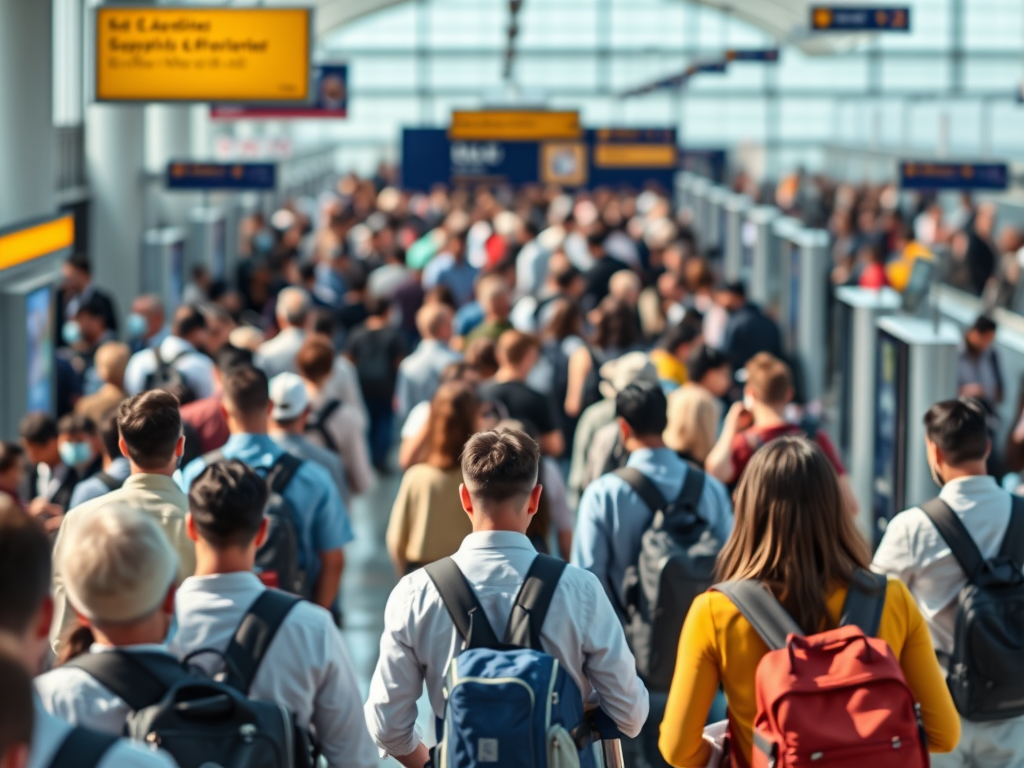
Low-Cost Carriers (LCCs) and Ultra Low-Cost Carriers (ULCCs) didn’t just lower fares. They rewired the “customer experience” model: fewer bundled promises, more explicit tradeoffs, and a digitally mediated journey where control is available—at a price. Southwest Airlines’ rocky transition to assigned seating is a live case study of what happens when an airline changes its CX operating system while the rest of the product (bins, boarding, family seating expectations) still behaves like the old one.
Table of contents
- The great CX rewrite: what LCCs/ULCCs changed (and why it stuck)
- Unbundling as a CX design principle (not just a pricing trick)
- The “self-service airline”: digital first, humans last
- The new battleground: fairness, transparency, and “bin economics”
- Southwest’s assigned seating: a controlled experiment with real passengers
- Overhead bins as the hidden constraint that breaks the experience
- Families, adjacency, and the reputational cost of “random assignment”
- The strategic tradeoff: efficiency vs. monetization vs. brand identity
- A CX playbook for airlines navigating the LCC/ULCC era
- What happens next: the next wave of airline CX competition
The great CX rewrite: what LCCs/ULCCs changed (and why it stuck)
For decades, “airline customer experience” meant a fairly stable bundle: one ticket, a seat (implicitly), a carry-on expectation, some level of assistance, and a set of policies that felt like part of the brand’s promise. LCCs and ULCCs reframed that model with a blunt proposition:
- We’ll sell the transportation efficiently.
- Everything else becomes a choice. (Seat, bag, priority, flexibility, comfort, snacks, even “less uncertainty.”)
- And choices have prices.
The result is not simply “worse service.” It’s a different architecture: a base product optimized for cost and utilization, plus a menu of paid options designed to match distinct willingness-to-pay. This is why the model persisted even as some customers complained: it aligns cost structure, revenue levers, and operational standardization.
But the deeper change is psychological. LCCs/ULCCs normalized the idea that the passenger is not buying an “experience bundle.” They are assembling an experience—step by step—through decisions, fees, and digital flows. That changes what customers expect from every airline, including “hybrids” like Southwest.
Unbundling as a CX design principle (not just a pricing trick)
In mature LCC/ULCC models, unbundling is a form of experience design. It forces clarity—sometimes brutally:
- Priority becomes a product (early boarding, better seat, faster service recovery).
- Certainty becomes a product (assigned seating, guaranteed overhead space, change flexibility).
- Comfort becomes a product (extra legroom, blocked middle, “preferred” zone).
Airlines that master unbundling do two things well:
- They define the base experience with discipline. The cheapest fare is intentionally spartan, but coherent.
- They engineer “upgrade moments” along the journey. The customer is repeatedly offered ways to reduce friction—at a price—often when anxiety peaks (check-in, boarding, disruptions).
When it works, customers don’t feel “nickel-and-dimed.” They feel in control: “I paid for what matters to me.” When it fails, the experience feels like a trap: the base product is engineered to be uncomfortable, and upgrades look like ransom.
A quick maturity model
| Unbundling maturity | Customer perception | Typical outcomes |
|---|---|---|
| Ad hoc fees | “They’re charging me for everything.” | Complaints spike; loyalty weakens |
| Structured menu | “I can choose what I want.” | Ancillary growth; better NPS segmentation |
| Experience engineering | “I can buy less stress.” | Higher conversion, fewer service calls |
| Operationally synchronized | “It just works.” | On-time performance + revenue lift + fewer conflict points |
The “self-service airline”: digital first, humans last
LCCs/ULCCs pioneered a digital operating model that legacy airlines later adopted—sometimes reluctantly:
- Apps as the primary interface: rebooking, vouchers, upsells, boarding pass, “service recovery” messaging.
- Policy-driven automation: fewer discretionary exceptions, more consistent enforcement (which can feel harsh).
- Lean airport footprint: fewer agents, more kiosks, more self-tagging, more “gate is the new customer service desk.”
This shifts the definition of customer experience from “how friendly are the people?” to “how predictable is the system?” In other words: the UX of policies and digital flows becomes the brand.
That’s also why transitions are perilous. When you change one major system component—like seating allocation—you must re-tune the entire journey: check-in rules, boarding logic, bin availability, family seating policies, staff scripts, and escalation pathways.
The new battleground: fairness, transparency, and “bin economics”
Once airlines monetize “certainty” (seat selection, priority boarding, extra legroom), the core CX question becomes fairness. Not moral fairness—perceived fairness.
Passengers will accept fewer freebies if the rules are clear and outcomes feel logical. They revolt when outcomes feel random or inconsistent—especially when money or loyalty status is involved.
The hidden economics of overhead bins
Cabin storage is a finite resource that is poorly “priced” and inconsistently enforced across the industry. In open seating models, early boarding implicitly secured bin space. In assigned seating models, customers expect the seat they paid for (or status they earned) to correlate with a reasonable chance of storing a bag near that seat.
When that correlation breaks, you trigger a specific kind of anger: “I did everything right and still lost.” That’s the emotional core of Southwest’s current friction.
Southwest’s assigned seating: a controlled experiment with real passengers
Southwest’s shift away from its iconic open seating is more than a tactical tweak. It is a strategic migration toward the industry norm: seat choice as a monetizable product, and boarding as a hierarchy informed by fare, status, and paid add-ons.
Southwest publicly framed the decision as aligned with customer preference and modernization. But modernization is not a single switch. It’s a system redesign—and the first weeks of operation revealed where the system is brittle.
What passengers are reporting (and what the airline acknowledges): assigned seating can produce outcomes that feel misaligned with expectations—especially when the “premium” customer ends up separated from their bag, their travel party, or the experience they believed they purchased.
Importantly, Southwest is not a typical ULCC. Its brand equity historically came from simplicity: a distinctive boarding culture, a perception of “less gotchas,” and an airline that felt human. When you introduce monetized hierarchy, you must manage the cultural shock—because customers are not only buying a seat. They’re buying what the brand used to represent.
Overhead bins as the hidden constraint that breaks the experience
The most telling issue surfacing in early feedback is not the assigned seat itself—it’s overhead bin access. Customers in forward rows (including loyalty members and extra-legroom purchasers) report storing bags far behind their seats because early boarders fill the front bins first.
Why this matters:
- It breaks the “premium promise.” If a customer pays for a better seat, they expect fewer hassles, not a scavenger hunt for storage.
- It slows the operation. Walking bags backwards (and later walking forward against the flow) degrades boarding and deplaning time.
- It creates conflict. Bin disputes are high-emotion, public, and contagious—exactly what airlines try to avoid.
What LCCs/ULCCs learned earlier
Many ULCCs reduced carry-on expectations by charging for larger cabin bags, incentivizing smaller personal items and shifting volume to the hold. Whether you like it or not, it is a coherent operational response to finite bins. Southwest is now experiencing a version of that physics: once boarding hierarchy changes, bin scarcity becomes visible and political.
Core insight: You can’t redesign seating without redesigning the storage “contract.” If the passenger’s mental model is “my seat implies nearby storage,” then your process must support that—or you must explicitly sell/guarantee storage as a product.
Families, adjacency, and the reputational cost of “random assignment”
Another flashpoint is family seating—particularly cases where children are assigned seats away from parents when the family declines paid seat selection. Even if the airline ultimately resolves such cases at the gate, the reputational damage occurs before resolution: the customer experiences stress, social judgment, and uncertainty.
This is where customer experience intersects with public policy debates and brand risk. A few principles have emerged across the industry:
- Family adjacency is not just “a nice to have.” It is a safety, ethics, and PR issue.
- Gate-based fixes don’t scale. They create delays and put frontline staff in conflict with passengers.
- Algorithmic assignment must encode adjacency rules. If you sell seat choice, you still need baseline protections for minors traveling with guardians.
LCC/ULCC carriers have experimented with multiple approaches—some better than others. The best approaches are explicit: clear policies, clear boundaries, and predictable outcomes.
The strategic tradeoff: efficiency vs. monetization vs. brand identity
Why is this happening now—across the industry? Because airline economics increasingly depend on ancillary revenue and product segmentation, even as capacity, labor costs, and operational complexity rise.
Southwest’s transition highlights a broader truth: customer experience is not the opposite of revenue optimization. In modern airlines, CX is the mechanism through which revenue optimization is delivered—via choices, tiers, and “paid certainty.”
But there is a brand identity risk
Southwest’s brand historically signaled:
- “We’re different.”
- “We’re simple.”
- “We’re fair (enough).”
Assigned seating and monetized hierarchy can still be consistent with those values—but only if the airline makes the system feel transparent, coherent, and operationally smooth. Otherwise, the airline risks becoming “like everyone else,” without the premium network advantages that larger carriers have.
The LCC/ULCC lesson for everyone
The winners are not the airlines that offer the most perks. They are the airlines that offer the cleanest tradeoffs:
- If you pay, the benefit is real and reliable.
- If you don’t pay, the base product is still workable and predictable.
- Rules are enforced consistently, with minimal discretionary drama.
A CX playbook for airlines navigating the LCC/ULCC era
Here is a practical set of moves airlines can apply when shifting CX “operating systems” (seating, boarding, tiers, fees):
1) Treat overhead bins as a product and a process
- Define the storage promise. Is bin space “best effort,” or tied to fare/seat?
- Align boarding to storage logic. If premium customers sit forward, then premium boarding must protect forward bin availability.
- Enforce bag size consistently. Inconsistent enforcement destroys perceived fairness.
2) Encode family adjacency into assignment algorithms
- Guarantee adjacency for minors with guardians within reasonable constraints.
- Prefer pre-assignment solutions over gate interventions.
- Communicate clearly before purchase and at check-in.
3) Reduce “surprise moments”
In modern airline CX, surprises are the enemy. Customers tolerate constraints; they do not tolerate feeling tricked.
- Show seat outcomes earlier.
- Explain why a seat is what it is (fare tier, late check-in, aircraft change).
- Offer a “fix” path inside the app, not at the gate.
4) Make upgrades feel like value, not ransom
- Bundle upgrades around customer jobs-to-be-done: certainty, speed, comfort, flexibility.
- Keep the base product coherent. If base is punitive, social media will do the marketing for you—in the worst way.
5) Script the frontline experience
When systems change, frontline staff become the UX. Equip them:
- Clear rules + escalation paths
- Short, consistent explanations
- Discretionary tools for edge cases (especially families)
6) Measure the right things
| Metric | What it reveals | Why it matters now |
|---|---|---|
| Boarding time variance | Process stability | Variance indicates conflict points (bins, scanning, group logic) |
| Gate interventions per flight | System failures that humans must patch | High levels predict delays and staff burnout |
| Seat-change requests | Mismatch between assignment logic and customer needs | Especially important for families and status customers |
| Complaint clustering (social + direct) | Reputation risk | Clusters often precede mainstream media stories |
| Ancillary conversion by journey moment | Where customers buy certainty | Guides UX improvements without harming trust |
What happens next: the next wave of airline CX competition
The next phase of airline customer experience competition is not about adding amenities. It’s about reducing friction through system design while preserving profitable segmentation.
Expect the industry to double down on:
- More explicit tiering: basic fares that are truly basic, and premium economy-like zones on narrowbodies.
- Paid certainty bundles: seat + boarding + storage guarantees packaged together.
- Algorithmic personalization: upsells tuned to traveler context (family, business trip, tight connection).
- Operationally aware CX: real-time messaging and re-accommodation that prevents lines and gate chaos.
Southwest’s assigned-seating turbulence should be read as a signal, not an anomaly. When an airline changes a foundational ritual (like open seating), it must redesign the “physics” around it—bins, boarding, family adjacency, and fairness cues. LCCs/ULCCs taught the market how to monetize choice. Now the strategic challenge is doing so without eroding trust.
Bottom line: In 2026, the winning customer experience is not the most generous. It’s the most legible—where rules are clear, outcomes make sense, and paid upgrades reliably remove stress rather than merely shifting it onto someone else.

 Olivier Delestre-Levai