
The Great Retail Customer Service Pivot Since COVID: Why Policies Are Tightening Everywhere (and What Costco’s Shift Really Signals)

Since COVID, retail customer service has been quietly rewritten. The “always say yes” era (frictionless returns, endless exceptions, generous goodwill credits) is being replaced by a more controlled model: shorter return windows, stricter eligibility, more verification, more self-service, and less discretionary flexibility in-store. Costco—historically the poster child of ultra-lenient satisfaction guarantees—tightening its approach is a watershed moment, not an anecdote.


Why this matters now

Retail leaders spent decades treating customer service as a brand amplifier: remove friction, absorb exceptions, and let frontline staff “make it right.” COVID changed the economics underneath that philosophy. The shift wasn’t ideological—it was structural:

  • E-commerce acceleration pushed return rates up (and made reverse logistics a core P&L line, not an operational footnote).
  • Labor constraints and churn increased the cost of service delivery while reducing the experience consistency customers used to take for granted.
  • Inflation forced margin defense, and customer service policies became a margin lever.
  • Fraud, “policy arbitrage,” and abuse scaled with digital receipts, marketplaces, and social sharing of loopholes.
  • Shrink + ORC (organized retail crime) broadened the security lens: verification, controls, and exception governance.

The result is a new customer service doctrine: “yes, but with guardrails.” And those guardrails are spreading across mass retail, specialty retail, and even luxury—segments that used to differentiate precisely through leniency.


The Costco signal: when the most forgiving retailer stops being forgiving

Costco has long benefited from a near-mythical customer promise: satisfaction guaranteed, with a reputation for unusually flexible returns and minimal interrogation. That reputation is also a magnet for edge cases—returns that feel more like “rental behavior” than dissatisfaction resolution.

According to recent reporting, Costco members are observing a tightening of the experience: more frequent requests for proof of purchase, more scrutiny, and signals that the warehouse is narrowing what qualifies under the broad satisfaction umbrella. The emotional reaction (“the easy days are over”) matters because it shows something deeper than a policy tweak:

  • Costco is protecting the membership model (value perception for paying members depends on controlling abuse and costs).
  • Costco is normalizing verification (proof, history checks, and consistency across stores—less frontline discretion, more system rule).
  • Costco is treating returns as a managed risk domain, not a marketing message.

In parallel, the wider industry context is stark: retail returns represent an enormous cost pool, and return/claims fraud is measured in the tens (and hundreds) of billions. Once you accept those numbers as real, policy tightening becomes less a “customer service choice” and more a “business continuity choice.”


From “delight at any cost” to “service as a controlled operating system”

Pre-COVID, customer service was often a brand theater: the store manager could override; exceptions were part of the charm; a generous policy signaled confidence. Since 2020, the playbook is shifting toward a controlled operating system with five recurring moves:

1) Shorter windows and tighter eligibility

The easiest way to reduce return cost is to reduce the time (and condition variability) of what comes back.

  • Shorter refund windows (30 days becomes the new default in many categories).
  • Category exclusions (electronics, high-theft items, consumables, seasonal goods).
  • Condition enforcement (packaging, tags, “unused,” hygiene rules).

2) More verification, less discretion

Verification is replacing trust-by-default.

  • Receipt/proof requirements are more consistently enforced.
  • Identity verification for returns (especially no-receipt returns).
  • System flags for unusually frequent returns (“pattern detection”).

3) Monetary friction: fees, restocking, and store credit

Retailers learned that customers respond to small friction. Not enough to kill conversion—but enough to discourage bracketing and impulse over-ordering.

  • Mail return fees for online orders.
  • Restocking fees for large items or electronics.
  • Store credit beyond a certain window, rather than original tender refunds.

4) Self-service everywhere (and fewer humans when it’s “non-value add”)

Service has been “productized” into flows, portals, kiosks, and chat.

  • Portals for returns, cancellations, and order changes.
  • Chatbots for triage (humans reserved for escalations).
  • Appointments for high-touch categories (beauty consultations, luxury repairs, alterations).

5) A new metric stack: margin + abuse control + customer lifetime value

The metric conversation is maturing. “NPS at all costs” is being replaced by segmentation and lifetime value logic:

  • Different rules for different tiers (memberships, loyalty levels).
  • Exceptions are governed, documented, and audited.
  • Service recovery is still possible—but increasingly conditional.

Segment-by-segment: how the pivot looks in mass, specialty, and luxury

Mass retail: tightening at scale without breaking trust

Mass retailers must preserve convenience because they compete on frequency and breadth. Their challenge is to tighten policies without triggering a perception of hostility.

What’s changing most visibly:

  • Returns as an “industrial process”: automation, scanning, routing, liquidation optimization.
  • More “policy clarity” signage: fewer ambiguous promises, more standardized rules.
  • Membership and account economics: perks remain, but increasingly sit behind a login, a tier, or an identity check.

Strategic rationale: mass retail can’t out-luxury luxury—but it can out-operate everyone. Returns and customer service are now part of operational excellence, not just store friendliness.

Specialty retail: where returns, try-ons, and “bracketing” collided

Specialty retail (apparel, beauty, consumer electronics, sporting goods) is ground zero for the post-COVID returns debate. Digital shopping made try-on behavior explode, and social media normalized bracketing (“buy three sizes, return two”).

Common moves:

  • Reduced windows (especially for beauty and electronics).
  • More rigid “used vs unused” definitions.
  • Mail return friction and incentives to return in-store (because it’s cheaper and can save the sale).
  • Exchange-first flows (“store credit” nudges, bonus credit, faster exchange shipping).

Strategic rationale: specialty retailers often live in lower gross margin reality than consumers assume—especially once shipping, promotions, and reverse logistics are counted.

Luxury: the most surprising pivot—because “exception” used to be the product

Luxury customer service traditionally weaponized flexibility: you weren’t buying a product, you were buying reassurance, relationship, and effortless problem resolution. So why tighten now?

  • Higher ticket fraud risk: returns and chargebacks become materially expensive, materially fast.
  • Grey market leakage: returns and exchanges can be exploited to move product into resale channels.
  • Brand protection: condition standards, authenticity chain-of-custody, and packaging rules become stricter.
  • Clienteling modernization: service is increasingly tied to profiles, purchase history, and relationship ownership.

Luxury isn’t “becoming mass retail.” It is becoming more explicit about what was previously implicit: service is exceptional when the relationship is real, and controlled when behavior looks transactional or abusive.


The hidden engine behind stricter policies: reverse logistics economics

Returns are not just “items coming back.” They are a multi-step cost cascade:

  • Inbound shipping or carrier consolidation
  • Receiving labor
  • Inspection and grading
  • Repackaging / refurb / cleaning
  • Re-stocking or re-routing
  • Markdown risk (inventory aging)
  • Liquidation / secondary market recovery
  • Fraud investigation and dispute handling

And the critical insight: many returned items cannot be resold at full price—or at all. For categories like cosmetics, intimate apparel, seasonal fashion, and certain electronics, the resale value drops sharply. Generous return policies were effectively a silent subsidy—one that looked acceptable when growth was the primary story, and looks unacceptable in a margin-defense era.


Customer expectations didn’t shrink—so the “service contract” is being renegotiated

Here’s the tension: customers got used to frictionless everything during the pandemic years—easy returns, liberal exceptions, quick refunds, free shipping, and instant support. Retailers can’t fully sustain that model anymore, but they also can’t revert to “old retail” without losing loyalty.

So we’re watching a renegotiation of the service contract built around three ideas:

1) Transparency beats surprise

Customers will tolerate stricter rules if they’re clearly stated at the right moment (product page, checkout, receipt) and enforced consistently.

2) Good friction is targeted friction

Friction should deter abuse, not punish legitimate customers. That requires segmentation and data—not blanket policies applied bluntly.

3) Membership is the new “exception engine”

Retailers are increasingly saying: if you want the “old world” of ease, enroll. Memberships (paid or loyalty-based) are how companies fund better service and keep it economically rational.


What the best retailers are doing instead of just saying “no”

The strongest operators aren’t simply tightening. They’re replacing generosity with smarter design:

  • Pre-purchase confidence tools: sizing intelligence, fit prediction, richer product data, better photography, reviews you can trust.
  • Exchange-first UX: make the “keep the customer” path smoother than the “refund” path.
  • Instant credit for compliant returns: faster store credit when rules are followed; slower refunds when risk is higher.
  • Human support for high-value moments: premium SKUs, loyalty tiers, complex issues—humans where it matters.
  • Fraud prevention that doesn’t feel accusatory: quiet controls, not public conflict at the counter.

This is the pivot in one sentence: design out returns and disputes, instead of absorbing them.


A practical framework: how to tighten policies without destroying your brand

If you run retail, here is a pragmatic blueprint I see working across segments:

Step 1: Segment customers and incidents

  • Separate high-LTV customers from one-time opportunists.
  • Separate defect-related returns from preference-related returns.
  • Separate “new condition” from “degraded condition” pathways.

Step 2: Define a clear “exception governance” model

  • Who can override policies?
  • When should they override?
  • How is it recorded and audited?

Step 3: Make compliance easy

  • Simple instructions, QR codes, proactive reminders.
  • In-store return lanes and clear receipts.
  • Instant resolution when the customer follows the rules.

Step 4: Add friction only where abuse concentrates

  • No-receipt returns
  • High-risk SKUs
  • High-frequency returners
  • Unusual claims patterns

Step 5: Communicate the “why” in customer language

Cost, fairness, member value, safety, and sustainability resonate more than “policy changes.”


My take: Costco is not “becoming harsh”—it’s becoming economically honest

Costco’s brand has always been built on trust and value. Tightening return behavior enforcement doesn’t contradict that—if it’s executed well. In fact, there’s an argument that it protects the promise for the majority of members by preventing a minority from subsidizing their lifestyle through policy loopholes.

The winners in the next retail chapter will be the companies that manage a delicate balance:

  • Firm rules that protect the business
  • Fast resolution for compliant customers
  • Selective humanity when the moment justifies it

Customer service isn’t disappearing. It’s being redesigned—from a discretionary art to an engineered system.
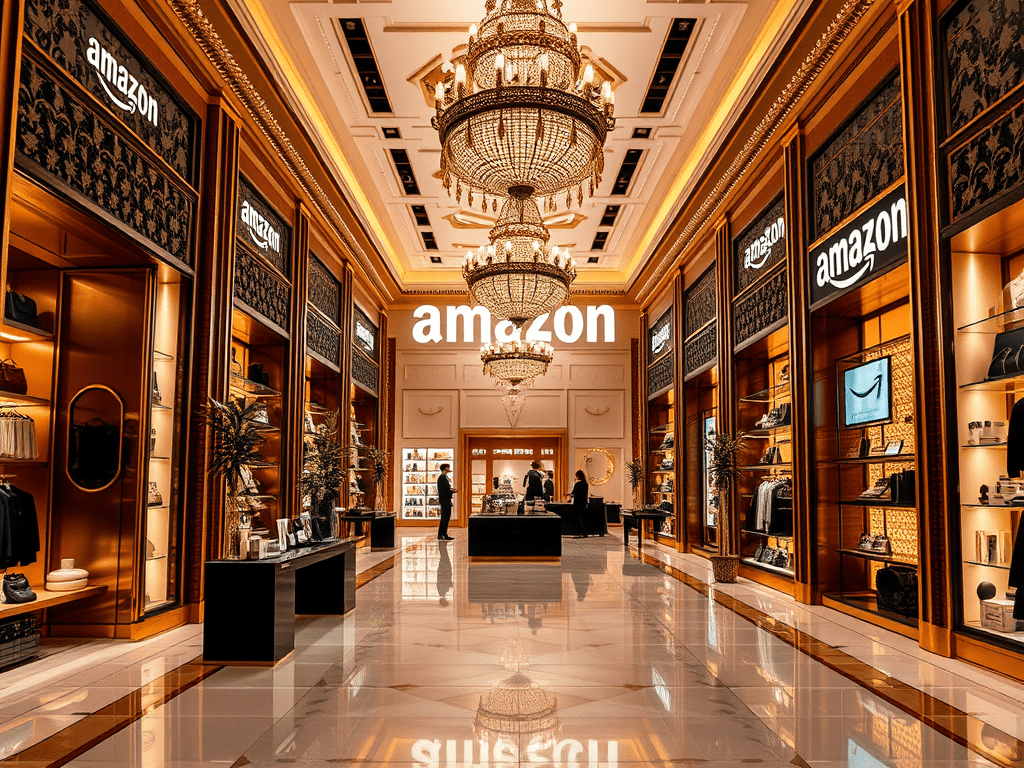
Saks x Amazon Is Over — And It Exposes the Structural Crisis of Luxury Retail

Two weeks after my analysis of luxury retail at a crossroads, the “Saks on Amazon” experiment is being wound down. The outcome isn’t just a setback for one partnership — it’s a signal about what’s breaking (and what must change) in luxury retail’s operating model.

Related (published Jan 5, 2026): Luxury retail in the U.S. at a crossroads — beyond the Saks Global crisis


What happened: a partnership that never achieved escape velocity

The “Saks on Amazon” storefront was supposed to be a proof point: a premium department-store curator leveraging a digital giant’s reach, logistics, and personalization engine to accelerate luxury e-commerce adoption. Instead, it became a case study in how difficult luxury is to scale on a generalist marketplace.

According to reporting shared with employees, the storefront saw limited participation from brands and failed to deliver the traction needed to justify the operational and reputational complexity. The parent company is now winding down the storefront to refocus attention on its own channels — in plain terms, to drive traffic back to its own ecosystem and concentrate scarce executive bandwidth where it matters most.

Context matters: the wind-down comes as the company is restructuring, trimming non-core operations, and rethinking how much complexity it can carry while it stabilizes vendor relationships, cash flow, and customer demand.

This isn’t a “digital is dead” story. It’s a “luxury distribution is a governance problem” story — and the partnership made that governance problem visible.


Why this matters beyond the headline

Luxury retail has always balanced two competing imperatives:

  • Growth (new customers, new categories, new geographies, more transactions)
  • Control (brand narrative, scarcity, pricing integrity, service choreography)

In strong cycles, luxury can “have both” — because demand is robust enough to tolerate distribution imperfections. In weak or volatile cycles, the trade-off becomes brutal: every additional channel adds operational cost, increases pricing pressure, expands return rates, and weakens the brand’s ability to create a coherent client experience.

The end of this partnership is a symptom of that broader reality: luxury retail is recalibrating from expansion to consolidation — pruning channels that dilute unit economics or brand equity, especially when liquidity is tight and vendor confidence is fragile.


The “Amazon + luxury” paradox: scale vs. scarcity

Amazon’s value proposition is built on convenience, breadth, price transparency, and frictionless fulfillment. Luxury’s value proposition is built on the opposite: controlled distribution, brand theater, scarcity cues, and a service model that makes the customer feel known.

That doesn’t mean luxury can’t sell online — it obviously can. It means luxury online requires a different operating system:

1) Brand governance is the product

In luxury, the “store” isn’t just a shelf; it’s a stage. The visual hierarchy, editorial tone, packaging, authentication assurances, and the post-purchase relationship are part of what the customer is buying. Marketplaces struggle here because:

  • They optimize for conversion efficiency, not brand choreography.
  • They compress brands into a standardized interface (which is exactly what luxury brands resist).
  • They introduce adjacency risk: premium items appear one scroll away from mass-market products.

2) Scarcity and discount discipline are strategic assets

Luxury brands obsess over controlling discounting, third-party resellers, and grey-market leakage. In a marketplace environment, even if the luxury storefront is curated, the broader platform trains customers to compare, hunt, and wait for deals.

That creates a structural tension: luxury wants “confidence,” marketplaces create “optionalities.”

3) Trust is fragile — and it’s everything

For luxury buyers, trust is not just “will it arrive?” It’s:

  • Is it authentic?
  • Is it handled properly?
  • Will the return/refund experience be premium?
  • Will I be treated like a client, not an order number?

Amazon has invested heavily in trust mechanisms across categories, but luxury has an unusually high “trust bar.” Even one reputational scare can have a disproportionate impact on brand participation.

4) Luxury needs data ownership, not just data access

Luxury has shifted from transactions to relationships. The growth flywheel depends on building a client book: preferences, events, service history, and high-touch outreach. When luxury sells through a third-party, it risks becoming a “supplier” instead of a “relationship owner.”

This is why many luxury brands favor models that preserve identity and customer ownership: controlled wholesale, concessions, and first-party e-commerce — even if reach is smaller.


Saks’ real priority: rebuild the core, protect liquidity, restore partner trust

Partnerships are rarely wound down because leadership suddenly “stops believing” in the idea. They’re wound down because trade-offs become impossible to justify under constraint.

In a restructuring context, there are three priorities that dominate decision-making:

1) Liquidity and operational focus

When you’re stabilizing a complex retail group, every extra channel adds cost and distraction: integration work, merchandising alignment, inventory planning, customer service, returns, marketing, and analytics. If the channel isn’t producing meaningful incremental value, it becomes a liability.

2) Vendor confidence and supply continuity

Luxury retail runs on vendor trust. Brands need to believe they will be paid, that inventory will be protected, and that pricing discipline will be maintained. During turbulence, retailers often over-communicate stability and reduce anything that could be interpreted as loss of control.

3) Rebuilding traffic to owned channels

For a department-store model, margin survival increasingly depends on shifting customers to the highest-margin pathways: owned e-commerce, app, loyalty/member experiences, private clienteling, and events. If traffic is redirected to a third-party storefront, the retailer risks paying “rent” in the form of platform economics and reduced ability to build lifetime value.

Strategically, the move signals a pivot: simplify the ecosystem, concentrate on cash-generating operations, and rebuild the brand’s ability to drive full-price demand — without external dependencies that dilute identity.


What it tells us about the crisis of luxury retail

Luxury retail’s crisis is not one thing. It’s a stack of compounding pressures — many of them structural, not cyclical.

1) The “aspirational luxury” squeeze

The middle of the luxury market is under the most pressure. Ultra-high-end clients remain resilient, but aspirational customers (who used to stretch for a purchase) are more cautious. That shifts the category from “growth + pricing power” to “selective demand + promotional gravity.”

When that happens, the weakest part of the value chain gets exposed: multi-brand retailers carrying heavy fixed costs, with inventory risk, and limited ability to enforce full-price integrity across brands.

2) Inventory and markdown economics are redefining winners

Multi-brand retailers are essentially portfolio managers of inventory — and inventory volatility is brutal in slow demand cycles. Mis-forecasting turns into markdowns; markdowns train customers; trained customers wait; and the spiral worsens.

Off-price can help clear inventory, but it can also become a “shadow channel” that erodes full-price perception. The recent industry trend is telling: outlets and off-price are being reframed as liquidation tools, not growth engines.

3) Department stores are fighting a two-front war

They’re being squeezed by:

  • Brands going direct (DTC and brand-controlled e-commerce)
  • Platform economics (marketplaces and paid acquisition costs)

In other words, department stores are losing unique access to brands and losing cost advantage in customer acquisition at the same time.

4) Omnichannel has become expensive — and unforgiving

The promise of omnichannel was convenience. The hidden reality is cost: ship-from-store complexity, returns, reverse logistics, fraud, customer support, and inventory accuracy. In luxury, expectations are higher (packaging, speed, white-glove service), which pushes cost even further up.

When sales soften, those costs do not soften proportionally — and the model breaks faster than executives expect.

5) Luxury is redefining what “premium experience” means

Luxury used to be anchored in physical experience: flagship stores, personal shoppers, salons, events. Today, “premium” must also exist digitally:

  • Editorial storytelling that feels like a magazine, not a catalog
  • Clienteling that feels personal, not automated
  • Service recovery that is proactive, not policy-driven

That bar is difficult to hit on generalized platforms — and difficult for legacy retailers with fragmented tech stacks and tight budgets.


Who wins next: the models that are compounding advantages

The next cycle will reward luxury retail models that can combine:

  • Brand control (assortment, pricing integrity, narrative)
  • Client ownership (data, relationships, repeat behavior)
  • Operational discipline (inventory accuracy, returns control, cash efficiency)
  • Experience differentiation (service choreography, trust, exclusivity cues)

Three models are emerging as structurally advantaged:

Model A — Brand-controlled ecosystems (DTC + curated wholesale)

Brands that tightly manage distribution can protect pricing and invest in service experiences that build lifetime value. Wholesale becomes selective and strategic — supporting discovery and reach without surrendering governance.

Model B — Curated multi-brand platforms with strong governance

Multi-brand can still win — but only with strict discipline: authenticated supply chains, clear differentiation, and a “taste” proposition that brands respect. This model looks less like “infinite shelf” and more like “editorial curation + service excellence.”

Model C — High-touch physical retail as a relationship engine

Stores that function as clienteling hubs (appointments, styling, repairs, events) are less exposed to pure transaction volatility. The store becomes the relationship engine, and digital becomes the continuity layer.

Where does the Saks–Amazon experiment fit? It was trying to blend Model B and marketplace scale — but the governance burden, brand hesitation, and economics appear to have prevented it from compounding.


A practical playbook for luxury retailers and brands in 2026

If you’re leading strategy, digital, or merchandising in luxury retail right now, here are practical moves that map to what we’re seeing:

1) Choose fewer channels — and execute them exceptionally well

Channel sprawl is a silent killer. Every channel requires:

  • Assortment strategy
  • Inventory policy
  • Pricing governance
  • Service standards
  • Marketing investment

When resources are tight, “more channels” almost always means “more mediocrity.” The winning move is ruthless prioritization.

2) Treat trust as an operational KPI, not a marketing claim

Luxury trust is built through operational rigor:

  • Authentication and chain-of-custody discipline
  • Packaging standards
  • Returns/refunds speed and fairness
  • Proactive service recovery

If you can’t guarantee those consistently on a channel, don’t scale that channel.

3) Re-architect inventory around demand signals, not seasonal hope

Luxury retail is moving from “seasonal bulk bets” to “signal-driven replenishment.” This requires tighter integration between:

  • Merch planning
  • Digital demand analytics
  • Store-level sell-through visibility
  • Vendor collaboration

4) Make clienteling measurable

Clienteling can’t remain “art only.” It needs a measurable operating model:

  • Client book health (coverage, recency, segmentation)
  • Appointment-to-purchase conversion
  • Event ROI and retention lift
  • Repeat rate and category expansion

5) Turn off-price into a controlled release valve

Off-price should exist — but as a controlled release valve, not a parallel growth engine. The goal is to clear inventory without training your core client to wait for discounts.

6) Build partnership structures that preserve governance

Partnerships can still work — but the contract must be explicit about governance:

  • Brand presentation standards
  • Data rights and customer relationship rules
  • Pricing and promotion policies
  • Return policies and service SLAs

If those aren’t enforceable, the partnership becomes a brand liability.


Closing thought: luxury’s next cycle will be earned, not assumed

The end of the Saks–Amazon partnership is not a verdict on either company’s talent or ambition. It’s a reminder that luxury retail has become structurally harder:

  • Demand is more selective.
  • Customer acquisition is more expensive.
  • Omnichannel operations are costlier than spreadsheets suggest.
  • Brands are more protective of distribution than ever.

In that environment, experiments that add complexity without compounding trust and margin will be pruned quickly.

The question for 2026 is simple: will luxury retail be rebuilt around fewer, stronger, governed ecosystems — or will it keep chasing scale in environments that inherently dilute the luxury proposition?

I’ll continue to connect the dots as this restructuring evolves and as we see which luxury retail operating models are proving resilient.


Key takeaways (for skim readers)

  • Luxury doesn’t scale like commodity e-commerce. Governance and trust are the product.
  • Marketplaces create brand adjacency and pricing psychology risks that luxury brands resist.
  • In a restructuring cycle, focus wins. Channels that don’t drive meaningful incremental value get cut.
  • The winners will be governed ecosystems that combine client ownership, operational discipline, and experience differentiation.