
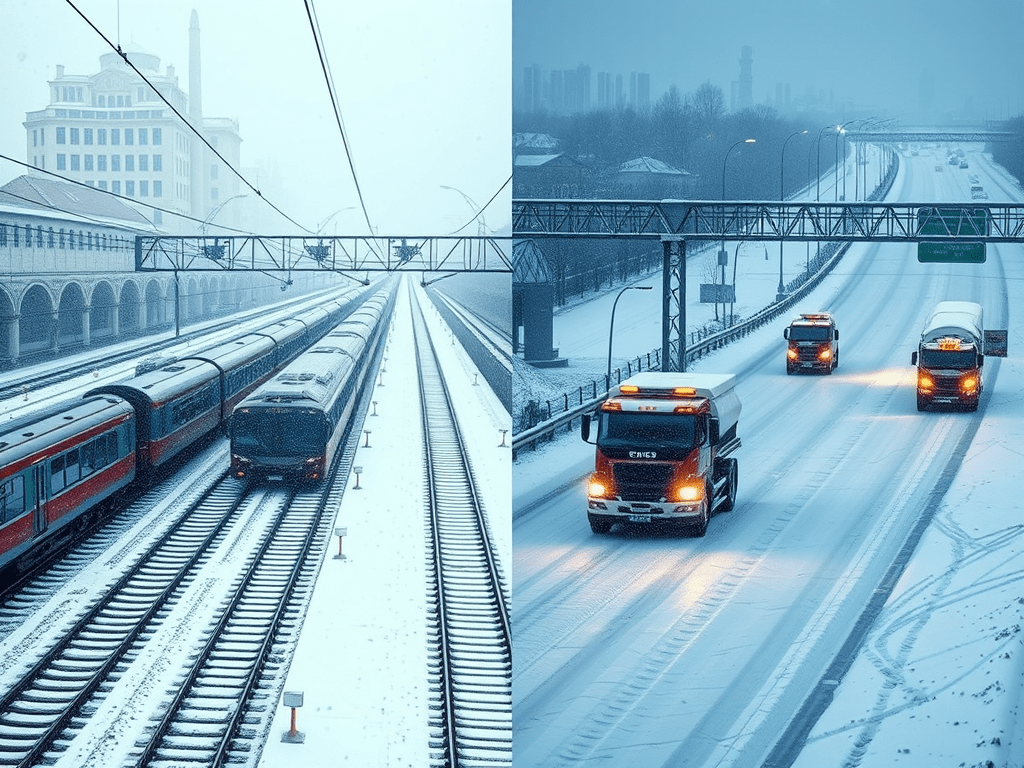
A practical look at equipment choices, operating models, and the cold economics behind winter preparedness.
In early January 2026, a cold snap across Northern Europe once again turned winter weather into a system-wide stress test. In the Netherlands, domestic rail service was suspended, and major flight cancellations rippled through Amsterdam’s Schiphol hub—underscoring a recurring question that comes up every time European cities and networks seize up: why does severe winter weather appear to be “handled better” in North America?
The short answer isn’t toughness, competence, or grit. It’s design assumptions and cost/benefit math. North America—especially Canada and the U.S. Midwest/Northeast—optimizes infrastructure and operations around the expectation that disruptive winter events happen regularly. Much of Western Europe optimizes around a milder baseline and accepts periodic disruption as a rational trade-off.
This article breaks down what that trade-off really means: the differences in equipment, how agencies and operators decide what to buy (or not buy), and why “being fully equipped” is rarely a universal good—especially as climate volatility increases.
Continue reading “Why a Few Inches of Snow Can Shut Down Europe (and Barely Register in North America)”
 Olivier Delestre-Levai