
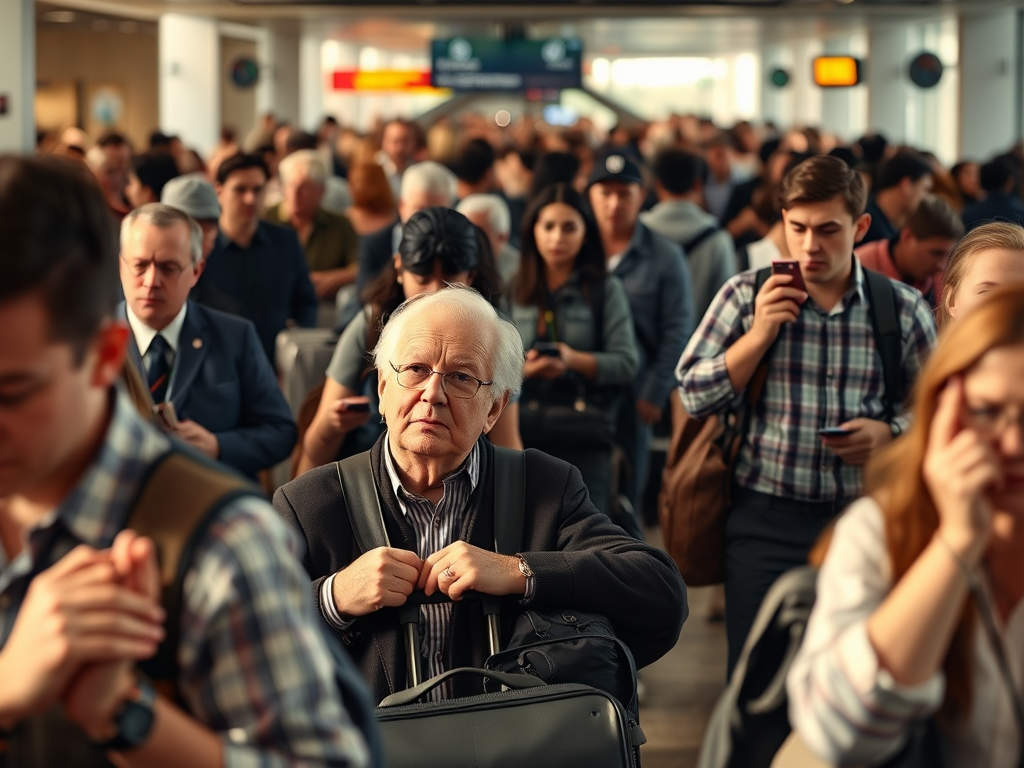
For decades, airline loyalty was built on a simple compact. Fly often, spend time in the air, concentrate your business with one carrier, and the airline would recognize your value. Status, upgrades, lounge access, and faster mileage accumulation were not gifts. They were the economic return on repeat purchasing behavior. They were the mechanism that turned a customer into a loyalist.
That compact has now been fundamentally broken in the United States.
What has replaced it is not a better version of loyalty, nor a more sophisticated one. It is a financialized ecosystem in which the most rewarded customer is increasingly not the person who flies the most, but the person who swipes the right card the most. The center of gravity has moved away from butt-in-seat behavior and toward credit card economics. At the same time, premium travel benefits that were once scarce and meaningful have been diluted by mass distribution. Lounge access is the clearest example: what was designed as a differentiated sanctuary for premium travelers and top elites has become, in many airports, a mass-market entitlement attached to financial products.
The result is a surreal inversion of the original model. Frequent flyers who spend tens of thousands of dollars a year on airfare can find themselves less rewarded than consumers who spend heavily on groceries, dining, and everyday purchases using co-branded cards. Travelers who earned lounge access through years of business travel now queue outside overcrowded clubs filled with members who arrived through credit card channels. Airlines continue to market loyalty as a travel proposition, but the underlying economics increasingly resemble consumer finance, data monetization, and yield management.
This is not a marginal irritant for aviation enthusiasts. It is a structural shift with major implications for airline profitability, customer segmentation, brand equity, and the future of premium travel. It also raises a larger question that many U.S. airlines now seem reluctant to confront directly: if loyalty programs no longer reward loyalty to flying, what exactly are they rewarding?
The Original Promise of Airline Loyalty
Historically, frequent-flyer programs were designed to shape behavior. Airlines needed customers to choose them repeatedly in a commoditized and cyclical market. Routes overlapped, fares moved constantly, and service quality was often uneven. Loyalty programs created switching costs. The traveler who was 20 flights away from requalifying for status was less likely to defect. The corporate road warrior who had accumulated upgrade instruments and lounge access was more likely to remain within one ecosystem.
The brilliance of the classic model was that it aligned the airline’s commercial priorities with the traveler’s perceived fairness. More flying generated more rewards. Premium cabin spend generated faster progression. Status signaled a traveler’s economic importance to the airline. The program was not perfect, but it was legible. Its logic made sense.
Even the excesses of mileage running and status chasing reflected the power of the model. Travelers adjusted behavior because the reward structure was clear enough, aspirational enough, and valuable enough to justify incremental purchasing. Airline loyalty became one of the few consumer relationships where devotion felt measurable and cumulative.
That logic has been steadily eroded for years through devaluations, dynamic pricing, tighter upgrade inventory, and increasingly opaque redemption structures. But the latest phase is different in nature, not just degree. The system is no longer merely less generous. It is being redesigned around a different customer and a different revenue engine.
From Airline Loyalty to Financial Engineering
The modern U.S. airline loyalty program is increasingly a financial product disguised as a travel benefit. Airlines sell billions of dollars of miles to banks, which use those miles to attract cardholders, stimulate spend, and justify annual fees. The bank gains acquisition and spending volume. The airline receives a remarkably attractive stream of cash, often more stable and higher margin than its flying business. Everybody in the ecosystem benefits except, increasingly, the traveler whose primary form of engagement is actually boarding planes.
This is the core contradiction of the current system. Airlines still speak the language of travel loyalty, but their incentives increasingly point elsewhere. A frequent flyer who travels often but uses a competitor’s card is economically less attractive than a less frequent traveler who channels large volumes of everyday spend into an airline portfolio. The airline may still value the frequent flyer operationally and symbolically, but the balance sheet increasingly rewards the cardholder.
In strategic terms, this is understandable. Airline revenue is cyclical. Fuel prices are volatile. Labor costs are structurally higher. Aircraft delivery uncertainty persists. Credit card economics offer a more stable, high-margin annuity-like stream of income that softens shocks and smooths earnings. Loyalty programs have evolved from customer retention tools into major profit engines and, in some cases, quasi-financial assets.
But what makes sense for near-term earnings can corrode long-term trust. Once the customer realizes that the airline’s most important loyal behavior is not flying but spending on plastic, the emotional foundation of loyalty weakens. The relationship starts to feel transactional in the wrong way: less like recognition and more like extraction.
The New Hierarchy: Swipe More, Fly Less
The most striking symptom of the broken system is the emergence of a new hierarchy of value. In theory, top-tier status should be a proxy for intense travel frequency, premium cabin contribution, or both. In practice, many U.S. programs now create faster pathways to meaningful rewards through credit card activity, shopping portals, dining programs, hotel booking platforms, mortgage partnerships, subscription offers, and retail tie-ins than through actual flying.
This is where the absurdity becomes visible. A traveler can spend week after week in airports, tolerate irregular operations, sit through delays, and route business to one carrier, only to discover that another member has climbed the same ladder largely through non-flight activity. The original social contract of frequent-flyer status starts to collapse because the signal no longer clearly identifies the truly frequent flyer.
This matters operationally as well as emotionally. Upgrade queues become more crowded. Elite pools become more diluted. Priority lines become less meaningful. Service recovery becomes less personalized because there are simply too many people carrying some variant of a premium credential. Airlines then respond by layering further segmentation, introducing invite-only tiers, premium lounges within lounges, and increasingly baroque bundles of exceptions. The system becomes more exclusive at the very top and more congested everywhere else.
Instead of solving the dilution problem, the industry has often chosen to commercialize around it. If too many people have access, build a more premium tier. If general lounge access becomes crowded, create a separate business-class lounge. If elite status loses distinction, create hidden statuses, one-time premium passes, or monetized fast tracks. In other words, every erosion of value becomes the pretext for selling a new layer of access.
Lounges as the Clearest Symbol of Devaluation
Nowhere is the dysfunction more visible than in U.S. airport lounges.
Lounge access was once one of the clearest manifestations of airline loyalty. It provided comfort, productivity, and refuge during the most stressful parts of the journey. It was also legible as a premium benefit because it was scarce. There was a threshold to enter: elite standing, paid membership, premium-class travel, or a narrowly distributed corporate entitlement.
That scarcity has vanished.
Today, access to lounges is distributed through an ever-expanding network of airline cards, premium transferable-points cards, bank lounge networks, authorized-user privileges, guest entitlements, premium ticket bundles, and status-matching campaigns. The result is predictable. The club is no longer a sanctuary for a relatively contained premium segment. It is a crowded extension of the terminal for a broad swath of affluent or fee-tolerant consumers.
The problem is not that more people can enjoy a better airport experience. The problem is that the promise of exclusivity and ease has been sold far beyond the capacity of the product. Once a lounge has waitlists, entrance queues, seat scarcity, food depletion, and noise levels comparable to the concourse, the benefit is no longer performing its intended brand function. It becomes a symbol of false premiumization: marketed as elevated, experienced as over-subscribed.
Airlines and card issuers are now trying to reverse this through guest restrictions, spending thresholds, visit caps, time limits, and separate premium facilities. But these are corrective measures for a problem of their own making. The industry over-distributed access to monetize aspiration, and now it is forced to re-ration access in order to restore enough scarcity to preserve perceived value.
How We Reached Peak Lounge Inflation
The lounge problem did not emerge by accident. It emerged because three separate trends converged.
First, airlines and card issuers discovered that lounge access was one of the most marketable premium benefits in consumer finance. It translated immediately in advertising. It photographed well. It made annual fees easier to justify. It appealed to both true frequent travelers and aspirational ones. As a result, lounge access became a core acquisition hook for high-fee cards.
Second, the post-pandemic premium travel boom changed the composition of airport demand. Airlines leaned harder into premium segmentation, affluent leisure travelers spent more aggressively, and many consumers who had accumulated savings or shifted spending priorities were more willing to pay for premium cards and premium travel experiences. Lounges became part of that lifestyle proposition.
Third, the barriers to entry softened at precisely the moment demand surged. Authorized users gained access. Transferable-points ecosystems multiplied. Card portfolios proliferated. Lounge networks expanded, but not nearly fast enough to absorb the growth in eligible users.
The result is that many lounges now suffer from the classic pathologies of over-distributed premium membership models. The acquisition funnel expanded faster than the underlying capacity base. The industry solved for sign-ups before it solved for service delivery.
This is a familiar error beyond aviation. Hotels, retail memberships, and streaming subscriptions all face versions of it. But in the airline context, it is particularly damaging because airport stress magnifies every gap between promise and reality. A crowded lounge is not merely a less pleasant experience. It is a live demonstration that status inflation has overtaken service design.
The Delta Case: Restricting Access After Encouraging It
Delta is perhaps the most visible example of this tension. Over the last several years, the airline built one of the most powerful premium ecosystems in the market, closely intertwined with American Express. That strategy helped produce enormous value. It also contributed to one of the most public lounge crowding problems in the U.S. industry.
The airline’s response has been telling. Rather than retreating from the card-led model, Delta has tried to rebalance it. Lounge access through key American Express products now comes with limits, and unlimited access increasingly requires very high annual card spend. The implication is unmistakable: access still matters, but it must now be rationed more aggressively because the product was previously made too available.
This is a highly revealing moment. It shows that the airlines understand the devaluation dynamic. They know that lounge overcrowding weakens premium perception. They know that once a benefit becomes too common, it stops functioning as a differentiator. But instead of re-centering loyalty on actual flying, the correction often takes the form of new spending thresholds and product complexity.
In other words, even the fix remains financialized. The lesson drawn is not that the frequent flyer should matter more again. The lesson drawn is that the cardholder should be segmented more finely.
United and the Open Prioritization of Cardholders
United’s recent moves make the strategic shift even more explicit. The airline has made clear that co-branded cardholders will receive superior mileage-earning treatment compared with non-cardholders. From a corporate standpoint, this is perfectly rational. It encourages card adoption, deepens customer engagement, and reinforces a profitable bank partnership.
From a loyalty philosophy standpoint, it is devastatingly revealing.
It says, in effect, that two customers on the same plane, paying similar fares, can generate meaningfully different future value not because of how much they travel, but because one of them is also a financial-services customer in the right ecosystem. The frequent-flyer program is no longer merely rewarding travel behavior. It is steering customers toward a broader commercial stack.
This changes the meaning of airline loyalty. The airline ceases to ask, “How much do you fly with us?” and increasingly asks, “How much of your wallet can we capture beyond the flight?” Those are not the same strategic question. One is about travel loyalty. The other is about ecosystem monetization.
Again, the business logic is real. But the customer experience logic is corrosive. The more directly airlines privilege card-linked spend over flying, the more they risk alienating the very travelers who gave these programs their original legitimacy.
American Airlines and the Gamification of Status
American Airlines took another route by broadening the pathways through which customers can accumulate meaningful progress via Loyalty Points. This has made the program feel more modern and accessible, and it offers the airline more ways to engage customers across channels. On paper, it looks innovative. In practice, it reinforces the same structural shift.
Status progression becomes less about travel intensity and more about gaming a broad commercial ecosystem. Shopping portals, partner activity, card spend, and non-flight behaviors become central to the program’s logic. The traveler who understands the mechanics can optimize aggressively without ever approximating the travel pattern that frequent-flyer status once signaled.
There is a strategic upside here. Broader engagement creates more touchpoints, more monetization, and more customer data. But there is also a cost: the symbolic meaning of status degrades. If an “elite” customer may or may not actually be a frequent flyer in any traditional sense, then elite recognition becomes harder to operationalize and less credible socially.
That credibility matters more than airlines sometimes admit. Loyalty programs are partly economic systems, but they are also status systems. And status only works when the hierarchy feels earned, intelligible, and relatively fair.
The Great Devaluation of Benefits
The central consumer complaint about U.S. loyalty programs today is not simply that earning is harder or redemptions are pricier. It is that benefits have become both less valuable and less trustworthy.
Miles buy less. Award prices move unpredictably. Upgrade rates feel weaker. Elite recognition is diluted. Lounges are more crowded. Boarding groups are swollen. Priority lines are longer. Customer service differentiation is inconsistent. The traveler is asked to spend more, subscribe more, optimize more, and carry more products, all while receiving less certainty in return.
This is textbook benefit devaluation. And it is especially dangerous because loyalty programs depend on future-oriented psychology. Customers tolerate friction today because they believe accumulated value will matter tomorrow. Once that faith weakens, the whole machine becomes less effective.
Frequent flyers are particularly sensitive to this because they encounter the product repeatedly. They see the queue lengths. They experience the waitlists. They notice the shrinking upgrade windows, the tighter award availability, the increasingly complex terms, and the multiplication of monetized exceptions. What was once a loyalty system begins to feel like a permanent negotiation against the house.
In that environment, cynicism replaces aspiration. And cynicism is poison for loyalty economics.
The Hidden Tax of Premium Credit Card Proliferation
Credit cards have become the dominant intermediary between airlines and customer rewards. That shift has not just changed who gets rewarded. It has changed who pays.
The modern airline-card ecosystem is funded partly through interchange economics, annual fees, revolving credit behavior, and merchant acceptance costs. In practical terms, the lavishness of premium rewards is not a free-market miracle. It is subsidized by a broader payments system in which merchants absorb fees, prices incorporate those costs, and all consumers participate indirectly whether or not they are optimizers.
This is why the loyalty debate is bigger than aviation. The current system effectively redistributes value toward cardholders who are affluent enough, informed enough, and financially positioned enough to extract outsized benefit from premium products. Travelers who do not use those products, cannot qualify for them, or simply prefer not to play the optimization game are increasingly disadvantaged within the travel ecosystem.
That creates a striking tension. Airlines present these programs as democratized access to premium travel, but their real architecture often amplifies stratification. The winners are those who understand and can fund the system. The losers include not only non-cardholders but also the genuinely frequent flyer whose travel pattern no longer guarantees proportionate recognition.
Why Airlines Keep Doing It Anyway
If the model is so visibly frustrating customers, why do airlines continue to push it? Because financially, it works.
Co-branded credit card relationships are among the most attractive revenue streams in the airline sector. They provide cash flow that is less exposed to fuel volatility, weather disruptions, operational meltdowns, and short-term softness in domestic demand. They increase switching costs across a broader set of behaviors. They also create a powerful acquisition and retention loop in partnership with some of the largest banks in the country.
For management teams, the appeal is obvious. Building a more resilient earnings profile is a rational objective in an industry that has historically destroyed capital and punished shocks. Loyalty monetization through cards has become one of the few areas where airlines can generate premium multiples from what is otherwise still a cyclical transportation business.
The challenge is that what works for quarterly stability can create strategic fragility if overextended. Once a loyalty program becomes too detached from the core product, its brand credibility can weaken. Once too many benefits are over-issued, perceived scarcity collapses. Once frequent flyers conclude that their real loyalty is under-recognized, the airline risks eroding the highest-intensity customer relationship it has.
The paradox is this: airlines have used loyalty programs to reduce the volatility of the airline business, but if they undermine the meaning of loyalty too far, they may also weaken one of the industry’s strongest tools for preference formation.
The Premiumization Trap
U.S. airlines are now deeply committed to premiumization. More premium seats, more segmented ground products, more premium lounges, more premium pricing architecture, and more premium card tie-ins. This strategy has clear logic. It targets higher-yield demand, strengthens margins, and aligns with the post-pandemic resilience of affluent consumers.
But loyalty inflation creates a premiumization trap.
As more customers gain access to premium-coded benefits through financial products, the premium experience itself becomes less premium. The airline then needs to create new layers of exclusivity to defend the proposition. That means new business-class lounges, new invitation-only tiers, new same-flight-only rules, new guest restrictions, new spending hurdles, and new monetized bundles. Premium becomes a staircase with ever more steps because each lower step has been over-filled.
This can work for a while, especially in a strong demand environment. But it creates structural complexity and customer fatigue. It also increases the risk that consumers eventually re-rate the entire proposition. If too many “premium” benefits feel crowded, limited, or conditional, the customer may simply decide the annual fee, the loyalty effort, or the airline concentration is no longer worth it.
Why the Most Frequent Flyers Feel Betrayed
The word most often heard among serious travelers is not inconvenience. It is betrayal.
That may sound melodramatic to outsiders, but it captures something real. Frequent flyers made decisions over many years on the basis of an implied exchange. They accepted less convenient routings, paid fare premiums, absorbed irregular operations, and concentrated spend because they believed long-term recognition would justify those choices. Now many of them feel that the basis of the relationship has been rewritten without candor.
They are told loyalty still matters, but they can see that other behaviors matter more. They are told lounges are premium spaces, but they spend time in entrance lines. They are told elite status signals value, but they are one of dozens on the upgrade list. They are told programs are richer than ever, but actual redemption utility is less predictable. The rhetoric has remained emotionally familiar while the economics have shifted underneath it.
This is the hallmark of a broken loyalty architecture: the brand promise survives in language longer than it survives in customer reality.
What a More Rational System Would Look Like
The answer is not to abolish airline credit card partnerships. That would be unrealistic, financially destructive, and strategically backward. The answer is to restore balance and honesty.
First, airlines should re-anchor top-tier recognition more explicitly in flying behavior and premium-ticket contribution. Card spend can accelerate engagement, but it should not overwhelm the signaling function of true frequent travel. The customer who spends 120 nights away from home for work should not feel interchangeable with the customer who optimized household spend from a kitchen table.
Second, lounge access needs to be redesigned around real capacity economics. If a lounge is marketed as premium, it must be managed as a scarce operating asset, not as an endlessly distributable marketing perk. That requires tighter eligibility, better forecasting, more investment, and more willingness to say no before the experience collapses.
Third, airlines should simplify benefit structures and make trade-offs more explicit. Complexity is not value. It is often a way to obscure devaluation. Customers can accept tougher qualification rules more readily than they can accept opaque ones.
Fourth, programs should protect a meaningful gap between broad participation and true elite recognition. Not every engaged customer needs the same set of benefits. Trying to make everyone feel premium often results in nobody actually feeling premium.
Finally, loyalty should again reward friction endured, not just financial product usage. The traveler who actually flies through delays, reroutings, and overnight connections is still taking the operational risk of the airline’s product. That customer deserves a differentiated logic of recognition.
The Regulatory and Political Overhang
Another reason this debate matters now is that the airline-card model is no longer operating in a purely commercial vacuum. The economics of interchange, consumer credit, and rewards funding are under increasing public and political scrutiny. If the economics of premium card rewards come under pressure, airlines could find that a material part of their profit architecture is more exposed than it appears.
This is not merely a regulatory side note. It underscores how far loyalty programs have drifted from flying. When a loyalty program’s future is shaped as much by payments policy and consumer-finance regulation as by route networks and service quality, the transformation is complete. What used to be an airline retention tool has become infrastructure in a much larger financial system.
That may be lucrative. It may not be durable in its current form.
The Strategic Risk for Airline Brands
The deepest long-term risk is not that customers will complain on social media or in enthusiast circles. It is that airline brands may quietly lose the emotional premium they have spent decades constructing.
Loyalty programs do more than allocate rewards. They translate frequency into belonging. They help a customer feel known, recognized, and prioritized in a stressful category. If that psychological mechanism weakens, price sensitivity tends to increase. Once loyalty feels synthetic, consumers become more willing to shop around, split behavior, and defect for convenience or fare.
The irony is that the airlines most successful at monetizing loyalty may also be the ones with the most to lose if its meaning empties out. Card revenue can cushion the near term. It cannot fully replace authentic brand attachment in the long term.
Conclusion: A Loyalty System That Now Rewards Almost Everything Except Loyalty
The U.S. airline loyalty system is not broken because it has become more commercial. It was always commercial. It is broken because it increasingly rewards the wrong behaviors relative to the promises it continues to make.
It tells customers that frequency matters while designing programs around card economics. It sells premium access while distributing it too broadly to preserve quality. It expands pathways to status while weakening the meaning of status. It offers richer ecosystems while reducing clarity and confidence in the value delivered to the traveler who actually flies.
The frequent flyer today often faces a strange reality: fly more, receive less certainty; spend more on a credit card, receive more attention. That is not loyalty in the classic sense. It is ecosystem monetization dressed in the language of loyalty.
For airlines, the immediate economics are compelling. For customers, the growing disillusion is unmistakable. And for the industry, the central question is no longer whether these programs are profitable. It is whether they can remain credible.
A loyalty system can survive devaluation. It can survive complexity. It can even survive some unfairness. What it cannot survive indefinitely is a widespread loss of belief in what it is supposed to reward.
That is the real problem facing U.S. airlines today. The benefits have not merely become harder to access. The system has become conceptually incoherent. And once loyalty stops rewarding loyalty, the entire premise begins to unravel.
Key Takeaways
The U.S. airline loyalty model has shifted decisively from rewarding frequent flying to rewarding credit card engagement and broader ecosystem participation. That shift has made loyalty programs more valuable to airline balance sheets, but less intuitive and less fair to many actual frequent flyers.
Lounge access has become the clearest symbol of benefit devaluation. By distributing access through too many premium cards and affiliated channels, airlines and banks undermined the scarcity and service quality that once made lounges genuinely premium.
Status inflation, upgrade dilution, and growing program complexity have weakened the trust that underpins loyalty economics. Customers will tolerate strict rules more readily than opaque ones, but they struggle when the logic of recognition no longer aligns with real travel behavior.
The next phase for the industry should not be to abandon loyalty monetization, but to restore balance. Airlines need to protect the distinction of true frequent travel, redesign lounge access around capacity realities, and be more candid about what their programs are actually optimizing for.
