
Starbucks, Loyalty, and the Backlash Trap: When a Smarter Rewards Program Still Creates a Customer Problem

Few consumer brands illustrate the power of loyalty as clearly as Starbucks. For years, Starbucks Rewards has been one of the most effective digital engines in retail and foodservice, not only driving frequency and spend, but also serving as the connective tissue between the company’s mobile ecosystem, personalization strategy, payments infrastructure, and customer data model. It has helped turn habitual coffee consumption into a structured relationship. It has also made Starbucks unusually dependent on the psychology of membership.

That is precisely why the company’s newly reimagined loyalty program matters far beyond the coffee category. On paper, the refreshed structure is rational, strategically coherent, and in several respects more sophisticated than what came before. It introduces a more explicit tiering model, attempts to reward engagement more dynamically, and reflects a broader ambition to make Starbucks Rewards feel less like a coupon engine and more like a status ecosystem. Yet the online backlash that followed the rollout shows a recurring truth in customer strategy: a loyalty program is not judged solely by its economics. It is judged by the emotional expectations it creates, the symbols it preserves, and the losses customers believe they have suffered.

The Starbucks case is therefore not simply about whether the program is objectively better or worse. It is about transition management, customer memory, status signaling, and the risks that emerge when a company modernizes a high-visibility consumer system without fully accounting for how legacy perceptions still shape the market response. That makes this a useful case study not only for retail and hospitality leaders, but for any executive overseeing digital membership, subscription, customer experience, or loyalty transformation.

A Strategic Reset That Makes Sense on Paper

Starbucks did not redesign its rewards architecture in a vacuum. The company is in the middle of a broader effort to sharpen the customer experience, restore momentum, and translate scale into more sustainable growth. In that context, reworking loyalty was inevitable. A program of Starbucks’ size cannot remain static indefinitely, especially when consumer expectations are changing, digital engagement patterns are evolving, and the economics of rewards are under constant pressure from inflation, labor costs, and competitive intensity.

The new structure introduces a more visible tiering logic and attempts to restore progression to a program that had become highly transactional. Tiering creates narrative. It gives customers something to aim for, not just something to redeem. It also gives the brand more latitude to tailor benefits, differentiate high-value members, and create a ladder of recognition that can support frequency without relying exclusively on direct discounting.

From a design perspective, the program also reflects a more mature understanding of loyalty mechanics. Starbucks is signaling that loyalty should not be only about dollars spent. It should also be about behaviors that reinforce the ecosystem: app usage, reloads, reusable cup usage, promotional participation, and repeated engagement. That is strategically sound. A sophisticated loyalty engine should reward profitable behaviors, not just gross volume.

The revised model also attempts to solve several long-standing friction points. It adds more flexibility around redemptions, introduces incremental perks for upper-tier members, and tries to make the relationship feel more experiential. In principle, that is the right move. The loyalty programs with the strongest long-term resilience are not the ones that simply hand out free product at the lowest possible threshold. They are the ones that combine utility, status, convenience, and emotional differentiation.

Seen from the boardroom, the logic is straightforward. Starbucks has enormous scale, one of the strongest digital customer bases in the sector, and a premium brand that should be able to offer more than a narrow earn-and-burn mechanism. A more structured loyalty model gives the company more control over customer lifetime value management, margin architecture, and segmentation. It also aligns Starbucks more closely with the structural logic used in travel, hospitality, and other sectors where membership status is part of the brand experience itself.

What Changed and Why It Matters

The reworked Starbucks Rewards program is more than a cosmetic refresh. It changes the language of membership, the visibility of status, and the mechanics of reward accumulation. For Starbucks, that is not a marginal move. Loyalty is central to how the company manages digital engagement, drives order frequency, and protects customer intimacy in a category where consumers have more alternatives than ever.

At the base level, Starbucks still needs broad accessibility. The company understands that its rewards program cannot become too exclusive because a large portion of the ecosystem’s value comes from mass participation. The challenge is therefore to preserve enough everyday usefulness to keep casual and mid-frequency users engaged while creating enough differentiation at the top to reward the most valuable customers.

This is where the company’s strategic ambition becomes visible. Starbucks is trying to evolve the relationship from a simple transactional loop into a more layered membership proposition. In theory, that means stronger recognition for heavy users, more personalization, and a better linkage between the behaviors Starbucks wants and the benefits customers receive in return.

The problem is that customers do not experience loyalty programs as strategy diagrams. They experience them as habits, expectations, and emotional markers. A redesigned rewards structure may make excellent financial sense internally, but if it changes how customers perceive their own status or earning power, the reaction can be immediate and hostile. In loyalty, the human interpretation of change often matters more than the objective design of the change itself.

Why the Backlash Was So Immediate

The backlash was not simply a protest against change. It was a protest against perceived loss, confusion, and inconsistency. These are three different forces, and together they are toxic in loyalty transitions.

First, many customers interpreted the revised structure through a devaluation lens. Even when a company adds benefits, customers tend to focus on what now feels harder to reach, less generous, or less familiar. In loyalty psychology, losses are more emotionally powerful than gains. A new perk can be interesting; a perceived downgrade feels personal. Customers who believed they had a certain standing or expected a certain reward cadence reacted as though something had been taken away from them, whether or not the aggregate value equation supported that conclusion.

Second, the rollout collided with historical memory. Starbucks had long built emotional equity around recognizable status markers, and many customers still carried those associations with them. When the company adjusted the program, customers did not evaluate the refresh only against the immediate prior version. Many compared it to what they remembered as the best version of Starbucks loyalty. That is a far harder benchmark because memory is selective and emotional.

Third, online discourse amplified the reaction at high speed. Loyalty changes are uniquely vulnerable to social media simplification because they are easy to reduce into emotionally charged statements such as “they made it worse,” “they devalued the program,” or “the rewards are harder to earn now.” Once that narrative takes hold, nuance disappears. A brand can publish FAQs and program explanations, but if customers feel surprised, confused, or diminished by the rollout, the emotional interpretation will spread faster than the official explanation.

This is what makes the Starbucks episode important. The backlash was not caused only by the structure of the new program. It was caused by the interaction between design, customer memory, rollout communication, and digital amplification.

The Gold Problem: When Legacy Symbolism Becomes a Liability

One of the most revealing aspects of the backlash is the role of symbolic status. Starbucks has historically benefited from the fact that its loyalty program created more than economic value. It created identity. Members did not just accumulate stars. They felt seen, recognized, and part of something with visible hierarchy and meaning.

That kind of symbolic capital can be very powerful, but it can also become a liability during redesign. Once a brand has created emotionally resonant status markers, it can no longer treat them as interchangeable labels. Customers attach memory and meaning to them. They become part of the brand contract.

In Starbucks’ case, a portion of the backlash reflects precisely that phenomenon. Customers were not only assessing whether the new economics were better or worse. They were reacting to a perceived disruption in identity. If the revised structure made status feel more conditional, harder to reach, or less intuitively rewarding, that did not register merely as a technical change. It registered as a withdrawal of recognition.

This is a classic challenge in mature loyalty systems. Companies tend to focus on current-state mechanics, while customers think in terms of remembered identity. The two are not the same. If a brand has ever created a powerful symbol of belonging, it must account for that symbol’s afterlife. Otherwise, a program redesign can quickly turn into a reputational issue.

The Economics Behind the Move

Despite the backlash, Starbucks’ redesign is not irrational. In fact, the economics behind it are fairly clear. Starbucks has one of the largest active rewards bases in consumer retail, and even small changes in behavior among that base can have meaningful financial implications. A program this large must balance customer appeal with redemption liability, product mix, margin protection, and digital engagement goals.

The first pressure is cost discipline. Traditional points programs can become expensive when thresholds are set too low, benefits are too broad, or redemptions cluster around higher-cost items. Adjusting the architecture allows the company to reshape where value is delivered and how often customers redeem.

The second pressure is segmentation efficiency. Not all loyalty members generate the same value, and treating them as though they do can be economically inefficient. A more tiered structure lets Starbucks invest more deliberately in members who drive higher frequency, stronger app engagement, and better lifetime value.

The third pressure is ecosystem behavior. Starbucks does not simply want visits. It wants digitally connected visits. It wants app participation, stored payment behavior, order visibility, and customer data that can support personalization. A rewards program that nudges those behaviors becomes more than a retention mechanism. It becomes a strategic operating lever.

The fourth pressure is premiumization. Starbucks continues to operate in an environment where consumers are more selective about discretionary spending, yet still willing to pay for quality, convenience, and relevance when the value proposition is clear. A layered loyalty model allows the brand to reinforce premium cues without turning every benefit into a discount. That matters for both margin and positioning.

In short, the redesign is consistent with a company trying to modernize a massive loyalty engine under tighter economic conditions. The problem is not that Starbucks changed the program. The problem is that it appears to have underestimated the emotional cost of the change.

Why Consumer Tolerance for Loyalty Changes Is So Low Right Now

The Starbucks backlash also reflects a broader consumer environment. Across industries, customers have become more skeptical of loyalty programs, subscription offers, and member-value narratives. Over the past several years, many brands have changed rules, tightened benefits, raised prices, or inserted more complexity into systems that were originally marketed as simple and rewarding. As a result, consumers increasingly assume that any “update” may actually mean a reduction in value.

This is especially true in categories tied to everyday spending. Unlike airline or hotel programs, where customers may tolerate complexity because the rewards feel high-value and travel is episodic, coffee loyalty lives inside daily routine. Customers expect it to feel frictionless, transparent, and immediately beneficial. Any increase in complexity is felt more sharply because the relationship is more frequent and more habitual.

There is also a cultural dimension. Starbucks is not just another quick-service brand. It occupies a space that blends routine, convenience, lifestyle, and self-perception. Customers do not merely buy beverages. Many feel they participate in a daily ritual. When a brand holds that kind of position, changes in loyalty are interpreted through a more personal lens. A revised rewards structure is not seen only as a commercial adjustment. It can feel like a statement about how the brand values the customer.

At the same time, digital platforms intensify every reaction. Communities on Reddit, Threads, TikTok, and other channels can transform isolated frustration into a collective narrative within hours. Screenshots, point calculations, and anecdotal complaints become symbolic proof that a brand is taking value away. Once that framing gains momentum, it becomes very hard to reverse because it aligns with a broader cultural suspicion that companies are constantly trying to offer less while charging more.

What Starbucks Was Trying to Achieve Strategically

It would be simplistic to interpret Starbucks’ move as merely an attempt to save money by making rewards less generous. The company appears to be pursuing a broader shift from pure points accumulation toward a richer membership proposition. That is strategically sensible because the future of loyalty is unlikely to belong to programs that compete only on free product. The strongest systems will be those that combine utility, status, convenience, and relevance.

This is why experiential elements matter. Starbucks wants its best customers to feel they are part of something more distinctive than a frequent-purchase discount club. That is a familiar move in hospitality, aviation, and premium retail. The idea is that emotional rewards and recognition can build stronger attachment than pure discounting, especially among the highest-value customer segments.

Similarly, the emphasis on ecosystem-friendly behaviors reflects a clear operating objective. Starbucks wants to reward not just spending but the specific forms of engagement that make the model more efficient and more data-rich. That is not unusual. The most effective loyalty systems are not passive. They shape customer behavior in ways that improve economics and reinforce strategic priorities.

The challenge is that Starbucks operates at massive scale. It has to balance aspiration with accessibility. A more premium tier may excite the most engaged customers, but if the average member concludes that the system now feels more conditional, more engineered, or less generous, the company risks weakening the broad-based emotional appeal that made the program so powerful to begin with.

This is the central tension. If Starbucks leans too far toward premium differentiation, it risks feeling exclusionary. If it leans too far toward mass simplicity, it limits its ability to use loyalty as a segmentation and profit lever. The redesign clearly aimed to balance both. The backlash suggests that the communication around that balance did not land clearly enough in the public mind.

The Real Failure Was Change Management

From a transformation perspective, the most interesting part of this story is not the loyalty architecture itself. It is the rollout. Starbucks did not merely launch a revised program; it executed a customer-facing transformation affecting identity, expectations, benefits, and digital interpretation. That kind of move requires change management discipline, not just product or marketing execution.

The first requirement in such transitions is historical mapping. A company must identify which legacy elements still carry emotional weight, even if they are no longer central to the current model. If a symbol or status marker still resonates with customers, it cannot be treated casually in a redesign.

The second requirement is narrative clarity. Customers do not evaluate loyalty changes like analysts. They want a simple answer to a simple question: is this better for me or worse for me? If the company cannot answer that convincingly for different customer types, the internet will answer on its behalf.

The third requirement is transition choreography. App updates, emails, FAQs, customer service scripts, promotional messages, and in-store conversations all need to reinforce the same interpretation. If a customer sees one message in the app, hears another in the store, and reads a third on social media, confidence erodes immediately. In a loyalty system, trust is an operational asset.

The fourth requirement is real-time listening. Major consumer brands should assume that loyalty changes will be interpreted and debated publicly within hours. That means monitoring online conversations not just for complaints, but for narrative formation. Early backlash is not always avoidable, but it can often be contained if the brand responds quickly, clarifies ambiguity, and shows that it understands the emotional core of the reaction.

Starbucks appears to have approached this as a structural redesign. It also needed to treat it as a large-scale customer transition. That difference matters.

Lessons for Retail, Hospitality, and Consumer Brands

The Starbucks episode offers several lessons for leaders across retail, hospitality, foodservice, airlines, and subscription businesses.

The first is that loyalty is never just a math problem. Finance and growth teams naturally focus on accrual rates, thresholds, redemption liability, and unit economics. Those matter. But customers experience loyalty as recognition, fairness, and identity. A program that is financially smart but emotionally clumsy can still damage brand value.

The second is that symbols matter as much as benefits. Names, colors, cards, badges, tiers, and visible markers of status are not superficial. They are part of the product. Changing them changes meaning, not just mechanics.

The third is that transition communication must be segmented. Heavy users, occasional users, legacy members, and top-value customers do not need the same message. A single broad announcement is rarely sufficient because each segment interprets change through a different lens.

The fourth is that loyalty redesign should be stress-tested against social interpretation, not just internal logic. A model may be perfectly coherent in a strategy presentation and still be vulnerable to immediate backlash if its visible outcomes can be framed as downgrades. Brands need to ask not just whether the design is economically sound, but what the first wave of angry posts will look like and whether they are prepared to answer them.

The fifth is that everyday loyalty programs should avoid unnecessary complexity. Complexity can work in travel because status differentiation is part of the category’s culture. In daily coffee and food routines, customers generally want the value proposition to feel intuitive. If the system becomes too layered, many will default to skepticism.

Can Starbucks Still Make This Work?

Yes. There is a strong possibility that the long-term commercial effect of the redesign will be better than the initial reaction suggests. Consumer backlash in the early days of a loyalty change does not automatically translate into sustained behavioral decline. Many customers complain and then adapt. Others discover benefits they initially overlooked. Still others remain deeply engaged because convenience, routine, and brand familiarity continue to outweigh dissatisfaction.

Starbucks also has structural advantages. Its physical footprint remains powerful, its app ecosystem is deeply embedded in customer habits, and its brand recognition is extraordinary. That gives the company room to refine its messaging, reduce friction, and reinforce the value of the new structure over time.

But recovery requires responsiveness. Starbucks should not assume the backlash will simply fade. The company needs to clarify the rationale in plain language, continuously reinforce customer benefits, and monitor whether specific customer groups reduce engagement, frequency, or spend as a result of the rollout.

If Starbucks treats this as a communications and trust issue layered on top of a strategically valid redesign, it can stabilize the situation and potentially strengthen the program over time. If it dismisses the backlash as mere resistance to change, it risks missing the deeper warning about emotional equity.

The Bigger Strategic Question: What Is Loyalty Actually For?

The Starbucks debate also raises a broader executive question. Is loyalty meant to subsidize transactions, deepen habit, reward frequency, express recognition, or create differentiated membership? Increasingly, the answer is all of the above. But the weighting matters.

If a brand uses loyalty primarily as a discounting engine, it may drive traffic but weaken pricing power. If it uses loyalty primarily as a prestige mechanism, it may strengthen attachment among top customers but risk alienating the broader base. If it uses loyalty primarily as a data capture tool, customers may eventually sense the asymmetry and disengage. The strongest programs work because they balance these objectives in a way that feels fair, useful, and intuitive to the customer.

Starbucks appears to be moving toward a model where loyalty becomes more identity-driven, more segmented, and more behaviorally strategic. That is a sophisticated direction. It is also a more delicate one because it raises the stakes of perception. The more the company asks customers to care about status, the more sensitive they become to status disappointment.

This is why execution matters so much. Loyalty in 2026 is not just a retention tool. It is a brand governance mechanism. It shapes how customers talk about fairness, generosity, exclusivity, and trust. A misstep therefore does not remain confined to the loyalty team. It spills into reputation, digital experience, customer service load, and long-term emotional preference.

Conclusion: A Smart Redesign Undermined by Human Reality

The new Starbucks Rewards approach is not a simplistic story of corporate greed or customer overreaction. It is a more interesting and more useful case. Strategically, the redesign has logic. It supports segmentation, behavior shaping, premiumization, and ecosystem engagement. It reflects a serious effort to evolve loyalty from a purely transactional mechanism into a more differentiated membership model.

And yet the backlash was real, immediate, and revealing. It exposed the gap between analytical program design and customer psychology. It showed how legacy symbols can outlive the systems that created them. It confirmed that in loyalty, perceived loss is often more powerful than objective gain. And it demonstrated that even a rational redesign can become a reputational issue if the transition is not managed with enough empathy, clarity, and awareness of customer memory.

For Starbucks, the lesson is not that it should stop evolving its program. It is that loyalty transformation is as much a change management exercise as a pricing or product exercise. The company still has time to make the new model work. But to do so, it must manage not only the economics of rewards, but the emotions of recognition.

For the rest of the market, the message is even clearer. In an era where customers are increasingly skeptical of brand value claims, loyalty programs cannot afford to surprise people in ways that feel like downgrades. Every membership system is, at its core, a promise. When that promise changes, the numbers matter. But the story matters more.

Key Takeaways

Starbucks’ revised rewards program reflects a strategically coherent attempt to modernize loyalty around segmentation, engagement, personalization, and premium positioning. The backlash did not emerge because the redesign lacked business logic, but because customers interpreted the rollout through the lenses of loss, fairness, and historical memory.

The case demonstrates that loyalty programs must be managed as emotional systems, not just economic systems. Status labels, visible symbols, and remembered benefits can shape the reaction as much as the actual value equation.

For leaders across consumer industries, the Starbucks episode is a reminder that customer-facing transformation requires rigorous change management. The more embedded a program is in daily routine, the more carefully change must be choreographed.

Ultimately, Starbucks may still succeed with the new model. But the episode already offers a clear lesson for the broader market: when brands redesign loyalty, they are not only changing rules. They are renegotiating trust.

From “No Frills” to “Choice Architecture”: How Low-Cost Carriers Are Redesigning Customer Experience — and What Southwest’s Assigned-Seating Turbulence Reveals

Low-Cost Carriers (LCCs) and Ultra Low-Cost Carriers (ULCCs) didn’t just lower fares. They rewired the “customer experience” model: fewer bundled promises, more explicit tradeoffs, and a digitally mediated journey where control is available—at a price. Southwest Airlines’ rocky transition to assigned seating is a live case study of what happens when an airline changes its CX operating system while the rest of the product (bins, boarding, family seating expectations) still behaves like the old one.

Table of contents

  1. The great CX rewrite: what LCCs/ULCCs changed (and why it stuck)
  2. Unbundling as a CX design principle (not just a pricing trick)
  3. The “self-service airline”: digital first, humans last
  4. The new battleground: fairness, transparency, and “bin economics”
  5. Southwest’s assigned seating: a controlled experiment with real passengers
  6. Overhead bins as the hidden constraint that breaks the experience
  7. Families, adjacency, and the reputational cost of “random assignment”
  8. The strategic tradeoff: efficiency vs. monetization vs. brand identity
  9. A CX playbook for airlines navigating the LCC/ULCC era
  10. What happens next: the next wave of airline CX competition

The great CX rewrite: what LCCs/ULCCs changed (and why it stuck)

For decades, “airline customer experience” meant a fairly stable bundle: one ticket, a seat (implicitly), a carry-on expectation, some level of assistance, and a set of policies that felt like part of the brand’s promise. LCCs and ULCCs reframed that model with a blunt proposition:

  • We’ll sell the transportation efficiently.
  • Everything else becomes a choice. (Seat, bag, priority, flexibility, comfort, snacks, even “less uncertainty.”)
  • And choices have prices.

The result is not simply “worse service.” It’s a different architecture: a base product optimized for cost and utilization, plus a menu of paid options designed to match distinct willingness-to-pay. This is why the model persisted even as some customers complained: it aligns cost structure, revenue levers, and operational standardization.

But the deeper change is psychological. LCCs/ULCCs normalized the idea that the passenger is not buying an “experience bundle.” They are assembling an experience—step by step—through decisions, fees, and digital flows. That changes what customers expect from every airline, including “hybrids” like Southwest.

Unbundling as a CX design principle (not just a pricing trick)

In mature LCC/ULCC models, unbundling is a form of experience design. It forces clarity—sometimes brutally:

  • Priority becomes a product (early boarding, better seat, faster service recovery).
  • Certainty becomes a product (assigned seating, guaranteed overhead space, change flexibility).
  • Comfort becomes a product (extra legroom, blocked middle, “preferred” zone).

Airlines that master unbundling do two things well:

  1. They define the base experience with discipline. The cheapest fare is intentionally spartan, but coherent.
  2. They engineer “upgrade moments” along the journey. The customer is repeatedly offered ways to reduce friction—at a price—often when anxiety peaks (check-in, boarding, disruptions).

When it works, customers don’t feel “nickel-and-dimed.” They feel in control: “I paid for what matters to me.” When it fails, the experience feels like a trap: the base product is engineered to be uncomfortable, and upgrades look like ransom.

A quick maturity model

Unbundling maturityCustomer perceptionTypical outcomes
Ad hoc fees“They’re charging me for everything.”Complaints spike; loyalty weakens
Structured menu“I can choose what I want.”Ancillary growth; better NPS segmentation
Experience engineering“I can buy less stress.”Higher conversion, fewer service calls
Operationally synchronized“It just works.”On-time performance + revenue lift + fewer conflict points

The “self-service airline”: digital first, humans last

LCCs/ULCCs pioneered a digital operating model that legacy airlines later adopted—sometimes reluctantly:

  • Apps as the primary interface: rebooking, vouchers, upsells, boarding pass, “service recovery” messaging.
  • Policy-driven automation: fewer discretionary exceptions, more consistent enforcement (which can feel harsh).
  • Lean airport footprint: fewer agents, more kiosks, more self-tagging, more “gate is the new customer service desk.”

This shifts the definition of customer experience from “how friendly are the people?” to “how predictable is the system?” In other words: the UX of policies and digital flows becomes the brand.

That’s also why transitions are perilous. When you change one major system component—like seating allocation—you must re-tune the entire journey: check-in rules, boarding logic, bin availability, family seating policies, staff scripts, and escalation pathways.

The new battleground: fairness, transparency, and “bin economics”

Once airlines monetize “certainty” (seat selection, priority boarding, extra legroom), the core CX question becomes fairness. Not moral fairness—perceived fairness.

Passengers will accept fewer freebies if the rules are clear and outcomes feel logical. They revolt when outcomes feel random or inconsistent—especially when money or loyalty status is involved.

The hidden economics of overhead bins

Cabin storage is a finite resource that is poorly “priced” and inconsistently enforced across the industry. In open seating models, early boarding implicitly secured bin space. In assigned seating models, customers expect the seat they paid for (or status they earned) to correlate with a reasonable chance of storing a bag near that seat.

When that correlation breaks, you trigger a specific kind of anger: “I did everything right and still lost.” That’s the emotional core of Southwest’s current friction.

Southwest’s assigned seating: a controlled experiment with real passengers

Southwest’s shift away from its iconic open seating is more than a tactical tweak. It is a strategic migration toward the industry norm: seat choice as a monetizable product, and boarding as a hierarchy informed by fare, status, and paid add-ons.

Southwest publicly framed the decision as aligned with customer preference and modernization. But modernization is not a single switch. It’s a system redesign—and the first weeks of operation revealed where the system is brittle.

What passengers are reporting (and what the airline acknowledges): assigned seating can produce outcomes that feel misaligned with expectations—especially when the “premium” customer ends up separated from their bag, their travel party, or the experience they believed they purchased.

Importantly, Southwest is not a typical ULCC. Its brand equity historically came from simplicity: a distinctive boarding culture, a perception of “less gotchas,” and an airline that felt human. When you introduce monetized hierarchy, you must manage the cultural shock—because customers are not only buying a seat. They’re buying what the brand used to represent.

Overhead bins as the hidden constraint that breaks the experience

The most telling issue surfacing in early feedback is not the assigned seat itself—it’s overhead bin access. Customers in forward rows (including loyalty members and extra-legroom purchasers) report storing bags far behind their seats because early boarders fill the front bins first.

Why this matters:

  • It breaks the “premium promise.” If a customer pays for a better seat, they expect fewer hassles, not a scavenger hunt for storage.
  • It slows the operation. Walking bags backwards (and later walking forward against the flow) degrades boarding and deplaning time.
  • It creates conflict. Bin disputes are high-emotion, public, and contagious—exactly what airlines try to avoid.

What LCCs/ULCCs learned earlier

Many ULCCs reduced carry-on expectations by charging for larger cabin bags, incentivizing smaller personal items and shifting volume to the hold. Whether you like it or not, it is a coherent operational response to finite bins. Southwest is now experiencing a version of that physics: once boarding hierarchy changes, bin scarcity becomes visible and political.

Core insight: You can’t redesign seating without redesigning the storage “contract.” If the passenger’s mental model is “my seat implies nearby storage,” then your process must support that—or you must explicitly sell/guarantee storage as a product.

Families, adjacency, and the reputational cost of “random assignment”

Another flashpoint is family seating—particularly cases where children are assigned seats away from parents when the family declines paid seat selection. Even if the airline ultimately resolves such cases at the gate, the reputational damage occurs before resolution: the customer experiences stress, social judgment, and uncertainty.

This is where customer experience intersects with public policy debates and brand risk. A few principles have emerged across the industry:

  • Family adjacency is not just “a nice to have.” It is a safety, ethics, and PR issue.
  • Gate-based fixes don’t scale. They create delays and put frontline staff in conflict with passengers.
  • Algorithmic assignment must encode adjacency rules. If you sell seat choice, you still need baseline protections for minors traveling with guardians.

LCC/ULCC carriers have experimented with multiple approaches—some better than others. The best approaches are explicit: clear policies, clear boundaries, and predictable outcomes.

The strategic tradeoff: efficiency vs. monetization vs. brand identity

Why is this happening now—across the industry? Because airline economics increasingly depend on ancillary revenue and product segmentation, even as capacity, labor costs, and operational complexity rise.

Southwest’s transition highlights a broader truth: customer experience is not the opposite of revenue optimization. In modern airlines, CX is the mechanism through which revenue optimization is delivered—via choices, tiers, and “paid certainty.”

But there is a brand identity risk

Southwest’s brand historically signaled:

  • “We’re different.”
  • “We’re simple.”
  • “We’re fair (enough).”

Assigned seating and monetized hierarchy can still be consistent with those values—but only if the airline makes the system feel transparent, coherent, and operationally smooth. Otherwise, the airline risks becoming “like everyone else,” without the premium network advantages that larger carriers have.

The LCC/ULCC lesson for everyone

The winners are not the airlines that offer the most perks. They are the airlines that offer the cleanest tradeoffs:

  • If you pay, the benefit is real and reliable.
  • If you don’t pay, the base product is still workable and predictable.
  • Rules are enforced consistently, with minimal discretionary drama.

A CX playbook for airlines navigating the LCC/ULCC era

Here is a practical set of moves airlines can apply when shifting CX “operating systems” (seating, boarding, tiers, fees):

1) Treat overhead bins as a product and a process

  • Define the storage promise. Is bin space “best effort,” or tied to fare/seat?
  • Align boarding to storage logic. If premium customers sit forward, then premium boarding must protect forward bin availability.
  • Enforce bag size consistently. Inconsistent enforcement destroys perceived fairness.

2) Encode family adjacency into assignment algorithms

  • Guarantee adjacency for minors with guardians within reasonable constraints.
  • Prefer pre-assignment solutions over gate interventions.
  • Communicate clearly before purchase and at check-in.

3) Reduce “surprise moments”

In modern airline CX, surprises are the enemy. Customers tolerate constraints; they do not tolerate feeling tricked.

  • Show seat outcomes earlier.
  • Explain why a seat is what it is (fare tier, late check-in, aircraft change).
  • Offer a “fix” path inside the app, not at the gate.

4) Make upgrades feel like value, not ransom

  • Bundle upgrades around customer jobs-to-be-done: certainty, speed, comfort, flexibility.
  • Keep the base product coherent. If base is punitive, social media will do the marketing for you—in the worst way.

5) Script the frontline experience

When systems change, frontline staff become the UX. Equip them:

  • Clear rules + escalation paths
  • Short, consistent explanations
  • Discretionary tools for edge cases (especially families)

6) Measure the right things

MetricWhat it revealsWhy it matters now
Boarding time varianceProcess stabilityVariance indicates conflict points (bins, scanning, group logic)
Gate interventions per flightSystem failures that humans must patchHigh levels predict delays and staff burnout
Seat-change requestsMismatch between assignment logic and customer needsEspecially important for families and status customers
Complaint clustering (social + direct)Reputation riskClusters often precede mainstream media stories
Ancillary conversion by journey momentWhere customers buy certaintyGuides UX improvements without harming trust

What happens next: the next wave of airline CX competition

The next phase of airline customer experience competition is not about adding amenities. It’s about reducing friction through system design while preserving profitable segmentation.

Expect the industry to double down on:

  • More explicit tiering: basic fares that are truly basic, and premium economy-like zones on narrowbodies.
  • Paid certainty bundles: seat + boarding + storage guarantees packaged together.
  • Algorithmic personalization: upsells tuned to traveler context (family, business trip, tight connection).
  • Operationally aware CX: real-time messaging and re-accommodation that prevents lines and gate chaos.

Southwest’s assigned-seating turbulence should be read as a signal, not an anomaly. When an airline changes a foundational ritual (like open seating), it must redesign the “physics” around it—bins, boarding, family adjacency, and fairness cues. LCCs/ULCCs taught the market how to monetize choice. Now the strategic challenge is doing so without eroding trust.

Bottom line: In 2026, the winning customer experience is not the most generous. It’s the most legible—where rules are clear, outcomes make sense, and paid upgrades reliably remove stress rather than merely shifting it onto someone else.

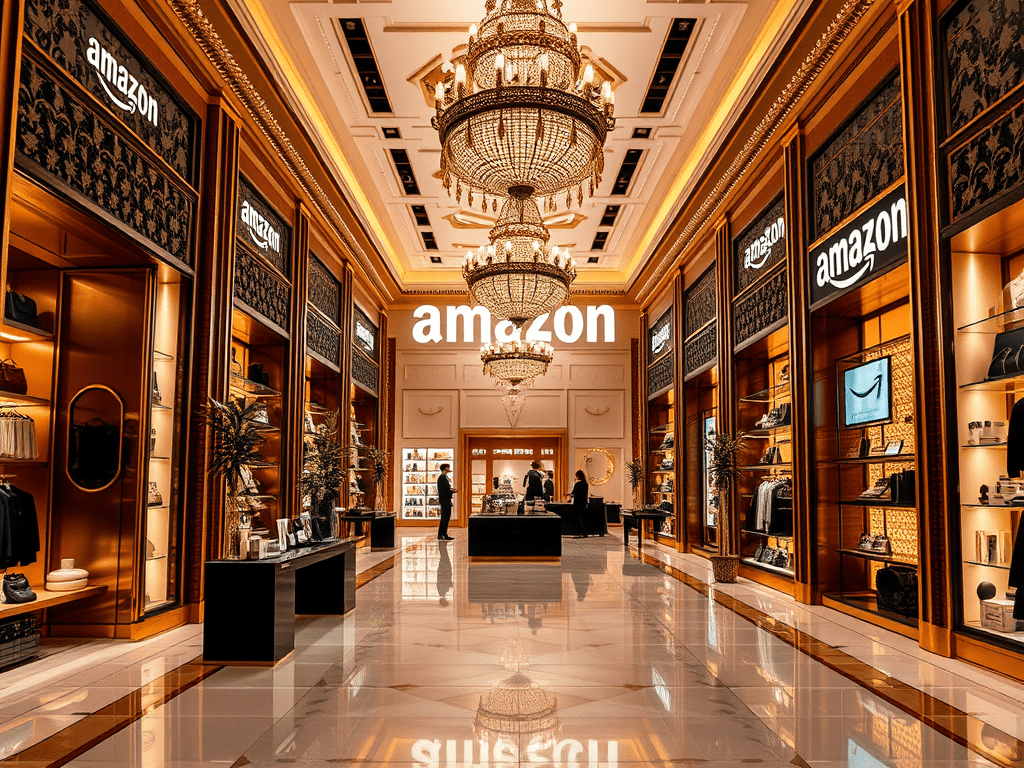
Saks x Amazon Is Over — And It Exposes the Structural Crisis of Luxury Retail

Two weeks after my analysis of luxury retail at a crossroads, the “Saks on Amazon” experiment is being wound down. The outcome isn’t just a setback for one partnership — it’s a signal about what’s breaking (and what must change) in luxury retail’s operating model.

Related (published Jan 5, 2026): Luxury retail in the U.S. at a crossroads — beyond the Saks Global crisis


What happened: a partnership that never achieved escape velocity

The “Saks on Amazon” storefront was supposed to be a proof point: a premium department-store curator leveraging a digital giant’s reach, logistics, and personalization engine to accelerate luxury e-commerce adoption. Instead, it became a case study in how difficult luxury is to scale on a generalist marketplace.

According to reporting shared with employees, the storefront saw limited participation from brands and failed to deliver the traction needed to justify the operational and reputational complexity. The parent company is now winding down the storefront to refocus attention on its own channels — in plain terms, to drive traffic back to its own ecosystem and concentrate scarce executive bandwidth where it matters most.

Context matters: the wind-down comes as the company is restructuring, trimming non-core operations, and rethinking how much complexity it can carry while it stabilizes vendor relationships, cash flow, and customer demand.

This isn’t a “digital is dead” story. It’s a “luxury distribution is a governance problem” story — and the partnership made that governance problem visible.


Why this matters beyond the headline

Luxury retail has always balanced two competing imperatives:

  • Growth (new customers, new categories, new geographies, more transactions)
  • Control (brand narrative, scarcity, pricing integrity, service choreography)

In strong cycles, luxury can “have both” — because demand is robust enough to tolerate distribution imperfections. In weak or volatile cycles, the trade-off becomes brutal: every additional channel adds operational cost, increases pricing pressure, expands return rates, and weakens the brand’s ability to create a coherent client experience.

The end of this partnership is a symptom of that broader reality: luxury retail is recalibrating from expansion to consolidation — pruning channels that dilute unit economics or brand equity, especially when liquidity is tight and vendor confidence is fragile.


The “Amazon + luxury” paradox: scale vs. scarcity

Amazon’s value proposition is built on convenience, breadth, price transparency, and frictionless fulfillment. Luxury’s value proposition is built on the opposite: controlled distribution, brand theater, scarcity cues, and a service model that makes the customer feel known.

That doesn’t mean luxury can’t sell online — it obviously can. It means luxury online requires a different operating system:

1) Brand governance is the product

In luxury, the “store” isn’t just a shelf; it’s a stage. The visual hierarchy, editorial tone, packaging, authentication assurances, and the post-purchase relationship are part of what the customer is buying. Marketplaces struggle here because:

  • They optimize for conversion efficiency, not brand choreography.
  • They compress brands into a standardized interface (which is exactly what luxury brands resist).
  • They introduce adjacency risk: premium items appear one scroll away from mass-market products.

2) Scarcity and discount discipline are strategic assets

Luxury brands obsess over controlling discounting, third-party resellers, and grey-market leakage. In a marketplace environment, even if the luxury storefront is curated, the broader platform trains customers to compare, hunt, and wait for deals.

That creates a structural tension: luxury wants “confidence,” marketplaces create “optionalities.”

3) Trust is fragile — and it’s everything

For luxury buyers, trust is not just “will it arrive?” It’s:

  • Is it authentic?
  • Is it handled properly?
  • Will the return/refund experience be premium?
  • Will I be treated like a client, not an order number?

Amazon has invested heavily in trust mechanisms across categories, but luxury has an unusually high “trust bar.” Even one reputational scare can have a disproportionate impact on brand participation.

4) Luxury needs data ownership, not just data access

Luxury has shifted from transactions to relationships. The growth flywheel depends on building a client book: preferences, events, service history, and high-touch outreach. When luxury sells through a third-party, it risks becoming a “supplier” instead of a “relationship owner.”

This is why many luxury brands favor models that preserve identity and customer ownership: controlled wholesale, concessions, and first-party e-commerce — even if reach is smaller.


Saks’ real priority: rebuild the core, protect liquidity, restore partner trust

Partnerships are rarely wound down because leadership suddenly “stops believing” in the idea. They’re wound down because trade-offs become impossible to justify under constraint.

In a restructuring context, there are three priorities that dominate decision-making:

1) Liquidity and operational focus

When you’re stabilizing a complex retail group, every extra channel adds cost and distraction: integration work, merchandising alignment, inventory planning, customer service, returns, marketing, and analytics. If the channel isn’t producing meaningful incremental value, it becomes a liability.

2) Vendor confidence and supply continuity

Luxury retail runs on vendor trust. Brands need to believe they will be paid, that inventory will be protected, and that pricing discipline will be maintained. During turbulence, retailers often over-communicate stability and reduce anything that could be interpreted as loss of control.

3) Rebuilding traffic to owned channels

For a department-store model, margin survival increasingly depends on shifting customers to the highest-margin pathways: owned e-commerce, app, loyalty/member experiences, private clienteling, and events. If traffic is redirected to a third-party storefront, the retailer risks paying “rent” in the form of platform economics and reduced ability to build lifetime value.

Strategically, the move signals a pivot: simplify the ecosystem, concentrate on cash-generating operations, and rebuild the brand’s ability to drive full-price demand — without external dependencies that dilute identity.


What it tells us about the crisis of luxury retail

Luxury retail’s crisis is not one thing. It’s a stack of compounding pressures — many of them structural, not cyclical.

1) The “aspirational luxury” squeeze

The middle of the luxury market is under the most pressure. Ultra-high-end clients remain resilient, but aspirational customers (who used to stretch for a purchase) are more cautious. That shifts the category from “growth + pricing power” to “selective demand + promotional gravity.”

When that happens, the weakest part of the value chain gets exposed: multi-brand retailers carrying heavy fixed costs, with inventory risk, and limited ability to enforce full-price integrity across brands.

2) Inventory and markdown economics are redefining winners

Multi-brand retailers are essentially portfolio managers of inventory — and inventory volatility is brutal in slow demand cycles. Mis-forecasting turns into markdowns; markdowns train customers; trained customers wait; and the spiral worsens.

Off-price can help clear inventory, but it can also become a “shadow channel” that erodes full-price perception. The recent industry trend is telling: outlets and off-price are being reframed as liquidation tools, not growth engines.

3) Department stores are fighting a two-front war

They’re being squeezed by:

  • Brands going direct (DTC and brand-controlled e-commerce)
  • Platform economics (marketplaces and paid acquisition costs)

In other words, department stores are losing unique access to brands and losing cost advantage in customer acquisition at the same time.

4) Omnichannel has become expensive — and unforgiving

The promise of omnichannel was convenience. The hidden reality is cost: ship-from-store complexity, returns, reverse logistics, fraud, customer support, and inventory accuracy. In luxury, expectations are higher (packaging, speed, white-glove service), which pushes cost even further up.

When sales soften, those costs do not soften proportionally — and the model breaks faster than executives expect.

5) Luxury is redefining what “premium experience” means

Luxury used to be anchored in physical experience: flagship stores, personal shoppers, salons, events. Today, “premium” must also exist digitally:

  • Editorial storytelling that feels like a magazine, not a catalog
  • Clienteling that feels personal, not automated
  • Service recovery that is proactive, not policy-driven

That bar is difficult to hit on generalized platforms — and difficult for legacy retailers with fragmented tech stacks and tight budgets.


Who wins next: the models that are compounding advantages

The next cycle will reward luxury retail models that can combine:

  • Brand control (assortment, pricing integrity, narrative)
  • Client ownership (data, relationships, repeat behavior)
  • Operational discipline (inventory accuracy, returns control, cash efficiency)
  • Experience differentiation (service choreography, trust, exclusivity cues)

Three models are emerging as structurally advantaged:

Model A — Brand-controlled ecosystems (DTC + curated wholesale)

Brands that tightly manage distribution can protect pricing and invest in service experiences that build lifetime value. Wholesale becomes selective and strategic — supporting discovery and reach without surrendering governance.

Model B — Curated multi-brand platforms with strong governance

Multi-brand can still win — but only with strict discipline: authenticated supply chains, clear differentiation, and a “taste” proposition that brands respect. This model looks less like “infinite shelf” and more like “editorial curation + service excellence.”

Model C — High-touch physical retail as a relationship engine

Stores that function as clienteling hubs (appointments, styling, repairs, events) are less exposed to pure transaction volatility. The store becomes the relationship engine, and digital becomes the continuity layer.

Where does the Saks–Amazon experiment fit? It was trying to blend Model B and marketplace scale — but the governance burden, brand hesitation, and economics appear to have prevented it from compounding.


A practical playbook for luxury retailers and brands in 2026

If you’re leading strategy, digital, or merchandising in luxury retail right now, here are practical moves that map to what we’re seeing:

1) Choose fewer channels — and execute them exceptionally well

Channel sprawl is a silent killer. Every channel requires:

  • Assortment strategy
  • Inventory policy
  • Pricing governance
  • Service standards
  • Marketing investment

When resources are tight, “more channels” almost always means “more mediocrity.” The winning move is ruthless prioritization.

2) Treat trust as an operational KPI, not a marketing claim

Luxury trust is built through operational rigor:

  • Authentication and chain-of-custody discipline
  • Packaging standards
  • Returns/refunds speed and fairness
  • Proactive service recovery

If you can’t guarantee those consistently on a channel, don’t scale that channel.

3) Re-architect inventory around demand signals, not seasonal hope

Luxury retail is moving from “seasonal bulk bets” to “signal-driven replenishment.” This requires tighter integration between:

  • Merch planning
  • Digital demand analytics
  • Store-level sell-through visibility
  • Vendor collaboration

4) Make clienteling measurable

Clienteling can’t remain “art only.” It needs a measurable operating model:

  • Client book health (coverage, recency, segmentation)
  • Appointment-to-purchase conversion
  • Event ROI and retention lift
  • Repeat rate and category expansion

5) Turn off-price into a controlled release valve

Off-price should exist — but as a controlled release valve, not a parallel growth engine. The goal is to clear inventory without training your core client to wait for discounts.

6) Build partnership structures that preserve governance

Partnerships can still work — but the contract must be explicit about governance:

  • Brand presentation standards
  • Data rights and customer relationship rules
  • Pricing and promotion policies
  • Return policies and service SLAs

If those aren’t enforceable, the partnership becomes a brand liability.


Closing thought: luxury’s next cycle will be earned, not assumed

The end of the Saks–Amazon partnership is not a verdict on either company’s talent or ambition. It’s a reminder that luxury retail has become structurally harder:

  • Demand is more selective.
  • Customer acquisition is more expensive.
  • Omnichannel operations are costlier than spreadsheets suggest.
  • Brands are more protective of distribution than ever.

In that environment, experiments that add complexity without compounding trust and margin will be pruned quickly.

The question for 2026 is simple: will luxury retail be rebuilt around fewer, stronger, governed ecosystems — or will it keep chasing scale in environments that inherently dilute the luxury proposition?

I’ll continue to connect the dots as this restructuring evolves and as we see which luxury retail operating models are proving resilient.


Key takeaways (for skim readers)

  • Luxury doesn’t scale like commodity e-commerce. Governance and trust are the product.
  • Marketplaces create brand adjacency and pricing psychology risks that luxury brands resist.
  • In a restructuring cycle, focus wins. Channels that don’t drive meaningful incremental value get cut.
  • The winners will be governed ecosystems that combine client ownership, operational discipline, and experience differentiation.