When Politics Breaks the Airport: The DHS Shutdown, Unpaid TSA Workers, and the Dangerous Normalization of Travel Chaos

Over the past several weeks, the United States has once again offered the world a strikingly self-inflicted lesson in institutional fragility. What should have been a routine spring travel period turned into a vivid demonstration of how quickly a modern transport system can unravel when political actors treat critical public infrastructure as leverage rather than as a national obligation. The Department of Homeland Security shutdown, and the resulting decision to leave Transportation Security Administration personnel unpaid, has done far more than generate operational inconvenience. It has exposed a deep structural weakness in the American model of governance, a dangerous tolerance for dysfunction, and an alarming willingness on both sides of the political aisle to instrumentalize frontline workers and traveling citizens in a broader partisan confrontation.

This is not merely a story about airport lines. It is a story about governance credibility, labor dignity, operational resilience, and the basic obligations of a serious economy. Airports are not symbolic assets. They are part of the country’s commercial bloodstream. When airport security becomes unstable, the consequences cascade quickly: passenger delays, missed connections, operational disruption for airlines, reputational damage for airports, financial hardship for workers, and reduced confidence in the reliability of the national transport system. To allow that instability to fester for political signaling is not strategy. It is negligence.

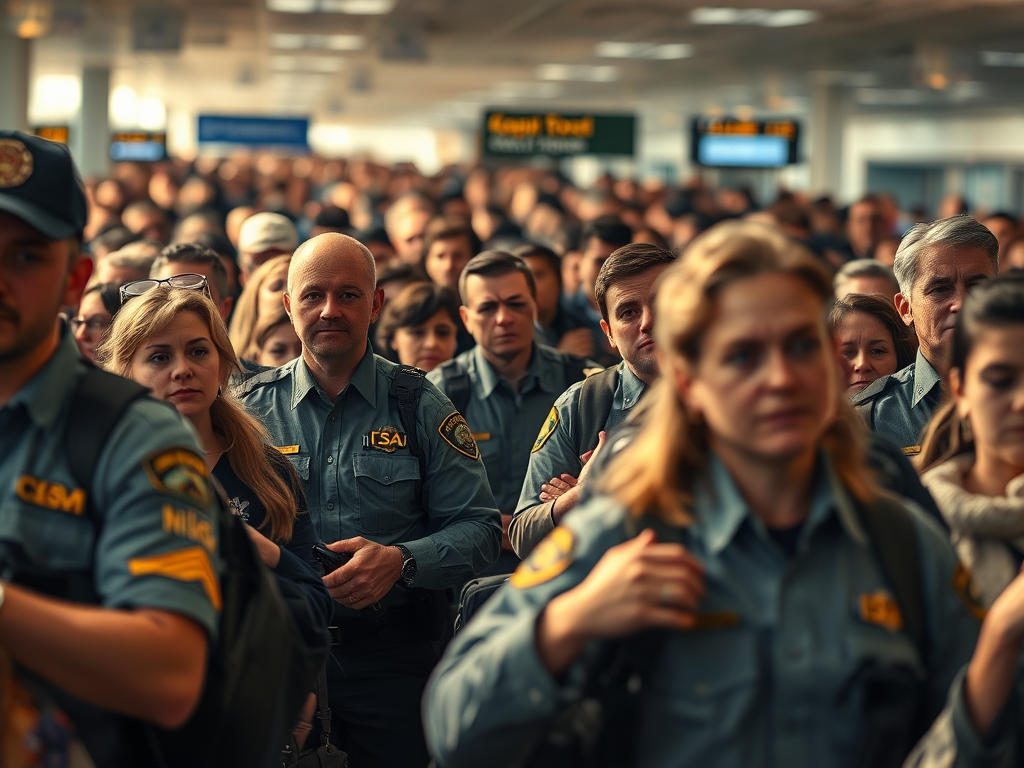
What has made this episode especially troubling is that the dysfunction was not hidden. It was visible, measurable, and entirely predictable. TSA officers were asked to continue reporting to work without pay. Attrition rose. Call-outs surged. Passenger wait times expanded dramatically in several major airports. Smaller airports began to look particularly vulnerable. Meanwhile, elected leaders continued treating the standoff as a contest of narrative positioning rather than as an urgent operational crisis requiring immediate resolution.

In that context, one of the more striking reactions came not from Washington, but from the airline industry itself. Delta Air Lines, under Ed Bastian’s leadership, chose to suspend special travel services previously extended to members of Congress. That decision mattered far beyond its immediate operational scope. It represented an unusually clear corporate statement: if lawmakers are prepared to tolerate disruption for everyone else, they should not expect to be insulated from its consequences. It was a rare example of executive accountability being asserted from outside government, and it resonated because it reflected a principle many travelers and workers already understood intuitively: privilege cannot continue uninterrupted while the system supporting ordinary passengers is being starved.

The Real Problem Was Never Just the Shutdown Itself

Government shutdowns in the United States have become so recurrent that they are often discussed as if they were unfortunate but normal features of the political landscape. That normalization is itself part of the problem. A shutdown affecting the Department of Homeland Security is not a routine budget event. It strikes directly at airport security, border operations, emergency preparedness, and the infrastructure of domestic mobility. Treating that as just another round in Washington’s procedural warfare fundamentally misunderstands the economic and operational centrality of DHS functions.

The TSA sits at the very heart of that exposure. Commercial aviation cannot operate at scale without reliable, adequately staffed, professionally managed checkpoint operations. Airlines can adjust schedules, airports can reconfigure passenger flows, and travelers can be urged to arrive earlier, but these are coping mechanisms, not solutions. The actual dependency remains the same: without enough trained people at checkpoints, the entire system begins to fail in ways that are highly visible and quickly contagious.

That is what made the decision to leave TSA officers unpaid so indefensible. Security personnel are not optional labor. They are essential workers whose presence underpins the legal, operational, and psychological viability of air travel. Asking them to absorb prolonged financial hardship while simultaneously expecting flawless performance under public pressure is not only unfair; it is strategically absurd. No serious executive would design a workforce model this way. Yet that is effectively what the political system imposed on one of the country’s most visible frontline workforces.

Even more troubling, the consequences were foreseeable. Anyone with a basic understanding of labor economics and airport operations could have predicted rising absenteeism, resignations, morale collapse, and degraded passenger experience. Once employees miss paychecks, especially in a profession not characterized by extraordinary compensation, the impact is immediate. Rent, childcare, transportation, food, and debt obligations do not pause for political theater. When those workers begin stepping away from the checkpoint, the system does not fail abstractly. It fails in public, in real time, with thousands of witnesses and millions of dollars of downstream cost.

The Human Cost Was the First Failure

The first and most important point is often the one most quickly lost in institutional debates: unpaid TSA personnel were not a talking point. They were people. They were workers expected to continue ensuring the functioning of a national security and transport interface while their own financial stability deteriorated. That arrangement is morally questionable and operationally reckless.

There is a persistent tendency in U.S. political life to speak about essential workers in heroic language while managing them through disposable assumptions. The rhetoric emphasizes service, sacrifice, and patriotism. The lived reality, too often, is delayed pay, public abuse, rising stress, and indifference from decision-makers until the disruption becomes impossible to ignore. This latest shutdown fit that pattern perfectly.

For TSA officers, the issue was not only the absence of pay. It was the message encoded in that absence. It signaled that their labor was indispensable enough to be demanded but not respected enough to be protected. It told them that the system could continue asking for discipline, professionalism, and public-facing performance even while failing its most basic reciprocal obligation. Once a workforce internalizes that message, the damage exceeds the immediate crisis. Retention worsens. recruitment becomes harder. Cynicism deepens. Institutional trust erodes.

That is why this episode should concern anyone thinking beyond the next news cycle. Essential workforces cannot be sustainably managed through episodic coercion. If the United States wants resilient airport security, it needs a labor compact that reflects reality rather than convenience. Security cannot be treated as mission-critical one day and fiscally expendable the next. Workers notice the contradiction, and so does the market.

The Passenger Experience Was the Most Visible Symptom

Travelers experienced the shutdown not through budget language, but through chaos. Longer lines, uncertainty at checkpoints, airport advisories urging earlier arrival times, and growing anxiety about whether routine travel could still be relied upon all became part of the passenger experience. For business travelers, that meant lost time, reduced productivity, and greater trip friction. For leisure travelers, especially families traveling during spring break periods, it meant added stress and a diminished sense of control. For airlines and airports, it meant operational noise injected into an already complex system.

The modern air travel chain is a tightly coordinated sequence. Schedule integrity, staffing models, baggage processing, gate management, customer service, crew legality, aircraft rotations, and connection flows are all interconnected. Security checkpoints are one of the most visible and least flexible parts of that chain. Once they become unstable, every downstream actor inherits the disruption. Planes may still depart, but the customer journey deteriorates sharply, and the reputational damage spreads far beyond the original cause.

This is where the political discourse often becomes disingenuous. Policymakers tend to describe such episodes as temporary inconvenience. That language systematically understates the cumulative cost. A major airport delay is not a minor consumer annoyance. It can mean missed client meetings, disrupted family events, additional hotel costs, missed cruise departures, lost onward international connections, and reduced confidence in domestic travel planning. In aggregate, these consequences carry real economic weight.

There is also a broader demand effect. When travelers perceive the system as unreliable, some discretionary trips are delayed or canceled. Corporate travel managers build in larger buffers. Travelers shift behavior toward perceived lower-risk options. The result is not a collapse in aviation demand overnight, but a reduction in system efficiency and customer confidence that weakens overall travel performance.

The Business Consequences Extended Far Beyond the Checkpoint

One of the persistent weaknesses in public debate around shutdowns is the failure to discuss them in management terms. If a private company knowingly deprived a mission-critical frontline workforce of pay, accepted rising absenteeism, watched service quality deteriorate, and then insisted that the customer impact was manageable, markets would punish it brutally. Yet in government, the same pattern is often framed as normal bargaining friction.

For airlines, the shutdown imposed real costs. Operational planning had to adjust around uncertain checkpoint throughput. Customer service teams had to absorb frustration for a problem they did not create. Irregular operations risk increased as travelers missed check-in windows or arrived at gates late. Brand perception became exposed to an externality outside airline control. Even when carriers were not directly responsible, they still occupied the front line of customer disappointment.

Airports faced similar pressure. Airport operators can optimize queue management, revise signage, increase communication, and coordinate with carriers, but they cannot replace federal security staffing. That makes them highly exposed to the reputational consequences of a system they do not fully control. In practical terms, passengers do not always distinguish between airline failure, airport failure, and government failure. They remember only that their travel day went badly.

The wider travel ecosystem also absorbs the shock. Hotels see more distressed arrivals and no-shows. ground transportation providers must cope with fluctuating demand peaks. Meeting schedules are disrupted. Event attendance becomes less reliable. Corporate travel budgets absorb hidden inefficiencies. The notion that a DHS shutdown is somehow compartmentalized within Washington finance politics is simply false. It is transmitted directly into the real economy.

There is also a serious competitiveness issue. The United States already presents a paradox in travel: it remains one of the world’s most important aviation markets, but the traveler experience often suffers from aging infrastructure, fragmented operational ownership, and avoidable policy volatility. Each episode like this reinforces a perception of unreliability. For a country that depends heavily on business mobility, tourism, and global connectivity, that is not a trivial reputational problem.

The Weaponization of Essential Services by Both Parties Is Unacceptable

The most uncomfortable but necessary conclusion is that both Republicans and Democrats deserve criticism for allowing this situation to become a mechanism of leverage. The exact legislative arguments differ. The rhetorical framing differs. The constituency management differs. But the operational outcome was the same: essential airport security personnel were left in the middle of a partisan struggle, and travelers became collateral damage.

Republicans cannot credibly position themselves as champions of order, security, and economic normalcy while tolerating a prolonged state in which airport security workers go unpaid and checkpoint performance deteriorates. If an issue is truly critical to public safety and economic continuity, it should be funded and insulated with urgency. To do otherwise is to turn one’s own stated priorities into bargaining chips.

Democrats, meanwhile, cannot credibly claim to defend workers while accepting a strategy that leaves frontline federal personnel without pay in the name of broader policy objectives. Even when the underlying substantive disagreements may be serious, the chosen mechanism matters. Once the tactic involves prolonged harm to essential workers and public-facing disruption, it becomes difficult to maintain the moral high ground.

This is where the political class often loses touch with institutional responsibility. There is a difference between taking a hard negotiating position and weaponizing the functioning of basic national systems. Airport security, like air traffic management, emergency response, or core public health operations, should sit on the protected side of that line. Once both parties become comfortable crossing it, the country drifts into a permanently unstable operating model where essential continuity depends on political mood rather than governance discipline.

That is not democratic toughness. It is institutional immaturity.

Why Ed Bastian and Delta Got This Mostly Right

Against that backdrop, Delta’s decision to suspend special services for members of Congress stood out because it carried symbolic precision. It did not amount to grandstanding without cost. It connected the privileges of political decision-makers to the consequences of the crisis they had allowed to continue. That linkage matters.

Ed Bastian has often positioned himself not only as the leader of a major airline, but as an executive willing to speak directly about system-level issues affecting travel. In this case, Delta’s response did something rare in corporate America: it moved beyond generic statements of concern and imposed a modest but meaningful accountability mechanism on a political class that is often insulated from the operational pain it creates.

The decision was strategically smart for several reasons. First, it aligned Delta with public frustration and worker reality rather than elite privilege. Second, it reinforced the airline’s brand as one prepared to defend operational integrity. Third, it signaled that travel companies need not quietly absorb political dysfunction while continuing to facilitate special treatment for the very people enabling it.

Importantly, this was not an anti-government gesture. It was a pro-accountability one. Members of Congress were not denied travel. They were simply told, in effect, that while frontline workers and ordinary passengers were enduring the consequences of Washington’s failure, they would no longer enjoy a parallel universe of convenience. That is an entirely defensible position.

More airline leaders should be willing to articulate similar clarity. The industry has every right to demand that essential aviation and security functions be protected from future shutdown politics. When airlines are expected to maintain reliability while the federal government undermines one of the foundations of that reliability, silence becomes a form of passive acceptance.

The Industry Response Showed a More Serious Understanding of Risk Than Washington Did

One of the more revealing aspects of this episode was that airline executives often appeared to understand the stakes more clearly than elected officials. From an airline management perspective, the situation was obviously untenable. A critical operational dependency was degrading in real time. Customer trust was at risk. Airport throughput was becoming uncertain. Media narratives were shifting from inconvenience to institutional breakdown. Any competent executive reading those signals would escalate immediately.

That is precisely why the response from aviation leaders carried weight. Their message was not ideological. It was operational. Pay the workers. End the standoff. Stop turning airport security into a political football. That is not partisan analysis. It is business realism.

The contrast with Washington was stark. Too many political actors behaved as though the crisis remained abstract until complete airport paralysis occurred. That is a remarkably poor threshold for action. Good management intervenes before the full-blown failure state. It does not wait until the queue is wrapping through terminals and public confidence is visibly cracking.

This difference in posture should be studied carefully. It suggests that industry leaders, despite their own incentives and limitations, may now be more attuned than policymakers to the fragility of the travel system. That is not necessarily because they are more virtuous. It is because they are closer to the real operating consequences. They see how thin the margin can become between a strained system and a broken one.

The Substitution Logic Was a Warning Sign

One of the more disturbing dimensions of the crisis was the apparent comfort with stopgap substitution logic: if enough TSA workers are absent, perhaps other federal personnel can be deployed to fill pieces of the gap. Whatever tactical rationale may be offered in the moment, that instinct should worry anyone concerned with institutional integrity.

Modern security systems depend not only on bodies in space, but on training, role clarity, procedural rigor, and professional legitimacy. The idea that one can casually patch over a security workforce crisis through improvised redeployment reflects a dangerously shallow understanding of operational specialization. It also sends a damaging signal to the affected workforce: your expertise is treated as interchangeable right up until it is urgently needed.

Even if temporary support measures are operationally necessary in a crisis, they do not solve the underlying problem. They merely mask it. And when masking becomes politically convenient, resolution gets delayed. That is exactly what should not happen in a function as visible and consequential as airport security.

The deeper lesson is simple: resilience is not the same as improvisation. A resilient system has protected funding, credible staffing pipelines, strong retention, and clear continuity protocols. An improvisational system lurches from crisis to workaround and congratulates itself for not completely collapsing. The United States should aspire to the former, but too often settles for the latter.

What This Reveals About the American State Capacity Problem

This travel disruption is not an isolated policy embarrassment. It is one expression of a broader state capacity problem. The U.S. remains capable of enormous scale, extraordinary innovation, and deep institutional reach. Yet it repeatedly demonstrates an inability to protect core functions from predictable political self-sabotage. That contradiction is increasingly central to the lived experience of citizens and businesses alike.

In practical terms, state capacity is not measured by the number of agencies or the volume of public spending. It is measured by whether a system can perform essential functions reliably under pressure. Can it keep airports functioning during a political dispute? Can it protect frontline workers from becoming bargaining instruments? Can it sustain public confidence in basic continuity? During this episode, the answer was plainly unsatisfactory.

This matters for more than travel. Once a government repeatedly shows that essential functions may be destabilized by partisan brinkmanship, every dependent sector begins pricing in dysfunction. Companies build workarounds. Citizens lower expectations. Workers disengage. The long-term result is not merely frustration. It is a decline in institutional ambition. People stop expecting competence and start optimizing around its absence.

That is one of the most corrosive effects of repeated shutdown politics. It teaches society to normalize poor governance rather than to demand better governance. And in sectors like travel, where coordination and trust are foundational, that normalization carries significant economic and reputational cost.

What a Serious Reform Agenda Would Look Like

If policymakers and industry leaders genuinely want to learn from this episode, the response cannot be limited to reopening government and moving on. The system needs structural reform that prevents essential travel security from being used this way again.

First, compensation continuity for essential security personnel should be automatic. No TSA officer, air traffic-related employee, or similarly critical operational worker should ever face unpaid status because of a congressional impasse. The legal and fiscal architecture should make that impossible.

Second, DHS operational continuity rules should be tightened for travel-critical functions. If the country accepts that aviation security is indispensable, then its funding protection should reflect that status. Essentiality must mean more than rhetorical importance.

Third, Congress should face stronger direct consequences when it allows these disruptions to continue. Delta’s symbolic move was effective precisely because it touched comfort and privilege. Institutional reform should explore similar logic more formally. If lawmakers can permit system failure while remaining insulated from it, incentives remain badly misaligned.

Fourth, the aviation industry should use this moment to push for a broader resilience compact with government. Airlines, airports, airport labor representatives, and federal agencies should define clearer escalation protocols and public transparency standards for security staffing crises. Better foresight will not eliminate political dysfunction, but it can reduce the degree to which passengers and workers are left in the dark.

Finally, public debate must become more adult. It is possible to hold strong positions on immigration, border enforcement, labor rights, or executive power without taking airport security workers hostage in the process. A mature political system knows how to separate substantive conflict from operational destruction. The U.S. political class too often behaves as though it does not.

The Bigger Strategic Lesson for Business Leaders

There is also a broader lesson here for private-sector executives far beyond aviation. The DHS shutdown demonstrates that political risk in the United States can no longer be treated as a distant regulatory variable. It now has immediate operating consequences in customer experience, workforce stability, logistics, and reputation. That means leaders in travel, hospitality, retail, events, and any business dependent on mobility must upgrade how they think about public-sector fragility.

In the past, many companies assumed that basic federal continuity would hold even amid partisan noise. That assumption is becoming harder to defend. Strategic planning now requires more explicit consideration of how political deadlock can impair frontline national infrastructure. This is not merely a public affairs issue. It is an enterprise resilience issue.

Executives should also recognize that moments like this create leadership tests. Customers, employees, and investors notice whether companies remain passive, issue bland statements, or speak with clarity. Delta’s move gained attention precisely because it reflected a clear point of view. In a period when institutions increasingly blur responsibility, there is reputational value in identifying where accountability actually belongs.

That does not mean every company should become performatively political. It means they should be willing to defend the operational and ethical foundations of their industries. For airlines, that includes insisting that airport security workers are paid. For hospitality companies, it may mean speaking about the economic consequences of transport instability. For business leaders more generally, it means understanding that silence is not always neutrality. Sometimes it is acquiescence to dysfunction.

Conclusion: The Airport Is a Mirror of the State

Airports are one of the clearest mirrors of state effectiveness. They are where policy, labor, infrastructure, security, technology, and public expectation meet in a highly compressed environment. When that system runs well, it signals competence. When it begins to crack under avoidable political pressure, it signals something more troubling: that the country is losing the ability to protect core functions from self-inflicted disruption.

The DHS shutdown and the unpaid status imposed on TSA workers were not just unfortunate byproducts of legislative disagreement. They were evidence of a deeper governance failure. Both Republicans and Democrats allowed essential personnel and ordinary travelers to become leverage points in a broader political contest. That is unacceptable on ethical grounds, indefensible on operational grounds, and costly on economic grounds.

At the same time, this episode also clarified where some of the stronger leadership came from. Airline executives, and particularly Ed Bastian, showed a greater willingness than many elected officials to name the absurdity of the situation and respond in a way that connected privilege to accountability. Suspending congressional perks did not solve the shutdown, but it made an important point: those who create public dysfunction should not be buffered from experiencing any of it.

The United States cannot continue managing essential travel infrastructure through a combination of worker sacrifice, passenger frustration, and political indifference. A serious country does not leave airport security officers unpaid while pretending the damage is temporary. A serious political class does not weaponize national mobility systems in pursuit of narrative advantage. And a serious reform agenda does not merely reopen the government; it ensures that the same failure cannot be repeated so easily.

The real issue is not whether this shutdown will eventually end. It will. The real issue is whether the country learns anything durable from it. If the answer is no, then the next crisis is already in preparation, and the next airport line is simply waiting for its turn.

Key Takeaways

  • The DHS shutdown turned airport security into a public example of governance failure, not merely a budget dispute.
  • Leaving TSA officers unpaid was both ethically indefensible and operationally reckless.
  • Travel disruption rapidly spread beyond checkpoints into airline operations, airport reputation, business travel efficiency, and the broader travel economy.
  • Both Republicans and Democrats bear responsibility for weaponizing essential public services as leverage.
  • Delta and Ed Bastian were right to suspend special congressional travel services and make accountability more tangible.
  • The deeper issue is state capacity: a serious economy cannot repeatedly allow critical mobility infrastructure to be destabilized by partisan brinkmanship.
  • The long-term answer is structural reform, including automatic pay continuity for essential aviation-security personnel and stronger protections for travel-critical operations.
Iran’s Shockwave Through the Sky: How the New Middle East Conflict Is Repricing Airline Risk and Rewiring Oil Markets

The escalation of the Iran conflict has quickly become more than a regional geopolitical crisis. It is now a stress test for two industries that are structurally intertwined: aviation and energy. Airlines run on oil, global trade depends on stable air corridors, and investor confidence in both sectors is built on one fundamental assumption — that major chokepoints in energy and airspace will remain open enough for the system to function. That assumption has been badly shaken over the past days.

The market reaction has been swift and brutal. Brent crude surged sharply, airline equities sold off across regions, and the financial logic is straightforward: when oil spikes, jet fuel tends to move even more aggressively; when airspace closes, routes lengthen; when both happen at once, airline unit economics deteriorate fast.

For the airline sector, this is not a single-variable shock. It is a compound disruption. Carriers are simultaneously facing higher fuel costs, longer routings, sudden capacity dislocations, flight suspensions across multiple destinations, and a likely demand response if fares remain elevated. For oil markets, the conflict revives the oldest fear in the book: the risk that instability around Iran turns the Strait of Hormuz from a geopolitical concern into a sustained supply bottleneck.

What makes this moment particularly significant is that it collides with an industry narrative that had been relatively constructive going into 2026. Airlines had been expecting a more benign fuel environment this year. That outlook has now been abruptly challenged. The industry entered 2026 expecting some relief; instead, it may be walking into another margin squeeze.

Aviation’s Immediate Problem: Fuel Cost Inflation Arrives Faster Than Revenue Can Adjust

Fuel is not the largest cost line for every airline anymore, but it remains one of the most volatile and strategically dangerous. Airline planning, guidance, route economics, and pricing strategies were built on a relatively manageable cost environment. A sudden oil shock destabilizes all of that at once.

And the pass-through is not immediate. Many airlines sold their tickets weeks or months ago, meaning the current surge in fuel costs cannot simply be billed back to customers overnight. This is why even a short-lived spike can distort quarterly results.

This is also why airline stocks reacted so violently. Investors are discounting the near-term reality that costs rise instantly while pricing catches up only gradually. That gap compresses margins. It also explains why markets punished carriers in different geographies at once: the exposure is global, not local.

In normal market conditions, airlines can offset part of this pressure through yield management, ancillary revenues, or network optimization. But a geopolitical airspace shock is different. It hits the cost base and the network simultaneously. Airlines are not just paying more for fuel; they are burning more of it.

Airspace Disruption Changes the Entire Network Equation

The conflict has also reminded the market how dependent long-haul aviation remains on stable overflight rights and predictable corridor access. As safety agencies and airlines adjust their operating recommendations, the practical result is the same: disruption becomes institutionalized for carriers serving Europe-Asia, Gulf long-haul flows, and several Middle Eastern destinations.

This is no longer a localized operational inconvenience. It is a broad network event. Airlines have been forced to reroute flights, carry extra fuel, and in some cases make additional refuelling stops to preserve resilience in case of sudden diversions. Each one of these measures increases cost, complexity, and schedule fragility.

The impact is especially acute because Gulf carriers are not niche players in the global aviation system. They represent a major share of traffic flows between Europe and Asia, as well as Europe and Oceania. When those connectors are disrupted, the shock ripples through the entire long-haul ecosystem, not just the Middle East.

Airlines across the world have already begun adjusting their schedules. Suspensions and cancellations have affected routes to and from multiple cities across the region. This breadth matters. It shows that the conflict is not just suppressing one or two routes; it is fracturing a commercially critical geography.

Why Long-Haul Airlines Are Especially Exposed

The current crisis is asymmetric. Not every carrier is equally vulnerable. Short-haul domestic operators in more protected fuel environments will feel the pain, but airlines with large long-haul exposure between Europe, Asia, and Oceania are on the front line. Their business models depend heavily on efficient routing, reliable widebody utilization, and premium traffic flows that do not respond well to operational uncertainty.

Longer routes also mean more than extra fuel. They can reduce aircraft productivity, disrupt crew legality windows, increase maintenance strain, and complicate recovery after even small delays. A routing extension on one sector can cascade into missed onward connections, aircraft mispositioning, and soft product degradation.

In premium aviation, those operational consequences can be as damaging to brand equity as the direct cost impact. This is precisely why network shocks of this type tend to show up not only in financial results, but also in customer sentiment.

There is also a demand-side risk. When airfares spike sharply because of scarcity and disruption, some leisure demand disappears and some corporate demand is deferred or more tightly controlled. If disruption persists, this could weigh on travel demand for much of 2026.

The Hedge Divide: Some Airlines Are Better Protected Than Others

One of the most important fault lines exposed by the crisis is the divergence in airline fuel hedging strategy. Some U.S. airlines have largely abandoned hedging over the past two decades, while a number of major Asian and European carriers still maintain meaningful protection. In a low or declining fuel environment, not hedging can look smart. In a geopolitical spike, it leaves airlines fully exposed to spot-market pain.

This is where treasury discipline suddenly becomes strategic. Airlines with stronger hedge positions are not immune to the crisis, but they are often better protected from the first wave of commodity shock. That buys time, protects short-term guidance, and gives management more room to respond operationally.

That said, hedging is not a universal shield. If the conflict persists long enough, airlines eventually roll into higher market levels. Hedges buy time more than immunity. They smooth the first wave; they do not neutralize a structurally higher fuel regime.

As a result, even better-protected carriers may still revise guidance, moderate capacity growth, or reprice aggressively if disruption lasts beyond the near term. The issue is not whether airlines can survive a short shock, but whether they are built to operate in a more volatile and politically fragmented world.

Oil Markets: Why Iran Still Matters Disproportionately

The reason markets react so violently to conflict involving Iran is not only about Iran’s own barrels. It is about geography. The Strait of Hormuz remains one of the most consequential energy chokepoints in the world. A large share of global seaborne oil trade and a meaningful share of LNG flows transit through that corridor.

That means the market is not merely pricing today’s lost barrels. It is pricing the risk to the corridor itself. Even if total supply destruction proves smaller than feared, the embedded risk premium can remain substantial as long as traders worry about shipping disruption, insurance costs, rerouting, or temporary outages among Gulf exporters and refiners.

There are partial mitigants. Some Gulf producers have pipeline infrastructure capable of bypassing part of Hormuz flows. But that capacity is limited relative to the scale of the corridor. Alternative routes can soften the shock; they cannot fully absorb it.

Markets understand that, which is why price responses can become nonlinear once Hormuz risk is perceived as more than theoretical. Once that happens, airlines are no longer reacting to headlines alone; they are reacting to a changed commodity environment.

From Deflation Story to Inflation Shock

Before this escalation, the macro oil story for 2026 had been relatively manageable, with expectations of softer balances and a less aggressive price environment. That base case has not disappeared, but it has been interrupted by geopolitics in a way that matters enormously for sentiment, inflation expectations, and sector valuation.

This is an important nuance. The market may ultimately discover that a geopolitical spike can coexist with a softer medium-term structural balance if the conflict stabilizes. But for airlines, the distinction is almost academic in the short term. They buy fuel in the market that exists today, not the one economists expected three months ago.

The damage to guidance, unit costs, and investor confidence can happen long before any reversion story plays out. This is why the aviation sector reacts so quickly to geopolitical oil shocks, even when the underlying commodity outlook remains debated.

There is a broader macro consequence as well. Oil shocks feed through into transportation costs, inflation expectations, consumer confidence, and corporate travel behavior. When fuel, logistics, and uncertainty all rise together, the pressure is not isolated to airlines. It spreads into tourism, cargo, retail supply chains, and business travel budgets.

What This Means for Airline Strategy in the Months Ahead

The most important strategic question is not whether airlines can absorb a few bad weeks. Most can. The real question is whether the crisis becomes a prolonged new operating environment. If it does, carriers will need to make harder choices on capacity, schedule design, fleet deployment, and pricing.

Three responses are already becoming visible. First, capacity is being reallocated. Airlines are moving aircraft away from suspended or commercially weakened destinations toward markets where demand remains more stable and yields can still hold.

Second, hedging and treasury strategy will return to the boardroom. Carriers that reduced or abandoned fuel hedging may reconsider how much pure commodity exposure they are willing to carry in a world of persistent geopolitical volatility.

Third, premium demand assumptions may need to be revisited. Corporates tolerate high fares during brief disruptions, but sustained uncertainty often leads to tighter travel approvals, more virtual substitution, and pressure on airline premium mix. For network carriers built around premium long-haul economics, that is as serious a warning sign as the fuel spike itself.

The Investor View: This Is Really a Margin Story

For equity markets, the immediate issue is not headline revenue. It is margin compression. Airlines entered 2026 with thin net margins by most industry standards even in a constructive scenario. In that context, a sharp fuel shock does not need to last forever to do meaningful damage.

A business running on structurally thin margins is highly sensitive to any rapid increase in variable cost. This is why the selloff should not be dismissed as market overreaction. Investors are repricing a business model whose profitability depends on cost stability more than many executives like to admit.

In aviation, a margin that looks acceptable in a steady state can unravel fast under stress. The sector’s operating leverage works both ways. This moment is a reminder that airlines are still, at their core, macro-sensitive, fuel-sensitive, and geopolitically exposed businesses.

A Broader Industry Lesson: Resilience Is No Longer Optional

There is also a more structural lesson here for the aviation sector. The past few years have forced airlines to manage pandemics, supply-chain breakdowns, engine issues, labor shortages, ATC constraints, and persistent geopolitical closures. The Iran conflict adds another layer to a growing pattern: shocks are no longer rare interruptions of normal business. They are becoming part of the operating model.

That changes what good management looks like. It is no longer just about maximizing load factor and squeezing cost in normal conditions. It is about building enough resilience into fleets, balance sheets, fuel strategy, crew planning, and network architecture to survive repeated discontinuities.

Carriers that optimize only for peacetime efficiency may continue to deliver attractive short-term numbers, but they will be punished whenever the system fractures. The current divergence between hedged and unhedged airlines is only one example of that principle.

Conclusion: The Iran Conflict Has Repriced More Than Oil

The immediate headline is easy to see: oil is up, airline shares are down, and routes across the Middle East are disrupted. But the deeper story is more important. The conflict has abruptly repriced risk across the aviation value chain. It has exposed how fragile long-haul network assumptions remain, how dependent airline profitability still is on energy stability, and how quickly a geopolitical event can turn into a commercial and financial one.

For oil markets, the central variable remains whether disruption around Iran and Hormuz becomes prolonged enough to harden the risk premium into a sustained supply shock. For airlines, the judgment is even starker: every additional week of elevated fuel prices and restricted airspace increases the probability of weaker margins, tighter schedules, and softer discretionary demand.

In other words, this is not just a Middle East story. It is a global aviation and macroeconomic story. Airlines were hoping for a more stable 2026. Instead, they have been reminded that in this industry, peace is not just a political condition. It is an operating assumption embedded in every fare, every route, and every quarterly forecast.


Key Takeaways

  • The Iran conflict has triggered a simultaneous airline cost shock and network shock, with fuel prices rising while airspace constraints lengthen routings and force cancellations.
  • Airline margins are under direct pressure because fuel costs rise immediately while pricing adjusts more slowly.
  • Long-haul carriers are especially exposed because their business models depend on efficient routing, widebody utilization, and premium traffic flows.
  • Airlines with stronger fuel hedging are better positioned in the immediate term than fully exposed peers, but hedging only buys time.
  • The Strait of Hormuz remains the key oil-market transmission channel, making this conflict a global aviation and energy story, not just a regional one.

From “No Frills” to “Choice Architecture”: How Low-Cost Carriers Are Redesigning Customer Experience — and What Southwest’s Assigned-Seating Turbulence Reveals

Low-Cost Carriers (LCCs) and Ultra Low-Cost Carriers (ULCCs) didn’t just lower fares. They rewired the “customer experience” model: fewer bundled promises, more explicit tradeoffs, and a digitally mediated journey where control is available—at a price. Southwest Airlines’ rocky transition to assigned seating is a live case study of what happens when an airline changes its CX operating system while the rest of the product (bins, boarding, family seating expectations) still behaves like the old one.

Table of contents

  1. The great CX rewrite: what LCCs/ULCCs changed (and why it stuck)
  2. Unbundling as a CX design principle (not just a pricing trick)
  3. The “self-service airline”: digital first, humans last
  4. The new battleground: fairness, transparency, and “bin economics”
  5. Southwest’s assigned seating: a controlled experiment with real passengers
  6. Overhead bins as the hidden constraint that breaks the experience
  7. Families, adjacency, and the reputational cost of “random assignment”
  8. The strategic tradeoff: efficiency vs. monetization vs. brand identity
  9. A CX playbook for airlines navigating the LCC/ULCC era
  10. What happens next: the next wave of airline CX competition

The great CX rewrite: what LCCs/ULCCs changed (and why it stuck)

For decades, “airline customer experience” meant a fairly stable bundle: one ticket, a seat (implicitly), a carry-on expectation, some level of assistance, and a set of policies that felt like part of the brand’s promise. LCCs and ULCCs reframed that model with a blunt proposition:

  • We’ll sell the transportation efficiently.
  • Everything else becomes a choice. (Seat, bag, priority, flexibility, comfort, snacks, even “less uncertainty.”)
  • And choices have prices.

The result is not simply “worse service.” It’s a different architecture: a base product optimized for cost and utilization, plus a menu of paid options designed to match distinct willingness-to-pay. This is why the model persisted even as some customers complained: it aligns cost structure, revenue levers, and operational standardization.

But the deeper change is psychological. LCCs/ULCCs normalized the idea that the passenger is not buying an “experience bundle.” They are assembling an experience—step by step—through decisions, fees, and digital flows. That changes what customers expect from every airline, including “hybrids” like Southwest.

Unbundling as a CX design principle (not just a pricing trick)

In mature LCC/ULCC models, unbundling is a form of experience design. It forces clarity—sometimes brutally:

  • Priority becomes a product (early boarding, better seat, faster service recovery).
  • Certainty becomes a product (assigned seating, guaranteed overhead space, change flexibility).
  • Comfort becomes a product (extra legroom, blocked middle, “preferred” zone).

Airlines that master unbundling do two things well:

  1. They define the base experience with discipline. The cheapest fare is intentionally spartan, but coherent.
  2. They engineer “upgrade moments” along the journey. The customer is repeatedly offered ways to reduce friction—at a price—often when anxiety peaks (check-in, boarding, disruptions).

When it works, customers don’t feel “nickel-and-dimed.” They feel in control: “I paid for what matters to me.” When it fails, the experience feels like a trap: the base product is engineered to be uncomfortable, and upgrades look like ransom.

A quick maturity model

Unbundling maturityCustomer perceptionTypical outcomes
Ad hoc fees“They’re charging me for everything.”Complaints spike; loyalty weakens
Structured menu“I can choose what I want.”Ancillary growth; better NPS segmentation
Experience engineering“I can buy less stress.”Higher conversion, fewer service calls
Operationally synchronized“It just works.”On-time performance + revenue lift + fewer conflict points

The “self-service airline”: digital first, humans last

LCCs/ULCCs pioneered a digital operating model that legacy airlines later adopted—sometimes reluctantly:

  • Apps as the primary interface: rebooking, vouchers, upsells, boarding pass, “service recovery” messaging.
  • Policy-driven automation: fewer discretionary exceptions, more consistent enforcement (which can feel harsh).
  • Lean airport footprint: fewer agents, more kiosks, more self-tagging, more “gate is the new customer service desk.”

This shifts the definition of customer experience from “how friendly are the people?” to “how predictable is the system?” In other words: the UX of policies and digital flows becomes the brand.

That’s also why transitions are perilous. When you change one major system component—like seating allocation—you must re-tune the entire journey: check-in rules, boarding logic, bin availability, family seating policies, staff scripts, and escalation pathways.

The new battleground: fairness, transparency, and “bin economics”

Once airlines monetize “certainty” (seat selection, priority boarding, extra legroom), the core CX question becomes fairness. Not moral fairness—perceived fairness.

Passengers will accept fewer freebies if the rules are clear and outcomes feel logical. They revolt when outcomes feel random or inconsistent—especially when money or loyalty status is involved.

The hidden economics of overhead bins

Cabin storage is a finite resource that is poorly “priced” and inconsistently enforced across the industry. In open seating models, early boarding implicitly secured bin space. In assigned seating models, customers expect the seat they paid for (or status they earned) to correlate with a reasonable chance of storing a bag near that seat.

When that correlation breaks, you trigger a specific kind of anger: “I did everything right and still lost.” That’s the emotional core of Southwest’s current friction.

Southwest’s assigned seating: a controlled experiment with real passengers

Southwest’s shift away from its iconic open seating is more than a tactical tweak. It is a strategic migration toward the industry norm: seat choice as a monetizable product, and boarding as a hierarchy informed by fare, status, and paid add-ons.

Southwest publicly framed the decision as aligned with customer preference and modernization. But modernization is not a single switch. It’s a system redesign—and the first weeks of operation revealed where the system is brittle.

What passengers are reporting (and what the airline acknowledges): assigned seating can produce outcomes that feel misaligned with expectations—especially when the “premium” customer ends up separated from their bag, their travel party, or the experience they believed they purchased.

Importantly, Southwest is not a typical ULCC. Its brand equity historically came from simplicity: a distinctive boarding culture, a perception of “less gotchas,” and an airline that felt human. When you introduce monetized hierarchy, you must manage the cultural shock—because customers are not only buying a seat. They’re buying what the brand used to represent.

Overhead bins as the hidden constraint that breaks the experience

The most telling issue surfacing in early feedback is not the assigned seat itself—it’s overhead bin access. Customers in forward rows (including loyalty members and extra-legroom purchasers) report storing bags far behind their seats because early boarders fill the front bins first.

Why this matters:

  • It breaks the “premium promise.” If a customer pays for a better seat, they expect fewer hassles, not a scavenger hunt for storage.
  • It slows the operation. Walking bags backwards (and later walking forward against the flow) degrades boarding and deplaning time.
  • It creates conflict. Bin disputes are high-emotion, public, and contagious—exactly what airlines try to avoid.

What LCCs/ULCCs learned earlier

Many ULCCs reduced carry-on expectations by charging for larger cabin bags, incentivizing smaller personal items and shifting volume to the hold. Whether you like it or not, it is a coherent operational response to finite bins. Southwest is now experiencing a version of that physics: once boarding hierarchy changes, bin scarcity becomes visible and political.

Core insight: You can’t redesign seating without redesigning the storage “contract.” If the passenger’s mental model is “my seat implies nearby storage,” then your process must support that—or you must explicitly sell/guarantee storage as a product.

Families, adjacency, and the reputational cost of “random assignment”

Another flashpoint is family seating—particularly cases where children are assigned seats away from parents when the family declines paid seat selection. Even if the airline ultimately resolves such cases at the gate, the reputational damage occurs before resolution: the customer experiences stress, social judgment, and uncertainty.

This is where customer experience intersects with public policy debates and brand risk. A few principles have emerged across the industry:

  • Family adjacency is not just “a nice to have.” It is a safety, ethics, and PR issue.
  • Gate-based fixes don’t scale. They create delays and put frontline staff in conflict with passengers.
  • Algorithmic assignment must encode adjacency rules. If you sell seat choice, you still need baseline protections for minors traveling with guardians.

LCC/ULCC carriers have experimented with multiple approaches—some better than others. The best approaches are explicit: clear policies, clear boundaries, and predictable outcomes.

The strategic tradeoff: efficiency vs. monetization vs. brand identity

Why is this happening now—across the industry? Because airline economics increasingly depend on ancillary revenue and product segmentation, even as capacity, labor costs, and operational complexity rise.

Southwest’s transition highlights a broader truth: customer experience is not the opposite of revenue optimization. In modern airlines, CX is the mechanism through which revenue optimization is delivered—via choices, tiers, and “paid certainty.”

But there is a brand identity risk

Southwest’s brand historically signaled:

  • “We’re different.”
  • “We’re simple.”
  • “We’re fair (enough).”

Assigned seating and monetized hierarchy can still be consistent with those values—but only if the airline makes the system feel transparent, coherent, and operationally smooth. Otherwise, the airline risks becoming “like everyone else,” without the premium network advantages that larger carriers have.

The LCC/ULCC lesson for everyone

The winners are not the airlines that offer the most perks. They are the airlines that offer the cleanest tradeoffs:

  • If you pay, the benefit is real and reliable.
  • If you don’t pay, the base product is still workable and predictable.
  • Rules are enforced consistently, with minimal discretionary drama.

A CX playbook for airlines navigating the LCC/ULCC era

Here is a practical set of moves airlines can apply when shifting CX “operating systems” (seating, boarding, tiers, fees):

1) Treat overhead bins as a product and a process

  • Define the storage promise. Is bin space “best effort,” or tied to fare/seat?
  • Align boarding to storage logic. If premium customers sit forward, then premium boarding must protect forward bin availability.
  • Enforce bag size consistently. Inconsistent enforcement destroys perceived fairness.

2) Encode family adjacency into assignment algorithms

  • Guarantee adjacency for minors with guardians within reasonable constraints.
  • Prefer pre-assignment solutions over gate interventions.
  • Communicate clearly before purchase and at check-in.

3) Reduce “surprise moments”

In modern airline CX, surprises are the enemy. Customers tolerate constraints; they do not tolerate feeling tricked.

  • Show seat outcomes earlier.
  • Explain why a seat is what it is (fare tier, late check-in, aircraft change).
  • Offer a “fix” path inside the app, not at the gate.

4) Make upgrades feel like value, not ransom

  • Bundle upgrades around customer jobs-to-be-done: certainty, speed, comfort, flexibility.
  • Keep the base product coherent. If base is punitive, social media will do the marketing for you—in the worst way.

5) Script the frontline experience

When systems change, frontline staff become the UX. Equip them:

  • Clear rules + escalation paths
  • Short, consistent explanations
  • Discretionary tools for edge cases (especially families)

6) Measure the right things

MetricWhat it revealsWhy it matters now
Boarding time varianceProcess stabilityVariance indicates conflict points (bins, scanning, group logic)
Gate interventions per flightSystem failures that humans must patchHigh levels predict delays and staff burnout
Seat-change requestsMismatch between assignment logic and customer needsEspecially important for families and status customers
Complaint clustering (social + direct)Reputation riskClusters often precede mainstream media stories
Ancillary conversion by journey momentWhere customers buy certaintyGuides UX improvements without harming trust

What happens next: the next wave of airline CX competition

The next phase of airline customer experience competition is not about adding amenities. It’s about reducing friction through system design while preserving profitable segmentation.

Expect the industry to double down on:

  • More explicit tiering: basic fares that are truly basic, and premium economy-like zones on narrowbodies.
  • Paid certainty bundles: seat + boarding + storage guarantees packaged together.
  • Algorithmic personalization: upsells tuned to traveler context (family, business trip, tight connection).
  • Operationally aware CX: real-time messaging and re-accommodation that prevents lines and gate chaos.

Southwest’s assigned-seating turbulence should be read as a signal, not an anomaly. When an airline changes a foundational ritual (like open seating), it must redesign the “physics” around it—bins, boarding, family adjacency, and fairness cues. LCCs/ULCCs taught the market how to monetize choice. Now the strategic challenge is doing so without eroding trust.

Bottom line: In 2026, the winning customer experience is not the most generous. It’s the most legible—where rules are clear, outcomes make sense, and paid upgrades reliably remove stress rather than merely shifting it onto someone else.

Summer 2026 Transatlantic Strategy: Business Class Overcapacity Risk, Premium-Leisure Playbooks, and the Air France New York Signal

For the last three summers, the transatlantic market has been the airline industry’s cash engine: high load factors, strong yields, and a premium cabin that kept surprising on the upside. Summer 2026, however, looks like a more complex equation. Capacity is still climbing, premium seat counts are structurally higher than they were pre-2020, and corporate travel—while healthier than in 2021–2022—remains more volatile and more “optional” than it used to be.

The biggest strategic risk is not “transatlantic demand collapsing.” It’s more subtle: Business Class overcapacity on key city pairs during peak weeks, causing discounting pressure, dilution via upgrades, and a forced pivot toward leisure-oriented premium demand (“premium leisure” / “affordable luxury” / “treat-yourself travel”).

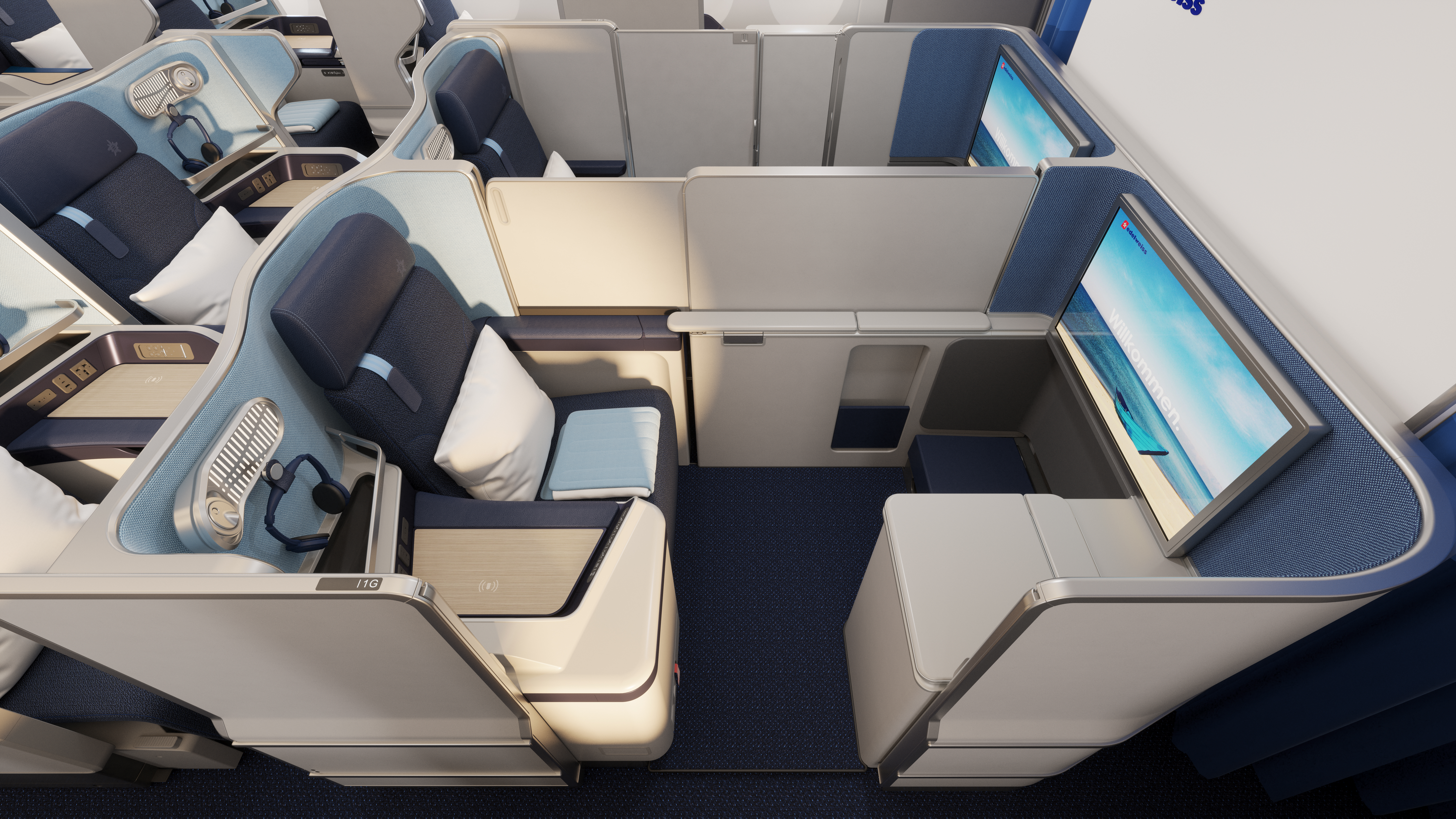
And then, Air France drops a signal that matters: up to 11 daily flights between Paris-CDG and New York (JFK + Newark), including a stronger Newark schedule with a second daily frequency in June–October 2026, deployed on A350-900 aircraft featuring the latest Business seat with a sliding door—explicitly framed as flexibility for business travelers and leisure customers alike. This is not a timid bet; it’s a calibrated bet. And it captures the Summer 2026 playbook in one move: more frequency, more premium product consistency, and more leisure-friendly scheduling.


Key Takeaways (If You Only Read One Section)

  • Premium capacity is structurally up (fleet gauge, cabin densification, premium-economy growth, and more business-class seats per aircraft) while demand signals are normalizing compared to post-pandemic peaks.
  • Business Class overcapacity risk is highest on high-frequency trunk routes (NYC–London/Paris, BOS–Europe, IAD/EWR–Europe) during shoulder weeks and late-booking windows.
  • Airlines are mitigating via premium leisure stimulation: sharper segmentation, bundles, co-branded card levers, loyalty/status accelerators, corporate-lite products for SMEs, and “experience-led” premium differentiation.
  • Network strategy is shifting from pure growth to quality growth: frequency and schedule convenience, rather than just new dots on the map, to protect yields.
  • Premium Economy is the pressure valve: it absorbs aspirational demand, protects Business pricing integrity, and offers inventory management flexibility.

1) Why Summer 2026 Is Different: The Overcapacity Setup

1.1 Premium seat counts have quietly exploded

Premium capacity is not just a function of “how many flights.” It’s increasingly a function of seat mix. Many carriers have moved to:

  • More 1-2-1 Business Class cabins (often with more seats than older layouts).
  • Rapid expansion of Premium Economy (which changes the upsell ladder and protects long-haul economics).
  • Higher premium density on new-generation widebodies (A350, 787) and retrofits.

This is rational: premium seats are where the margin lives, especially when fuel, labor, and airport costs remain elevated. Industry macro outlooks have also highlighted resilient premium demand as a yield-supporting factor in 2026 projections. Still, resilience does not mean immunity—especially when supply rises faster than willingness-to-pay on marginal trips.

1.2 Demand is strong, but “less irrationally strong”

By early 2026, multiple travel-data narratives point to a scenario airlines know too well: capacity up modestly while bookings soften for peak Summer 2026 compared to Summer 2025 on certain transatlantic flows—an early warning that pricing power could weaken if inventory is not managed aggressively.

In other words: the market is not “bad.” It’s just returning to being a market—where revenue management must work for its living again.


2) The Air France New York Move: A Micro-Case Study of the Macro Strategy

Air France’s announcement is a perfect case study because it bundles together the three levers airlines are prioritizing for Summer 2026: frequency, premium product, and premium leisure relevance.

2.1 Up to 11 daily flights: frequency as a premium product

Air France will offer up to 11 daily flights between Paris-CDG and New York, split between JFK and Newark, together with Delta within the transatlantic joint venture. On JFK alone, Air France is positioned at up to 6 daily frequencies, with multiple flights operated by 777-300ER aircraft equipped with La Première, and JV complementarity through Delta-operated flights.

Strategic point: In premium, frequency is a product. Convenience drives share, and share protects yields.

2.2 Newark strengthened June–October: leisure-friendly schedule design

The Newark route is strengthened from June 1, 2026, with up to two daily flights rather than one, operated by A350-900 aircraft with the latest cabins, including the Business seat with a sliding door—explicitly marketed to both business travelers and leisure customers. Flight timings are also “day-shape” friendly for leisure (and for premium customers who value predictable departure windows).

Strategic point: Newark is not just about corporate contracts. It is also a premium leisure gateway, and schedule design can stimulate higher-yield leisure demand (especially for couples/families who will buy premium when it is convenient and framed as a “once-a-year upgrade”).

2.3 The Cannes Lions Nice flights: event-driven premium leisure

Air France also highlights special flights between New York-JFK and Nice for Cannes Lions in June 2026—an example of event-driven premium leisure where willingness-to-pay is temporarily elevated and inventory can be managed as a scarcity product.

Strategic point: When premium overcapacity looms, airlines manufacture “peak willingness-to-pay moments” through targeted capacity and storytelling.

Source: Air France corporate release (Feb 9, 2026). Summer 2026: Air France strengthens its New York service


3) Where Business Class Overcapacity Hits First

Overcapacity rarely shows up evenly. It usually appears in predictable pockets:

  • Trunk premium corridors: NYC–London, NYC–Paris, NYC–Frankfurt, BOS–London/Paris, EWR–Europe hubs.
  • Shoulder weeks inside “peak season”: early June and late August/September patterns where leisure still travels but corporate is inconsistent.
  • Late-booking windows: when the “business traveler last-minute premium purchase” is weaker than forecast, leaving a premium cabin with seats that must be monetized.
  • Competitive JV markets: where joint ventures rationalize capacity to a degree, but each brand still wants share and visibility.

The challenge is amplified because premium cabins are not like economy: you cannot “hide” a lie-flat seat. If you don’t sell it, you either (a) upgrade into it, (b) discount it, or (c) accept spoilage. Every option impacts yield quality and brand signals.


4) The Summer 2026 Mitigation Playbook: How Airlines Stimulate Leisure Business Class Demand

4.1 Precision segmentation and “premium leisure personas”

Airlines are getting sharper at identifying leisure segments that behave like corporate segments:

  • Affluent couples traveling for milestone trips (anniversaries, bucket list).
  • Family premium (one parent buys up for comfort/health reasons; family follows via upgrades or points).
  • SME / “corporate-lite” travelers (self-booking founders/partners who want Business but lack managed programs).
  • Bleisure extensions (corporate ticket + leisure add-on where one leg upgrades).

Instead of generic “sale fares,” airlines increasingly deploy targeted offers through CRM, loyalty, and distribution partners—protecting brand integrity while moving inventory.

4.2 Bundling and soft-fencing (protecting list price optics)

To avoid blatant Business Class discounting, airlines use:

  • Bundles (seat + lounge + chauffeur/transfer + flexible change) that justify price while improving perceived value.
  • Fare families (semi-flex leisure premium vs full-flex corporate) to separate willingness-to-pay.
  • Ancillary inclusion (Wi-Fi, premium dining, lounge upgrades) to reduce “price-only” comparisons.

4.3 Loyalty levers: points, status, and upgrade marketplaces

Loyalty programs have become the “liquidity engine” for premium cabins:

  • More dynamic award pricing to match demand conditions.
  • Upgrade auctions / paid-upgrade prompts to monetize empty J seats late in the booking curve.
  • Status accelerators and co-branded card promos aimed at aspirational premium travelers.

In overcapacity scenarios, loyalty is not only a reward mechanism; it is a yield management tool that monetizes seats without publicly collapsing price anchors.

4.4 Premium Economy as the shock absorber

Premium Economy is the “pressure valve” that helps airlines:

  • Capture aspirational demand that won’t pay for Business.
  • Create a credible step-up ladder (Economy → Premium Economy → Business).
  • Limit Business dilution by offering an attractive alternative.

From a strategy lens, Premium Economy reduces the need to dump Business fares at the margin.

4.5 Schedule and frequency optimization (the underrated lever)

Air France’s NYC move illustrates this: airlines can protect premium revenue not only by “adding routes” but by adding the right departures at the right times, maximizing convenience and recapture. Frequency is a hedge against corporate volatility because it also sells strongly to leisure customers who value flexibility.


5) Network Strategy for Summer 2026: Growth, but with Guardrails

Transatlantic is still strategically attractive, but carriers are becoming more selective about where they grow and how they present that growth.

5.1 Joint ventures: disciplined on paper, competitive in practice

JVs (e.g., immunized alliances) can coordinate capacity and pricing more effectively than pure competitors. Yet each member still fights for brand preference, distribution strength, and loyalty capture. Summer 2026 will test JV discipline, especially when one partner has more premium capacity exposure than another.

5.2 Secondary cities: premium leisure gold, but fragile economics

New or expanded services to secondary European cities can be profitable when they unlock premium leisure (think “direct-to-destination” travel). However, they can also be the first to suffer if load factors soften. Expect airlines to:

  • Use narrowbody long-range aircraft where viable (risk containment).
  • Seasonalize more aggressively.
  • Prioritize destinations with event-driven peaks and strong inbound tourism.

5.3 Product consistency: doors, Wi-Fi, lounges, and the premium narrative

Premium leisure customers are more influenced by “product story” than traditional managed corporate. Hence the focus on:

  • Suite-like Business seats (doors, privacy).
  • Connectivity as a default expectation.
  • Lounge upgrades and curated ground experiences.

6) The Real Battlefield: Revenue Management Under Premium Pressure

When Business Class demand is uncertain, airline profitability hinges on three RM principles:

  • Protect the price anchor: avoid public fare collapses that retrain customers to wait.
  • Control dilution: upgrades are inevitable, but unmanaged upgrades destroy the perceived scarcity of premium.
  • Exploit micro-peaks: holidays, events, shoulder-week patterns, and city-level demand asymmetries.

Expect Summer 2026 to deliver more visible “deal cycles” in premium—but increasingly through private channels (targeted offers, loyalty pricing, bundles) rather than billboard sales.


7) What This Means for Airlines: A Strategic Scorecard

7.1 Winners will do “quality growth”

The best Summer 2026 strategies will not be the ones that grow the most ASKs. They will be the ones that:

  • Grow frequency where it increases premium share.
  • Use Premium Economy to protect Business integrity.
  • Deploy loyalty and CRM as inventory monetization tools.
  • Invest in the premium narrative (hard + soft product) that persuades leisure travelers to pay up.

7.2 Losers will chase volume and then “sell their way out”

Overcapacity is not fatal. Poor discipline is. Airlines that chase share without guardrails often end up discounting Business, over-upgrading elites, and eroding their own premium willingness-to-pay for future seasons.


8) What This Means for Travelers (and Why This Matters)

  • If you’re a traveler paying cash: expect more targeted premium deals (but less obvious public discounting).
  • If you’re a loyalty traveler: Summer 2026 may offer better upgrade opportunities and more dynamic award inventory on certain weeks.
  • If you’re corporate/SME: airlines will keep building “corporate-lite” propositions (flexibility bundles, SME programs) to stabilize premium demand.

9) Conclusion: Air France’s NYC Expansion Is a Signal, Not an Outlier

Air France increasing New York frequency for Summer 2026 is not a simple capacity story. It is a strategic statement: transatlantic remains the arena where premium product, schedule convenience, and leisure-driven demand stimulation converge.

Summer 2026 will likely reward airlines that accept a new reality: Business Class demand is broader than corporate—but it must be activated. The carriers that master premium leisure stimulation without destroying price anchors will protect margins. The others will discover, again, that premium overcapacity is not a capacity problem—it’s a strategy problem.

STARLUX Airlines: Genesis, Strategy, and the A350-1000 Moment That Changes the Game

In just a few years, STARLUX Airlines has moved from “bold startup” to a carrier with a credible long-haul blueprint. The moment that crystallizes this shift is the arrival—and global debut—of Taiwan’s first Airbus A350-1000, a flagship designed to unlock network range, premium monetization, and scale economics without abandoning the brand’s boutique DNA.

This article is a strategic deep dive into: (1) STARLUX’s genesis and positioning, (2) why an all-Airbus fleet is not just a procurement choice but a business model, (3) what the A350-1000 enables (and what it does not), and (4) how the airline’s next expansion wave could play out across North America and Europe.


1) The STARLUX origin story: a premium airline built “in reverse”

Most airlines either start with volume and later layer premium, or they start premium but remain boutique due to limited scale economics. STARLUX is trying something rarer: building a premium brand from day one, while designing the operating model to scale into long-haul relevance.

Founded by aviation executive and trained pilot Chang Kuo-wei, STARLUX launched operations in 2020 as Taiwan’s newest full-service airline, entering a market already served by strong incumbents.

That makes the strategic problem less about “how to fly planes” and more about “how to create a differentiated premium proposition from a hub that already has established competitors.” STARLUX’s bet is that a curated product, paired with modern fleet economics and a connective hub logic in Taipei, can carve a sustainable niche—especially on long-haul routes where premium demand and brand perception carry disproportionate yield impact.

1.1 Premium as a system, not a cabin

STARLUX treats premium not as an isolated business-class seat, but as an end-to-end system: cabin design language, service choreography, consistent hardware, and a “luxury-forward” brand signature. On long-haul aircraft, it uses a four-cabin configuration—including a small First Class—signaling an intent to compete at the top end rather than “premium-ish.”

That approach is expensive if your network is thin and your fleet is fragmented. Which leads to the second foundational choice: fleet strategy.


2) The all-Airbus fleet strategy: commonality as the hidden growth engine

STARLUX has built an all-Airbus fleet across narrowbody and widebody families and reinforced this approach with additional orders across the A330neo and A350 families, including freighter capacity via the A350F.

To many observers, “all-Airbus” can sound like brand preference. Strategically, it is closer to an operating model: cockpit commonality, training pipelines, maintenance and spares rationalization, vendor ecosystem simplification, and more predictable operational performance as you grow.

2.1 Why commonality matters more for a young airline

Legacy carriers often carry fleet complexity as historical baggage. Young airlines can build a clean fleet architecture that allows them to grow without exploding their fixed-cost base.

When an airline adds a new aircraft type, it doesn’t just buy airframes; it buys complexity: additional crew qualification paths, simulator capacity, parts inventories, maintenance programs, and reliability learning curves. Commonality reduces the “organizational drag” of growth—especially important when you are simultaneously building network breadth, brand, and operational maturity.

This is why the A350-1000 is not merely “a bigger A350.” It is a scale step within the same family—meaning STARLUX gets capacity and performance without resetting the operational playbook.


3) The A350-1000 moment: Taiwan’s first, and STARLUX’s flagship pivot

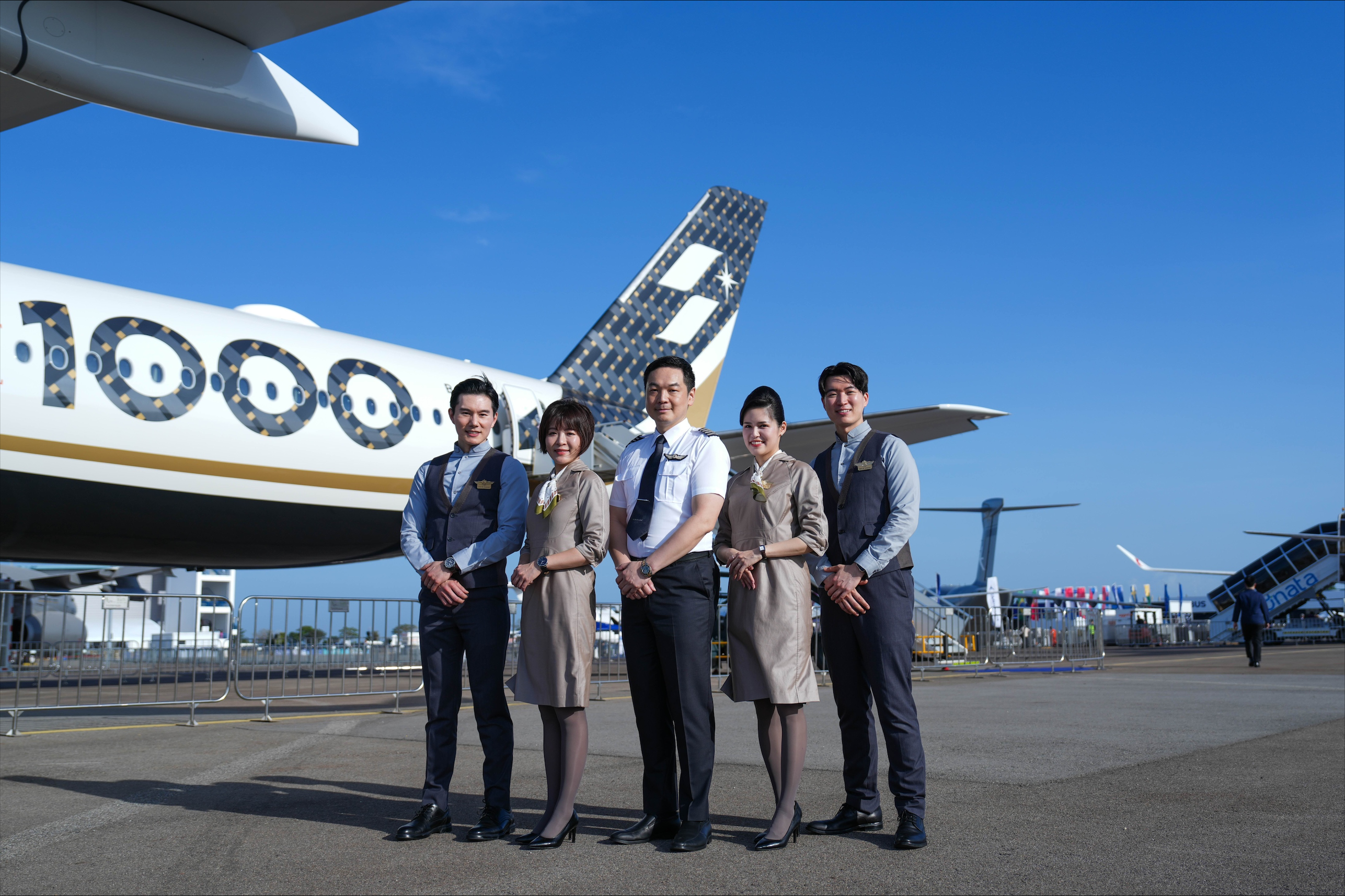
In early 2026, STARLUX took delivery of its first A350-1000—Taiwan’s first of the type—handed over in Toulouse and flown nonstop to Taipei. Shortly after, the airline showcased the aircraft at the Singapore Airshow before entry into commercial service, positioning the jet not only as a network tool but as a brand statement on an international stage.

3.1 The aircraft configuration tells you the strategy

STARLUX’s A350-1000 is configured as a four-class, 350-seat aircraft: 4 First Class suites, 40 Business Class seats, 36 Premium Economy, and 270 Economy.

This split matters:

  • It preserves premium density (First + Business + Premium Economy) rather than maximizing total seats—consistent with a yield-first model.
  • It creates monetization ladders that are critical for a hub-and-spoke connector: upgrades, corporate contracts, premium leisure, and high-value redemption flows.
  • It increases payload-range flexibility for long sectors while keeping unit costs competitive against other premium-oriented widebodies.

3.2 Range and economics: what the A350-1000 unlocks

Public materials emphasize a near-9,700-mile range (15,600 km), Rolls-Royce Trent XWB engines, and efficiency gains (fuel burn, noise, emissions). Strategically, this enables three things:

  1. Longer nonstop reach from Taipei with fewer compromises on payload, expanding feasible route options and seasonal resilience.
  2. Better unit costs at premium-friendly capacity—the airline can grow supply without a pure “volume bet.”
  3. Brand consistency at scale—a flagship aircraft type becomes a rolling showroom for premium design, which matters disproportionately for newer brands building global awareness.

4) The network logic: Taipei as a connector hub (and why the U.S. matters first)

STARLUX’s visible network messaging centers on: easy transfers in Taipei and a growing North American footprint. The U.S. growth phase is the first big test of the long-haul model because transpacific flying is where aircraft economics and premium monetization collide.

4.1 The competitive reality: strong incumbents and a mature hub

Taipei is not an empty playing field. It is a mature aviation market with established operators. STARLUX cannot win by being simply “another carrier with decent service.” It needs either:

  • Product differentiation that pulls premium share, and/or
  • Network convenience (schedules, connections, frequency) that creates habit and corporate relevance.

The A350-1000 primarily supports the second, while reinforcing the first.

4.2 Why the A350-1000 fits the U.S. growth phase

  • Stage lengths are long enough that fuel efficiency and reliability become major profitability determinants.
  • Premium cabins become materially important: the difference between “good demand” and “great economics” often sits in Business Class and Premium Economy performance.
  • Operational resilience matters: irregular operations harm a young premium brand more than an established one.

5) The brand layer: turning aircraft delivery into a global visibility strategy

STARLUX has been deliberate at turning fleet events into brand events. Showcasing the A350-1000 at a major international airshow before commercial entry is a signal to multiple audiences at once: passengers, industry partners, suppliers, and future talent.

The airline has also invested in cultural branding through the “AIRSORAYAMA” collaboration with Japanese artist Hajime Sorayama, designed to transform two A350-1000 aircraft into flying art pieces scheduled to enter service in 2026.

This is not just marketing. It’s a strategic response to a real constraint: a young airline must accelerate awareness and premium credibility faster than network scale naturally allows.


6) Fleet roadmap: A350-1000s, A330neos, and the cargo pivot

STARLUX’s broader fleet plan signals ambition beyond passenger growth. The A330neo supports flexible medium-to-long-haul scaling; the A350-1000 is the long-haul flagship platform; and the A350F order signals a serious cargo thesis connected to Taiwan’s role in global logistics flows.

6.1 Why cargo matters (even for a “luxury” airline)

  • It diversifies revenue away from passenger cyclicality.
  • It can improve long-haul route economics through belly + freighter optimization.
  • It leverages Taiwan’s geography and logistics ecosystem.

7) The A350-1000 in practice: where STARLUX can deploy it (and why)

Public communications link the A350-1000 to North American and European expansion ambitions, but the most useful way to assess deployment is scenario-based, rooted in constraints and advantages.

Likely deployment patterns (scenario-based)

Scenario A: Upgauge on existing U.S. trunk routes.
Replace or complement A350-900 flying on top routes to add capacity and premium seats without adding new city complexity.

Scenario B: Unlock new long-range markets with payload resilience.
Use the aircraft’s range/performance to make certain long sectors more feasible year-round.

Scenario C: The European “credibility route.”
A first European destination can be as much about brand signal as economics—especially for a young carrier establishing global premium relevance.


8) Competitive differentiation: what STARLUX gets right—and where the risks are

8.1 What looks structurally strong

  • Coherent brand + hardware strategy: premium positioning is consistent across the customer journey.
  • Fleet architecture designed for scale: commonality reduces friction as the airline grows.
  • Hub logic with international relevance: Taipei can play connector across North America and Asia when schedules and reliability are right.

8.2 Strategic risks to watch

  • Premium monetization discipline: a four-cabin layout is a statement, but it also requires careful revenue management and corporate traction.
  • Network depth vs. brand promise: premium brands are judged harshly when irregular operations occur, especially on long-haul.
  • Competitive response: incumbents can respond with frequency, loyalty levers, and corporate deals that are hard for a young airline to match quickly.

9) Why the Singapore Airshow debut is strategically smart

Displaying the A350-1000 at the Singapore Airshow before commercial entry is a “visibility stacking” move: it compresses the timeline for global awareness, reinforces premium credibility, and positions STARLUX as a serious long-haul player—not merely a regional newcomer.


10) What comes next: STARLUX’s likely extension path (2026–2031)

Based on publicly visible fleet and strategy signals, STARLUX’s next chapter is defined by three expansions:

  • Passenger long-haul growth: increased North America depth and selective new markets as additional widebodies arrive.
  • A350-1000 scale-up: using the flagship platform to grow capacity while maintaining premium positioning.
  • Cargo build-out: maturing a dedicated freight strategy as a margin and resilience lever.

Conclusion: the A350-1000 is the hinge between boutique and contender

STARLUX’s story is not “a new airline bought a new airplane.” It’s closer to: a young premium carrier is using fleet architecture and flagship deployment to compress the timeline from boutique launch to global long-haul relevance.

The A350-1000 matters because it is simultaneously:

  • a capacity and performance tool for long-haul economics,
  • a brand amplifier that reinforces premium credibility, and
  • a scalable step inside an all-Airbus operating model.

If STARLUX executes well—route selection, schedule reliability, premium revenue discipline—this fleet move could mark the point where the airline stops being a curiosity and becomes a true competitive force across the Pacific (and eventually beyond).


American Airlines’ FY2025 Results, in Context: How AAL Stacks Up Against Delta and United

American Airlines closed FY2025 with record revenue—but far slimmer profitability than its two largest U.S. network peers. Delta and United, meanwhile, translated “premium + loyalty + operational reliability” into meaningfully stronger earnings and cash flow.


At-a-glance: FY2025 snapshot (AAL vs DAL vs UAL)

Metric (FY2025)American (AAL)Delta (DAL)United (UAL)
Revenue / Operating revenue$54.6B (record)$63.4B operating revenue (record)$59.1B total operating revenue (record)
Profitability headlineGAAP net income: $111MGAAP operating margin: 9.2% (op income $5.8B)Pre-tax earnings: $4.3B (pre-tax margin 7.3%)
EPS (headline)GAAP EPS: $0.17GAAP EPS: $7.66Diluted EPS: $10.20
Free cash flow (FCF)FY2026E: >$2B (guidance)$4.6B (FY2025)$2.7B (FY2025)
Leverage / debt (selected disclosures)Total debt: $36.5B; net debt: $30.7BTotal debt & finance leases: $14.1B; adjusted debt/EBITDAR: 2.4xTotal debt: $25B; net leverage: 2.2x
2026 EPS guidance (selected)Adjusted EPS: $1.70–$2.70EPS: $6.50–$7.50Market-reported FY2026 adj. EPS: $12–$14

Important note on comparability: airlines mix GAAP and non-GAAP measures (adjusted EPS, adjusted debt/EBITDAR, etc.). Treat cross-carrier comparisons as directional unless you normalize definitions and one-time items.


1) American Airlines (AAL): record revenue, but profitability still lagging

What AAL reported

  • Record revenue: $14.0B in Q4 and $54.6B for FY2025.
  • Profitability: GAAP net income of $99M (Q4) and $111M (FY). Excluding special items, net income of $106M (Q4) and $237M (FY).
  • Disruption impact: management cited an approximate $325M negative revenue impact in Q4 tied to a government shutdown.
  • Deleveraging progress: total debt reduced by $2.1B in 2025; year-end total debt of $36.5B and net debt of $30.7B.

Why margins are the real story

American’s record top line did not translate into commensurate earnings. That gap versus Delta and United reflects a few structural issues that AAL has been actively working to close:

  • Domestic unit revenue pressure (with part of Q4 pressure attributed to the shutdown’s impact on domestic performance).
  • Higher relative leverage than peers, which matters in a capital-intensive, operationally volatile industry.
  • Operational volatility (weather and air traffic constraints hit everyone, but the financial sensitivity differs by network design, schedule padding, and disruption recovery playbooks).

Strategy moves AAL is leaning into (and why they matter)

American’s narrative for 2026 is consistent with the industry playbook—premium, loyalty, reliability—but it’s also more “catch-up mode” than “defend-the-lead mode.” Key initiatives highlighted include:

  • Premium product: Flagship Suite rollout (introduced mid-2025) and continued investment in premium lounges.
  • Connectivity as a loyalty lever: free high-speed Wi-Fi for AAdvantage members sponsored by AT&T.
  • Operational reliability: schedule strengthening and re-banking DFW to a 13-bank structure to reduce misconnections and cascading delays.
  • Network and fleet: upgrades at DFW (Terminal F), aircraft retrofits, and premium seating growth via 787-9 and A321XLR deliveries.
  • Loyalty engine: AAdvantage enrollments +7% YoY; co-brand credit card spending +8% YoY; and a channel transition to Citi in inflight/airport acquisition as the partnership expanded.

What AAL guided for 2026

  • FY2026 adjusted EPS: $1.70–$2.70
  • FY2026 free cash flow: >$2B
  • Q1 2026: revenue up 7%–10% YoY; ASMs up 3%–5%; adjusted loss per share ($0.10)–($0.50)

Bottom line for AAL: the strategy is directionally right. The execution challenge is to convert premium and loyalty improvements into durable margin expansion while continuing to de-risk the balance sheet.


2) Delta (DAL): “premium + diversified revenues + cash flow” at scale

What DAL reported

Delta’s full-year numbers underline why it’s often viewed as the profitability benchmark among U.S. network carriers:

  • FY2025 operating revenue: $63.4B
  • FY2025 operating income: $5.8B (GAAP operating margin 9.2%)
  • FY2025 pre-tax income: $6.2B (pre-tax margin 9.8%)
  • FY2025 EPS: $7.66 (GAAP)
  • Cash generation: operating cash flow $8.3B; free cash flow $4.6B

Delta’s structural advantage: the “60% diversified revenue” model

Delta emphasizes that high-margin, diversified revenue streams—premium, loyalty, cargo, and MRO—collectively represent a large share of total revenue and are growing faster than the base ticket business. This matters because it lowers earnings volatility and makes margin resilience more achievable even when economy leisure demand is uneven.

What DAL guided for 2026

  • FY2026 EPS: $6.50–$7.50
  • FY2026 free cash flow: $3–$4B
  • Q1 2026 revenue growth: +5% to +7% YoY (with operating margin 4.5%–6%)

Bottom line for DAL: Delta’s 2025 results show a mature “premium airline economics” model: strong cash flow, controlled leverage, and commercial strength that’s not solely reliant on base fares.


3) United (UAL): record revenue, improving operation, and aggressive premium/network expansion

What UAL reported

  • FY2025 total operating revenue: $59.1B (+3.5% YoY)
  • FY2025 profitability: pre-tax earnings $4.3B (pre-tax margin 7.3%); net income $3.4B
  • FY2025 EPS: $10.20 diluted (adjusted $10.62)
  • Cash generation: operating cash flow $8.4B; free cash flow $2.7B
  • Customer mix: premium revenue +11% YoY for the full year; loyalty revenue +9% YoY for the full year (per company disclosure).

Operational reliability as a commercial weapon

United has been explicit that reliability (cancellations, misconnections, recovery speed) is not just a cost topic—it’s a revenue topic. In a world where business travelers and premium leisure travelers pay for certainty, operational performance becomes a pricing and loyalty advantage.

Fleet and product investments

  • Starlink Wi-Fi: rolling out across regional and starting on mainline, positioned as a loyalty/experience differentiator.
  • Premium capacity growth: continued investment in premium cabins and new interiors.
  • 2026 deliveries: plans to take delivery of 100+ narrowbodies and ~20 Boeing 787s (a major capacity and product lever if executed on time).

2026 outlook (market-reported)

United’s earnings materials reference an investor update for detailed guidance; market reporting following the release pointed to an FY2026 adjusted EPS outlook of $12–$14 and a positive Q1 profitability range—signaling confidence in ongoing premium and corporate demand.

Bottom line for UAL: United looks like a carrier still in “profitable growth mode” (capacity, international breadth, premium upsell), while continuing to tighten the operation.


What the comparison really says (beyond the headlines)

1) Premiumization is the industry’s center of gravity—but starting points differ

All three carriers are chasing high-yield demand. The difference is how much of that premium flywheel is already embedded in performance:

  • Delta: premium + diversified streams already underpin margins and cash flow.
  • United: premium + network expansion is translating into strong EPS and record revenue.
  • American: product investments are real, but the financial conversion into margins is still catching up.

2) Balance sheet flexibility matters more than ever

When disruptions hit (weather, ATC constraints, supply chain, geopolitical shocks), liquidity and leverage shape how quickly an airline can adapt—whether through schedule changes, fleet decisions, or opportunistic investments. American’s deleveraging progress is meaningful, but the gap remains visible versus peers.

3) Operational reliability is no longer “nice to have”

Reliability is becoming a core commercial KPI: it supports NPS, corporate share, premium upsell, and ultimately pricing power. Each airline is investing here, but consistency is what turns that into sustainable revenue quality.


What to watch in 2026

  • Corporate demand durability: does the rebound persist across sectors, or remain uneven?
  • Premium cabin supply: how quickly does added premium capacity dilute yields (or does it unlock incremental demand)?
  • Fleet delivery risk: aircraft availability and retrofit timelines can make or break growth plans.
  • Cost creep: labor, airport costs, MRO, and irregular operations can erode margin gains fast.
  • Distribution and revenue management: restoring/defending indirect channel economics while pushing modern retailing (and doing it without demand leakage).

Conclusion

American’s FY2025 headline is “record revenue, modest profits”—and that combination is exactly why 2026 execution matters. AAL is investing in the right pillars (premium product, loyalty, reliability, fleet) and making progress on debt reduction, but investors will look for visible margin expansion and more resilient cash generation to narrow the gap with Delta and United.

Delta remains the cash-flow and durability benchmark; United continues to combine growth with strong earnings momentum. For American, the opportunity is real—but the standard it’s chasing is being set by peers that are already operating closer to “premium airline economics” at scale.

Disclosure: This is an independent analysis based on public company disclosures and market reporting. It is not investment advice.

Edelweiss’ New A350 Cabin: When a Leisure Airline Outruns “Business Class” in the Lufthansa Group

In airline groups, product hierarchy is supposed to be simple: the “premium” brands set the standard, and the leisure subsidiaries optimize for cost, density, and seasonality. The Lufthansa Group has historically followed that playbook—Lufthansa and SWISS carry the premium narrative, while leisure-focused operators concentrate on holiday demand.

And yet, Edelweiss—SWISS’ leisure sister company within the Lufthansa Group—just unveiled an Airbus A350 cabin concept that will feel decisively more modern than the Business Class experience still offered on a meaningful share of the Group’s long-haul fleet.

The announcement is not incremental. It’s a full cabin rethink: direct-aisle-access Business Class in a consistent 1-2-1 layout, a “Business Suite” with privacy doors and a 32-inch screen, a new Premium Economy cabin with upgraded service rituals, and a technology stack—Starlink, 4K IFE, Bluetooth audio connectivity, and USB-C power up to 60W—that many network carriers still treat as “future rollouts.”

This is a case study in how product strategy, fleet opportunity, and brand positioning can combine to produce a surprisingly premium outcome—even in a leisure airline.

Context: Edelweiss, SWISS, and the Lufthansa Group “Brand Ladder”

Edelweiss positions itself as Switzerland’s leading leisure travel airline, based at Zurich Airport, and describes itself as a sister company of SWISS and a member of the Lufthansa Group. That “sister-company” relationship is not just corporate structure—it shapes hub expectations and the minimum viable “Swiss quality” bar for long-haul leisure flying out of Zurich.

In practice, Zurich creates a unique pressure: passengers connect, compare, and talk. A holiday airline product that feels materially behind the hub’s premium flagship becomes visible friction—especially when premium leisure travelers increasingly pay for comfort upgrades rather than defaulting to the cheapest fare.

What Edelweiss Announced: A Cabin Designed “Holistically”

Edelweiss framed the A350 cabin as a complete experience redesign under the motto “More room to feel good,” blending calmer aesthetics, premium materials, and a modern onboard tech baseline across all classes. The official release is unusually detailed about both hard product and service cues.

Economy: small changes that matter on long-haul

Edelweiss is adding approximately three centimeters of legroom across Economy seats versus the previous cabin and increasing seat recline angle—minor on paper, meaningful at scale on long flights where comfort degradation is cumulative.

Premium Economy: a real “step-up,” plus service cues that justify price

Edelweiss is introducing a new Premium Economy cabin with 28 seats in a 2-3-2 configuration and roughly one meter of legroom, using a hard-shell seat comparable to those used on other Lufthansa Group airlines.

Commercially, the value proposition is reinforced through “premium cues”: welcome drink before takeoff, expanded food options served on china with a tablecloth, included alcoholic beverages, and noise-canceling headphones.

Business Class: consistent 1-2-1 layout with direct aisle access

The A350 moves Edelweiss Business to a continuous 1-2-1 configuration, giving every passenger direct aisle access and fully flat beds. Edelweiss also keeps a leisure-specific twist: roughly half of the seats are “double seats” designed for couples traveling together.

Business Suite: doors, a 32-inch screen, and a sleep-first design

The headline surprise is the Edelweiss Business Suite: ~1.20m privacy doors, a 32-inch monitor, adjustable divider in the middle suites for companions, a generous open foot area, and upgraded sleep amenities (memory foam pillow + mattress topper).

Technology: Starlink, 4K + Bluetooth, and serious power

Edelweiss bundles a modern tech baseline across all classes: free high-speed internet via Starlink, 4K screens with Bluetooth audio connectivity, 400+ films and series, a 3D flight map and external cameras, and human-centric lighting designed to support circadian rhythm.

It also includes wireless charging (Premium Economy and above) and USB-C/USB-A ports at every seat up to 60W (enough for laptop charging), with additional power outlets in Business and Business Suite.

Why this can feel better than Business Class across much of the Group

Customer perception is shaped less by the “best available seat” and more by the “most common seat people actually fly.” Lufthansa has publicly positioned its next-generation Allegris product as the future baseline, but rollout realities mean fleet experience remains mixed for now. For the official product view, see Lufthansa Allegris Business Class.

Historically, Lufthansa’s long-haul Business Class was widely criticized for older 2-2-2 layouts on parts of the fleet—especially due to the lack of direct aisle access. A representative industry write-up is available here: The Points Guy review.

Against that backdrop, Edelweiss’ A350 proposition is strategically clean: make direct aisle access consistent, add suite-level privacy for those who value it, and modernize tech so the cabin feels current.

What to watch: where the strategy will succeed—or get tested

1) Will customers pay for “Business Suite” as a distinct tier?

The suite concept is a monetization lever: doors, a 32-inch screen, enhanced sleep comfort, and extra storage are tangible. If priced intelligently (not purely as a luxury surcharge), this can drive ancillary revenue while keeping the base Business cabin competitive.

2) Premium Economy: the quiet profit engine

Premium Economy has become one of the most resilient long-haul segments because it captures travelers who self-fund comfort but won’t stretch to Business. Edelweiss’ combination of seat space plus upgraded service rituals is designed to defend the price differential with “felt value.”

3) Operational delivery will define the story

Cabins win headlines, but consistency wins loyalty. Starlink uptime, catering execution, and the real-world wear of premium materials will determine whether the product remains premium at scale. Edelweiss has set expectations high—now it must deliver with leisure-season peaks, high aircraft utilization, and mixed customer profiles.

Timeline: when you can actually fly it

Edelweiss states the first aircraft with the new cabin will enter service in December 2026, with flights bookable from summer 2026. Additional A350s will be converted in waves through January–July 2027, with the full A350 fleet equipped by summer 2027.


Source: Edelweiss Newsroom — “More space to feel good: Edelweiss presents the new cabin in the Airbus A350.” Read here.