Summer 2026 Transatlantic Strategy: Business Class Overcapacity Risk, Premium-Leisure Playbooks, and the Air France New York Signal

For the last three summers, the transatlantic market has been the airline industry’s cash engine: high load factors, strong yields, and a premium cabin that kept surprising on the upside. Summer 2026, however, looks like a more complex equation. Capacity is still climbing, premium seat counts are structurally higher than they were pre-2020, and corporate travel—while healthier than in 2021–2022—remains more volatile and more “optional” than it used to be.

The biggest strategic risk is not “transatlantic demand collapsing.” It’s more subtle: Business Class overcapacity on key city pairs during peak weeks, causing discounting pressure, dilution via upgrades, and a forced pivot toward leisure-oriented premium demand (“premium leisure” / “affordable luxury” / “treat-yourself travel”).

And then, Air France drops a signal that matters: up to 11 daily flights between Paris-CDG and New York (JFK + Newark), including a stronger Newark schedule with a second daily frequency in June–October 2026, deployed on A350-900 aircraft featuring the latest Business seat with a sliding door—explicitly framed as flexibility for business travelers and leisure customers alike. This is not a timid bet; it’s a calibrated bet. And it captures the Summer 2026 playbook in one move: more frequency, more premium product consistency, and more leisure-friendly scheduling.


Key Takeaways (If You Only Read One Section)

  • Premium capacity is structurally up (fleet gauge, cabin densification, premium-economy growth, and more business-class seats per aircraft) while demand signals are normalizing compared to post-pandemic peaks.
  • Business Class overcapacity risk is highest on high-frequency trunk routes (NYC–London/Paris, BOS–Europe, IAD/EWR–Europe) during shoulder weeks and late-booking windows.
  • Airlines are mitigating via premium leisure stimulation: sharper segmentation, bundles, co-branded card levers, loyalty/status accelerators, corporate-lite products for SMEs, and “experience-led” premium differentiation.
  • Network strategy is shifting from pure growth to quality growth: frequency and schedule convenience, rather than just new dots on the map, to protect yields.
  • Premium Economy is the pressure valve: it absorbs aspirational demand, protects Business pricing integrity, and offers inventory management flexibility.

1) Why Summer 2026 Is Different: The Overcapacity Setup

1.1 Premium seat counts have quietly exploded

Premium capacity is not just a function of “how many flights.” It’s increasingly a function of seat mix. Many carriers have moved to:

  • More 1-2-1 Business Class cabins (often with more seats than older layouts).
  • Rapid expansion of Premium Economy (which changes the upsell ladder and protects long-haul economics).
  • Higher premium density on new-generation widebodies (A350, 787) and retrofits.

This is rational: premium seats are where the margin lives, especially when fuel, labor, and airport costs remain elevated. Industry macro outlooks have also highlighted resilient premium demand as a yield-supporting factor in 2026 projections. Still, resilience does not mean immunity—especially when supply rises faster than willingness-to-pay on marginal trips.

1.2 Demand is strong, but “less irrationally strong”

By early 2026, multiple travel-data narratives point to a scenario airlines know too well: capacity up modestly while bookings soften for peak Summer 2026 compared to Summer 2025 on certain transatlantic flows—an early warning that pricing power could weaken if inventory is not managed aggressively.

In other words: the market is not “bad.” It’s just returning to being a market—where revenue management must work for its living again.


2) The Air France New York Move: A Micro-Case Study of the Macro Strategy

Air France’s announcement is a perfect case study because it bundles together the three levers airlines are prioritizing for Summer 2026: frequency, premium product, and premium leisure relevance.

2.1 Up to 11 daily flights: frequency as a premium product

Air France will offer up to 11 daily flights between Paris-CDG and New York, split between JFK and Newark, together with Delta within the transatlantic joint venture. On JFK alone, Air France is positioned at up to 6 daily frequencies, with multiple flights operated by 777-300ER aircraft equipped with La Première, and JV complementarity through Delta-operated flights.

Strategic point: In premium, frequency is a product. Convenience drives share, and share protects yields.

2.2 Newark strengthened June–October: leisure-friendly schedule design

The Newark route is strengthened from June 1, 2026, with up to two daily flights rather than one, operated by A350-900 aircraft with the latest cabins, including the Business seat with a sliding door—explicitly marketed to both business travelers and leisure customers. Flight timings are also “day-shape” friendly for leisure (and for premium customers who value predictable departure windows).

Strategic point: Newark is not just about corporate contracts. It is also a premium leisure gateway, and schedule design can stimulate higher-yield leisure demand (especially for couples/families who will buy premium when it is convenient and framed as a “once-a-year upgrade”).

2.3 The Cannes Lions Nice flights: event-driven premium leisure

Air France also highlights special flights between New York-JFK and Nice for Cannes Lions in June 2026—an example of event-driven premium leisure where willingness-to-pay is temporarily elevated and inventory can be managed as a scarcity product.

Strategic point: When premium overcapacity looms, airlines manufacture “peak willingness-to-pay moments” through targeted capacity and storytelling.

Source: Air France corporate release (Feb 9, 2026). Summer 2026: Air France strengthens its New York service


3) Where Business Class Overcapacity Hits First

Overcapacity rarely shows up evenly. It usually appears in predictable pockets:

  • Trunk premium corridors: NYC–London, NYC–Paris, NYC–Frankfurt, BOS–London/Paris, EWR–Europe hubs.
  • Shoulder weeks inside “peak season”: early June and late August/September patterns where leisure still travels but corporate is inconsistent.
  • Late-booking windows: when the “business traveler last-minute premium purchase” is weaker than forecast, leaving a premium cabin with seats that must be monetized.
  • Competitive JV markets: where joint ventures rationalize capacity to a degree, but each brand still wants share and visibility.

The challenge is amplified because premium cabins are not like economy: you cannot “hide” a lie-flat seat. If you don’t sell it, you either (a) upgrade into it, (b) discount it, or (c) accept spoilage. Every option impacts yield quality and brand signals.


4) The Summer 2026 Mitigation Playbook: How Airlines Stimulate Leisure Business Class Demand

4.1 Precision segmentation and “premium leisure personas”

Airlines are getting sharper at identifying leisure segments that behave like corporate segments:

  • Affluent couples traveling for milestone trips (anniversaries, bucket list).
  • Family premium (one parent buys up for comfort/health reasons; family follows via upgrades or points).
  • SME / “corporate-lite” travelers (self-booking founders/partners who want Business but lack managed programs).
  • Bleisure extensions (corporate ticket + leisure add-on where one leg upgrades).

Instead of generic “sale fares,” airlines increasingly deploy targeted offers through CRM, loyalty, and distribution partners—protecting brand integrity while moving inventory.

4.2 Bundling and soft-fencing (protecting list price optics)

To avoid blatant Business Class discounting, airlines use:

  • Bundles (seat + lounge + chauffeur/transfer + flexible change) that justify price while improving perceived value.
  • Fare families (semi-flex leisure premium vs full-flex corporate) to separate willingness-to-pay.
  • Ancillary inclusion (Wi-Fi, premium dining, lounge upgrades) to reduce “price-only” comparisons.

4.3 Loyalty levers: points, status, and upgrade marketplaces

Loyalty programs have become the “liquidity engine” for premium cabins:

  • More dynamic award pricing to match demand conditions.
  • Upgrade auctions / paid-upgrade prompts to monetize empty J seats late in the booking curve.
  • Status accelerators and co-branded card promos aimed at aspirational premium travelers.

In overcapacity scenarios, loyalty is not only a reward mechanism; it is a yield management tool that monetizes seats without publicly collapsing price anchors.

4.4 Premium Economy as the shock absorber

Premium Economy is the “pressure valve” that helps airlines:

  • Capture aspirational demand that won’t pay for Business.
  • Create a credible step-up ladder (Economy → Premium Economy → Business).
  • Limit Business dilution by offering an attractive alternative.

From a strategy lens, Premium Economy reduces the need to dump Business fares at the margin.

4.5 Schedule and frequency optimization (the underrated lever)

Air France’s NYC move illustrates this: airlines can protect premium revenue not only by “adding routes” but by adding the right departures at the right times, maximizing convenience and recapture. Frequency is a hedge against corporate volatility because it also sells strongly to leisure customers who value flexibility.


5) Network Strategy for Summer 2026: Growth, but with Guardrails

Transatlantic is still strategically attractive, but carriers are becoming more selective about where they grow and how they present that growth.

5.1 Joint ventures: disciplined on paper, competitive in practice

JVs (e.g., immunized alliances) can coordinate capacity and pricing more effectively than pure competitors. Yet each member still fights for brand preference, distribution strength, and loyalty capture. Summer 2026 will test JV discipline, especially when one partner has more premium capacity exposure than another.

5.2 Secondary cities: premium leisure gold, but fragile economics

New or expanded services to secondary European cities can be profitable when they unlock premium leisure (think “direct-to-destination” travel). However, they can also be the first to suffer if load factors soften. Expect airlines to:

  • Use narrowbody long-range aircraft where viable (risk containment).
  • Seasonalize more aggressively.
  • Prioritize destinations with event-driven peaks and strong inbound tourism.

5.3 Product consistency: doors, Wi-Fi, lounges, and the premium narrative

Premium leisure customers are more influenced by “product story” than traditional managed corporate. Hence the focus on:

  • Suite-like Business seats (doors, privacy).
  • Connectivity as a default expectation.
  • Lounge upgrades and curated ground experiences.

6) The Real Battlefield: Revenue Management Under Premium Pressure

When Business Class demand is uncertain, airline profitability hinges on three RM principles:

  • Protect the price anchor: avoid public fare collapses that retrain customers to wait.
  • Control dilution: upgrades are inevitable, but unmanaged upgrades destroy the perceived scarcity of premium.
  • Exploit micro-peaks: holidays, events, shoulder-week patterns, and city-level demand asymmetries.

Expect Summer 2026 to deliver more visible “deal cycles” in premium—but increasingly through private channels (targeted offers, loyalty pricing, bundles) rather than billboard sales.


7) What This Means for Airlines: A Strategic Scorecard

7.1 Winners will do “quality growth”

The best Summer 2026 strategies will not be the ones that grow the most ASKs. They will be the ones that:

  • Grow frequency where it increases premium share.
  • Use Premium Economy to protect Business integrity.
  • Deploy loyalty and CRM as inventory monetization tools.
  • Invest in the premium narrative (hard + soft product) that persuades leisure travelers to pay up.

7.2 Losers will chase volume and then “sell their way out”

Overcapacity is not fatal. Poor discipline is. Airlines that chase share without guardrails often end up discounting Business, over-upgrading elites, and eroding their own premium willingness-to-pay for future seasons.


8) What This Means for Travelers (and Why This Matters)

  • If you’re a traveler paying cash: expect more targeted premium deals (but less obvious public discounting).
  • If you’re a loyalty traveler: Summer 2026 may offer better upgrade opportunities and more dynamic award inventory on certain weeks.
  • If you’re corporate/SME: airlines will keep building “corporate-lite” propositions (flexibility bundles, SME programs) to stabilize premium demand.

9) Conclusion: Air France’s NYC Expansion Is a Signal, Not an Outlier

Air France increasing New York frequency for Summer 2026 is not a simple capacity story. It is a strategic statement: transatlantic remains the arena where premium product, schedule convenience, and leisure-driven demand stimulation converge.

Summer 2026 will likely reward airlines that accept a new reality: Business Class demand is broader than corporate—but it must be activated. The carriers that master premium leisure stimulation without destroying price anchors will protect margins. The others will discover, again, that premium overcapacity is not a capacity problem—it’s a strategy problem.
STARLUX Airlines: Genesis, Strategy, and the A350-1000 Moment That Changes the Game

In just a few years, STARLUX Airlines has moved from “bold startup” to a carrier with a credible long-haul blueprint. The moment that crystallizes this shift is the arrival—and global debut—of Taiwan’s first Airbus A350-1000, a flagship designed to unlock network range, premium monetization, and scale economics without abandoning the brand’s boutique DNA.

This article is a strategic deep dive into: (1) STARLUX’s genesis and positioning, (2) why an all-Airbus fleet is not just a procurement choice but a business model, (3) what the A350-1000 enables (and what it does not), and (4) how the airline’s next expansion wave could play out across North America and Europe.


1) The STARLUX origin story: a premium airline built “in reverse”

Most airlines either start with volume and later layer premium, or they start premium but remain boutique due to limited scale economics. STARLUX is trying something rarer: building a premium brand from day one, while designing the operating model to scale into long-haul relevance.

Founded by aviation executive and trained pilot Chang Kuo-wei, STARLUX launched operations in 2020 as Taiwan’s newest full-service airline, entering a market already served by strong incumbents.

That makes the strategic problem less about “how to fly planes” and more about “how to create a differentiated premium proposition from a hub that already has established competitors.” STARLUX’s bet is that a curated product, paired with modern fleet economics and a connective hub logic in Taipei, can carve a sustainable niche—especially on long-haul routes where premium demand and brand perception carry disproportionate yield impact.

1.1 Premium as a system, not a cabin

STARLUX treats premium not as an isolated business-class seat, but as an end-to-end system: cabin design language, service choreography, consistent hardware, and a “luxury-forward” brand signature. On long-haul aircraft, it uses a four-cabin configuration—including a small First Class—signaling an intent to compete at the top end rather than “premium-ish.”

That approach is expensive if your network is thin and your fleet is fragmented. Which leads to the second foundational choice: fleet strategy.


2) The all-Airbus fleet strategy: commonality as the hidden growth engine

STARLUX has built an all-Airbus fleet across narrowbody and widebody families and reinforced this approach with additional orders across the A330neo and A350 families, including freighter capacity via the A350F.

To many observers, “all-Airbus” can sound like brand preference. Strategically, it is closer to an operating model: cockpit commonality, training pipelines, maintenance and spares rationalization, vendor ecosystem simplification, and more predictable operational performance as you grow.

2.1 Why commonality matters more for a young airline

Legacy carriers often carry fleet complexity as historical baggage. Young airlines can build a clean fleet architecture that allows them to grow without exploding their fixed-cost base.

When an airline adds a new aircraft type, it doesn’t just buy airframes; it buys complexity: additional crew qualification paths, simulator capacity, parts inventories, maintenance programs, and reliability learning curves. Commonality reduces the “organizational drag” of growth—especially important when you are simultaneously building network breadth, brand, and operational maturity.

This is why the A350-1000 is not merely “a bigger A350.” It is a scale step within the same family—meaning STARLUX gets capacity and performance without resetting the operational playbook.


3) The A350-1000 moment: Taiwan’s first, and STARLUX’s flagship pivot

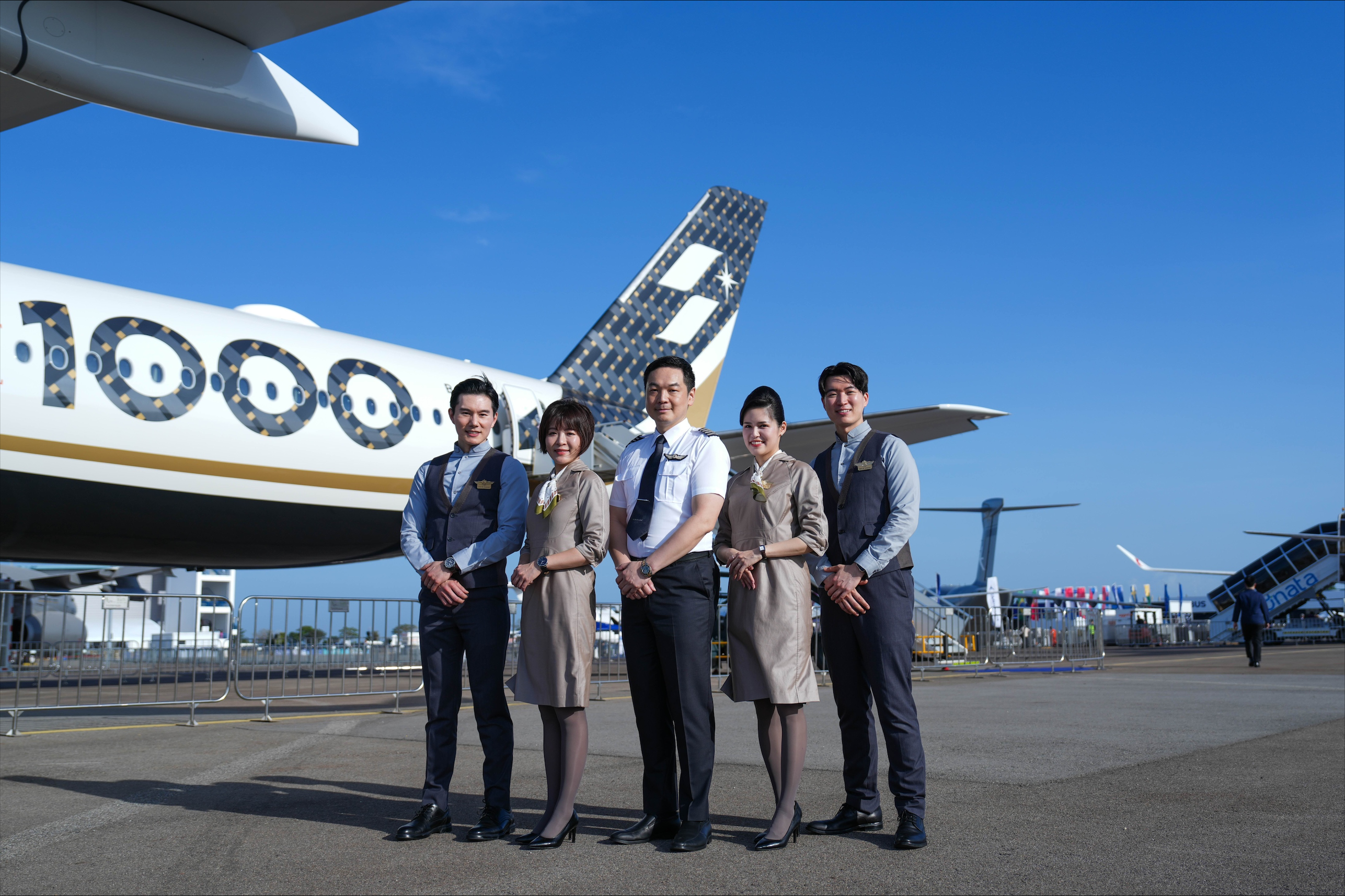
In early 2026, STARLUX took delivery of its first A350-1000—Taiwan’s first of the type—handed over in Toulouse and flown nonstop to Taipei. Shortly after, the airline showcased the aircraft at the Singapore Airshow before entry into commercial service, positioning the jet not only as a network tool but as a brand statement on an international stage.

3.1 The aircraft configuration tells you the strategy

STARLUX’s A350-1000 is configured as a four-class, 350-seat aircraft: 4 First Class suites, 40 Business Class seats, 36 Premium Economy, and 270 Economy.

This split matters:

  • It preserves premium density (First + Business + Premium Economy) rather than maximizing total seats—consistent with a yield-first model.
  • It creates monetization ladders that are critical for a hub-and-spoke connector: upgrades, corporate contracts, premium leisure, and high-value redemption flows.
  • It increases payload-range flexibility for long sectors while keeping unit costs competitive against other premium-oriented widebodies.

3.2 Range and economics: what the A350-1000 unlocks

Public materials emphasize a near-9,700-mile range (15,600 km), Rolls-Royce Trent XWB engines, and efficiency gains (fuel burn, noise, emissions). Strategically, this enables three things:

  1. Longer nonstop reach from Taipei with fewer compromises on payload, expanding feasible route options and seasonal resilience.
  2. Better unit costs at premium-friendly capacity—the airline can grow supply without a pure “volume bet.”
  3. Brand consistency at scale—a flagship aircraft type becomes a rolling showroom for premium design, which matters disproportionately for newer brands building global awareness.

4) The network logic: Taipei as a connector hub (and why the U.S. matters first)

STARLUX’s visible network messaging centers on: easy transfers in Taipei and a growing North American footprint. The U.S. growth phase is the first big test of the long-haul model because transpacific flying is where aircraft economics and premium monetization collide.

4.1 The competitive reality: strong incumbents and a mature hub

Taipei is not an empty playing field. It is a mature aviation market with established operators. STARLUX cannot win by being simply “another carrier with decent service.” It needs either:

  • Product differentiation that pulls premium share, and/or
  • Network convenience (schedules, connections, frequency) that creates habit and corporate relevance.

The A350-1000 primarily supports the second, while reinforcing the first.

4.2 Why the A350-1000 fits the U.S. growth phase

  • Stage lengths are long enough that fuel efficiency and reliability become major profitability determinants.
  • Premium cabins become materially important: the difference between “good demand” and “great economics” often sits in Business Class and Premium Economy performance.
  • Operational resilience matters: irregular operations harm a young premium brand more than an established one.

5) The brand layer: turning aircraft delivery into a global visibility strategy

STARLUX has been deliberate at turning fleet events into brand events. Showcasing the A350-1000 at a major international airshow before commercial entry is a signal to multiple audiences at once: passengers, industry partners, suppliers, and future talent.

The airline has also invested in cultural branding through the “AIRSORAYAMA” collaboration with Japanese artist Hajime Sorayama, designed to transform two A350-1000 aircraft into flying art pieces scheduled to enter service in 2026.

This is not just marketing. It’s a strategic response to a real constraint: a young airline must accelerate awareness and premium credibility faster than network scale naturally allows.


6) Fleet roadmap: A350-1000s, A330neos, and the cargo pivot

STARLUX’s broader fleet plan signals ambition beyond passenger growth. The A330neo supports flexible medium-to-long-haul scaling; the A350-1000 is the long-haul flagship platform; and the A350F order signals a serious cargo thesis connected to Taiwan’s role in global logistics flows.

6.1 Why cargo matters (even for a “luxury” airline)

  • It diversifies revenue away from passenger cyclicality.
  • It can improve long-haul route economics through belly + freighter optimization.
  • It leverages Taiwan’s geography and logistics ecosystem.

7) The A350-1000 in practice: where STARLUX can deploy it (and why)

Public communications link the A350-1000 to North American and European expansion ambitions, but the most useful way to assess deployment is scenario-based, rooted in constraints and advantages.

Likely deployment patterns (scenario-based)

Scenario A: Upgauge on existing U.S. trunk routes.
Replace or complement A350-900 flying on top routes to add capacity and premium seats without adding new city complexity.

Scenario B: Unlock new long-range markets with payload resilience.
Use the aircraft’s range/performance to make certain long sectors more feasible year-round.

Scenario C: The European “credibility route.”
A first European destination can be as much about brand signal as economics—especially for a young carrier establishing global premium relevance.


8) Competitive differentiation: what STARLUX gets right—and where the risks are

8.1 What looks structurally strong

  • Coherent brand + hardware strategy: premium positioning is consistent across the customer journey.
  • Fleet architecture designed for scale: commonality reduces friction as the airline grows.
  • Hub logic with international relevance: Taipei can play connector across North America and Asia when schedules and reliability are right.

8.2 Strategic risks to watch

  • Premium monetization discipline: a four-cabin layout is a statement, but it also requires careful revenue management and corporate traction.
  • Network depth vs. brand promise: premium brands are judged harshly when irregular operations occur, especially on long-haul.
  • Competitive response: incumbents can respond with frequency, loyalty levers, and corporate deals that are hard for a young airline to match quickly.

9) Why the Singapore Airshow debut is strategically smart

Displaying the A350-1000 at the Singapore Airshow before commercial entry is a “visibility stacking” move: it compresses the timeline for global awareness, reinforces premium credibility, and positions STARLUX as a serious long-haul player—not merely a regional newcomer.


10) What comes next: STARLUX’s likely extension path (2026–2031)

Based on publicly visible fleet and strategy signals, STARLUX’s next chapter is defined by three expansions:

  • Passenger long-haul growth: increased North America depth and selective new markets as additional widebodies arrive.
  • A350-1000 scale-up: using the flagship platform to grow capacity while maintaining premium positioning.
  • Cargo build-out: maturing a dedicated freight strategy as a margin and resilience lever.

Conclusion: the A350-1000 is the hinge between boutique and contender

STARLUX’s story is not “a new airline bought a new airplane.” It’s closer to: a young premium carrier is using fleet architecture and flagship deployment to compress the timeline from boutique launch to global long-haul relevance.

The A350-1000 matters because it is simultaneously:

  • a capacity and performance tool for long-haul economics,
  • a brand amplifier that reinforces premium credibility, and
  • a scalable step inside an all-Airbus operating model.

If STARLUX executes well—route selection, schedule reliability, premium revenue discipline—this fleet move could mark the point where the airline stops being a curiosity and becomes a true competitive force across the Pacific (and eventually beyond).


Edelweiss’ New A350 Cabin: When a Leisure Airline Outruns “Business Class” in the Lufthansa Group

In airline groups, product hierarchy is supposed to be simple: the “premium” brands set the standard, and the leisure subsidiaries optimize for cost, density, and seasonality. The Lufthansa Group has historically followed that playbook—Lufthansa and SWISS carry the premium narrative, while leisure-focused operators concentrate on holiday demand.

And yet, Edelweiss—SWISS’ leisure sister company within the Lufthansa Group—just unveiled an Airbus A350 cabin concept that will feel decisively more modern than the Business Class experience still offered on a meaningful share of the Group’s long-haul fleet.

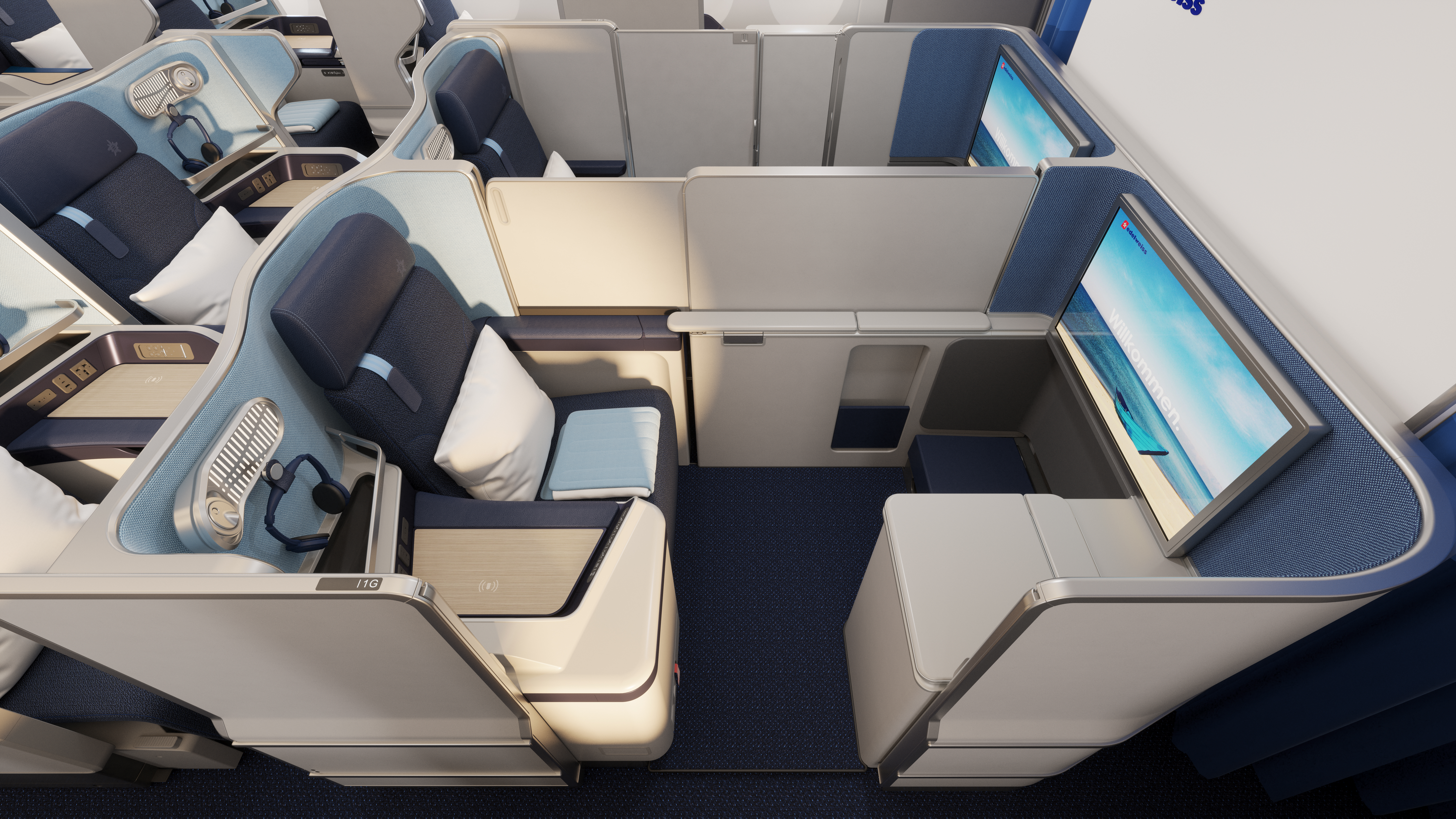
The announcement is not incremental. It’s a full cabin rethink: direct-aisle-access Business Class in a consistent 1-2-1 layout, a “Business Suite” with privacy doors and a 32-inch screen, a new Premium Economy cabin with upgraded service rituals, and a technology stack—Starlink, 4K IFE, Bluetooth audio connectivity, and USB-C power up to 60W—that many network carriers still treat as “future rollouts.”

This is a case study in how product strategy, fleet opportunity, and brand positioning can combine to produce a surprisingly premium outcome—even in a leisure airline.

Context: Edelweiss, SWISS, and the Lufthansa Group “Brand Ladder”

Edelweiss positions itself as Switzerland’s leading leisure travel airline, based at Zurich Airport, and describes itself as a sister company of SWISS and a member of the Lufthansa Group. That “sister-company” relationship is not just corporate structure—it shapes hub expectations and the minimum viable “Swiss quality” bar for long-haul leisure flying out of Zurich.

In practice, Zurich creates a unique pressure: passengers connect, compare, and talk. A holiday airline product that feels materially behind the hub’s premium flagship becomes visible friction—especially when premium leisure travelers increasingly pay for comfort upgrades rather than defaulting to the cheapest fare.

What Edelweiss Announced: A Cabin Designed “Holistically”

Edelweiss framed the A350 cabin as a complete experience redesign under the motto “More room to feel good,” blending calmer aesthetics, premium materials, and a modern onboard tech baseline across all classes. The official release is unusually detailed about both hard product and service cues.

Economy: small changes that matter on long-haul

Edelweiss is adding approximately three centimeters of legroom across Economy seats versus the previous cabin and increasing seat recline angle—minor on paper, meaningful at scale on long flights where comfort degradation is cumulative.

Premium Economy: a real “step-up,” plus service cues that justify price

Edelweiss is introducing a new Premium Economy cabin with 28 seats in a 2-3-2 configuration and roughly one meter of legroom, using a hard-shell seat comparable to those used on other Lufthansa Group airlines.

Commercially, the value proposition is reinforced through “premium cues”: welcome drink before takeoff, expanded food options served on china with a tablecloth, included alcoholic beverages, and noise-canceling headphones.

Business Class: consistent 1-2-1 layout with direct aisle access

The A350 moves Edelweiss Business to a continuous 1-2-1 configuration, giving every passenger direct aisle access and fully flat beds. Edelweiss also keeps a leisure-specific twist: roughly half of the seats are “double seats” designed for couples traveling together.

Business Suite: doors, a 32-inch screen, and a sleep-first design

The headline surprise is the Edelweiss Business Suite: ~1.20m privacy doors, a 32-inch monitor, adjustable divider in the middle suites for companions, a generous open foot area, and upgraded sleep amenities (memory foam pillow + mattress topper).

Technology: Starlink, 4K + Bluetooth, and serious power

Edelweiss bundles a modern tech baseline across all classes: free high-speed internet via Starlink, 4K screens with Bluetooth audio connectivity, 400+ films and series, a 3D flight map and external cameras, and human-centric lighting designed to support circadian rhythm.

It also includes wireless charging (Premium Economy and above) and USB-C/USB-A ports at every seat up to 60W (enough for laptop charging), with additional power outlets in Business and Business Suite.

Why this can feel better than Business Class across much of the Group

Customer perception is shaped less by the “best available seat” and more by the “most common seat people actually fly.” Lufthansa has publicly positioned its next-generation Allegris product as the future baseline, but rollout realities mean fleet experience remains mixed for now. For the official product view, see Lufthansa Allegris Business Class.

Historically, Lufthansa’s long-haul Business Class was widely criticized for older 2-2-2 layouts on parts of the fleet—especially due to the lack of direct aisle access. A representative industry write-up is available here: The Points Guy review.

Against that backdrop, Edelweiss’ A350 proposition is strategically clean: make direct aisle access consistent, add suite-level privacy for those who value it, and modernize tech so the cabin feels current.

What to watch: where the strategy will succeed—or get tested

1) Will customers pay for “Business Suite” as a distinct tier?

The suite concept is a monetization lever: doors, a 32-inch screen, enhanced sleep comfort, and extra storage are tangible. If priced intelligently (not purely as a luxury surcharge), this can drive ancillary revenue while keeping the base Business cabin competitive.

2) Premium Economy: the quiet profit engine

Premium Economy has become one of the most resilient long-haul segments because it captures travelers who self-fund comfort but won’t stretch to Business. Edelweiss’ combination of seat space plus upgraded service rituals is designed to defend the price differential with “felt value.”

3) Operational delivery will define the story

Cabins win headlines, but consistency wins loyalty. Starlink uptime, catering execution, and the real-world wear of premium materials will determine whether the product remains premium at scale. Edelweiss has set expectations high—now it must deliver with leisure-season peaks, high aircraft utilization, and mixed customer profiles.

Timeline: when you can actually fly it

Edelweiss states the first aircraft with the new cabin will enter service in December 2026, with flights bookable from summer 2026. Additional A350s will be converted in waves through January–July 2027, with the full A350 fleet equipped by summer 2027.


Source: Edelweiss Newsroom — “More space to feel good: Edelweiss presents the new cabin in the Airbus A350.” Read here.