
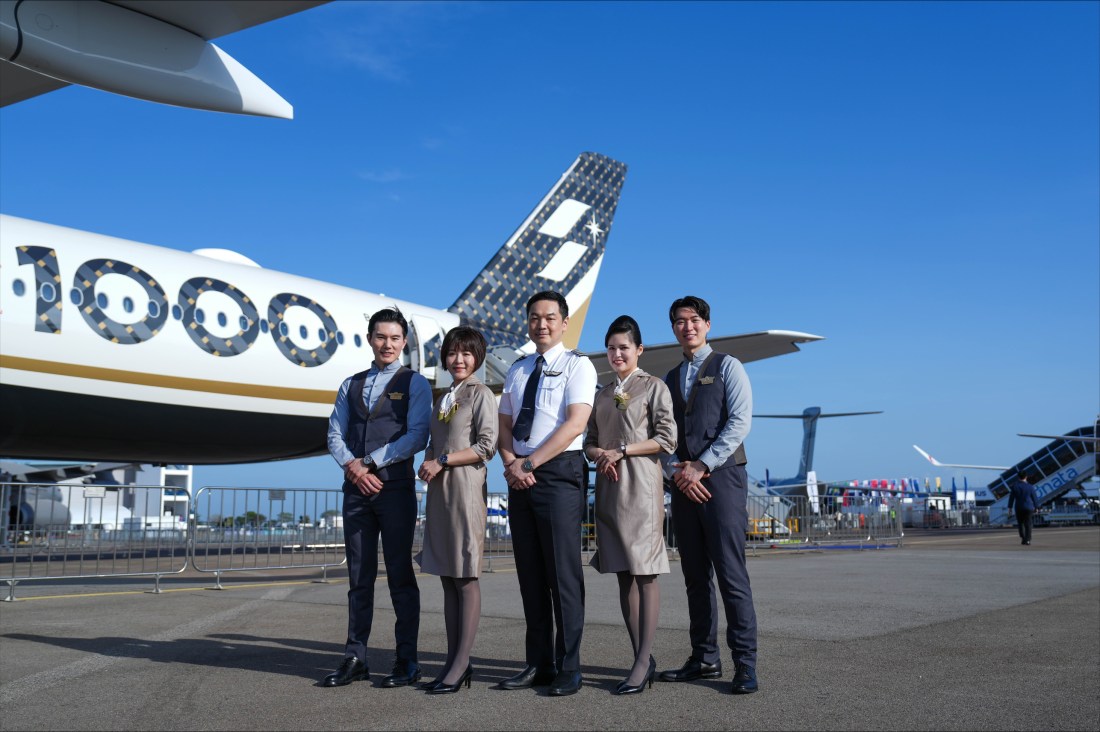
In just a few years, STARLUX Airlines has moved from “bold startup” to a carrier with a credible long-haul blueprint. The moment that crystallizes this shift is the arrival—and global debut—of Taiwan’s first Airbus A350-1000, a flagship designed to unlock network range, premium monetization, and scale economics without abandoning the brand’s boutique DNA.
This article is a strategic deep dive into: (1) STARLUX’s genesis and positioning, (2) why an all-Airbus fleet is not just a procurement choice but a business model, (3) what the A350-1000 enables (and what it does not), and (4) how the airline’s next expansion wave could play out across North America and Europe.
1) The STARLUX origin story: a premium airline built “in reverse”
Most airlines either start with volume and later layer premium, or they start premium but remain boutique due to limited scale economics. STARLUX is trying something rarer: building a premium brand from day one, while designing the operating model to scale into long-haul relevance.
Founded by aviation executive and trained pilot Chang Kuo-wei, STARLUX launched operations in 2020 as Taiwan’s newest full-service airline, entering a market already served by strong incumbents.
That makes the strategic problem less about “how to fly planes” and more about “how to create a differentiated premium proposition from a hub that already has established competitors.” STARLUX’s bet is that a curated product, paired with modern fleet economics and a connective hub logic in Taipei, can carve a sustainable niche—especially on long-haul routes where premium demand and brand perception carry disproportionate yield impact.
1.1 Premium as a system, not a cabin
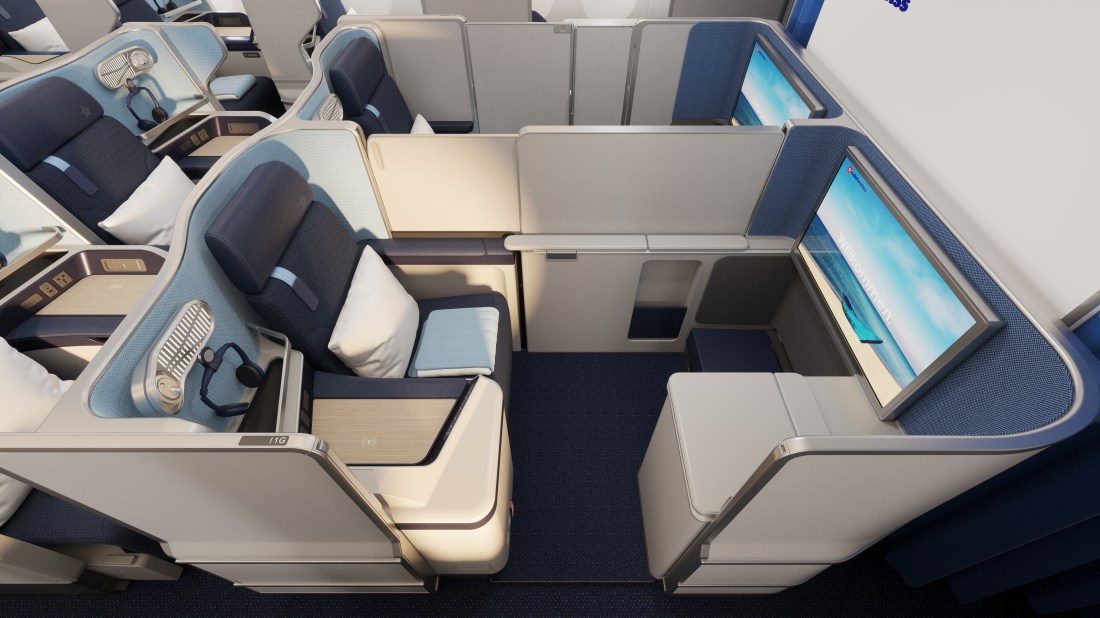
STARLUX treats premium not as an isolated business-class seat, but as an end-to-end system: cabin design language, service choreography, consistent hardware, and a “luxury-forward” brand signature. On long-haul aircraft, it uses a four-cabin configuration—including a small First Class—signaling an intent to compete at the top end rather than “premium-ish.”
That approach is expensive if your network is thin and your fleet is fragmented. Which leads to the second foundational choice: fleet strategy.
2) The all-Airbus fleet strategy: commonality as the hidden growth engine
STARLUX has built an all-Airbus fleet across narrowbody and widebody families and reinforced this approach with additional orders across the A330neo and A350 families, including freighter capacity via the A350F.
To many observers, “all-Airbus” can sound like brand preference. Strategically, it is closer to an operating model: cockpit commonality, training pipelines, maintenance and spares rationalization, vendor ecosystem simplification, and more predictable operational performance as you grow.
2.1 Why commonality matters more for a young airline
Legacy carriers often carry fleet complexity as historical baggage. Young airlines can build a clean fleet architecture that allows them to grow without exploding their fixed-cost base.
When an airline adds a new aircraft type, it doesn’t just buy airframes; it buys complexity: additional crew qualification paths, simulator capacity, parts inventories, maintenance programs, and reliability learning curves. Commonality reduces the “organizational drag” of growth—especially important when you are simultaneously building network breadth, brand, and operational maturity.
This is why the A350-1000 is not merely “a bigger A350.” It is a scale step within the same family—meaning STARLUX gets capacity and performance without resetting the operational playbook.
3) The A350-1000 moment: Taiwan’s first, and STARLUX’s flagship pivot
In early 2026, STARLUX took delivery of its first A350-1000—Taiwan’s first of the type—handed over in Toulouse and flown nonstop to Taipei. Shortly after, the airline showcased the aircraft at the Singapore Airshow before entry into commercial service, positioning the jet not only as a network tool but as a brand statement on an international stage.
3.1 The aircraft configuration tells you the strategy
STARLUX’s A350-1000 is configured as a four-class, 350-seat aircraft: 4 First Class suites, 40 Business Class seats, 36 Premium Economy, and 270 Economy.
This split matters:
- It preserves premium density (First + Business + Premium Economy) rather than maximizing total seats—consistent with a yield-first model.
- It creates monetization ladders that are critical for a hub-and-spoke connector: upgrades, corporate contracts, premium leisure, and high-value redemption flows.
- It increases payload-range flexibility for long sectors while keeping unit costs competitive against other premium-oriented widebodies.
3.2 Range and economics: what the A350-1000 unlocks
Public materials emphasize a near-9,700-mile range (15,600 km), Rolls-Royce Trent XWB engines, and efficiency gains (fuel burn, noise, emissions). Strategically, this enables three things:
- Longer nonstop reach from Taipei with fewer compromises on payload, expanding feasible route options and seasonal resilience.
- Better unit costs at premium-friendly capacity—the airline can grow supply without a pure “volume bet.”
- Brand consistency at scale—a flagship aircraft type becomes a rolling showroom for premium design, which matters disproportionately for newer brands building global awareness.
4) The network logic: Taipei as a connector hub (and why the U.S. matters first)
STARLUX’s visible network messaging centers on: easy transfers in Taipei and a growing North American footprint. The U.S. growth phase is the first big test of the long-haul model because transpacific flying is where aircraft economics and premium monetization collide.
4.1 The competitive reality: strong incumbents and a mature hub
Taipei is not an empty playing field. It is a mature aviation market with established operators. STARLUX cannot win by being simply “another carrier with decent service.” It needs either:
- Product differentiation that pulls premium share, and/or
- Network convenience (schedules, connections, frequency) that creates habit and corporate relevance.
The A350-1000 primarily supports the second, while reinforcing the first.
4.2 Why the A350-1000 fits the U.S. growth phase
- Stage lengths are long enough that fuel efficiency and reliability become major profitability determinants.
- Premium cabins become materially important: the difference between “good demand” and “great economics” often sits in Business Class and Premium Economy performance.
- Operational resilience matters: irregular operations harm a young premium brand more than an established one.
5) The brand layer: turning aircraft delivery into a global visibility strategy
STARLUX has been deliberate at turning fleet events into brand events. Showcasing the A350-1000 at a major international airshow before commercial entry is a signal to multiple audiences at once: passengers, industry partners, suppliers, and future talent.
The airline has also invested in cultural branding through the “AIRSORAYAMA” collaboration with Japanese artist Hajime Sorayama, designed to transform two A350-1000 aircraft into flying art pieces scheduled to enter service in 2026.
This is not just marketing. It’s a strategic response to a real constraint: a young airline must accelerate awareness and premium credibility faster than network scale naturally allows.
6) Fleet roadmap: A350-1000s, A330neos, and the cargo pivot
STARLUX’s broader fleet plan signals ambition beyond passenger growth. The A330neo supports flexible medium-to-long-haul scaling; the A350-1000 is the long-haul flagship platform; and the A350F order signals a serious cargo thesis connected to Taiwan’s role in global logistics flows.
6.1 Why cargo matters (even for a “luxury” airline)
- It diversifies revenue away from passenger cyclicality.
- It can improve long-haul route economics through belly + freighter optimization.
- It leverages Taiwan’s geography and logistics ecosystem.
7) The A350-1000 in practice: where STARLUX can deploy it (and why)
Public communications link the A350-1000 to North American and European expansion ambitions, but the most useful way to assess deployment is scenario-based, rooted in constraints and advantages.
Likely deployment patterns (scenario-based)
Scenario A: Upgauge on existing U.S. trunk routes.
Replace or complement A350-900 flying on top routes to add capacity and premium seats without adding new city complexity.
Scenario B: Unlock new long-range markets with payload resilience.
Use the aircraft’s range/performance to make certain long sectors more feasible year-round.
Scenario C: The European “credibility route.”
A first European destination can be as much about brand signal as economics—especially for a young carrier establishing global premium relevance.
8) Competitive differentiation: what STARLUX gets right—and where the risks are
8.1 What looks structurally strong
- Coherent brand + hardware strategy: premium positioning is consistent across the customer journey.
- Fleet architecture designed for scale: commonality reduces friction as the airline grows.
- Hub logic with international relevance: Taipei can play connector across North America and Asia when schedules and reliability are right.
8.2 Strategic risks to watch
- Premium monetization discipline: a four-cabin layout is a statement, but it also requires careful revenue management and corporate traction.
- Network depth vs. brand promise: premium brands are judged harshly when irregular operations occur, especially on long-haul.
- Competitive response: incumbents can respond with frequency, loyalty levers, and corporate deals that are hard for a young airline to match quickly.
9) Why the Singapore Airshow debut is strategically smart
Displaying the A350-1000 at the Singapore Airshow before commercial entry is a “visibility stacking” move: it compresses the timeline for global awareness, reinforces premium credibility, and positions STARLUX as a serious long-haul player—not merely a regional newcomer.
10) What comes next: STARLUX’s likely extension path (2026–2031)
Based on publicly visible fleet and strategy signals, STARLUX’s next chapter is defined by three expansions:
- Passenger long-haul growth: increased North America depth and selective new markets as additional widebodies arrive.
- A350-1000 scale-up: using the flagship platform to grow capacity while maintaining premium positioning.
- Cargo build-out: maturing a dedicated freight strategy as a margin and resilience lever.
Conclusion: the A350-1000 is the hinge between boutique and contender
STARLUX’s story is not “a new airline bought a new airplane.” It’s closer to: a young premium carrier is using fleet architecture and flagship deployment to compress the timeline from boutique launch to global long-haul relevance.
The A350-1000 matters because it is simultaneously:
- a capacity and performance tool for long-haul economics,
- a brand amplifier that reinforces premium credibility, and
- a scalable step inside an all-Airbus operating model.
If STARLUX executes well—route selection, schedule reliability, premium revenue discipline—this fleet move could mark the point where the airline stops being a curiosity and becomes a true competitive force across the Pacific (and eventually beyond).
 Olivier Delestre-Levai