Accor’s FY2025 Results: Solid, Above Guidance—and a Useful Lens on Where Hospitality Goes Next

Hotel groups rarely get the luxury of “clean” financial narratives: performance is a composite of macro demand, regional calendars, currency effects, distribution power, and—most critically—how well an operator has reshaped itself toward an asset-light, fee-driven machine.

Accor’s full-year 2025 results are a strong illustration of that transformation. The headline is simple: Accor delivered results above its 2025 guidance, with particularly strong momentum in Luxury & Lifestyle. The more interesting story is what these results reveal about the hospitality industry’s 2026 operating model—where growth is less about “more demand” and more about “better mix, better distribution, better development economics.”


Executive Takeaways (What Matters Most)

  • Accor’s revenue and profitability outperformed guidance, powered by Luxury & Lifestyle, disciplined development, and improving distribution economics.
  • RevPAR growth is still there, but it’s normalizing. In 2026, the winners will be the groups that can defend pricing while optimizing channel cost.
  • Europe/ENA and parts of MEA remain robust, while the US picture is mixed across the industry and China continues to be uneven.
  • Asset-light + loyalty + tech-enabled direct booking is the strategic trifecta. Accor is leaning harder into ALL Accor and distribution tooling to reduce OTA dependency.
  • Capital returns are back as a core pillar (dividend growth + planned buybacks), but investors still scrutinize “complexity items” like stakes in related entities and timing of disposals.

1) The Accor Scorecard: Above Guidance, With Luxury & Lifestyle Leading

Accor’s FY2025 results confirm something the industry has been living for 24 months: the demand engine hasn’t collapsed—it has segmented. The premium guest, the experience-led traveler, and the “bleisure” customer remain comparatively resilient. The pressure tends to show up first in price-sensitive segments, shorter booking windows, and high-OTA-dependent demand.

Key FY2025 highlights (simplified)

  • RevPAR: Up 4.2% for FY2025 (with a strong +7.0% in Q4)
  • Consolidated revenue: €5,639m
  • Recurring EBITDA: €1,201m, up 13.3% at constant currency (above guidance)
  • Net unit growth: 3.7% (303 hotel openings / ~51,000 rooms added)
  • Network scale: ~5,836 hotels / 881,427 rooms
  • Pipeline: >257,000 rooms across ~1,527 hotels
  • Shareholder returns: Proposed dividend €1.35/share (+7%), and a planned €450m buyback program for FY2026 (timing linked to corporate constraints)

What stands out is not only the absolute numbers—it’s the shape of performance: Accor’s two-division focus (Premium/Midscale/Economy vs Luxury/Lifestyle) is increasingly a portfolio management engine, letting the group push growth where profitability and pricing power are strongest.


2) The RevPAR Story: “Growth” Now Means Different Things by Region

RevPAR is still the easiest industry shorthand, but in 2026 it’s less about the aggregate percentage and more about the underlying drivers (rate vs occupancy) and the mix (urban vs resort, domestic vs international, direct vs OTA).

Accor’s Q4 snapshot: strength where calendars and mix cooperate

  • Premium/Midscale/Economy: Q4 RevPAR up 5.8%, primarily price-driven
  • Luxury & Lifestyle: Q4 RevPAR up 9.5% (both rate and occupancy contributed)

The important nuance: Accor referenced calendar distortions in Europe linked to the Paris Olympics comparison effects, which matters because it shows how quickly “headline volatility” can return even in a steady demand environment. In other words: the industry is past the pure rebound phase. Now it’s operational excellence and revenue strategy, quarter by quarter.


3) Profitability: The Quiet Win Is Margin Structure, Not Just Revenue

Accor’s recurring EBITDA growth above guidance is the kind of “boring good news” investors like—because it suggests that the company is finding operating leverage in a model that is increasingly fee-weighted.

Where profitability improved

  • Recurring EBITDA: €1,201m (+13.3% at constant currency)
  • Premium/Midscale/Economy EBITDA: €836m
  • Luxury & Lifestyle EBITDA: €482m (materially faster growth than PM&E)

One “real life” reminder embedded in the release: provisions tied to operator distress (a hospitality group under judicial administration affecting dozens of hotels) underline that even in asset-light models, hotel groups still carry operational and reputational exposure through managed networks. Asset-light is not risk-free—it’s “risk-shifted.”


4) Development & Pipeline: The Industry’s Real Growth Engine

Across the global hotel sector, 2025–2026 is not primarily a demand story; it’s a supply and brand-scale story. The majors are competing on developer preference: conversion-friendly brands, lower-cost prototypes, stronger loyalty contribution, and distribution efficiency.

Accor’s FY2025 net unit growth of 3.7% is healthy—and its pipeline of more than 257k rooms is a strategic asset. But here’s the key point when comparing to US-centric peers: some competitors are pushing materially higher net unit growth rates (often via franchising-heavy expansion in North America).

So what does Accor do differently? It leans into:

  • Luxury & Lifestyle expansion (where fees and brand pricing power can be more attractive)
  • Resort and experience-led positioning (especially where leisure is resilient)
  • Distribution + loyalty “flywheel” to improve hotel owner economics beyond pure brand naming rights

5) Benchmarking Accor vs the Hospitality Pack (Hilton, Marriott, IHG, Hyatt—and the Franchise Giants)

To understand Accor’s results, it helps to place them against the industry’s current pattern: moderate RevPAR growth, aggressive pipeline development, and heavy capital return programs.

Hilton: Lower RevPAR growth, faster unit growth, massive capital returns

Hilton reported modest RevPAR growth (low single digits), but it continues to scale aggressively: full-year openings were large and net unit growth was strong, with a sizeable development pipeline and ongoing share repurchases. Hilton’s 2026 outlook frames RevPAR as modest, but growth as structural: more rooms, more fees, more loyalty-driven demand capture.

IHG: Global balance (strong EMEAA), and a clear event-driven US thesis

IHG’s 2025 profile shows global RevPAR growth that is positive but uneven by region, with stronger performance in EMEAA and weaker US momentum in parts of the year. Their narrative emphasizes global scale, fee margin expansion, and demand tailwinds from major events (notably the 2026 World Cup) to support a US rebound thesis.

Hyatt: Stronger RevPAR, all-inclusive outperformance, continued portfolio reshaping

Hyatt delivered solid RevPAR growth in 2025, with particularly strong performance in all-inclusive metrics—an important read-across for Accor’s Luxury & Lifestyle momentum and the wider resort category. Hyatt’s development pipeline and net rooms growth reinforce the same sector logic: growth via brand + management/franchise expansion, supported by loyalty and distribution.

Marriott: Scale, system growth, and consistency (the sector’s “baseline”)

Marriott remains the industry’s gravity well: massive system scale, steady RevPAR, and continuous net rooms expansion. For competitors, the strategic question is not “how to beat Marriott everywhere,” but “where to create disproportionate advantage”—luxury/lifestyle ecosystems, region-specific dominance, or tech-enabled distribution edge.

The franchise-heavy giants (Wyndham, Choice): US RevPAR pressure, but durable economics

At the value and midscale end, franchise-heavy groups can show a different pattern: RevPAR pressure in parts of the US, but continued fee resilience, pipeline conversion activity, and strong free cash flow generation. This is where distribution costs and channel mix become existential—because in price-sensitive segments, OTAs can erase margin faster than in luxury.


6) The Real 2026 Playbook: Distribution Economics + Loyalty + Brand Architecture

Accor’s release repeatedly signals the same strategic direction the whole industry is chasing—yet with different degrees of urgency and credibility: reduce distribution leakage and increase the value of the brand-labeled booking.

In practical terms, that means:

  • Loyalty as a margin strategy, not just a marketing program (ALL Accor is positioned as an engine, not an accessory)
  • Tech as a distribution weapon (better direct conversion, smarter pricing, personalization, and lower “cost of sale”)
  • Brand architecture discipline (fewer fuzzy overlaps; clearer owner propositions; more conversion-friendly flags)
  • Experience portfolio expansion to widen the monetization surface beyond rooms (lifestyle F&B concepts, events, membership-like behaviors)

The punchline: 2026 winners won’t be those with the highest RevPAR. They’ll be those with the lowest incremental cost to capture demand, and the best ability to direct that demand to the right products.


7) Risks and Watch-Items (What Could Break the Narrative)

Accor’s results are strong. But the industry remains exposed to a set of “fast-moving variables”:

  • Currency headwinds (particularly for global groups reporting in EUR or USD while demand and costs occur in many currencies)
  • China’s uneven recovery and its knock-on effect on regional occupancy and international travel flows
  • OTA bargaining power (and the temptation to “buy demand” at the cost of long-term margin)
  • Owner economics under higher rates / refinancing cycles (affecting new-build decisions, renovations, and conversions)
  • Portfolio complexity (stakes, disposals, and timing constraints can dilute clarity for investors)

If 2024 was about “post-rebound normalization,” then 2026 becomes about “structural advantage.” The groups that have built defensible distribution + loyalty ecosystems will be better positioned when demand is merely decent instead of spectacular.


Conclusion: Accor’s FY2025 Is a Strong Result—and a Clear Signal

Accor’s FY2025 results support a simple thesis: the group is increasingly operating like a modern hospitality platform—balancing premium scale with a faster-growing Luxury & Lifestyle engine, expanding its network with discipline, and investing in distribution capabilities that can protect margin over time.

Compared with the broader industry, Accor’s story rhymes with the sector’s leading practices (asset-light fees, loyalty leverage, capital returns), while retaining a distinctive emphasis on lifestyle ecosystems and experience-led hospitality.

For 2026, the key question is not whether hotel demand will exist—it will. The question is: who captures that demand most efficiently, with the strongest mix, and the lowest cost of sale. Accor’s FY2025 suggests it intends to be in that winner circle.

America Is Rebuilding Intercity Rail: Faster Trains, Better Corridors, and a New Decade of Reliability

For decades, U.S. intercity passenger rail has lived in a paradox: a globally competitive product on a handful of corridors (hello Northeast Corridor), and a fragile, delay-prone experience almost everywhere else—largely because passenger trains share constrained infrastructure with freight, and because “state of good repair” got deferred too long.

That’s changing—slowly, unevenly, but materially. Over the last five years, the U.S. has stacked three forces on top of each other:

  • Unprecedented federal rail funding (and new program structures) under the Infrastructure Investment and Jobs Act / Bipartisan Infrastructure Law (IIJA/BIL).
  • A corridor-centric strategy (Corridor ID) designed to turn “nice ideas” into bankable, phased intercity rail programs.
  • A long-overdue fleet refresh that starts to modernize the customer experience at scale (NextGen Acela, Airo—and more to come).

This article looks back at the most important initiatives of the past five years—and, more importantly, what the next ten years could deliver if the U.S. executes on the hard parts: infrastructure, dispatching, maintenance facilities, and operating models.


Table of contents


Why this is happening now

The IIJA/BIL created a funding environment passenger rail advocates have been chasing for decades: multi-year, programmatic money at a national scale. But money alone isn’t the story. The bigger shift is structural: the U.S. is moving from “one-off projects” to “corridor development” as the unit of delivery—where service plans, capital packages, phased upgrades, and operating agreements get developed together.

In plain terms: the U.S. is building the bureaucracy and financing rails needed to behave (a bit more) like countries that routinely deliver incremental upgrades into a coherent network.


The fleet revolution: new trains as a “confidence signal”

Rail is one of the rare transport sectors where the hardware is part of the trust contract. Riders don’t read grant announcements. They notice:

  • whether the seats are ergonomic
  • whether the restrooms are usable (and accessible)
  • whether power outlets and lighting work
  • whether the train feels like it belongs in this decade

NextGen Acela: modernizing the flagship

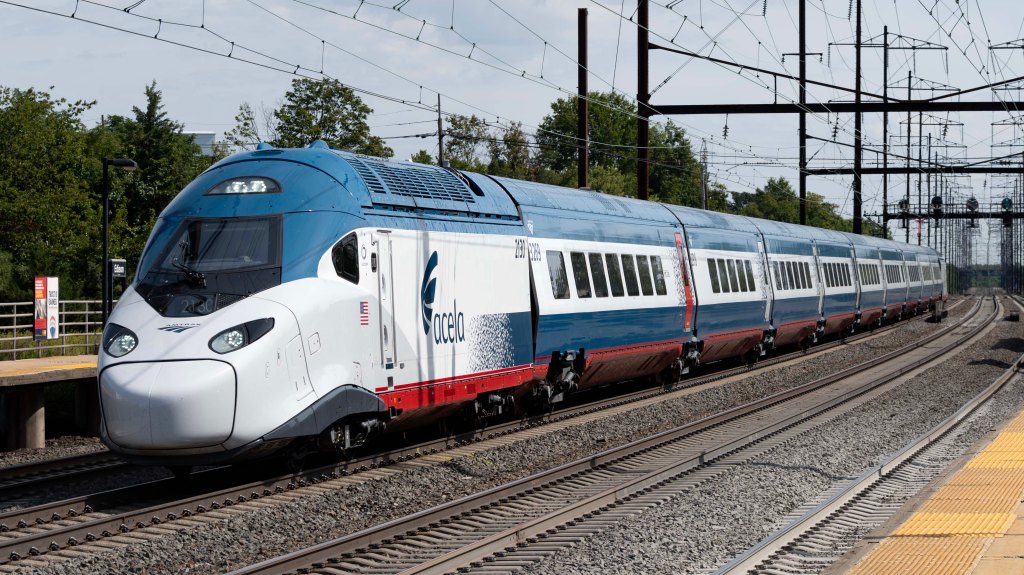
Amtrak’s high-speed brand is being refreshed through the NextGen Acela program—new trainsets, higher capacity, and a more modern onboard experience on the Northeast Corridor. It’s a foundational upgrade to the corridor’s premium offer and an important signal that Amtrak intends to keep growing NEC ridership against air and car alternatives.

Airo: the “regional train” finally becomes a product

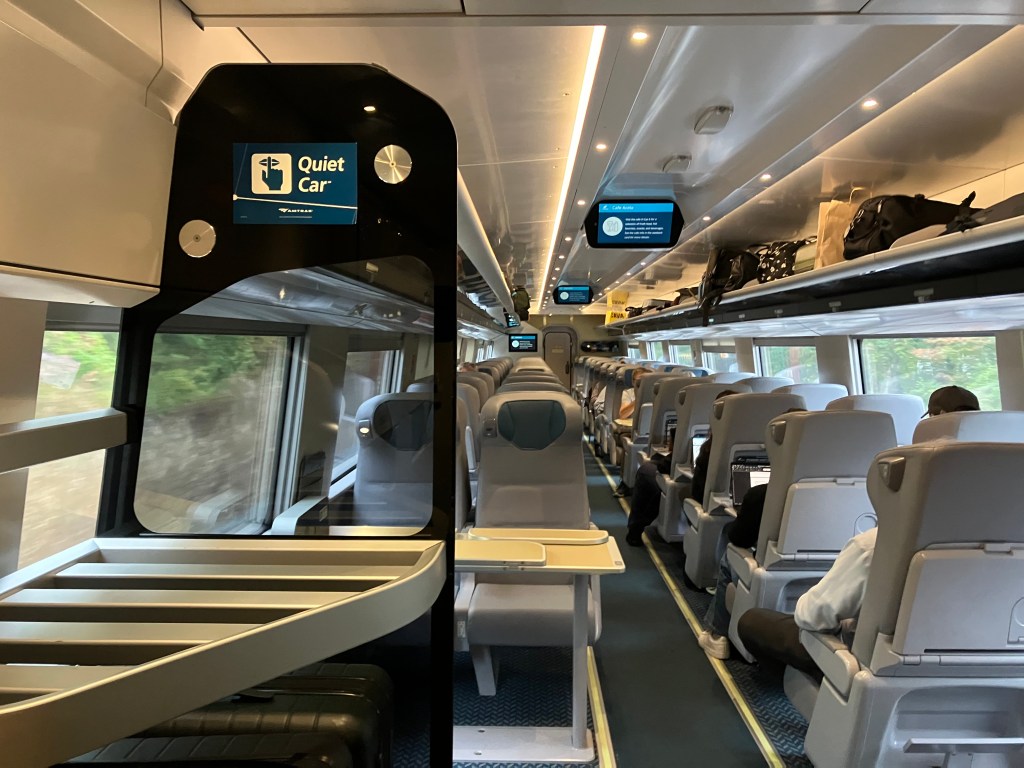
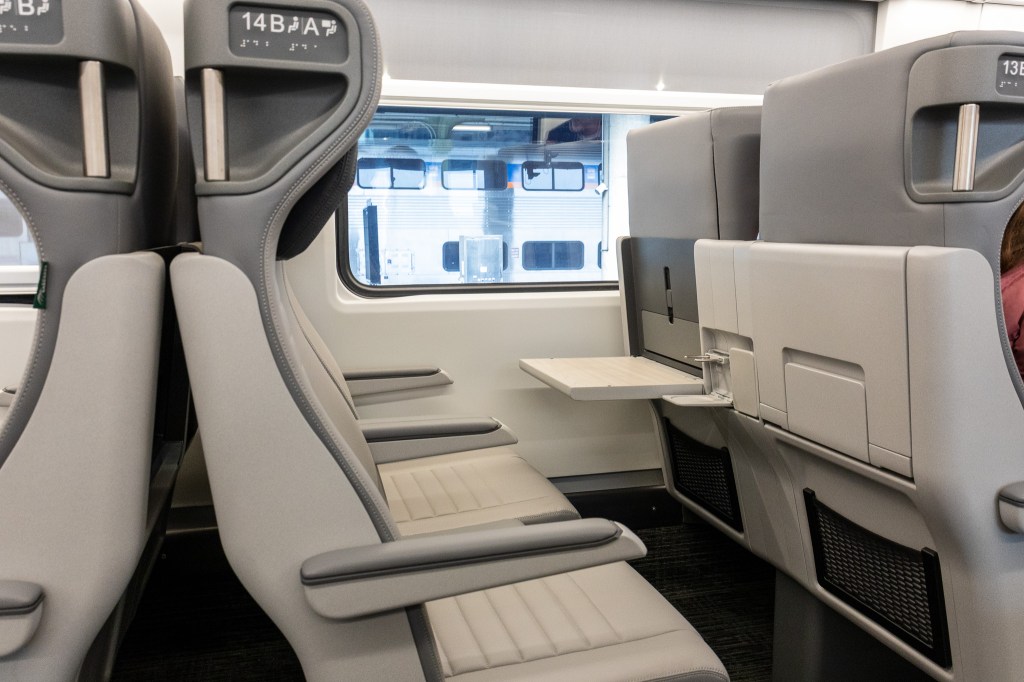
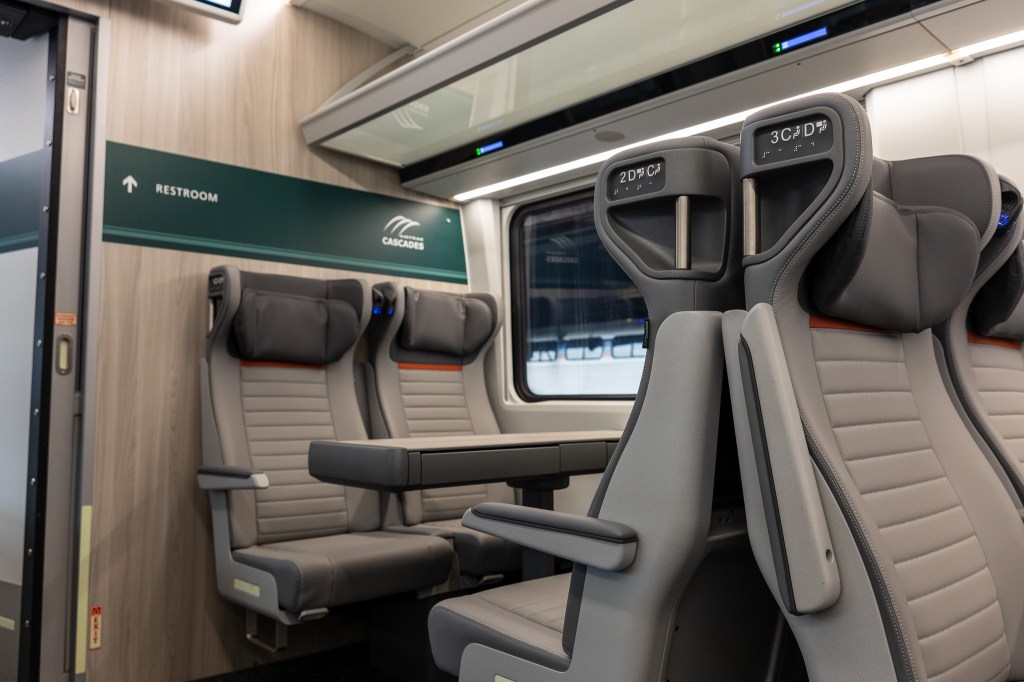
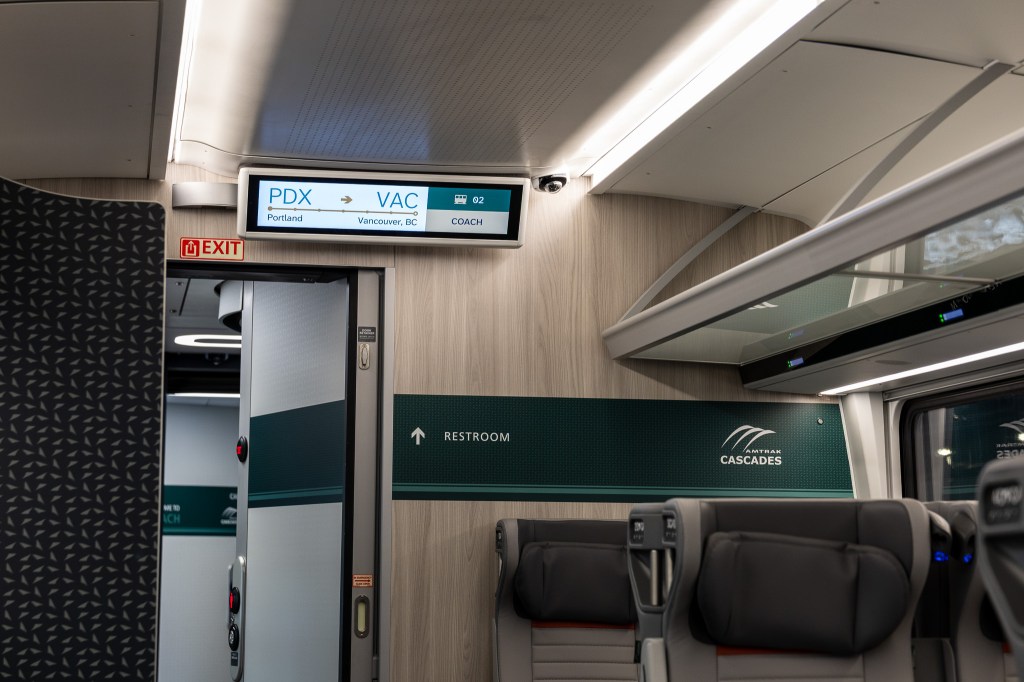
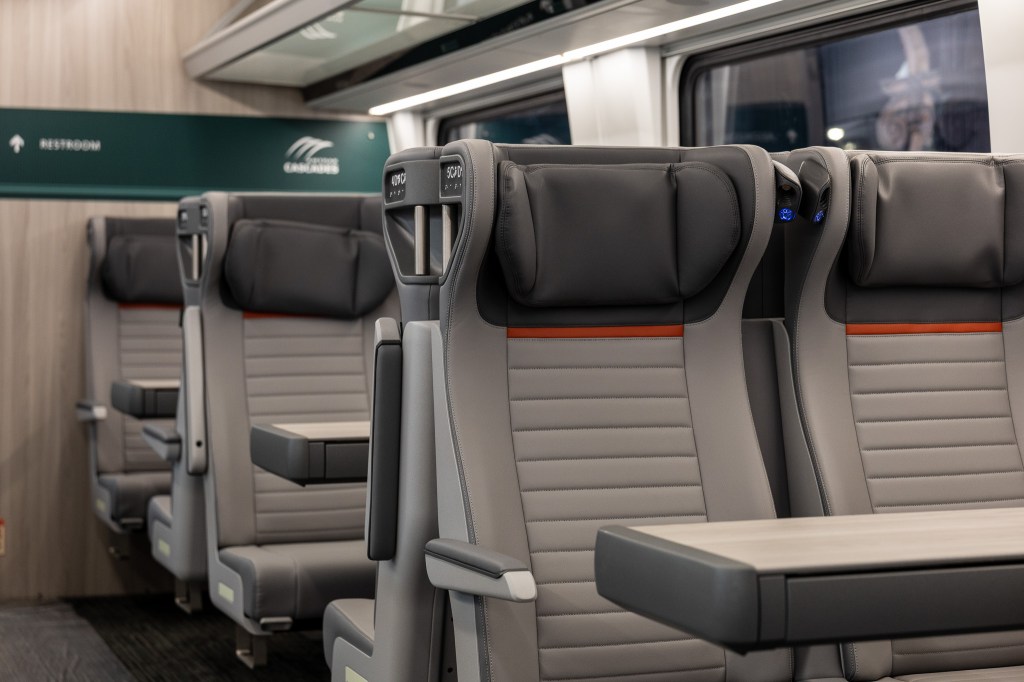
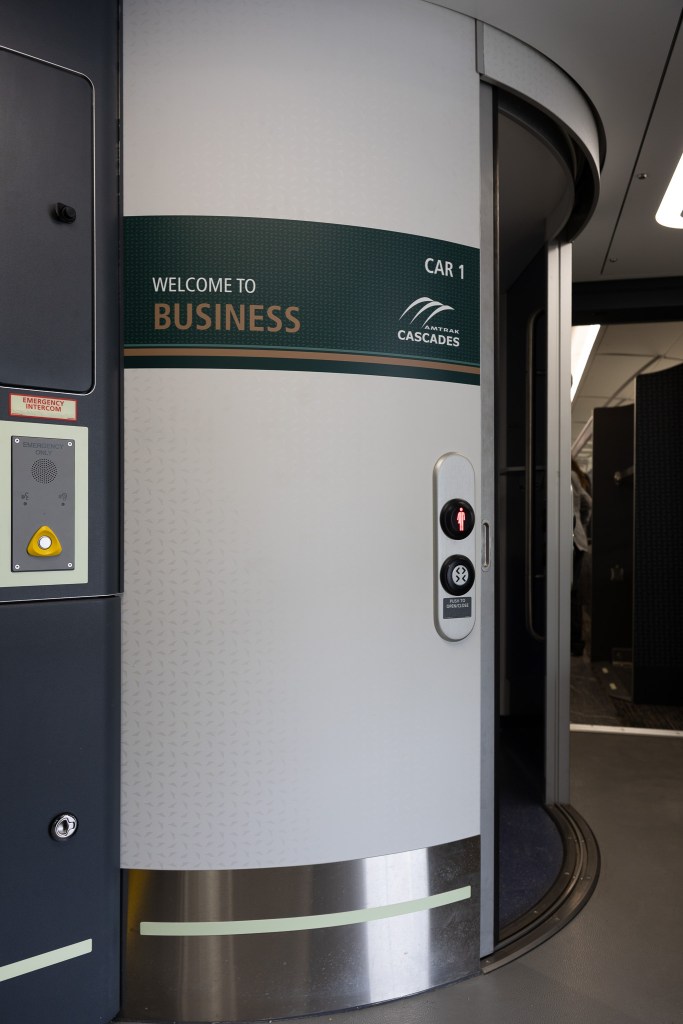
The most consequential fleet story for the broader network is Amtrak Airo: a large-scale replacement of aging equipment with trains designed around modern accessibility, better interiors, and a calmer, more ergonomic experience.

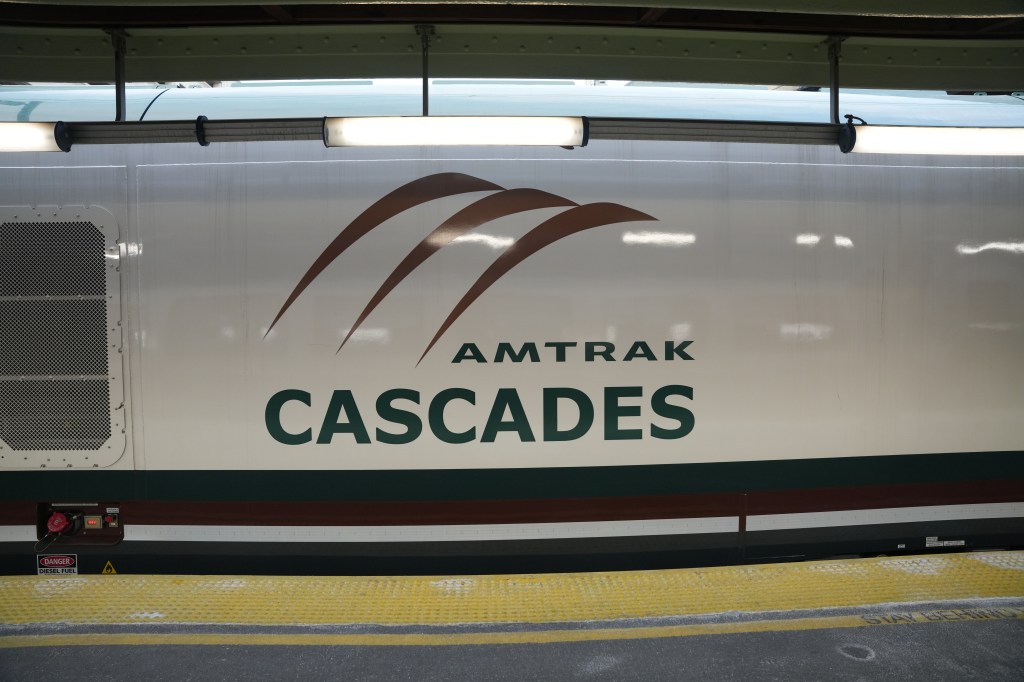
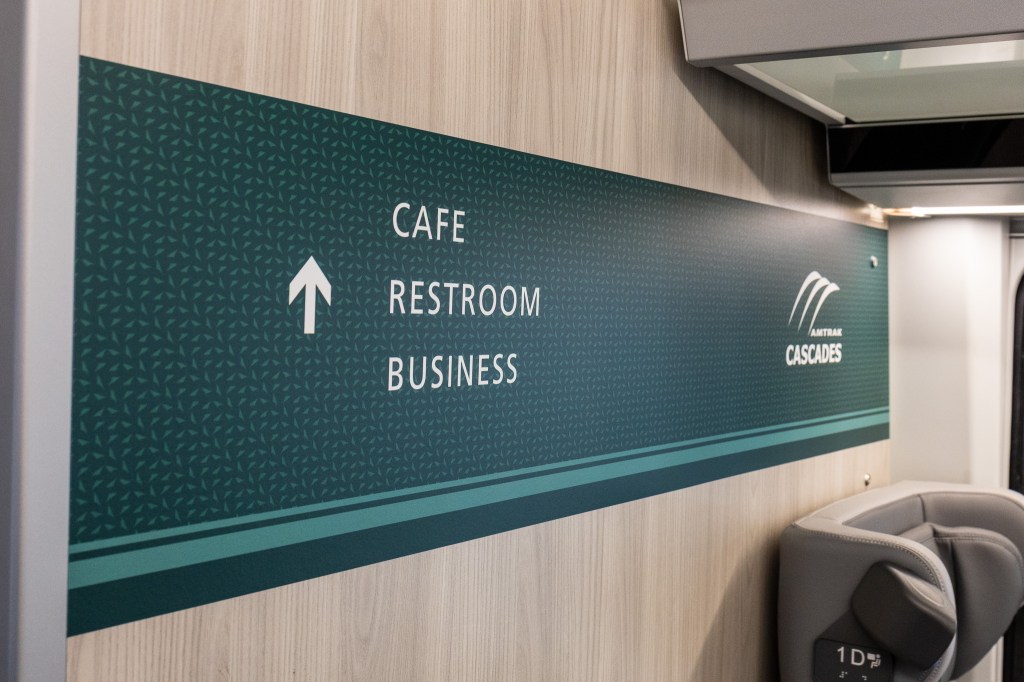
Based on the recent public previews and reporting, Amtrak plans to roll out Airo service starting with the Cascades in the Pacific Northwest, then expand across corridors from North Carolina to Maine, with plans to integrate Airo into Northeast Regional service by 2027. The details that matter are not “luxury”—they are the basics executed well: reliable power, thoughtful tray design, spacious and touchless restrooms, and accessibility integrated into the experience rather than bolted on.

Strategic point: Fleet modernization does two things at once: it improves the experience and strengthens the political and financial case for infrastructure upgrades. Trains are visible proof that rail investment isn’t theoretical.


Corridors, not slogans: the program machinery that matters

Corridor development is unglamorous—but it’s the “operating system” for passenger rail expansion. Over the past five years, the U.S. has pushed toward a model where corridors are advanced as programs: early-stage planning and governance, then incremental infrastructure and service upgrades, then repeat. This is how you get from “we should have trains” to “here is a credible service plan, capital plan, phasing, and operating agreement.”

Why it matters: the U.S. historically struggled with a missing middle—projects were either too early to fund or too under-defined to execute. A corridor-based pipeline is meant to standardize the path from concept into delivery.


The Northeast Corridor: megaprojects that unlock reliability

The NEC is where intercity rail already competes with air on door-to-door time for many city pairs. But the NEC is also the most fragile: century-old tunnels, bridge bottlenecks, constrained capacity, and cascading delays that ripple across the whole system.

Hudson River tunnel capacity: the single biggest choke point

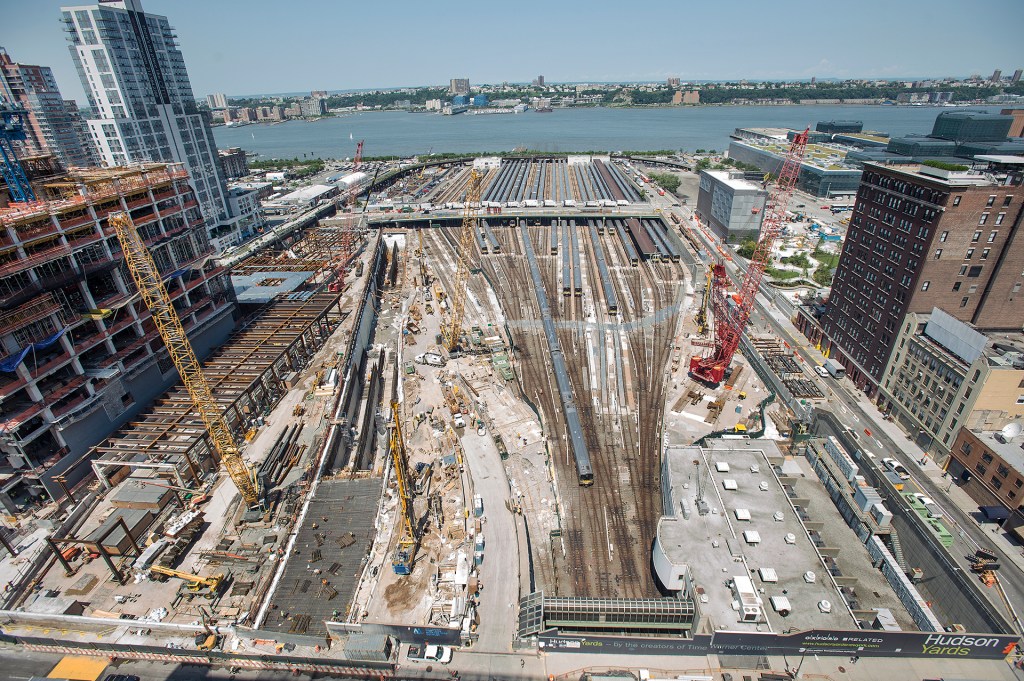
New York–New Jersey rail capacity (and resilience) hinges on adding and modernizing tunnel capacity under the Hudson River. This is not just a New York project; it is a Northeast economy project. In reliability terms, it’s the difference between a resilient network and a network where one aging asset can trigger region-wide disruption.

Baltimore tunnel replacement: speed + resilience

Baltimore’s long-standing tunnel constraints are another classic “small geography, huge impact” problem. Tunnel replacement and alignment improvements are the kind of infrastructure that riders don’t celebrate—but that quietly make the timetable trustworthy.

What these projects really do: they don’t just shave minutes. They reduce cascading delays—turning rail from “sometimes great” into “predictably reliable,” which is what converts car and short-haul air demand.


State corridors: the quiet winners (Midwest, Southeast, Virginia)

If the NEC is the flagship, the real volume story is in state-supported corridors: incremental frequency, improved schedules, and better stations—often at modest top speeds (79–110 mph) but with strong door-to-door competitiveness.

Midwest: “more trains” is the killer feature

One of the smartest corridor tactics is simply adding useful frequency on routes where demand already exists. A second daily round trip can change a corridor from “nice idea” to “practical default,” especially for business travel, weekend travel, and students.

Virginia: a blueprint for passenger rail expansion on shared tracks

Virginia has demonstrated a pragmatic model: invest in capacity, negotiate operating realities, and deliver incremental service improvements without waiting for a moonshot high-speed program. It’s not glamorous, but it’s how you build ridership—trip by trip, timetable by timetable.

Southeast Corridor: the Raleigh–Richmond logic

The Raleigh–Richmond market (and broader Southeast corridor) is one of the most strategically logical intercity rail plays in the U.S.: population growth, highway congestion, and short-haul air friction create the conditions where reliable rail can win—if the corridor is treated as a program, not a press release.


Private intercity rail: Brightline (Florida + West)

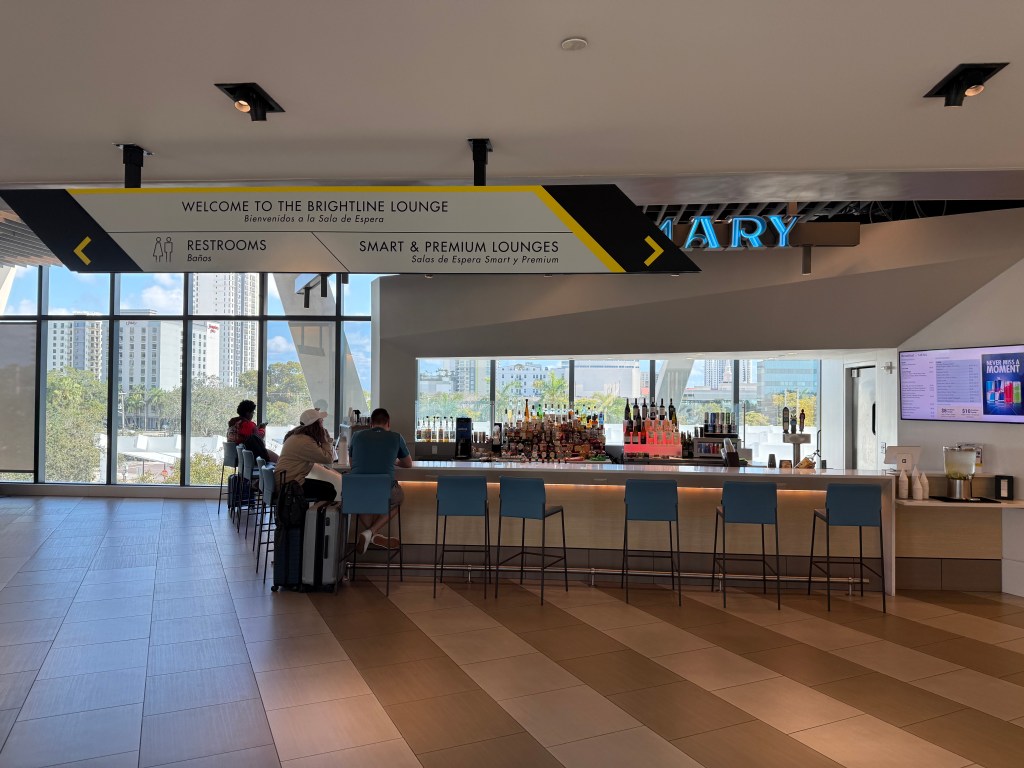
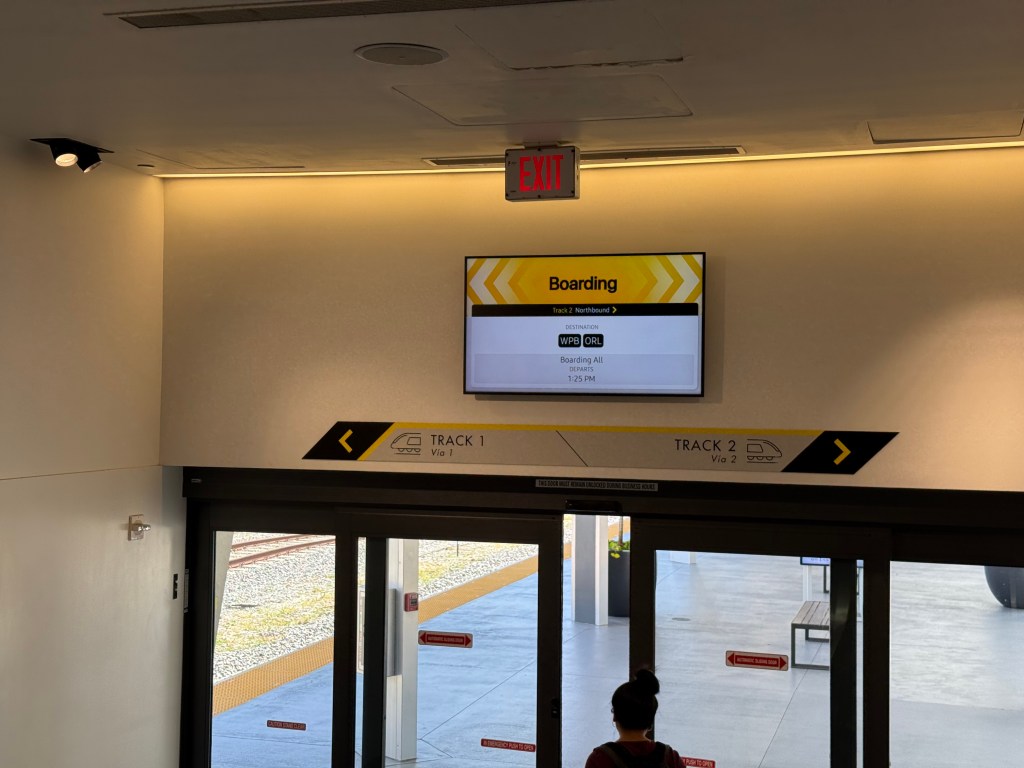
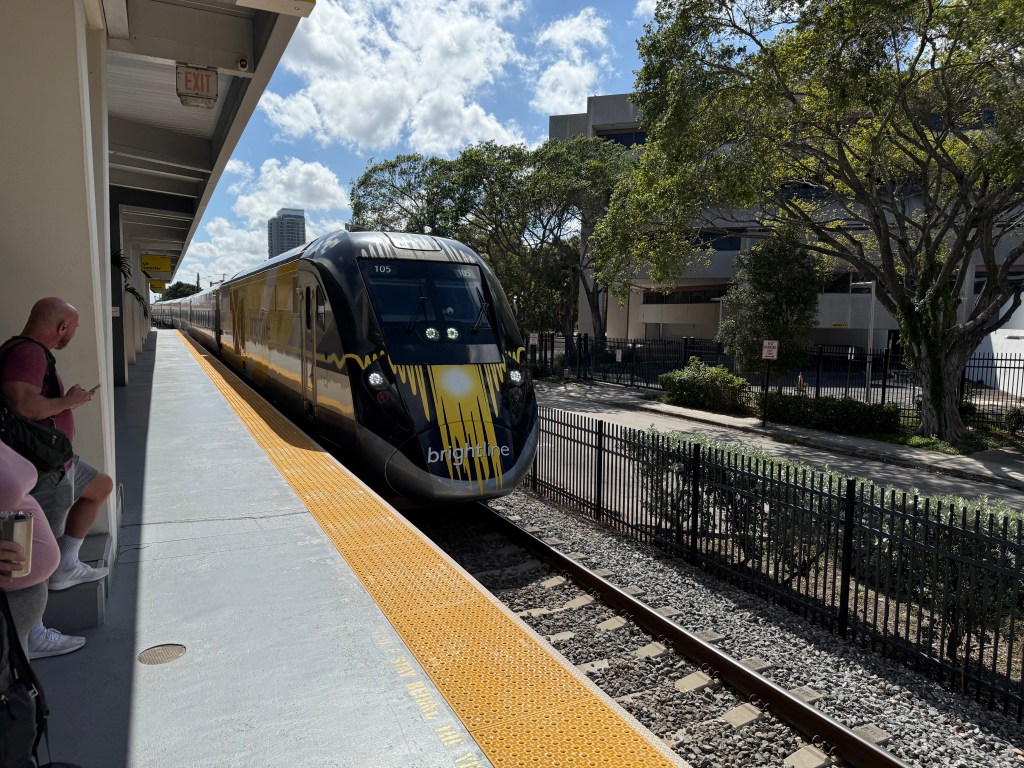
Brightline matters because it proves there is U.S. consumer willingness to adopt modern intercity rail when the product is easy to use and reasonably frequent. It also shows the power of good stations, clear branding, and a travel experience that feels designed rather than inherited.

Florida: Miami–Orlando as a real mode-shift experiment

Florida demonstrates what happens when intercity rail is treated as a mainstream product: clear schedules, clear stations, and a service cadence that makes the train a “default option” rather than a special occasion.

Brightline West: the highest-profile “new-build” intercity project

Brightline West (Las Vegas to Southern California) is the most visible attempt to deliver a new high-speed-ish intercity corridor outside the NEC. If execution holds, it could become a national proof point for new-build delivery—especially on a market where driving is painful and flying is short but inefficient door-to-door.


True high-speed rail: California’s long arc

California’s high-speed rail effort remains the most ambitious U.S. attempt at true HSR scale. Progress is real—but so are structural challenges of cost, governance, right-of-way complexity, and sustained funding. Whether it becomes the backbone of a statewide network or a high-quality “initial segment” depends on the next decade’s delivery discipline.

Regardless of the final form, California is already functioning as a national learning program for American HSR delivery: procurement, labor, environmental clearance, utility relocation, and complex civil works at scale.


Customer experience: what “modern rail” actually means

“Better trains” is not just speed. It’s a bundle of reliability + comfort + accessibility. The new generation of intercity rolling stock is pushing toward a baseline that travelers increasingly consider non-negotiable:

  • Accessible boarding and interiors designed for real mobility needs
  • Modern restrooms that are touchless, spacious, and usable (including family needs)
  • Seat-level power, lighting, and work-friendly tray solutions
  • Clear wayfinding and calmer interior design choices
  • Operational consistency (the same experience on Tuesday as on Saturday)

This is how rail wins back travelers from cars and short-haul flights: not by being “cool,” but by being dependable, comfortable, and human-centered.

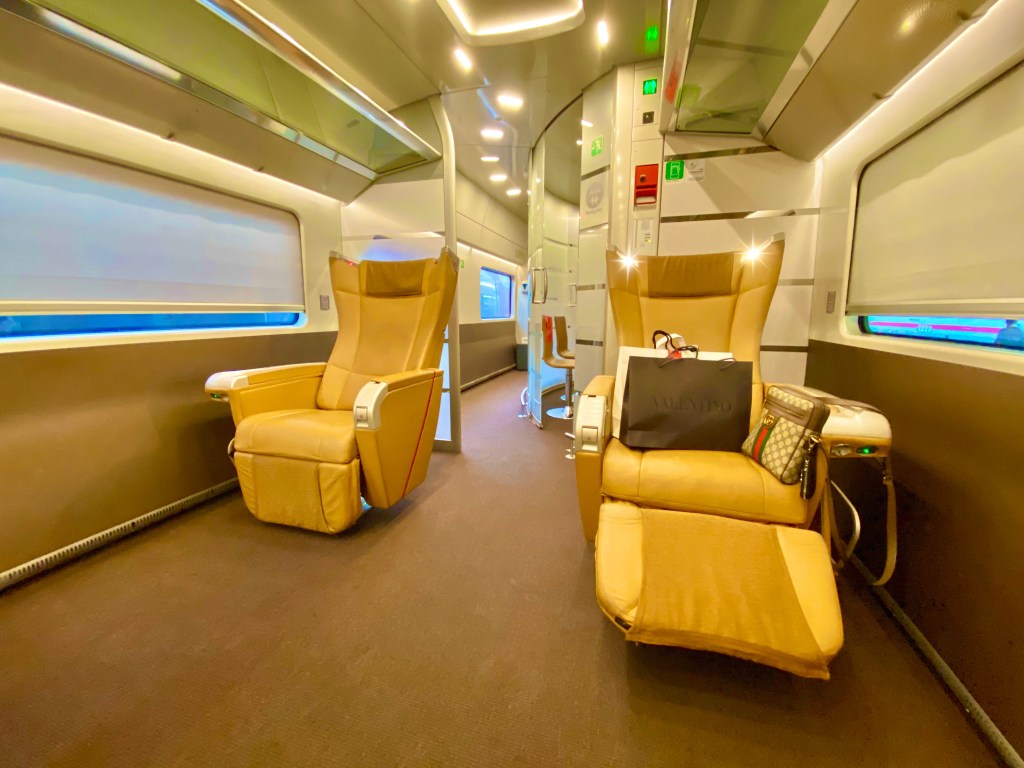
Trenitalia’s Frecciarossa Executive class is probably one of the best high speed product in Europe

What could still derail the rail comeback

This is the part most “rail renaissance” narratives underweight: rail’s constraints are operational and institutional as much as they’re financial.

1) Infrastructure is necessary but not sufficient

Without dispatching priority (or at least enforceable on-time performance regimes) on shared freight corridors, new trains will still sit behind long freights. Track upgrades must come with operating agreements that protect passenger reliability.

2) Maintenance facilities and workforce readiness

New fleets require upgraded maintenance bases, parts supply chains, and technician pipelines. If facilities lag, availability collapses and “new trains” become “stored trains.”

3) Funding continuity and political volatility

Multi-year rail programs need multi-year political commitment. Stop-and-go funding adds cost, delays, and contractor risk premiums—exactly the opposite of what rail needs.

4) Station experience and first/last-mile integration

Intercity rail wins when the station is an asset (central, safe, connected). It loses when stations are peripheral, unpleasant, or disconnected from local mobility.


The 10-year outlook (2026–2036): what a realistic win looks like

Let’s define “win” in a way that matches how transportation systems actually shift behavior.

What success likely looks like by the mid-2030s

  • Northeast Corridor reliability step-change through tunnel and key segment renewals (Hudson + Baltimore region), enabling tighter schedules and higher frequency.
  • Fleet renewal at scale across multiple corridors, making “modern train” a default expectation rather than a novelty.
  • 10–20 corridors upgraded into true “frequency networks” with more daily round trips and better span of service.
  • At least one headline new-build high-speed corridor outside the NEC becoming operational or meaningfully de-risked (Brightline West and/or a California initial segment).
  • More state-led wins where 90–110 mph + frequency beats 2-hour highway slogs.

The reachable prize

Make intercity rail the default choice in a growing set of 200–500 mile markets by combining frequency, reliability, and a modern onboard product—then let demand justify the next wave of upgrades.


Conclusion: a “new era of rail” is real—if the U.S. stays disciplined

The new trains are exciting not because they’re futuristic, but because they’re normal—normal for what intercity rail should feel like in 2026.

The next decade is where the U.S. either turns today’s funding moment into durable corridor systems—or repeats the historical cycle of big announcements, partial delivery, and degraded assets.

My take: the ingredients are finally on the table. The winners will be the corridors that combine (1) capital discipline, (2) operating agreements, (3) service frequency, and (4) customer experience that people actually want to repeat.

Disney’s New CEO in a Soft Tourism Cycle: The Stakes for Josh D’Amaro

Disney just picked a Parks operator—Josh D’Amaro—to run a company whose brand power was historically built on storytelling. That choice is logical (Parks/Experiences is the cash engine), but it is also risky: if global tourism demand is cooling and discretionary spend is under pressure, Disney can’t “price its way” through the next cycle without eroding trust. D’Amaro’s mandate is therefore not simply to keep building rides—it’s to rebuild the guest value equation while protecting margins, modernize the Parks operating model without turning the experience into a spreadsheet, and re-balance a company where the creative engine and the monetization engine must re-learn how to collaborate.


Table of contents

  1. A softer tourism backdrop changes the CEO playbook
  2. Why Disney picked a Parks CEO—why it makes sense
  3. Why Parks fans are anxious (and why it matters financially)
  4. The microtransaction problem: when “yield management” becomes distrust
  5. The $60B question: investment discipline vs. creative ambition
  6. Brand erosion is real: “Disney killed Kermie” and the symbolism problem
  7. Hotels & cruise: growth engines—or experience liabilities?
  8. Operating model: the org chart won’t save you—product governance might
  9. A pragmatic 100-day plan for D’Amaro
  10. Three scenarios for Disney Experiences through 2026–2028

1) A softer tourism backdrop changes the CEO playbook

When demand is strong, theme parks can behave like premium airlines: push price, segment aggressively, and monetize convenience. When demand softens—even modestly—the same playbook becomes fragile. The guest is more price-sensitive, less tolerant of friction, and far more likely to compare Disney not to “other theme parks” but to every other discretionary spend option: a beach week, a cruise, a long weekend in New York, or simply staying home.

That’s why the “new CEO stakes” are unusually high in 2026. D’Amaro inherits a Parks ecosystem that has optimized for monetization under capacity constraints—while simultaneously training guests to feel nickel-and-dimed. In a weak demand cycle, the elasticity changes: you can protect revenue short term, but you risk accelerating long-term brand and loyalty degradation.

Translation: the next CEO’s success will be judged less by headline attendance and more by the quality of demand—repeat intent, satisfaction, net promoter score, spend composition (ticket vs. add-ons), and whether families still see Disney as “worth it.”


2) Why Disney picked a Parks CEO—why it makes sense

Disney is telling the market something with this succession choice: Experiences is the ballast. Parks, resorts, cruise, and consumer products are where the company can still deliver predictable cash generation at scale—especially as linear TV continues its structural decline and streaming economics remain a work-in-progress.

D’Amaro also brings two CEO-grade traits that Hollywood leaders sometimes don’t:

  • Operational cadence: daily execution at industrial scale (crowds, labor, safety, uptime, food & beverage, hotels, transport).
  • Capital deployment discipline: multi-year capex programs, ROI sequencing, capacity modeling, and construction risk management.

Disney’s board is effectively betting that the next era requires a builder-operator who can keep the cash engine stable while the entertainment machine adapts.

But there’s a catch: an operator CEO can over-optimize the measurable (throughput, utilization, ARPU) at the expense of the emotional contract (magic, spontaneity, delight). In a soft tourism cycle, that emotional contract becomes the differentiator.


3) Why Parks fans are anxious (and why it matters financially)

Fan anxiety isn’t noise—it’s an early-warning system for brand health. The critique is consistent: Disney has moved from “premium but fair” to “premium and transactional.” Two symbolic examples circulating in the Parks community illustrate the point:

  • “Disney killed Kermie”: the decision to remove Muppet*Vision 3D—Jim Henson’s final completed work—from Disney’s Hollywood Studios, replacing it with a Monsters, Inc.-themed attraction. For many fans, that reads as “historical trust and craft are expendable if a more monetizable IP fits the spreadsheet.”
  • “Avengers Campus is a travesty”: a perception that major new lands can feel like concrete retail districts—strong logos, weak atmosphere—built to monetize IP rather than transport guests into a world.

These critiques aren’t just about taste. They point to a strategic risk: if Disney becomes “a very expensive theme park that also sells you line-skipping,” then Disney loses its moat. Plenty of companies can build rides. Fewer can build deep emotional belonging.


4) The microtransaction problem: when “yield management” becomes distrust

The sharpest complaint today is not prices alone—it’s friction + price + opacity. Historically, Disney’s FastPass system (and its evolution) created a feeling of earned mastery: guests who learned the system could have a better day. The newer era replaces that with a pay-to-reduce-friction model that can feel punitive.

Some of the current guest-facing pain points:

  • Pay-to-skip becomes default behavior, not an occasional upgrade—especially when standby waits are long and itinerary planning feels mandatory.
  • Layered paid products (multi-pass, single-pass, premium passes) create decision fatigue and a sense that the “real Disney day” is behind a paywall.
  • Smartphone dependency converts a vacation into a booking competition—refreshing, scheduling, and optimizing rather than wandering and discovering.
  • Perception of engineered scarcity: guests suspect the system is designed to make the baseline experience worse to sell relief.

In strong demand, Disney can absorb this criticism. In soft demand, it becomes a conversion killer—especially for first-time or occasional families who feel they can’t “do Disney right” without paying extra and studying a playbook.

The CEO-level challenge: D’Amaro must protect yield without letting monetization become the experience. The path forward is not “cheaper Disney.” It’s cleaner Disney: fewer layers, more transparency, less planning tax, and a baseline day that still feels generous.


5) The $60B question: investment discipline vs. creative ambition

Disney has telegraphed large-scale investment ambitions for Parks. That is necessary—new capacity, new lands, new cruise ships, refreshed hotels. But capex doesn’t automatically buy love. In fact, in a soft tourism cycle, capex has to clear a higher bar:

  • Capacity that improves the baseline (more things to do, shorter waits, better flow), not just new monetization nodes.
  • World-building quality that feels timeless, not “IP slapped on architecture.”
  • Operational resilience: weather, staffing variability, maintenance, and guest recovery when things go wrong.

D’Amaro’s risk is building the wrong kind of new. The Parks fan critique is essentially a product critique: “We can feel when cost-cutting and monetization came first.” That perception, once established, is hard to reverse.

What success looks like: new investments that visibly improve the whole day, not just the headline attraction. Think shade, seating, acoustics, crowd pinch points, transportation, hotel arrival experience, food value, and the “small magic” that doesn’t show up in a quarterly deck but determines repeat intent.


6) Brand erosion is real: why “Disney killed Kermie” is more than nostalgia

The Muppets example matters because it’s symbolic: it frames Disney as willing to erase a piece of cultural heritage for IP optimization. Even if the business logic is defensible, the decision communicates something about priorities.

Brand health at Disney is not just a marketing issue. It is a pricing power issue. Guests accept premium pricing when they believe the company is a steward of wonder. When they believe the company is a steward of extraction, they become transactional—and price sensitivity rises sharply.

D’Amaro’s leadership test is therefore cultural as much as financial:

  • Can Disney honor legacy while modernizing the product?
  • Can it scale IP without turning every creative choice into an ROI spreadsheet?
  • Can it restore the feeling that Imagineering is trusted, not throttled?

One of the most important “soft” levers a CEO has is what the organization celebrates. If the heroes are only the people who monetize, you get a monetization company. If the heroes include craft, story, and guest recovery, you get Disney.


7) Hotels & cruise: growth engines—or experience liabilities?

Disney’s resorts and cruise lines are often framed as growth engines—more rooms, more ships, more bundled spend. But in a soft demand cycle, they can also become liabilities if product quality doesn’t match price positioning.

Two risks stand out:

  • Hotel “premiumization” without premium detail: if renovations and refreshes feel generic, guests quickly compare Disney resort pricing to luxury and upper-upscale competitors that deliver sharper design, better bedding, better F&B, and fewer hidden fees.
  • Cruise expansion outpacing service culture: ships are floating cities. Growth is not just hulls—it’s training, entertainment quality, culinary consistency, maintenance, and guest recovery at sea.

The opportunity is real, though. If Disney can make the resort and cruise experience feel like a coherent extension of storytelling—not a lodging product attached to a ticket funnel—then it becomes a defensible premium ecosystem even in softer cycles.


8) Operating model: the org chart won’t save you—product governance might

Disney’s structural tension is obvious: the creative engine (studios, storytelling, characters) and the monetization engine (Parks, consumer products) have to move in lockstep without one cannibalizing the other.

D’Amaro’s advantage is that he understands the monetization engine intimately. His risk is assuming the creative engine will “just deliver content” that the Parks machine can monetize. In reality, the best Disney eras were when:

  • Imagineering had trust and autonomy within guardrails
  • Creative leaders obsessed over detail and continuity
  • Commercial discipline existed, but not as the only language

A CEO can’t personally manage every creative choice, but he can build governance that prevents predictable failure modes:

  • Greenlight criteria that include guest emotion, not only projected spend
  • “No friction by design” rules for park-day products (planning burden is a product defect)
  • Experience integrity reviews that flag “IP wallpaper” and insist on world-building standards

9) A pragmatic 100-day plan for D’Amaro

If I were advising D’Amaro entering this role in a softer tourism environment, I’d push for a 100-day plan that signals: “We will protect the business and the magic.”

9.1 Fix the value narrative (without pretending prices will drop)

  • Simplify the line-skipping / planning products into fewer tiers with clearer value.
  • Publish plain-language explanations: what is paid, what is included, what you can expect.
  • Guarantee a baseline “good day” experience: fewer moments where the guest feels punished for not paying.

9.2 Reduce the planning tax

  • Re-balance inventory so spontaneity is possible (especially for families).
  • Design for “walk-up joy”: streetmosphere, mini-shows, shade, seating, and low-wait capacity.
  • Measure success by phone time per guest and make that KPI go down.

9.3 Announce a creative trust signal

  • Publicly empower Imagineering with a clear mandate: “detail matters again.”
  • Protect at least one heritage/legacy asset as a symbol of stewardship.
  • Choose one near-term project to “overdeliver” on craftsmanship and atmosphere—make it a statement.

9.4 Labor and service culture: don’t squeeze the last ounce

  • In soft demand cycles, service becomes the differentiator.
  • Invest in frontline training, empowerment, and recovery tools.
  • Reduce policies that create conflict at the point of service (complex rules create angry moments).

9.5 Build a tourism-cycle dashboard

  • Track forward bookings, cancellation behavior, mix shifts, and guest intent.
  • Act early with targeted value offers that don’t cheapen the brand (bundled perks, not deep discounting).
  • Use dynamic pricing thoughtfully—but avoid making the guest feel like a mark.

10) Three scenarios for Disney Experiences (2026–2028)

Scenario A: “Value Reset” (best case)

D’Amaro simplifies the monetization stack, reduces friction, and invests in high-craft additions that improve the full-day experience. Guest sentiment recovers, repeat intent rises, and Disney protects premium pricing because the experience feels premium again.

Scenario B: “Margin Defense” (base case)

Disney maintains layered add-ons and pushes yield management harder. Attendance holds but guest sentiment continues to deteriorate. The company remains profitable, but the brand becomes more transactional. It works—until a sharper downturn exposes elasticity.

Scenario C: “Extraction Spiral” (risk case)

In a weak demand environment, Disney doubles down on microtransactions, reduces perceived generosity, and under-invests in atmospheric quality. Fans become critics, occasional guests drop out, and pricing power erodes. Recovery becomes expensive and slow.


Conclusion: the CEO bet is not “Parks vs. Entertainment”—it’s trust vs. friction

Disney didn’t pick Josh D’Amaro because it wants a theme park manager. It picked him because it needs a leader who can stabilize the most dependable cash engine while the rest of the company adapts. But in a soft tourism cycle, the Parks engine can’t run on pricing power alone. It needs trust.

If D’Amaro can rebuild the guest value equation—simpler products, less friction, higher craft, clearer generosity—he will earn the right to keep Disney premium. If he can’t, the company may protect margins for a while, but at the cost of the one asset that actually compounds: belief.

My take: this is a rare moment where operational excellence and creative stewardship must be fused at the CEO level. D’Amaro’s upside is that he already understands the machine. His challenge is to make it feel like Disney again—especially when families are watching every dollar.

Travel Demand 2026: Resilient Globally, Uneven in North America — What Marriott’s FY2025 Results Reveal

Today’s Marriott FY2025 announcement is a useful “industry barometer” because Marriott sits across almost every chain scale and geography: luxury to select-service, business transient to leisure, global gateway cities to secondary markets. The headline is not “travel is collapsing.” The story is more nuanced—and more strategic:

  • Worldwide demand is still resilient (especially cross-border), but it softened toward year-end in several markets.
  • North America is becoming K-shaped: premium holds up; value-oriented demand is more fragile.
  • Pricing power is increasingly segmented: luxury and experience-led destinations outperform while select-service faces pressure.
  • 2026 is shaping up as a “moderation year”: lower growth, higher dispersion, and sharper execution requirements.

This article breaks down the current state of travel/hotel demand worldwide with a focus on North America—using Marriott’s FY2025 results as the starting point, and then zooming out to what the data implies for operators, investors, destinations, and travelers.


1) The global picture: travel demand is still structurally strong

Globally, the travel engine is still running. International tourism continued to grow in 2025, supported by improved air connectivity, the continued rebound of Asia-Pacific destinations, and ongoing appetite for experiences—even with inflation in tourism services and a challenging geopolitical backdrop.

Two macro signals matter here:

  • Cross-border travel remains the “growth flywheel”, particularly for gateway cities and resort corridors that benefit from long-haul and premium leisure.
  • Spending is increasingly “value-optimized”: travelers still travel, but they trade off (length of stay, booking window, destination choice, and product tier) more actively than in the post-pandemic rebound surge.

Strategic takeaway: Global demand is not falling off a cliff. But “easy growth” is over. The industry is moving from rebound mode to competitive allocation mode: which segments, channels, and destinations win the next marginal traveler?

Sunlit hotel lobby with guests
Global travel is still “on”, but the demand mix is changing—fast. (Image: Unsplash)

2) Marriott’s FY2025 results: strong platform, uneven demand mix

Marriott’s FY2025 release confirms the pattern many operators have been feeling on the ground: growth exists, but it is increasingly uneven by region and chain scale.

Key read-across from Marriott’s announcement

  • Full year 2025: worldwide RevPAR increased ~2%, and net rooms grew ~4.3%, illustrating continued expansion of branded supply and the strength of the fee-based model.
  • Q4 2025: worldwide RevPAR rose ~1.9%, with international RevPAR up ~6% while U.S. & Canada were roughly flat.
  • Luxury outperformed (RevPAR up ~6%+), while performance moderated down the chain scales—a polite way to describe softness in more price-sensitive segments.
  • Development remained a growth engine: a global pipeline near ~610k rooms reinforces that owners still value the distribution + loyalty stack.

What makes Marriott especially useful as a lens is that their portfolio spans the “travel income distribution.” When Marriott says luxury is outperforming and select-service is under pressure, they are effectively describing a consumption reality: high-income travel demand is intact; lower- and middle-income demand is more constrained.


3) North America: travel demand is not weak — it’s fragmented

In North America, the best way to describe travel/hotel demand right now is: fragmented.

A K-shaped travel economy is showing up in hotels

North America is increasingly a tale of two travelers:

  • Affluent leisure continues to buy premium experiences (luxury resorts, iconic urban luxury, “special trips”), supporting ADR and premium upsell.
  • Budget-conscious travelers are more elastic: they shorten trips, shift dates, drive instead of fly, choose lower tiers, or delay discretionary travel.

Marriott’s own mix commentary reflects this: select-service in the U.S. saw declines while luxury grew, pointing to a widening performance gap across chain scales.

Business travel: stable, but cautious and “optimized”

Business travel in North America is not disappearing, but it is structurally more scrutinized than pre-2020:

  • More trip approval discipline; fewer “nice-to-have” trips
  • Shorter stays; tighter meeting agendas; more shoulder-night optimization
  • Higher expectations of ROI (customer outcomes, deal velocity, project delivery)

When business travel softens, it does not uniformly hit all markets. It hits weekday urban cores more than destination leisure, and it hits midscale/select-service differently than upper-upscale/luxury.


4) The U.S. hotel demand baseline: “flat-ish” volume, pressure on occupancy, ADR doing the heavy lifting

Across the U.S., the industry’s recent pattern can be summarized as:

  • Room nights are not collapsing, but growth is harder.
  • Occupancy is under pressure in several markets (especially where supply and alternative lodging compete aggressively).
  • ADR remains the primary lever—but only where the product is differentiated enough to sustain price integrity.

This matters because it changes how hotels should run their revenue strategy:

  • In a rebound, “rate up, volume follows.”
  • In a moderated cycle, “rate integrity versus share capture” becomes a daily trade-off.

5) The shadow competitor: short-term rentals keep reshaping demand

Short-term rentals are no longer a niche. They are a mainstream substitute—and in many markets, they are absorbing a meaningful share of leisure demand that historically fed hotels.

This is not just a leisure story. It’s also about:

  • Space arbitrage (families and groups choosing kitchens / multi-bedroom options)
  • Length-of-stay economics (weekly rates, cleaning fee structures, “work-from-anywhere” patterns)
  • Location convenience (neighborhood travel vs. central business districts)

Strategic takeaway: Hotels that win against short-term rentals are not the cheapest. They are the ones that make the “hotel value proposition” undeniable: consistency, service recovery, loyalty value, and experience design.


6) International markets: the growth story Marriott is pointing to

Marriott’s international RevPAR outperformance highlights where demand is still expanding more cleanly:

  • Europe (EMEA): strong cross-border flows and high willingness-to-pay in key destinations
  • APEC: continuing recovery and renewed momentum in major travel corridors
  • Premium long-haul leisure: travelers who “saved up” for major trips keep supporting higher-tier products

The implication: global network effects matter again. Brands with broad footprints, loyalty ecosystems, and multi-market negotiating power with owners have a structural advantage in capturing cross-border demand.


7) A simple dashboard: what the industry is signaling right now

SignalWhat it suggestsWhy it matters
Luxury outperformingAffluent demand remains intactPricing power exists—but is concentrated at the top
Select-service softnessBudget-conscious travelers are trading down or reducing tripsPromotions and loyalty offers become essential, but risk rate dilution
International RevPAR strongerCross-border travel is still the growth leverGateway assets and global brands capture disproportionate upside
Business travel cautiousTrips are optimized, not eliminatedWeekday/urban performance depends on events and corporate confidence
Alternative lodging pressureHotels compete for leisure share more directlyProduct differentiation and experience design become core strategy

8) What this means for hotel operators: execution beats macro

If you operate hotels in North America right now, the winners are typically not those with the best “macro story.” They are those with the best execution system. Here are the playbooks that matter in a fragmented demand environment:

(A) Segment precision in revenue management

  • Stop treating “leisure” as one segment: separate affluent leisure, value leisure, group leisure, event-driven leisure.
  • Use more dynamic offer design: bundles (breakfast/parking), value-adds, and targeted fenced offers.
  • Protect rate integrity in premium tiers; use tactical value levers in lower tiers without breaking the long-term ADR curve.

(B) Loyalty economics as a demand stabilizer

  • In a moderated cycle, loyalty is not just marketing; it is demand insurance.
  • Use member-only rates strategically, but ensure you are not simply shifting OTA demand into discounted member demand.
  • Invest in on-property recognition: if the experience is flat, loyalty becomes a commodity.

(C) Operational excellence is now a commercial strategy

  • When pricing power tightens, service recovery and consistency protect review scores—and review scores protect conversion.
  • Labor pressures remain real; smart scheduling and productivity tooling matter.
  • Food & beverage is either a margin drag or a differentiation lever—rarely both. Be intentional.

9) What this means for owners and investors: dispersion is the opportunity

The biggest investment mistake in 2026 is to think in averages. A “low-growth” year can still produce excellent outcomes if you are positioned in the right micro-markets with the right product.

Where outperformance is more likely

  • Experience-led leisure destinations with sustained demand drivers
  • Gateway cities where cross-border travel is strong and event calendars are dense
  • Luxury and upper-upscale assets with defensible pricing power
  • Well-branded conversions where distribution + loyalty can quickly lift performance

Where risk is higher

  • Undifferentiated select-service corridors with heavy supply and price-sensitive demand
  • Markets reliant on a single corporate driver (especially where office recovery is weak)
  • Assets competing head-to-head with short-term rentals without a clear hotel advantage

10) What this means for travelers: expect “better deals” in the middle, not at the top

If you are booking travel in 2026, the market structure suggests a clear pattern:

  • Luxury will stay expensive in top destinations because affluent demand is still there.
  • Upper-midscale and upscale will be promotional in many markets—especially in shoulder periods and weekends in business-heavy cities.
  • Flexibility is a superpower: shifting dates by a few days can dramatically change pricing in a fragmented demand environment.

Practical traveler tactics:

  • Use loyalty programs for targeted value (breakfast, late checkout, upgrades), not just points.
  • For North American cities: watch weekends for deals in business-heavy downtowns.
  • For resort/leisure: book earlier for premium inventory; last-minute is less reliable.

11) The 2026 outlook: moderation + volatility + big events

Marriott’s guidance implies a “moderate growth” year ahead. That aligns with the broader reality:

  • Demand is stable, but not accelerating in North America.
  • International flows remain important—and can swing quickly with policy, sentiment, and connectivity.
  • Event-driven spikes (major sports, conventions, destination festivals) will matter more than ever for market-level results.

My view: 2026 will reward operators and brands that manage dispersion—by segment, by channel, by market, by week. The “average traveler” is no longer the center of gravity. The winners will be those who design offers and experiences for specific travelers—and do it repeatedly, with discipline.


Conclusion: Marriott is not warning about demand collapse—it’s warning about demand composition

Marriott’s FY2025 results are fundamentally a composition story:

  • Global travel continues to grow, but the post-rebound “everyone travels everywhere” dynamic has normalized.
  • North America is not weak; it is fragmented and more price-sensitive at the bottom of the income distribution.
  • Luxury and international travel are carrying the industry’s growth narrative.
  • In 2026, execution is the strategy: segmentation, loyalty economics, and operational consistency will separate winners from everyone else.

If you are a hotel operator: segment ruthlessly and protect rate integrity.
If you are an owner/investor: focus on micro-market fundamentals and brand-enabled demand engines.
If you are a traveler: look for value in the middle tiers and in date flexibility—don’t expect luxury to get cheaper.

Disney Q1 FY26: streaming momentum offsets softer in-person growth — but cash flow is the real story

In its fiscal first quarter (ended December 27, 2025), Disney delivered another “two-engine” quarter: streaming profitability improved meaningfully while Experiences remained the primary profit pillar. Yet the most interesting signal is not the headline EPS beat — it’s the tension between rising operating profit and volatile cash generation.

In this analysis, I’ll break down what Disney’s latest results tell us about (1) the durability of the IP flywheel, (2) the maturation of streaming economics, and (3) the near-term risk signals for parks and sports — especially as management guides to international visitation headwinds and pre-opening costs.


1) The headline numbers (and what they hide)

Disney’s Q1 FY26 results were solid on revenue and mixed on profitability:

  • Revenue: $26.0B (+5% YoY)
  • Diluted EPS: $1.34 (down vs. prior year)
  • Adjusted EPS: $1.63 (down YoY, but ahead of expectations)
  • Total segment operating income: $4.6B (down 9% YoY)

The segment picture is more revealing:

  • Experiences (parks, cruises, consumer products): $10.0B revenue (+6%), $3.3B operating income (+6%)
  • Entertainment (studios, TV, streaming): $11.6B revenue (+7%), $1.1B operating income (down 35%)
  • Sports (ESPN): $4.9B revenue (+1%), $191M operating income (down 23%)

Why the caution? Two items complicate “clean” trend interpretation:

  • Portfolio shifts: the Star India transaction and the Hulu Live TV/Fubo combination reshape comparisons and reporting lines.
  • Cash flow volatility: cash provided by operations was materially lower YoY, with free cash flow negative in the quarter — a reminder that profit growth and cash conversion are not always synchronized in media businesses with heavy content, marketing, and timing effects.

2) Experiences: resilient, still the profit engine — but growth is normalizing

Disney’s Experiences segment continues to do what it has done for decades: monetize emotional attachment at scale. The quarter delivered record segment revenue (~$10B) and segment operating income (~$3.3B).

But the “slow-down” narrative is not about collapse — it’s about deceleration and mix:

  • Domestic parks: attendance up ~1%, per-capita spending up ~4% — pricing power and in-park monetization remain intact even when footfall growth is modest.
  • International parks: growth is positive, but management specifically points to international visitation headwinds affecting domestic parks in the near term.
  • Near-term margin pressure: upcoming pre-launch and pre-opening costs (cruise expansion and new themed lands) will weigh on comparability before they (hopefully) broaden long-term capacity and yield.

My read: Experiences looks like a mature, premium consumer business: stable demand, disciplined yield management, and huge operating leverage — but it will not grow linearly. The strategic question is less “can they grow?” and more “can they keep expanding capacity without diluting brand magic or overbuilding into a softer travel cycle?”

What I’m watching in Experiences

  • International visitation mix at U.S. parks (a key margin contributor).
  • Pre-opening cost cadence vs. realized demand lift post-launch.
  • Price/value perception — when attendance growth is low, guest sentiment becomes a leading indicator.

3) Streaming: the profitability inflection is real — and strategically important

The most structurally important signal in this quarter is that streaming is moving from “growth at all costs” to “scaled profitability.” Disney’s streaming operating income increased sharply to roughly $450M (with revenue up and margins improving).

This matters for three reasons:

  • It changes the narrative: streaming is no longer just a defensive play against cord-cutting; it’s a profit center that can fund content and reinvestment.
  • It improves optionality: more profit gives Disney flexibility on bundling, sports integration, pricing, and international expansion without constantly “explaining losses.”
  • It validates the “franchise flywheel”: big theatrical releases lift streaming engagement, which in turn sustains IP relevance and downstream monetization (parks, consumer products, gaming, licensing).

That said, a balanced read requires acknowledging what sits behind the improvement:

  • Pricing and packaging (including bundle strategy) can raise ARPU — but also risks churn if value perception weakens.
  • Content cost discipline improves margins — but the wrong cuts can reduce cultural impact and long-term franchise value.
  • Reporting changes: Disney has reduced emphasis on subscriber-count disclosures, signaling a shift toward profitability metrics (good), but it also reduces external visibility (less good for analysts).

The strategic takeaway

Disney is converging on what Netflix demonstrated earlier: at scale, streaming economics can work — but only if you operate it like a portfolio business with clear greenlight discipline, measurable retention outcomes, and a product experience that drives habitual use (not only “event viewing”).


4) Entertainment: box office strength, but margin pressure from costs

Disney’s studios had a strong slate and meaningful box office contribution — and management highlighted how franchise films can create value across the company. The quarter’s Entertainment revenue rose, yet operating income fell due to higher programming/production costs and marketing intensity (a familiar pattern when major tentpoles cluster in a quarter).

In other words: the IP engine is working, but the quarterly P&L reflects the timing of marketing spend and production amortization.

Why this is still positive (long-term): the best Disney franchises are not “films,” they are platform assets that can be monetized repeatedly across streaming libraries, merchandise, parks integration, and long-tail licensing.


5) Sports: ESPN remains powerful — but the economics are tightening

Disney’s Sports segment posted lower operating income, reflecting higher rights costs and disruption impacts. A temporary carriage dispute (notably with YouTube TV) hurt the quarter and is a reminder of the leverage shift in pay-TV distribution.

The strategic issue is not whether ESPN is valuable — it clearly is — but whether the industry can transition sports monetization from legacy bundles to streaming without compressing margins under (1) rising rights fees and (2) a more fragmented distribution ecosystem.

What I’m watching in Sports

  • Rights inflation vs. pricing power (affiliate fees + DTC pricing).
  • Churn behavior in a world of seasonal sports subscriptions.
  • Distribution stability — carriage disputes are short-term noise, but repeated disruptions can become a structural retention issue.

6) Outlook: management is confident — near-term headwinds remain

Disney maintained a constructive full-year posture, signaling double-digit adjusted EPS growth expectations and continued capital return intentions. For Q2, the company expects:

  • Entertainment: broadly comparable operating income YoY, with streaming operating income expected to rise further
  • Sports: operating income pressure tied to higher rights expenses
  • Experiences: modest operating income growth, impacted by international visitation headwinds and pre-opening/pre-launch costs

This is consistent with the “normalization” story: parks remain strong, but growth is not guaranteed quarter-to-quarter; streaming is improving; sports is the hardest to model because rights costs are lumpy and the distribution transition is still underway.


7) My POV: Disney is executing the portfolio transition — but investors should stay disciplined

Disney’s investment case is increasingly a story of portfolio management:

  • Experiences = premium, high-margin cash engine (with cyclical sensitivity and capacity constraints)
  • Streaming = scaling profit pool (requires product excellence + content discipline)
  • Sports = strategic asset under economic pressure (requires careful pricing and distribution strategy)
  • Studios = brand/IP flywheel fuel (requires selective, high-impact bets)

The execution trend is encouraging — especially the streaming profit trajectory — but a balanced view must include two “adult supervision” questions:

  • Cash conversion: when do these profit improvements translate into consistent free cash flow across quarters?
  • Capital allocation: can Disney simultaneously fund expansion (parks + cruise), invest in content, manage rights inflation, and return cash (buybacks) without over-levering or diluting returns?

If Disney can sustain streaming profitability and keep Experiences resilient through a softer international visitation period, the medium-term setup is strong. If either engine stalls, sentiment can turn quickly — because the market has little patience for “transition stories” that don’t convert into cash.


8) A short checklist: what to watch next quarter

  • Streaming operating income trajectory (and whether margins keep expanding)
  • Experiences demand signals tied to international visitation and consumer discretionary trends
  • ESPN distribution stability and rights-cost cadence
  • Cash flow normalization (working capital swings, content spend timing, and capex pacing)

Source links (primary):

Disclosure: This is an independent analysis for delestre.work, written from a strategy and operating-model perspective. It is not investment advice.

When Brand Standards Collide with Franchise Autonomy: Lessons from Hilton’s Minneapolis Controversy

On January 6, 2026, Hilton Worldwide Holdings made headlines when it removed a Hampton Inn franchise near Minneapolis from its reservation system after the property allegedly refused to honor room reservations made for Immigration and Customs Enforcement (ICE) agents. Hilton stated that the hotel’s actions were inconsistent with its brand values and standards, emphasizing that the property was independently owned and operated.

Beyond the political reactions the story triggered, this episode exposes a structural challenge in the hospitality industry: how global brands enforce standards across franchised properties while preserving franchisee autonomy.

Continue reading “When Brand Standards Collide with Franchise Autonomy: Lessons from Hilton’s Minneapolis Controversy”