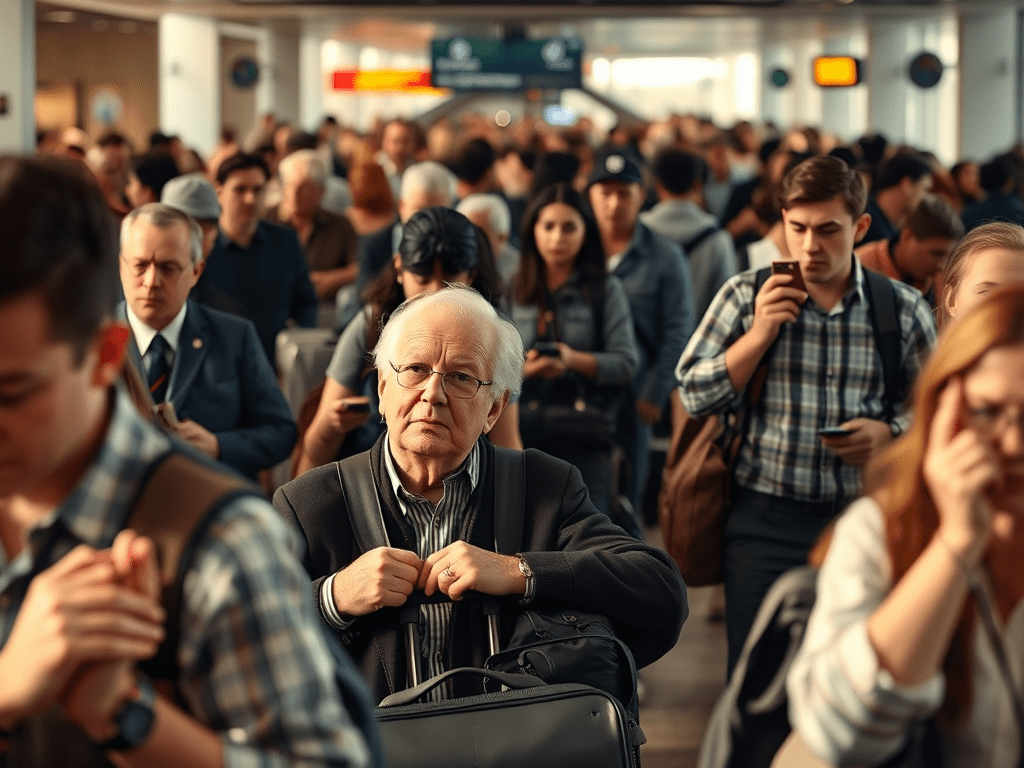
When Loyalty Stops Rewarding Loyalty: How the U.S. Airline and Credit Card Ecosystem Broke Frequent Flying

For decades, airline loyalty was built on a simple compact. Fly often, spend time in the air, concentrate your business with one carrier, and the airline would recognize your value. Status, upgrades, lounge access, and faster mileage accumulation were not gifts. They were the economic return on repeat purchasing behavior. They were the mechanism that turned a customer into a loyalist.

That compact has now been fundamentally broken in the United States.

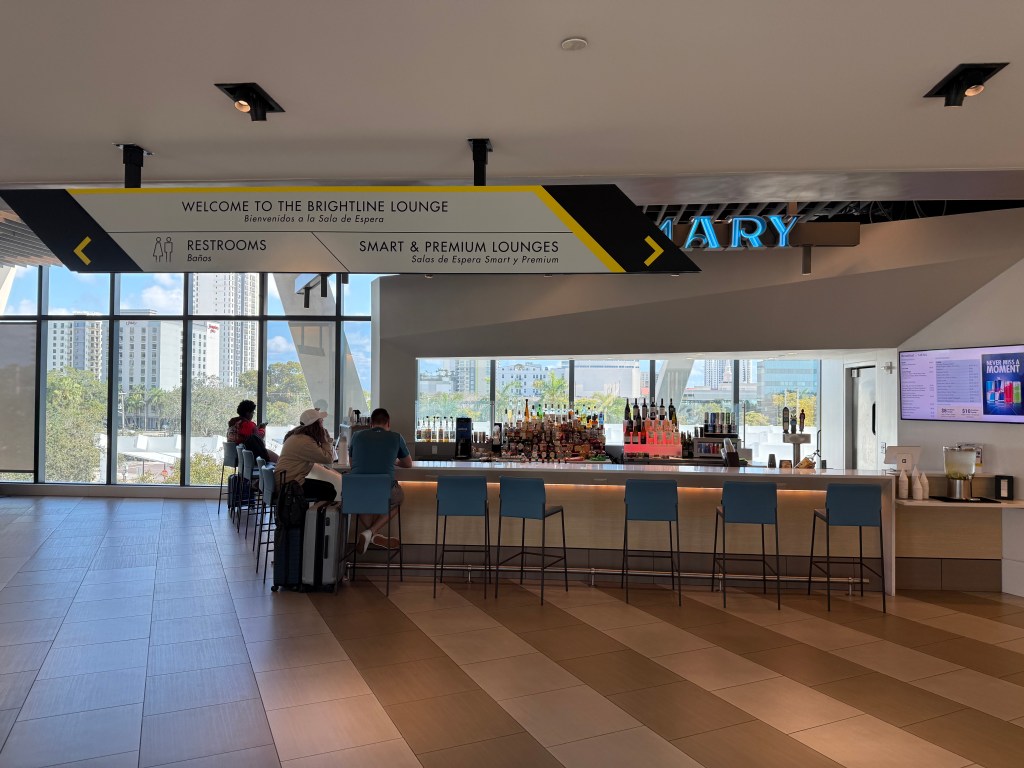
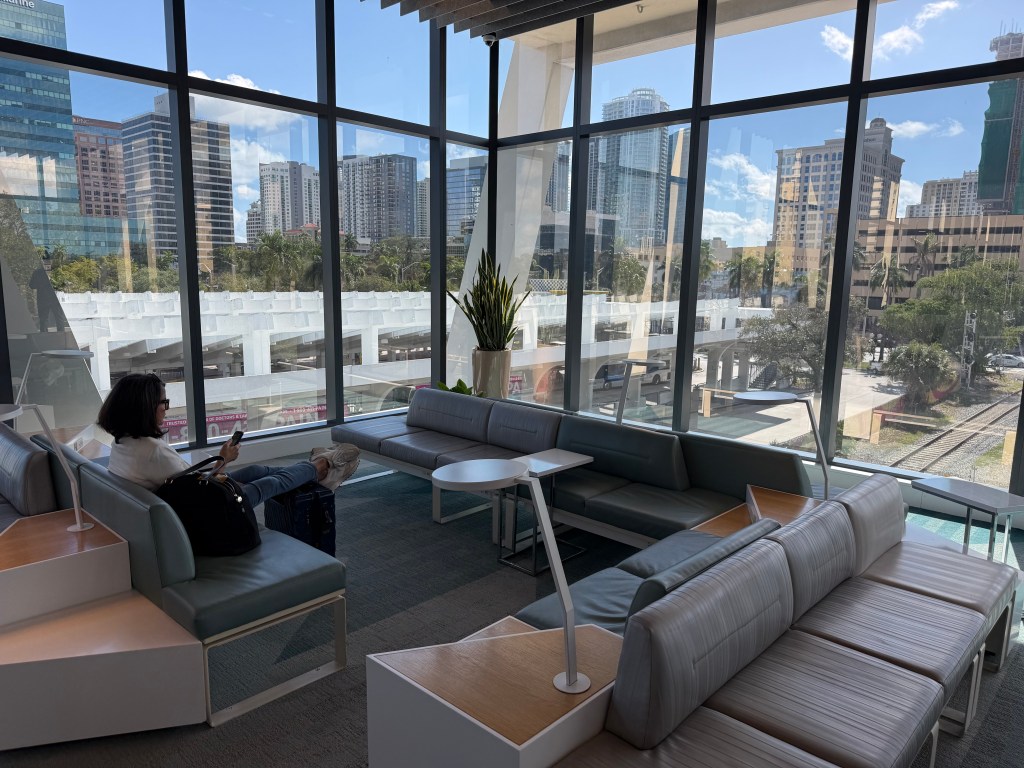
What has replaced it is not a better version of loyalty, nor a more sophisticated one. It is a financialized ecosystem in which the most rewarded customer is increasingly not the person who flies the most, but the person who swipes the right card the most. The center of gravity has moved away from butt-in-seat behavior and toward credit card economics. At the same time, premium travel benefits that were once scarce and meaningful have been diluted by mass distribution. Lounge access is the clearest example: what was designed as a differentiated sanctuary for premium travelers and top elites has become, in many airports, a mass-market entitlement attached to financial products.

The result is a surreal inversion of the original model. Frequent flyers who spend tens of thousands of dollars a year on airfare can find themselves less rewarded than consumers who spend heavily on groceries, dining, and everyday purchases using co-branded cards. Travelers who earned lounge access through years of business travel now queue outside overcrowded clubs filled with members who arrived through credit card channels. Airlines continue to market loyalty as a travel proposition, but the underlying economics increasingly resemble consumer finance, data monetization, and yield management.

This is not a marginal irritant for aviation enthusiasts. It is a structural shift with major implications for airline profitability, customer segmentation, brand equity, and the future of premium travel. It also raises a larger question that many U.S. airlines now seem reluctant to confront directly: if loyalty programs no longer reward loyalty to flying, what exactly are they rewarding?

The Original Promise of Airline Loyalty

Historically, frequent-flyer programs were designed to shape behavior. Airlines needed customers to choose them repeatedly in a commoditized and cyclical market. Routes overlapped, fares moved constantly, and service quality was often uneven. Loyalty programs created switching costs. The traveler who was 20 flights away from requalifying for status was less likely to defect. The corporate road warrior who had accumulated upgrade instruments and lounge access was more likely to remain within one ecosystem.

The brilliance of the classic model was that it aligned the airline’s commercial priorities with the traveler’s perceived fairness. More flying generated more rewards. Premium cabin spend generated faster progression. Status signaled a traveler’s economic importance to the airline. The program was not perfect, but it was legible. Its logic made sense.

Even the excesses of mileage running and status chasing reflected the power of the model. Travelers adjusted behavior because the reward structure was clear enough, aspirational enough, and valuable enough to justify incremental purchasing. Airline loyalty became one of the few consumer relationships where devotion felt measurable and cumulative.

That logic has been steadily eroded for years through devaluations, dynamic pricing, tighter upgrade inventory, and increasingly opaque redemption structures. But the latest phase is different in nature, not just degree. The system is no longer merely less generous. It is being redesigned around a different customer and a different revenue engine.

From Airline Loyalty to Financial Engineering

The modern U.S. airline loyalty program is increasingly a financial product disguised as a travel benefit. Airlines sell billions of dollars of miles to banks, which use those miles to attract cardholders, stimulate spend, and justify annual fees. The bank gains acquisition and spending volume. The airline receives a remarkably attractive stream of cash, often more stable and higher margin than its flying business. Everybody in the ecosystem benefits except, increasingly, the traveler whose primary form of engagement is actually boarding planes.

This is the core contradiction of the current system. Airlines still speak the language of travel loyalty, but their incentives increasingly point elsewhere. A frequent flyer who travels often but uses a competitor’s card is economically less attractive than a less frequent traveler who channels large volumes of everyday spend into an airline portfolio. The airline may still value the frequent flyer operationally and symbolically, but the balance sheet increasingly rewards the cardholder.

In strategic terms, this is understandable. Airline revenue is cyclical. Fuel prices are volatile. Labor costs are structurally higher. Aircraft delivery uncertainty persists. Credit card economics offer a more stable, high-margin annuity-like stream of income that softens shocks and smooths earnings. Loyalty programs have evolved from customer retention tools into major profit engines and, in some cases, quasi-financial assets.

But what makes sense for near-term earnings can corrode long-term trust. Once the customer realizes that the airline’s most important loyal behavior is not flying but spending on plastic, the emotional foundation of loyalty weakens. The relationship starts to feel transactional in the wrong way: less like recognition and more like extraction.

The New Hierarchy: Swipe More, Fly Less

The most striking symptom of the broken system is the emergence of a new hierarchy of value. In theory, top-tier status should be a proxy for intense travel frequency, premium cabin contribution, or both. In practice, many U.S. programs now create faster pathways to meaningful rewards through credit card activity, shopping portals, dining programs, hotel booking platforms, mortgage partnerships, subscription offers, and retail tie-ins than through actual flying.

This is where the absurdity becomes visible. A traveler can spend week after week in airports, tolerate irregular operations, sit through delays, and route business to one carrier, only to discover that another member has climbed the same ladder largely through non-flight activity. The original social contract of frequent-flyer status starts to collapse because the signal no longer clearly identifies the truly frequent flyer.

This matters operationally as well as emotionally. Upgrade queues become more crowded. Elite pools become more diluted. Priority lines become less meaningful. Service recovery becomes less personalized because there are simply too many people carrying some variant of a premium credential. Airlines then respond by layering further segmentation, introducing invite-only tiers, premium lounges within lounges, and increasingly baroque bundles of exceptions. The system becomes more exclusive at the very top and more congested everywhere else.

Instead of solving the dilution problem, the industry has often chosen to commercialize around it. If too many people have access, build a more premium tier. If general lounge access becomes crowded, create a separate business-class lounge. If elite status loses distinction, create hidden statuses, one-time premium passes, or monetized fast tracks. In other words, every erosion of value becomes the pretext for selling a new layer of access.

Lounges as the Clearest Symbol of Devaluation

Nowhere is the dysfunction more visible than in U.S. airport lounges.

Lounge access was once one of the clearest manifestations of airline loyalty. It provided comfort, productivity, and refuge during the most stressful parts of the journey. It was also legible as a premium benefit because it was scarce. There was a threshold to enter: elite standing, paid membership, premium-class travel, or a narrowly distributed corporate entitlement.

That scarcity has vanished.

Today, access to lounges is distributed through an ever-expanding network of airline cards, premium transferable-points cards, bank lounge networks, authorized-user privileges, guest entitlements, premium ticket bundles, and status-matching campaigns. The result is predictable. The club is no longer a sanctuary for a relatively contained premium segment. It is a crowded extension of the terminal for a broad swath of affluent or fee-tolerant consumers.

The problem is not that more people can enjoy a better airport experience. The problem is that the promise of exclusivity and ease has been sold far beyond the capacity of the product. Once a lounge has waitlists, entrance queues, seat scarcity, food depletion, and noise levels comparable to the concourse, the benefit is no longer performing its intended brand function. It becomes a symbol of false premiumization: marketed as elevated, experienced as over-subscribed.

Airlines and card issuers are now trying to reverse this through guest restrictions, spending thresholds, visit caps, time limits, and separate premium facilities. But these are corrective measures for a problem of their own making. The industry over-distributed access to monetize aspiration, and now it is forced to re-ration access in order to restore enough scarcity to preserve perceived value.

How We Reached Peak Lounge Inflation

The lounge problem did not emerge by accident. It emerged because three separate trends converged.

First, airlines and card issuers discovered that lounge access was one of the most marketable premium benefits in consumer finance. It translated immediately in advertising. It photographed well. It made annual fees easier to justify. It appealed to both true frequent travelers and aspirational ones. As a result, lounge access became a core acquisition hook for high-fee cards.

Second, the post-pandemic premium travel boom changed the composition of airport demand. Airlines leaned harder into premium segmentation, affluent leisure travelers spent more aggressively, and many consumers who had accumulated savings or shifted spending priorities were more willing to pay for premium cards and premium travel experiences. Lounges became part of that lifestyle proposition.

Third, the barriers to entry softened at precisely the moment demand surged. Authorized users gained access. Transferable-points ecosystems multiplied. Card portfolios proliferated. Lounge networks expanded, but not nearly fast enough to absorb the growth in eligible users.

The result is that many lounges now suffer from the classic pathologies of over-distributed premium membership models. The acquisition funnel expanded faster than the underlying capacity base. The industry solved for sign-ups before it solved for service delivery.

This is a familiar error beyond aviation. Hotels, retail memberships, and streaming subscriptions all face versions of it. But in the airline context, it is particularly damaging because airport stress magnifies every gap between promise and reality. A crowded lounge is not merely a less pleasant experience. It is a live demonstration that status inflation has overtaken service design.

The Delta Case: Restricting Access After Encouraging It

Delta is perhaps the most visible example of this tension. Over the last several years, the airline built one of the most powerful premium ecosystems in the market, closely intertwined with American Express. That strategy helped produce enormous value. It also contributed to one of the most public lounge crowding problems in the U.S. industry.

The airline’s response has been telling. Rather than retreating from the card-led model, Delta has tried to rebalance it. Lounge access through key American Express products now comes with limits, and unlimited access increasingly requires very high annual card spend. The implication is unmistakable: access still matters, but it must now be rationed more aggressively because the product was previously made too available.

This is a highly revealing moment. It shows that the airlines understand the devaluation dynamic. They know that lounge overcrowding weakens premium perception. They know that once a benefit becomes too common, it stops functioning as a differentiator. But instead of re-centering loyalty on actual flying, the correction often takes the form of new spending thresholds and product complexity.

In other words, even the fix remains financialized. The lesson drawn is not that the frequent flyer should matter more again. The lesson drawn is that the cardholder should be segmented more finely.

United and the Open Prioritization of Cardholders

United’s recent moves make the strategic shift even more explicit. The airline has made clear that co-branded cardholders will receive superior mileage-earning treatment compared with non-cardholders. From a corporate standpoint, this is perfectly rational. It encourages card adoption, deepens customer engagement, and reinforces a profitable bank partnership.

From a loyalty philosophy standpoint, it is devastatingly revealing.

It says, in effect, that two customers on the same plane, paying similar fares, can generate meaningfully different future value not because of how much they travel, but because one of them is also a financial-services customer in the right ecosystem. The frequent-flyer program is no longer merely rewarding travel behavior. It is steering customers toward a broader commercial stack.

This changes the meaning of airline loyalty. The airline ceases to ask, “How much do you fly with us?” and increasingly asks, “How much of your wallet can we capture beyond the flight?” Those are not the same strategic question. One is about travel loyalty. The other is about ecosystem monetization.

Again, the business logic is real. But the customer experience logic is corrosive. The more directly airlines privilege card-linked spend over flying, the more they risk alienating the very travelers who gave these programs their original legitimacy.

American Airlines and the Gamification of Status

American Airlines took another route by broadening the pathways through which customers can accumulate meaningful progress via Loyalty Points. This has made the program feel more modern and accessible, and it offers the airline more ways to engage customers across channels. On paper, it looks innovative. In practice, it reinforces the same structural shift.

Status progression becomes less about travel intensity and more about gaming a broad commercial ecosystem. Shopping portals, partner activity, card spend, and non-flight behaviors become central to the program’s logic. The traveler who understands the mechanics can optimize aggressively without ever approximating the travel pattern that frequent-flyer status once signaled.

There is a strategic upside here. Broader engagement creates more touchpoints, more monetization, and more customer data. But there is also a cost: the symbolic meaning of status degrades. If an “elite” customer may or may not actually be a frequent flyer in any traditional sense, then elite recognition becomes harder to operationalize and less credible socially.

That credibility matters more than airlines sometimes admit. Loyalty programs are partly economic systems, but they are also status systems. And status only works when the hierarchy feels earned, intelligible, and relatively fair.

The Great Devaluation of Benefits

The central consumer complaint about U.S. loyalty programs today is not simply that earning is harder or redemptions are pricier. It is that benefits have become both less valuable and less trustworthy.

Miles buy less. Award prices move unpredictably. Upgrade rates feel weaker. Elite recognition is diluted. Lounges are more crowded. Boarding groups are swollen. Priority lines are longer. Customer service differentiation is inconsistent. The traveler is asked to spend more, subscribe more, optimize more, and carry more products, all while receiving less certainty in return.

This is textbook benefit devaluation. And it is especially dangerous because loyalty programs depend on future-oriented psychology. Customers tolerate friction today because they believe accumulated value will matter tomorrow. Once that faith weakens, the whole machine becomes less effective.

Frequent flyers are particularly sensitive to this because they encounter the product repeatedly. They see the queue lengths. They experience the waitlists. They notice the shrinking upgrade windows, the tighter award availability, the increasingly complex terms, and the multiplication of monetized exceptions. What was once a loyalty system begins to feel like a permanent negotiation against the house.

In that environment, cynicism replaces aspiration. And cynicism is poison for loyalty economics.

The Hidden Tax of Premium Credit Card Proliferation

Credit cards have become the dominant intermediary between airlines and customer rewards. That shift has not just changed who gets rewarded. It has changed who pays.

The modern airline-card ecosystem is funded partly through interchange economics, annual fees, revolving credit behavior, and merchant acceptance costs. In practical terms, the lavishness of premium rewards is not a free-market miracle. It is subsidized by a broader payments system in which merchants absorb fees, prices incorporate those costs, and all consumers participate indirectly whether or not they are optimizers.

This is why the loyalty debate is bigger than aviation. The current system effectively redistributes value toward cardholders who are affluent enough, informed enough, and financially positioned enough to extract outsized benefit from premium products. Travelers who do not use those products, cannot qualify for them, or simply prefer not to play the optimization game are increasingly disadvantaged within the travel ecosystem.

That creates a striking tension. Airlines present these programs as democratized access to premium travel, but their real architecture often amplifies stratification. The winners are those who understand and can fund the system. The losers include not only non-cardholders but also the genuinely frequent flyer whose travel pattern no longer guarantees proportionate recognition.

Why Airlines Keep Doing It Anyway

If the model is so visibly frustrating customers, why do airlines continue to push it? Because financially, it works.

Co-branded credit card relationships are among the most attractive revenue streams in the airline sector. They provide cash flow that is less exposed to fuel volatility, weather disruptions, operational meltdowns, and short-term softness in domestic demand. They increase switching costs across a broader set of behaviors. They also create a powerful acquisition and retention loop in partnership with some of the largest banks in the country.

For management teams, the appeal is obvious. Building a more resilient earnings profile is a rational objective in an industry that has historically destroyed capital and punished shocks. Loyalty monetization through cards has become one of the few areas where airlines can generate premium multiples from what is otherwise still a cyclical transportation business.

The challenge is that what works for quarterly stability can create strategic fragility if overextended. Once a loyalty program becomes too detached from the core product, its brand credibility can weaken. Once too many benefits are over-issued, perceived scarcity collapses. Once frequent flyers conclude that their real loyalty is under-recognized, the airline risks eroding the highest-intensity customer relationship it has.

The paradox is this: airlines have used loyalty programs to reduce the volatility of the airline business, but if they undermine the meaning of loyalty too far, they may also weaken one of the industry’s strongest tools for preference formation.

The Premiumization Trap

U.S. airlines are now deeply committed to premiumization. More premium seats, more segmented ground products, more premium lounges, more premium pricing architecture, and more premium card tie-ins. This strategy has clear logic. It targets higher-yield demand, strengthens margins, and aligns with the post-pandemic resilience of affluent consumers.

But loyalty inflation creates a premiumization trap.

As more customers gain access to premium-coded benefits through financial products, the premium experience itself becomes less premium. The airline then needs to create new layers of exclusivity to defend the proposition. That means new business-class lounges, new invitation-only tiers, new same-flight-only rules, new guest restrictions, new spending hurdles, and new monetized bundles. Premium becomes a staircase with ever more steps because each lower step has been over-filled.

This can work for a while, especially in a strong demand environment. But it creates structural complexity and customer fatigue. It also increases the risk that consumers eventually re-rate the entire proposition. If too many “premium” benefits feel crowded, limited, or conditional, the customer may simply decide the annual fee, the loyalty effort, or the airline concentration is no longer worth it.

Why the Most Frequent Flyers Feel Betrayed

The word most often heard among serious travelers is not inconvenience. It is betrayal.

That may sound melodramatic to outsiders, but it captures something real. Frequent flyers made decisions over many years on the basis of an implied exchange. They accepted less convenient routings, paid fare premiums, absorbed irregular operations, and concentrated spend because they believed long-term recognition would justify those choices. Now many of them feel that the basis of the relationship has been rewritten without candor.

They are told loyalty still matters, but they can see that other behaviors matter more. They are told lounges are premium spaces, but they spend time in entrance lines. They are told elite status signals value, but they are one of dozens on the upgrade list. They are told programs are richer than ever, but actual redemption utility is less predictable. The rhetoric has remained emotionally familiar while the economics have shifted underneath it.

This is the hallmark of a broken loyalty architecture: the brand promise survives in language longer than it survives in customer reality.

What a More Rational System Would Look Like

The answer is not to abolish airline credit card partnerships. That would be unrealistic, financially destructive, and strategically backward. The answer is to restore balance and honesty.

First, airlines should re-anchor top-tier recognition more explicitly in flying behavior and premium-ticket contribution. Card spend can accelerate engagement, but it should not overwhelm the signaling function of true frequent travel. The customer who spends 120 nights away from home for work should not feel interchangeable with the customer who optimized household spend from a kitchen table.

Second, lounge access needs to be redesigned around real capacity economics. If a lounge is marketed as premium, it must be managed as a scarce operating asset, not as an endlessly distributable marketing perk. That requires tighter eligibility, better forecasting, more investment, and more willingness to say no before the experience collapses.

Third, airlines should simplify benefit structures and make trade-offs more explicit. Complexity is not value. It is often a way to obscure devaluation. Customers can accept tougher qualification rules more readily than they can accept opaque ones.

Fourth, programs should protect a meaningful gap between broad participation and true elite recognition. Not every engaged customer needs the same set of benefits. Trying to make everyone feel premium often results in nobody actually feeling premium.

Finally, loyalty should again reward friction endured, not just financial product usage. The traveler who actually flies through delays, reroutings, and overnight connections is still taking the operational risk of the airline’s product. That customer deserves a differentiated logic of recognition.

The Regulatory and Political Overhang

Another reason this debate matters now is that the airline-card model is no longer operating in a purely commercial vacuum. The economics of interchange, consumer credit, and rewards funding are under increasing public and political scrutiny. If the economics of premium card rewards come under pressure, airlines could find that a material part of their profit architecture is more exposed than it appears.

This is not merely a regulatory side note. It underscores how far loyalty programs have drifted from flying. When a loyalty program’s future is shaped as much by payments policy and consumer-finance regulation as by route networks and service quality, the transformation is complete. What used to be an airline retention tool has become infrastructure in a much larger financial system.

That may be lucrative. It may not be durable in its current form.

The Strategic Risk for Airline Brands

The deepest long-term risk is not that customers will complain on social media or in enthusiast circles. It is that airline brands may quietly lose the emotional premium they have spent decades constructing.

Loyalty programs do more than allocate rewards. They translate frequency into belonging. They help a customer feel known, recognized, and prioritized in a stressful category. If that psychological mechanism weakens, price sensitivity tends to increase. Once loyalty feels synthetic, consumers become more willing to shop around, split behavior, and defect for convenience or fare.

The irony is that the airlines most successful at monetizing loyalty may also be the ones with the most to lose if its meaning empties out. Card revenue can cushion the near term. It cannot fully replace authentic brand attachment in the long term.

Conclusion: A Loyalty System That Now Rewards Almost Everything Except Loyalty

The U.S. airline loyalty system is not broken because it has become more commercial. It was always commercial. It is broken because it increasingly rewards the wrong behaviors relative to the promises it continues to make.

It tells customers that frequency matters while designing programs around card economics. It sells premium access while distributing it too broadly to preserve quality. It expands pathways to status while weakening the meaning of status. It offers richer ecosystems while reducing clarity and confidence in the value delivered to the traveler who actually flies.

The frequent flyer today often faces a strange reality: fly more, receive less certainty; spend more on a credit card, receive more attention. That is not loyalty in the classic sense. It is ecosystem monetization dressed in the language of loyalty.

For airlines, the immediate economics are compelling. For customers, the growing disillusion is unmistakable. And for the industry, the central question is no longer whether these programs are profitable. It is whether they can remain credible.

A loyalty system can survive devaluation. It can survive complexity. It can even survive some unfairness. What it cannot survive indefinitely is a widespread loss of belief in what it is supposed to reward.

That is the real problem facing U.S. airlines today. The benefits have not merely become harder to access. The system has become conceptually incoherent. And once loyalty stops rewarding loyalty, the entire premise begins to unravel.

Key Takeaways

The U.S. airline loyalty model has shifted decisively from rewarding frequent flying to rewarding credit card engagement and broader ecosystem participation. That shift has made loyalty programs more valuable to airline balance sheets, but less intuitive and less fair to many actual frequent flyers.

Lounge access has become the clearest symbol of benefit devaluation. By distributing access through too many premium cards and affiliated channels, airlines and banks undermined the scarcity and service quality that once made lounges genuinely premium.

Status inflation, upgrade dilution, and growing program complexity have weakened the trust that underpins loyalty economics. Customers will tolerate strict rules more readily than opaque ones, but they struggle when the logic of recognition no longer aligns with real travel behavior.

The next phase for the industry should not be to abandon loyalty monetization, but to restore balance. Airlines need to protect the distinction of true frequent travel, redesign lounge access around capacity realities, and be more candid about what their programs are actually optimizing for.

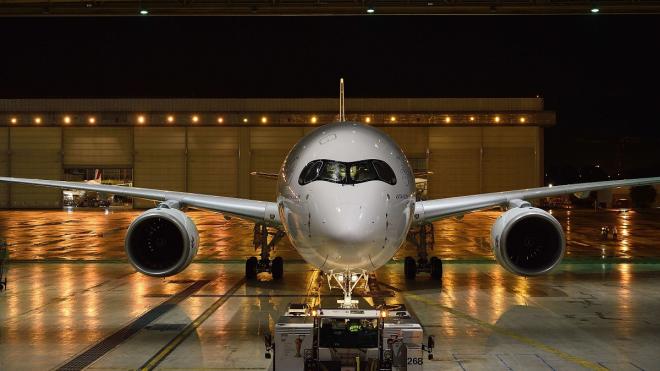
Iran’s Shockwave Through the Sky: How the New Middle East Conflict Is Repricing Airline Risk and Rewiring Oil Markets

The escalation of the Iran conflict has quickly become more than a regional geopolitical crisis. It is now a stress test for two industries that are structurally intertwined: aviation and energy. Airlines run on oil, global trade depends on stable air corridors, and investor confidence in both sectors is built on one fundamental assumption — that major chokepoints in energy and airspace will remain open enough for the system to function. That assumption has been badly shaken over the past days.

The market reaction has been swift and brutal. Brent crude surged sharply, airline equities sold off across regions, and the financial logic is straightforward: when oil spikes, jet fuel tends to move even more aggressively; when airspace closes, routes lengthen; when both happen at once, airline unit economics deteriorate fast.

For the airline sector, this is not a single-variable shock. It is a compound disruption. Carriers are simultaneously facing higher fuel costs, longer routings, sudden capacity dislocations, flight suspensions across multiple destinations, and a likely demand response if fares remain elevated. For oil markets, the conflict revives the oldest fear in the book: the risk that instability around Iran turns the Strait of Hormuz from a geopolitical concern into a sustained supply bottleneck.

What makes this moment particularly significant is that it collides with an industry narrative that had been relatively constructive going into 2026. Airlines had been expecting a more benign fuel environment this year. That outlook has now been abruptly challenged. The industry entered 2026 expecting some relief; instead, it may be walking into another margin squeeze.

Aviation’s Immediate Problem: Fuel Cost Inflation Arrives Faster Than Revenue Can Adjust

Fuel is not the largest cost line for every airline anymore, but it remains one of the most volatile and strategically dangerous. Airline planning, guidance, route economics, and pricing strategies were built on a relatively manageable cost environment. A sudden oil shock destabilizes all of that at once.

And the pass-through is not immediate. Many airlines sold their tickets weeks or months ago, meaning the current surge in fuel costs cannot simply be billed back to customers overnight. This is why even a short-lived spike can distort quarterly results.

This is also why airline stocks reacted so violently. Investors are discounting the near-term reality that costs rise instantly while pricing catches up only gradually. That gap compresses margins. It also explains why markets punished carriers in different geographies at once: the exposure is global, not local.

In normal market conditions, airlines can offset part of this pressure through yield management, ancillary revenues, or network optimization. But a geopolitical airspace shock is different. It hits the cost base and the network simultaneously. Airlines are not just paying more for fuel; they are burning more of it.

Airspace Disruption Changes the Entire Network Equation

The conflict has also reminded the market how dependent long-haul aviation remains on stable overflight rights and predictable corridor access. As safety agencies and airlines adjust their operating recommendations, the practical result is the same: disruption becomes institutionalized for carriers serving Europe-Asia, Gulf long-haul flows, and several Middle Eastern destinations.

This is no longer a localized operational inconvenience. It is a broad network event. Airlines have been forced to reroute flights, carry extra fuel, and in some cases make additional refuelling stops to preserve resilience in case of sudden diversions. Each one of these measures increases cost, complexity, and schedule fragility.

The impact is especially acute because Gulf carriers are not niche players in the global aviation system. They represent a major share of traffic flows between Europe and Asia, as well as Europe and Oceania. When those connectors are disrupted, the shock ripples through the entire long-haul ecosystem, not just the Middle East.

Airlines across the world have already begun adjusting their schedules. Suspensions and cancellations have affected routes to and from multiple cities across the region. This breadth matters. It shows that the conflict is not just suppressing one or two routes; it is fracturing a commercially critical geography.

Why Long-Haul Airlines Are Especially Exposed

The current crisis is asymmetric. Not every carrier is equally vulnerable. Short-haul domestic operators in more protected fuel environments will feel the pain, but airlines with large long-haul exposure between Europe, Asia, and Oceania are on the front line. Their business models depend heavily on efficient routing, reliable widebody utilization, and premium traffic flows that do not respond well to operational uncertainty.

Longer routes also mean more than extra fuel. They can reduce aircraft productivity, disrupt crew legality windows, increase maintenance strain, and complicate recovery after even small delays. A routing extension on one sector can cascade into missed onward connections, aircraft mispositioning, and soft product degradation.

In premium aviation, those operational consequences can be as damaging to brand equity as the direct cost impact. This is precisely why network shocks of this type tend to show up not only in financial results, but also in customer sentiment.

There is also a demand-side risk. When airfares spike sharply because of scarcity and disruption, some leisure demand disappears and some corporate demand is deferred or more tightly controlled. If disruption persists, this could weigh on travel demand for much of 2026.

The Hedge Divide: Some Airlines Are Better Protected Than Others

One of the most important fault lines exposed by the crisis is the divergence in airline fuel hedging strategy. Some U.S. airlines have largely abandoned hedging over the past two decades, while a number of major Asian and European carriers still maintain meaningful protection. In a low or declining fuel environment, not hedging can look smart. In a geopolitical spike, it leaves airlines fully exposed to spot-market pain.

This is where treasury discipline suddenly becomes strategic. Airlines with stronger hedge positions are not immune to the crisis, but they are often better protected from the first wave of commodity shock. That buys time, protects short-term guidance, and gives management more room to respond operationally.

That said, hedging is not a universal shield. If the conflict persists long enough, airlines eventually roll into higher market levels. Hedges buy time more than immunity. They smooth the first wave; they do not neutralize a structurally higher fuel regime.

As a result, even better-protected carriers may still revise guidance, moderate capacity growth, or reprice aggressively if disruption lasts beyond the near term. The issue is not whether airlines can survive a short shock, but whether they are built to operate in a more volatile and politically fragmented world.

Oil Markets: Why Iran Still Matters Disproportionately

The reason markets react so violently to conflict involving Iran is not only about Iran’s own barrels. It is about geography. The Strait of Hormuz remains one of the most consequential energy chokepoints in the world. A large share of global seaborne oil trade and a meaningful share of LNG flows transit through that corridor.

That means the market is not merely pricing today’s lost barrels. It is pricing the risk to the corridor itself. Even if total supply destruction proves smaller than feared, the embedded risk premium can remain substantial as long as traders worry about shipping disruption, insurance costs, rerouting, or temporary outages among Gulf exporters and refiners.

There are partial mitigants. Some Gulf producers have pipeline infrastructure capable of bypassing part of Hormuz flows. But that capacity is limited relative to the scale of the corridor. Alternative routes can soften the shock; they cannot fully absorb it.

Markets understand that, which is why price responses can become nonlinear once Hormuz risk is perceived as more than theoretical. Once that happens, airlines are no longer reacting to headlines alone; they are reacting to a changed commodity environment.

From Deflation Story to Inflation Shock

Before this escalation, the macro oil story for 2026 had been relatively manageable, with expectations of softer balances and a less aggressive price environment. That base case has not disappeared, but it has been interrupted by geopolitics in a way that matters enormously for sentiment, inflation expectations, and sector valuation.

This is an important nuance. The market may ultimately discover that a geopolitical spike can coexist with a softer medium-term structural balance if the conflict stabilizes. But for airlines, the distinction is almost academic in the short term. They buy fuel in the market that exists today, not the one economists expected three months ago.

The damage to guidance, unit costs, and investor confidence can happen long before any reversion story plays out. This is why the aviation sector reacts so quickly to geopolitical oil shocks, even when the underlying commodity outlook remains debated.

There is a broader macro consequence as well. Oil shocks feed through into transportation costs, inflation expectations, consumer confidence, and corporate travel behavior. When fuel, logistics, and uncertainty all rise together, the pressure is not isolated to airlines. It spreads into tourism, cargo, retail supply chains, and business travel budgets.

What This Means for Airline Strategy in the Months Ahead

The most important strategic question is not whether airlines can absorb a few bad weeks. Most can. The real question is whether the crisis becomes a prolonged new operating environment. If it does, carriers will need to make harder choices on capacity, schedule design, fleet deployment, and pricing.

Three responses are already becoming visible. First, capacity is being reallocated. Airlines are moving aircraft away from suspended or commercially weakened destinations toward markets where demand remains more stable and yields can still hold.

Second, hedging and treasury strategy will return to the boardroom. Carriers that reduced or abandoned fuel hedging may reconsider how much pure commodity exposure they are willing to carry in a world of persistent geopolitical volatility.

Third, premium demand assumptions may need to be revisited. Corporates tolerate high fares during brief disruptions, but sustained uncertainty often leads to tighter travel approvals, more virtual substitution, and pressure on airline premium mix. For network carriers built around premium long-haul economics, that is as serious a warning sign as the fuel spike itself.

The Investor View: This Is Really a Margin Story

For equity markets, the immediate issue is not headline revenue. It is margin compression. Airlines entered 2026 with thin net margins by most industry standards even in a constructive scenario. In that context, a sharp fuel shock does not need to last forever to do meaningful damage.

A business running on structurally thin margins is highly sensitive to any rapid increase in variable cost. This is why the selloff should not be dismissed as market overreaction. Investors are repricing a business model whose profitability depends on cost stability more than many executives like to admit.

In aviation, a margin that looks acceptable in a steady state can unravel fast under stress. The sector’s operating leverage works both ways. This moment is a reminder that airlines are still, at their core, macro-sensitive, fuel-sensitive, and geopolitically exposed businesses.

A Broader Industry Lesson: Resilience Is No Longer Optional

There is also a more structural lesson here for the aviation sector. The past few years have forced airlines to manage pandemics, supply-chain breakdowns, engine issues, labor shortages, ATC constraints, and persistent geopolitical closures. The Iran conflict adds another layer to a growing pattern: shocks are no longer rare interruptions of normal business. They are becoming part of the operating model.

That changes what good management looks like. It is no longer just about maximizing load factor and squeezing cost in normal conditions. It is about building enough resilience into fleets, balance sheets, fuel strategy, crew planning, and network architecture to survive repeated discontinuities.

Carriers that optimize only for peacetime efficiency may continue to deliver attractive short-term numbers, but they will be punished whenever the system fractures. The current divergence between hedged and unhedged airlines is only one example of that principle.

Conclusion: The Iran Conflict Has Repriced More Than Oil

The immediate headline is easy to see: oil is up, airline shares are down, and routes across the Middle East are disrupted. But the deeper story is more important. The conflict has abruptly repriced risk across the aviation value chain. It has exposed how fragile long-haul network assumptions remain, how dependent airline profitability still is on energy stability, and how quickly a geopolitical event can turn into a commercial and financial one.

For oil markets, the central variable remains whether disruption around Iran and Hormuz becomes prolonged enough to harden the risk premium into a sustained supply shock. For airlines, the judgment is even starker: every additional week of elevated fuel prices and restricted airspace increases the probability of weaker margins, tighter schedules, and softer discretionary demand.

In other words, this is not just a Middle East story. It is a global aviation and macroeconomic story. Airlines were hoping for a more stable 2026. Instead, they have been reminded that in this industry, peace is not just a political condition. It is an operating assumption embedded in every fare, every route, and every quarterly forecast.


Key Takeaways

  • The Iran conflict has triggered a simultaneous airline cost shock and network shock, with fuel prices rising while airspace constraints lengthen routings and force cancellations.
  • Airline margins are under direct pressure because fuel costs rise immediately while pricing adjusts more slowly.
  • Long-haul carriers are especially exposed because their business models depend on efficient routing, widebody utilization, and premium traffic flows.
  • Airlines with stronger fuel hedging are better positioned in the immediate term than fully exposed peers, but hedging only buys time.
  • The Strait of Hormuz remains the key oil-market transmission channel, making this conflict a global aviation and energy story, not just a regional one.

Air France-KLM FY2025 Results: The “French Engine” Outperforms Expectations—and Rebalances the Group’s Narrative vs Europe’s Majors

Air France-KLM’s FY2025 results confirm a strategic inflection point: the Group is no longer “only recovering” from the post-COVID shock—it is rebuilding a structurally more profitable model. The most surprising element is not the Group’s performance alone, but the clear outperformance of Air France inside the house, with an operating margin reaching 6.7%, while KLM remains stuck in a lower-margin reality at 3.2%. This is not a vanity comparison: it reshapes investor confidence, labor narratives, the funding capacity for fleet renewal, and the Group’s ability to play offense in a consolidating European market.

This article breaks down what Air France-KLM delivered in 2025, why the French airline is showing unexpectedly strong “business health” in the Group, what KLM needs to accelerate, and how these results compare with the other two European majors—IAG and Lufthansa Group—from a business model standpoint (margin structure, premium exposure, cost transformation, and multi-brand complexity).


Table of contents


1) FY2025 headline: Air France-KLM breaks the €2bn operating profit level

FY2025 is the kind of year that changes the tone of a Group. Air France-KLM delivered:

  • Revenue: €33.0bn (+4.9% YoY)
  • Operating result: €2.004bn (up +€403m YoY)
  • Operating margin: 6.1% (up +1.0pt YoY)
  • Passengers carried: 102.8m (+5.0% YoY)
  • Capacity (ASK): +4.9% YoY
  • Load factor: 87.2% (slightly down vs 87.8% in 2024, reflecting capacity growth)
  • Recurring adjusted operating free cash flow: €1.0bn (materially improved)
  • Cash at hand: €9.4bn
  • Net debt / current EBITDA: 1.7x

Those are not just “recovery numbers.” They are indicators of structural progress: margin expansion, improved cash conversion, a healthier leverage profile, and (most importantly) a segmented portfolio where multiple engines contribute—Passenger Network, Maintenance, and Loyalty—while lower-cost operations are being repositioned (Transavia at Orly).

In plain terms: Air France-KLM is now much closer to behaving like an industrial airline group with diversified profit pools—similar in spirit (not identical in structure) to what IAG and Lufthansa have been monetizing for years.


2) The surprising story: Air France emerges as the Group’s primary profitability engine

The core of your question is in the internal split of performance.

In FY2025, Air France delivered:

  • Revenues: €20.242bn (+5.3% YoY)
  • Operating result: €1.362bn (up +€382m YoY)
  • Operating margin: 6.7% (up +1.6pt YoY)
  • Capacity change: +4.9% YoY

Why is this “surprising good health” relative to prior narratives?

  • Because Air France historically carried a reputation of structural fragility (labor rigidity, higher cost base, and periodic social tension). FY2025 confirms that the airline can now operate with a margin profile that is not “anomaly-driven,” but supported by a mix and unit revenue story.
  • Because the margin is not achieved through shrinking: capacity is up, premium exposure is increasing, product investments continue, and Maintenance is scaling. This is a “growth with margin” pattern—harder to execute than “cut-to-profit.”
  • Because the airline is benefiting from the right combination of levers: premiumization and long-haul strength, operational execution, fleet renewal trajectory, and monetization of group assets (MRO, loyalty, partnerships).

Air France’s FY2025 margin is particularly meaningful in the European context: it places the French airline closer to “major group standards” than many observers would have expected—even if it remains behind the most structurally advantaged peers on certain geographies and cost regimes.


3) The other side: KLM stabilizes but must accelerate transformation

KLM’s FY2025 results are not “bad,” but they tell a different story—one of stabilization rather than step-change.

In FY2025, KLM delivered:

  • Revenues: €13.205bn (+3.9% YoY)
  • Operating result: €416m (broadly stable: +€1m YoY)
  • Operating margin: 3.2% (down -0.1pt YoY)
  • Capacity change: +5.0% YoY

The investors presentation is explicit in its storyline: “continued improvement at Air France; KLM needs to accelerate further transformation.”

What typically explains this kind of divergence inside the same Group?

  • Different hub constraints and network economics: Schiphol’s capacity and slot dynamics, combined with operational constraints, can make growth less elastic and cost absorption harder.
  • Different labor and productivity trajectories: stabilization can still be insufficient when peers are compounding productivity gains and scaling premium revenues faster.
  • Different exposure to competitive lanes: depending on long-haul mix, North Atlantic exposure, and the balance between point-to-point vs connecting flows.

Bottom line: KLM remains profitable, but at a margin that does not yet match the Group’s ambition. If Air France is now pulling the Group forward, KLM must ensure it is not becoming the “profitability ceiling.”


4) Premiumization: from marketing narrative to measurable mix and yield effects

“Premiumization” is often used loosely in airline communication. In Air France-KLM’s FY2025, it is operationally visible:

  • Group unit revenue (at constant currency): +1.0%
  • Passenger Network unit revenue (at constant currency): +2.0%
  • Air France margin expansion: +1.6pt YoY to 6.7% (explicitly tied to passenger network premiumization and maintenance contribution)

Premiumization here is not only “more premium seats.” It is a broader revenue quality strategy:

  • Cabin segmentation and pricing architecture: better monetization of willingness-to-pay (Business, Premium, Comfort products).
  • Product investment flywheel: higher perceived quality supports yield, which funds continued investment (lounges, cabins, ground experience), which reinforces brand preference.
  • Network optimization: focusing capacity where premium demand and long-haul economics can carry margin.

Air France’s “surprising health” is strongly correlated with its ability to execute premiumization with credibility. In Europe, the premium airline narrative is often fragile if operational reliability and ground experience do not match. The FY2025 margin suggests Air France is increasingly delivering the full chain, not just the seat.


5) Maintenance (MRO): the “hidden champion” with industrial-scale economics

One of the most underappreciated assets in Air France-KLM is Maintenance—a business whose economics can resemble industrial services more than airline seat selling.

FY2025 Maintenance delivered:

  • Revenues: €2.307bn (+10.6% YoY)
  • Operating result: €267m (up +€97m YoY)
  • Operating margin: 4.8% (up +1.5pt YoY)
  • External order book: $10.7bn

Why does this matter for the Group’s resilience?

  • Diversification: MRO profits are not perfectly correlated with passenger yield cycles.
  • Cash profile and visibility: long-term contracts create backlog and predictability (rare in airlines).
  • Strategic leverage: Maintenance scale supports fleet renewal execution and can reinforce partnerships (technical cooperation, supply chain leverage, and even alliance dynamics).

In European comparisons, this is where Air France-KLM starts to look closer to Lufthansa Group (which historically monetized MRO at scale through its own platforms). The difference is that Air France-KLM is clearly accelerating this engine now, and the order book indicates strong external demand for its capabilities.


6) Transavia: temporarily penalized by strategic capacity transfers

Transavia is one of the most “misread” lines in the FY2025 story. Its FY2025 performance is explicitly described as temporarily hampered, largely due to operational takeovers at Orly.

FY2025 Transavia delivered:

  • Capacity: +14.9%
  • Unit revenue (constant currency): -1.7%
  • Revenues: €3.451bn (+12.3% YoY)
  • Operating result: -€49m (down -€52m YoY)
  • Operating margin: -1.4% (down -1.5pt YoY)

What’s the strategic logic behind “short-term pain”?

  • Orly repositioning: absorbing Air France leisure operations into a lower-cost platform can improve the Group’s structural cost position over time—even if integration creates a temporary profitability dip.
  • Cost curve modernization: building a robust leisure/low-cost platform is not optional in Europe; it is a defensive necessity against ultra-competitive short-haul markets.
  • Brand architecture clarity: premiumization on the mainline side is stronger when leisure point-to-point is clearly priced and costed in a dedicated vehicle.

In other words: Transavia’s FY2025 is a transition year. The question for 2026 is not “will it recover?” but “will it scale without eroding unit revenue further?”


7) Cargo: normalization after peaks—yet still strategically valuable

Cargo is no longer in the “pandemic supercycle.” FY2025 reflects a normalization:

  • Group Cargo unit revenue (constant currency): broadly stable on the year, but weak in Q4 as expected
  • Operational constraints existed on full freighter capacity due to scheduled and unscheduled maintenance (per the press release)
  • Yet the platform is evolving: digital booking adoption reached very high levels (notably 91% of bookings through digital channels)

Strategic value of cargo in a diversified airline group:

  • Network economics: belly cargo improves long-haul route contribution and supports frequency decisions.
  • Customer intimacy in B2B: cargo relationships (forwarders, integrators, key industries) create network defensibility.
  • Operational optionality: in downturns, cargo can stabilize widebody utilization decisions.

In European peer comparisons, cargo quality is often a swing factor: not a permanent profit engine every year, but a critical stabilizer and a strategic lever when capacity is tight and yields behave cyclically.


8) Flying Blue: loyalty as a high-margin operating asset

In FY2025, Flying Blue is not presented as a “marketing function,” but as an economic engine with very strong margin characteristics:

  • Revenues: €886m (+9.2% YoY)
  • Operating result: €218m (+€18m YoY)
  • Operating margin: 24.6% (stable)

That margin profile is meaningful for three reasons:

  • It validates the portfolio model: airlines that monetize loyalty well can sustain brand investment even when seat cycles soften.
  • It funds premiumization: loyalty economics reinforce the product flywheel (more premium customers, more engagement, better partner monetization).
  • It strengthens alliances and partnerships: loyalty interoperability can be a negotiation lever in joint ventures and commercial partnerships.

In the IAG vs Lufthansa vs AF-KLM comparison, loyalty scale and quality are often a silent differentiator of “who can keep investing through the cycle.” FY2025 confirms Flying Blue’s role as an asset—not a cost center.


9) Cash, leverage, and financing: what “good health” really means

Airline results can look strong while balance sheets remain fragile. FY2025 suggests Air France-KLM is improving its financial resilience:

  • Recurring adjusted operating free cash flow: €1.0bn
  • Cash position: €9.4bn
  • Leverage: Net debt / current EBITDA at 1.7x
  • Financing activity: the Group refinanced and optimized its instrument mix, including actions on subordinated instruments and bond placements (per press release)

Why this matters specifically for Air France’s “good health” narrative:

  • Premium product investment requires capital: cabins, lounges, digital, and ground operations are capex-intensive.
  • Fleet renewal is expensive—but changes unit costs: especially on long haul, newer aircraft can reduce fuel burn and maintenance intensity.
  • Strategic optionality requires liquidity: the Group is actively shaping its portfolio (see SAS, WestJet stake, etc.). Liquidity is what allows a carrier to act before competitors do.

In short: Air France is not merely “posting a good year.” The Group is building the financial capacity to keep upgrading the product and pursuing consolidation opportunities.


10) Network lens: where the Group is winning (and where it’s exposed)

Air France-KLM’s FY2025 shows the classic European long-haul playbook working when executed with discipline: strong hubs (CDG/AMS), powerful alliance/JV economics, and improved product monetization.

Key network signals embedded in the FY2025 narrative:

  • Passenger Network revenue quality: unit revenue +2.0% at constant currency for the year
  • Long-haul performance emphasis: Q4 highlights positive passenger unit revenue driven by premium cabins and long haul
  • Load factor remains strong: 87%+ despite capacity growth

Where the exposure typically sits for a group like AF-KLM:

  • North Atlantic competitiveness: yields can swing quickly with capacity cycles and US carrier strategies.
  • Short-haul structural pressure: the low-cost/ultra-low-cost environment forces constant cost repositioning (hence the strategic importance of Transavia).
  • Operational reliability: premiumization only works sustainably if operations keep pace—delays, baggage performance, and disruption handling are “premium killers.”

Air France’s improved margin suggests it is currently winning on the premium long-haul equation. The question for 2026 is whether that strength can be maintained if macro demand softens or if competitive capacity returns aggressively on key corridors.


11) Fleet renewal & product upgrades: investments that change the cost curve and the brand

FY2025 communication continues to reinforce an investment thesis: Air France-KLM is not choosing between “profit now” and “product later.” It is trying to do both—because in Europe, product quality and cost curve are deeply intertwined.

Fleet renewal is strategically important because it:

  • Reduces fuel intensity and emissions intensity (critical under European regulatory pressure and ETS economics).
  • Improves reliability and maintenance profile (which also ties back to MRO scale and planning discipline).
  • Enables cabin densification and segmentation (premiumization, comfort products, revenue management flexibility).

Product upgrades (cabins, lounges, premium ground experience) matter because the Group is competing against:

  • US majors on the North Atlantic (where corporate travel remains a key profit pool)
  • Middle East carriers on connecting long-haul flows
  • European peers that have raised the bar in business class and lounges over the last decade

Air France’s improved operating margin indicates that its investments are translating into revenue quality—not only into “brand statements.”


12) Sustainability: progress, constraints, and credibility management

The sustainability section in the press release emphasizes “collective responsibility” and advocacy for a level playing field—language that reflects a real industry constraint: airlines can move faster operationally than the SAF ecosystem can scale.

A tangible indicator reported:

  • GHG intensity per RTK: 913 gCO₂eq/RTK in 2025, down 1.6% vs 2024

What matters strategically is not only the metric, but the credibility management framework:

  • Investments and actions (fleet renewal, operations, intermodal products)
  • Policy positioning (level playing field, industry-wide transformation)
  • Customer-facing decarbonization pathways (corporate programs, SAF claims, transparency)

In Europe, sustainability is not only a reputational topic—it is a cost topic. AF-KLM’s ability to keep improving intensity while maintaining margin matters for long-term competitiveness.


13) Comparison vs Europe’s other majors: IAG and Lufthansa Group

When comparing Air France-KLM to the two other European major airline groups, the goal is not to “rank” them based on a single year. It is to understand their profit pool architecture and the strategic choices that create structural advantage.

A) Air France-KLM vs IAG: premium exposure and margin structure

IAG (British Airways, Iberia, Aer Lingus, Vueling, LEVEL) has historically benefited from:

  • Strong premium exposure (especially British Airways on the North Atlantic and key business corridors)
  • Portfolio balance (Iberia’s improved cost discipline, plus leisure/low-cost presence via Vueling)
  • Madrid and London hub economics that can monetize connectivity at scale

What AF-KLM’s FY2025 suggests is that Air France is now operating closer to that “premium-led playbook.” The difference is that AF-KLM still has more visible transformation asymmetry (Air France improving faster than KLM), while IAG tends to show a more stable “group-wide margin narrative” because its portfolio is structured differently.

Key takeaway: AF-KLM is closing the narrative gap versus IAG on premium credibility, but it must ensure KLM does not remain structurally under-margined relative to Group ambition.

B) Air France-KLM vs Lufthansa Group: multi-brand complexity and industrial diversification

Lufthansa Group (Lufthansa, SWISS, Austrian, Brussels Airlines, Eurowings) is defined by:

  • Multi-brand complexity with a historically strong premium franchise (notably SWISS)
  • Industrial diversification where MRO and aviation services can be meaningful contributors
  • A constant tension between premium mainline economics and short-haul/low-cost repositioning (Eurowings)

AF-KLM’s FY2025 highlights a similar logic emerging more clearly:

  • Maintenance is scaling fast (strong revenue growth, margin expansion, very large external order book)
  • Low-cost repositioning is explicit (Transavia absorbing Orly leisure operations despite short-term losses)
  • Premium mainline is strengthening (Air France margin expansion tied to premiumization)

Key takeaway: AF-KLM is increasingly playing the “European airline group” model that Lufthansa has long embodied—diversified profit pools plus premium hub economics—while still needing to complete the transformation of one of its two main hubs (KLM/AMS) to raise the floor.


14) What this implies for 2026–2028: consolidation, partnerships, and execution risks

FY2025 is not only a “results story,” it is a strategic platform. The Group’s actions around portfolio and partnerships reinforce that:

  • SAS: the Group announced its intent to initiate proceedings to take a majority stake (moving to 60.5% if conditions are met). This is a consolidation move that strengthens the Group’s Nordic position and adds strategic depth to its European network and SkyTeam coherence.
  • WestJet stake: Air France-KLM purchased a stake as part of a broader transaction involving partners, reinforcing a transatlantic partnership ecosystem and connectivity footprint.

Why does Air France’s stronger health matter here?

  • Because consolidation requires credibility: regulators, partners, and labor stakeholders look at the “core” airline’s economics to assess execution risk.
  • Because consolidation requires capital: stronger margin and cash generation expand strategic optionality.
  • Because consolidation is happening with or without you: in Europe, scale and portfolio optimization are increasingly necessary to remain competitive against US carriers and Gulf carriers on long-haul economics.

Execution risks remain real:

  • Operational reliability (premiumization is fragile if disruption handling is weak)
  • Labor negotiations (productivity gains must be sustained without triggering destabilizing conflict)
  • Competitive capacity cycles (especially on the North Atlantic)
  • Low-cost unit revenue pressure (Transavia must scale without structurally eroding yield)

15) My 12-point watchlist for the year ahead

If you want to track whether FY2025 represents a one-off “good year” or a durable structural shift, here are the indicators that matter most in 2026:

  1. Air France premium cabin unit revenue trend (is premiumization still compounding?)
  2. KLM productivity and unit cost trajectory (does transformation accelerate?)
  3. Transavia margin recovery path after Orly integration effects normalize
  4. MRO external revenue growth and margin sustainability
  5. Flying Blue partner monetization (and redemption economics discipline)
  6. North Atlantic competitive capacity (especially summer scheduling intensity)
  7. Operational reliability metrics (IRROPS handling, baggage, customer recovery time)
  8. Fleet delivery and retrofit execution (does capex translate into product on-time?)
  9. Fuel and hedging impact (and ability to offset volatility through pricing)
  10. Regulatory cost exposure (ETS and broader European policy effects)
  11. SAS integration timeline and synergy realization feasibility
  12. Balance sheet discipline (leverage, liquidity, and refinancing strategy)

Conclusion: a European consolidation thesis with a stronger French core

Air France-KLM’s FY2025 results confirm a Group moving from recovery to structural rebuild. The headline is strong: €33.0bn revenue, €2.0bn operating result, 6.1% margin, and improved cash generation. But the most strategic signal is internal: Air France is now the profitability engine with a 6.7% operating margin, driven by premiumization and the scaling of Maintenance—while KLM remains profitable but under-margined at 3.2%, needing faster transformation.

Compared with Europe’s other majors, Air France-KLM is increasingly behaving like a mature airline group with diversified profit pools (MRO, loyalty, network) and a clear low-cost repositioning strategy—even if it still needs to raise the floor at one of its two hubs.

If 2024 was the year the European airline industry stabilized, 2025 is the year Air France-KLM demonstrated it can compete structurally. The next test is whether it can sustain premium-led economics through the cycle—and whether KLM can close the margin gap fast enough to turn a “two-speed Group” into a “two-engine Group.”

America Is Rebuilding Intercity Rail: Faster Trains, Better Corridors, and a New Decade of Reliability

For decades, U.S. intercity passenger rail has lived in a paradox: a globally competitive product on a handful of corridors (hello Northeast Corridor), and a fragile, delay-prone experience almost everywhere else—largely because passenger trains share constrained infrastructure with freight, and because “state of good repair” got deferred too long.

That’s changing—slowly, unevenly, but materially. Over the last five years, the U.S. has stacked three forces on top of each other:

  • Unprecedented federal rail funding (and new program structures) under the Infrastructure Investment and Jobs Act / Bipartisan Infrastructure Law (IIJA/BIL).
  • A corridor-centric strategy (Corridor ID) designed to turn “nice ideas” into bankable, phased intercity rail programs.
  • A long-overdue fleet refresh that starts to modernize the customer experience at scale (NextGen Acela, Airo—and more to come).

This article looks back at the most important initiatives of the past five years—and, more importantly, what the next ten years could deliver if the U.S. executes on the hard parts: infrastructure, dispatching, maintenance facilities, and operating models.


Table of contents


Why this is happening now

The IIJA/BIL created a funding environment passenger rail advocates have been chasing for decades: multi-year, programmatic money at a national scale. But money alone isn’t the story. The bigger shift is structural: the U.S. is moving from “one-off projects” to “corridor development” as the unit of delivery—where service plans, capital packages, phased upgrades, and operating agreements get developed together.

In plain terms: the U.S. is building the bureaucracy and financing rails needed to behave (a bit more) like countries that routinely deliver incremental upgrades into a coherent network.


The fleet revolution: new trains as a “confidence signal”

Rail is one of the rare transport sectors where the hardware is part of the trust contract. Riders don’t read grant announcements. They notice:

  • whether the seats are ergonomic
  • whether the restrooms are usable (and accessible)
  • whether power outlets and lighting work
  • whether the train feels like it belongs in this decade

NextGen Acela: modernizing the flagship

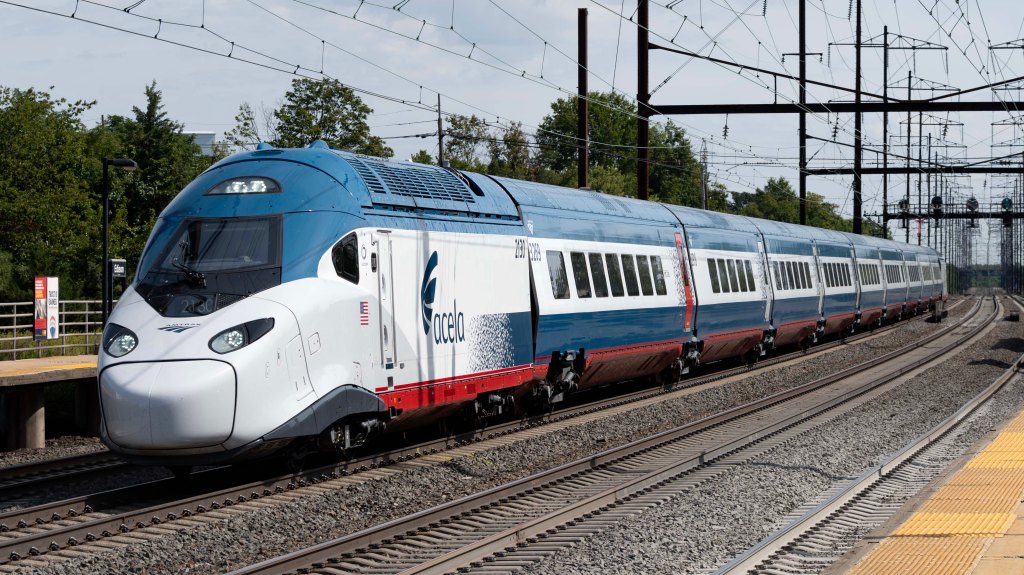
Amtrak’s high-speed brand is being refreshed through the NextGen Acela program—new trainsets, higher capacity, and a more modern onboard experience on the Northeast Corridor. It’s a foundational upgrade to the corridor’s premium offer and an important signal that Amtrak intends to keep growing NEC ridership against air and car alternatives.

Airo: the “regional train” finally becomes a product

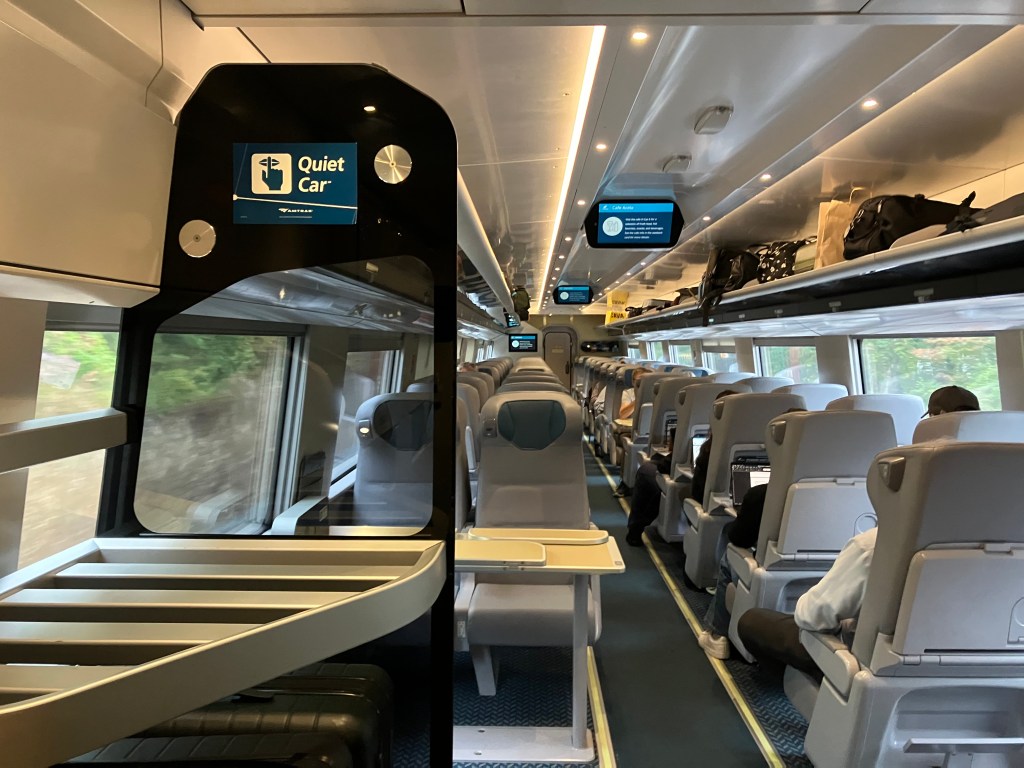
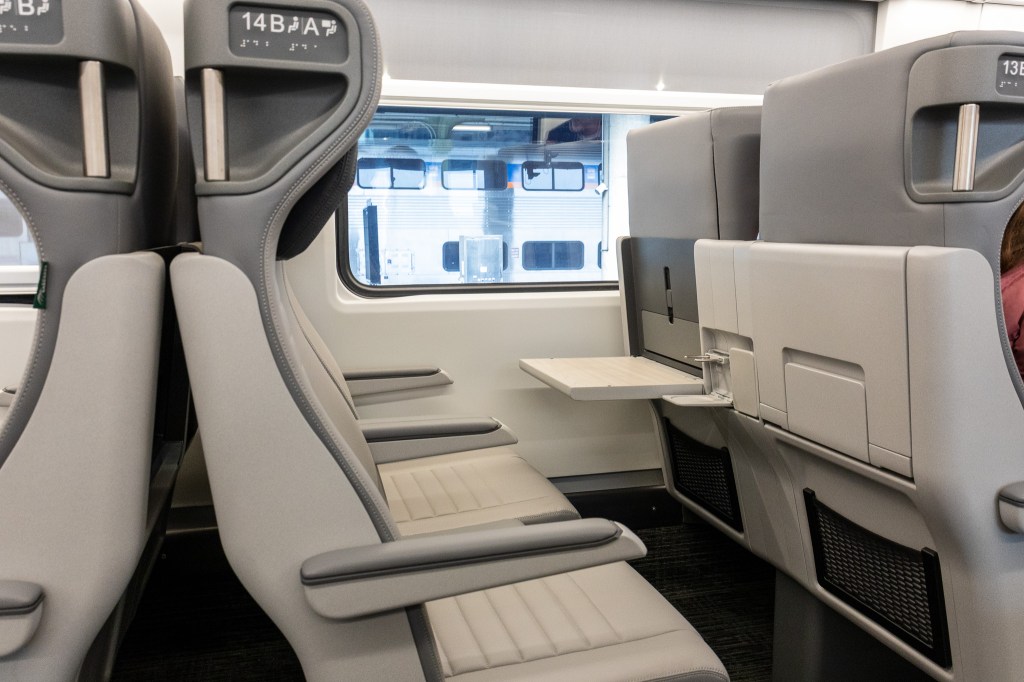
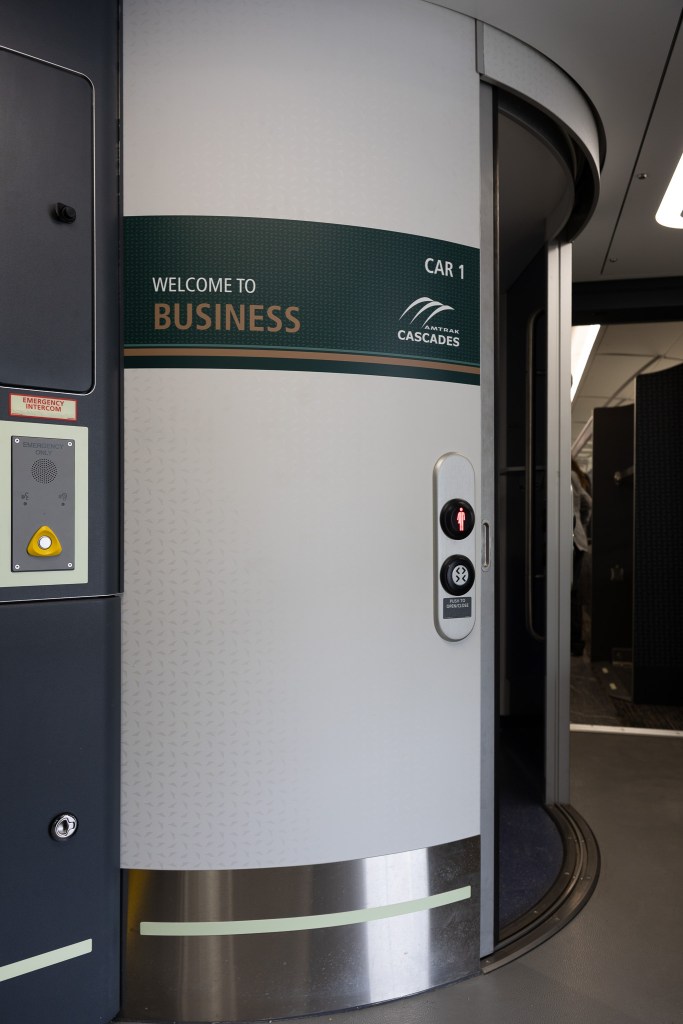
The most consequential fleet story for the broader network is Amtrak Airo: a large-scale replacement of aging equipment with trains designed around modern accessibility, better interiors, and a calmer, more ergonomic experience.

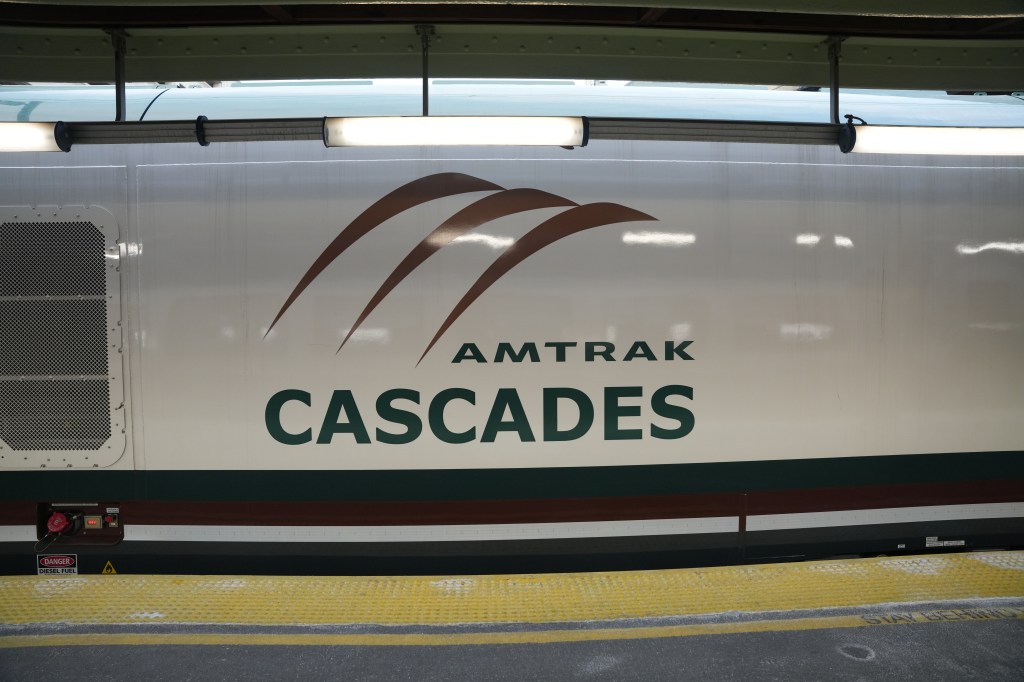
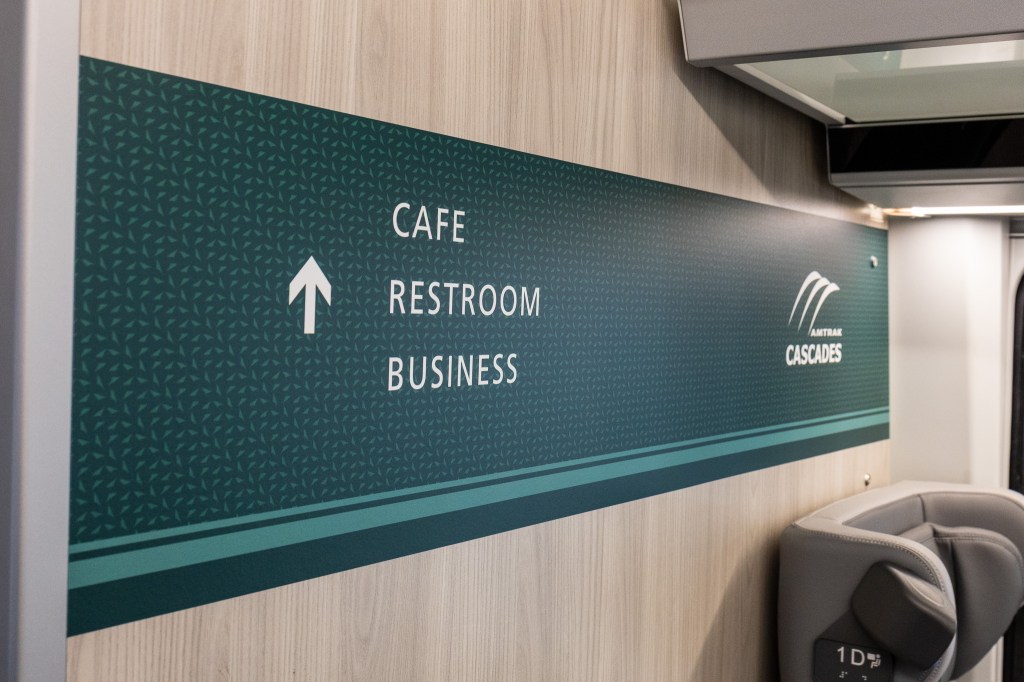
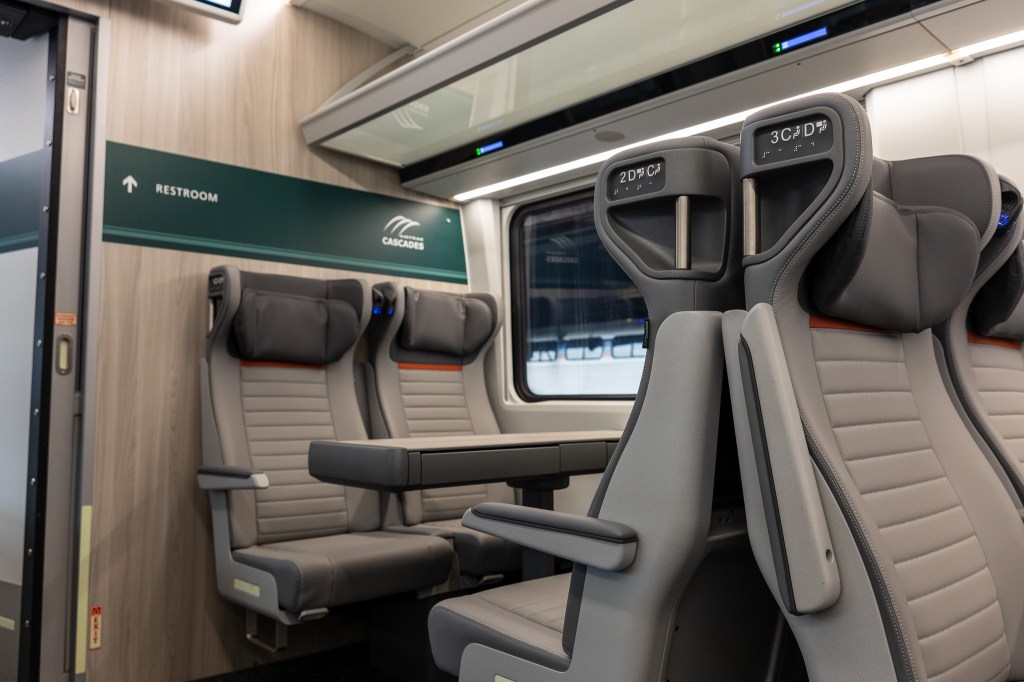
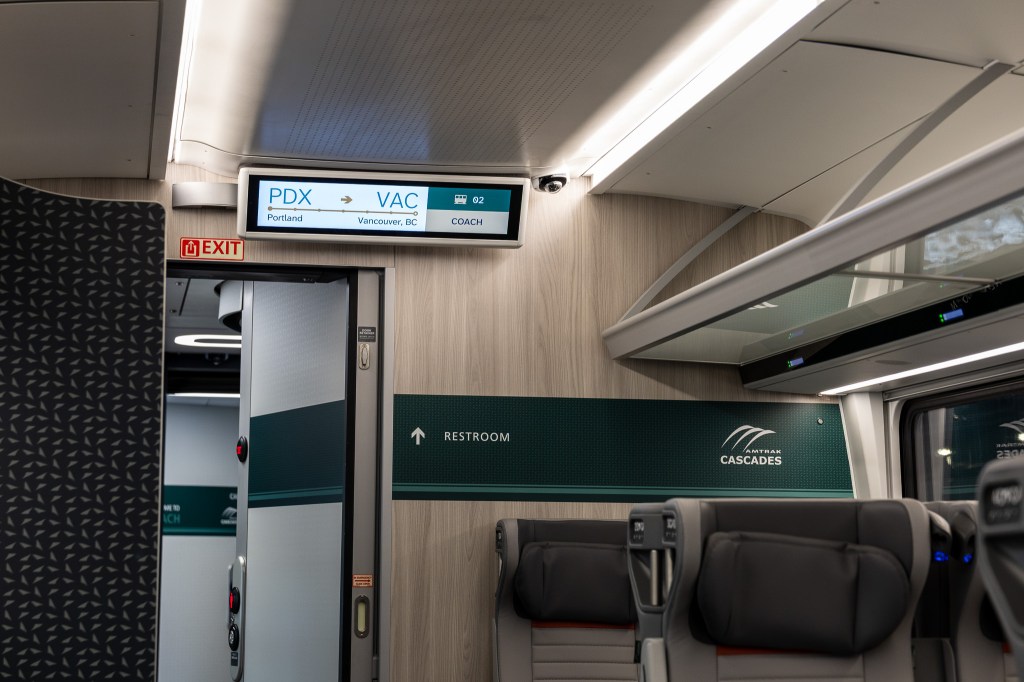
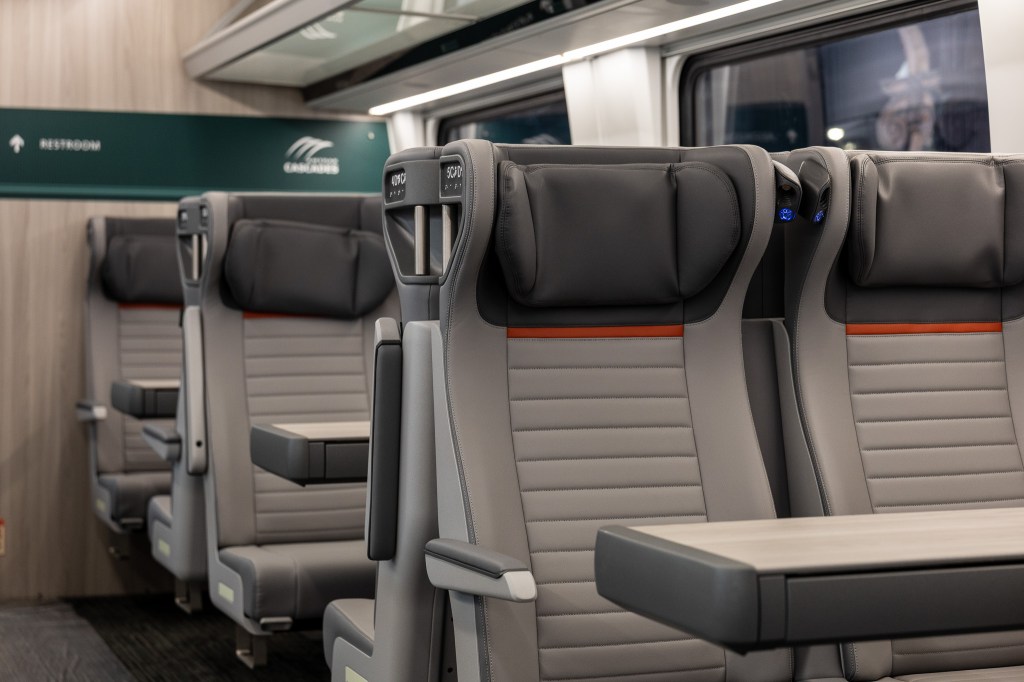
Based on the recent public previews and reporting, Amtrak plans to roll out Airo service starting with the Cascades in the Pacific Northwest, then expand across corridors from North Carolina to Maine, with plans to integrate Airo into Northeast Regional service by 2027. The details that matter are not “luxury”—they are the basics executed well: reliable power, thoughtful tray design, spacious and touchless restrooms, and accessibility integrated into the experience rather than bolted on.

Strategic point: Fleet modernization does two things at once: it improves the experience and strengthens the political and financial case for infrastructure upgrades. Trains are visible proof that rail investment isn’t theoretical.


Corridors, not slogans: the program machinery that matters

Corridor development is unglamorous—but it’s the “operating system” for passenger rail expansion. Over the past five years, the U.S. has pushed toward a model where corridors are advanced as programs: early-stage planning and governance, then incremental infrastructure and service upgrades, then repeat. This is how you get from “we should have trains” to “here is a credible service plan, capital plan, phasing, and operating agreement.”

Why it matters: the U.S. historically struggled with a missing middle—projects were either too early to fund or too under-defined to execute. A corridor-based pipeline is meant to standardize the path from concept into delivery.


The Northeast Corridor: megaprojects that unlock reliability

The NEC is where intercity rail already competes with air on door-to-door time for many city pairs. But the NEC is also the most fragile: century-old tunnels, bridge bottlenecks, constrained capacity, and cascading delays that ripple across the whole system.

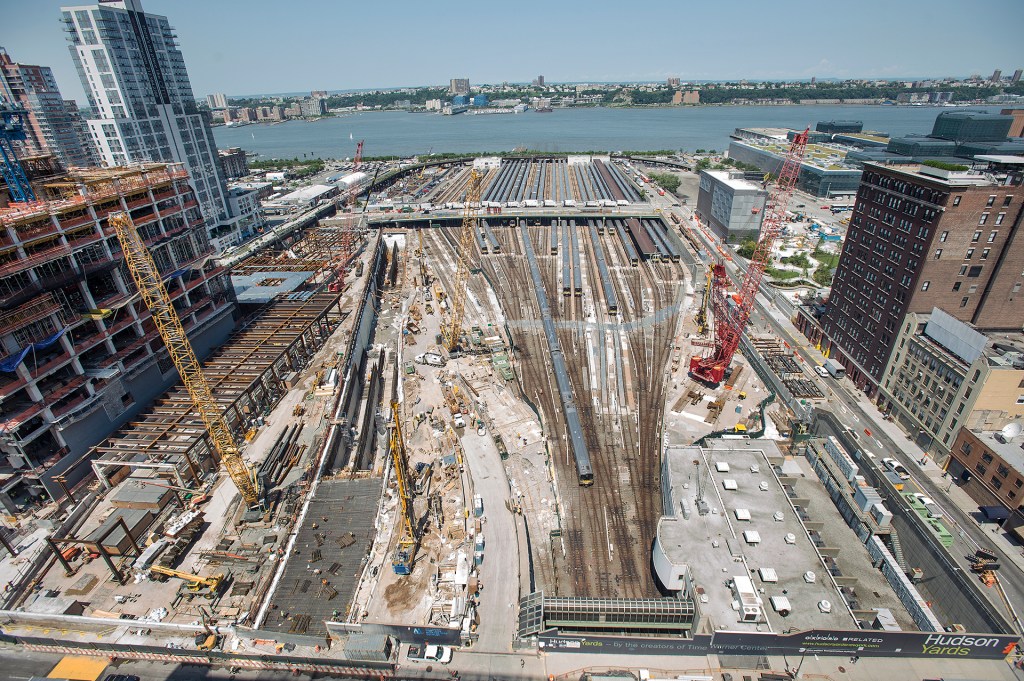
Hudson River tunnel capacity: the single biggest choke point

New York–New Jersey rail capacity (and resilience) hinges on adding and modernizing tunnel capacity under the Hudson River. This is not just a New York project; it is a Northeast economy project. In reliability terms, it’s the difference between a resilient network and a network where one aging asset can trigger region-wide disruption.

Baltimore tunnel replacement: speed + resilience

Baltimore’s long-standing tunnel constraints are another classic “small geography, huge impact” problem. Tunnel replacement and alignment improvements are the kind of infrastructure that riders don’t celebrate—but that quietly make the timetable trustworthy.

What these projects really do: they don’t just shave minutes. They reduce cascading delays—turning rail from “sometimes great” into “predictably reliable,” which is what converts car and short-haul air demand.


State corridors: the quiet winners (Midwest, Southeast, Virginia)

If the NEC is the flagship, the real volume story is in state-supported corridors: incremental frequency, improved schedules, and better stations—often at modest top speeds (79–110 mph) but with strong door-to-door competitiveness.

Midwest: “more trains” is the killer feature

One of the smartest corridor tactics is simply adding useful frequency on routes where demand already exists. A second daily round trip can change a corridor from “nice idea” to “practical default,” especially for business travel, weekend travel, and students.

Virginia: a blueprint for passenger rail expansion on shared tracks

Virginia has demonstrated a pragmatic model: invest in capacity, negotiate operating realities, and deliver incremental service improvements without waiting for a moonshot high-speed program. It’s not glamorous, but it’s how you build ridership—trip by trip, timetable by timetable.

Southeast Corridor: the Raleigh–Richmond logic

The Raleigh–Richmond market (and broader Southeast corridor) is one of the most strategically logical intercity rail plays in the U.S.: population growth, highway congestion, and short-haul air friction create the conditions where reliable rail can win—if the corridor is treated as a program, not a press release.


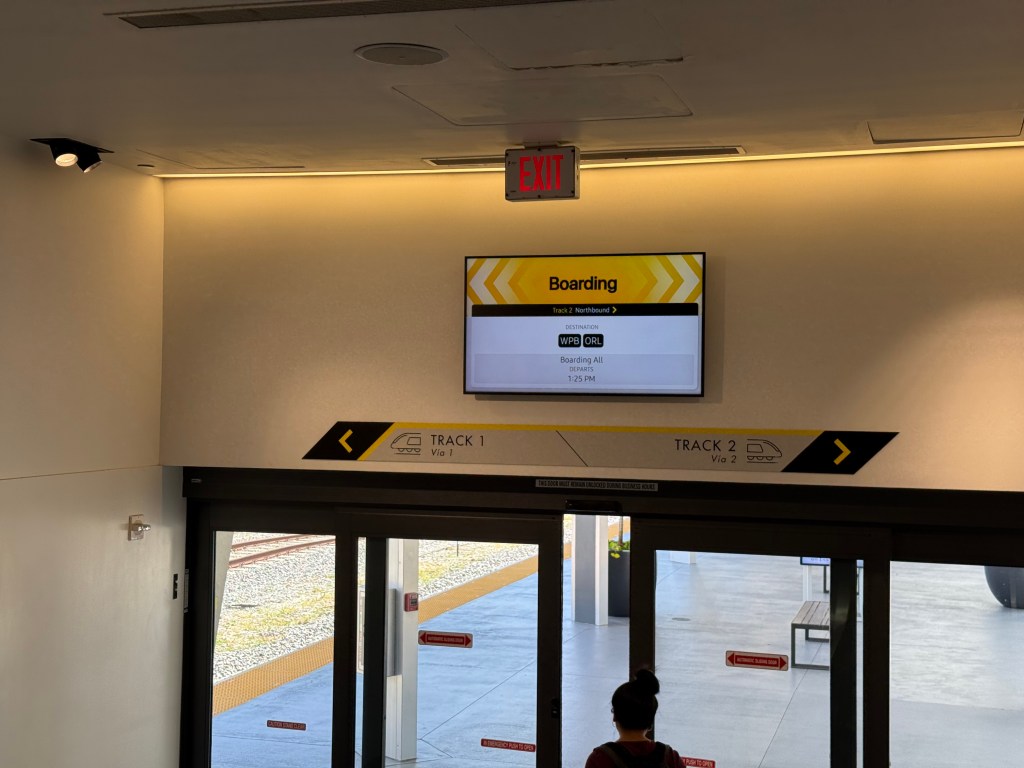
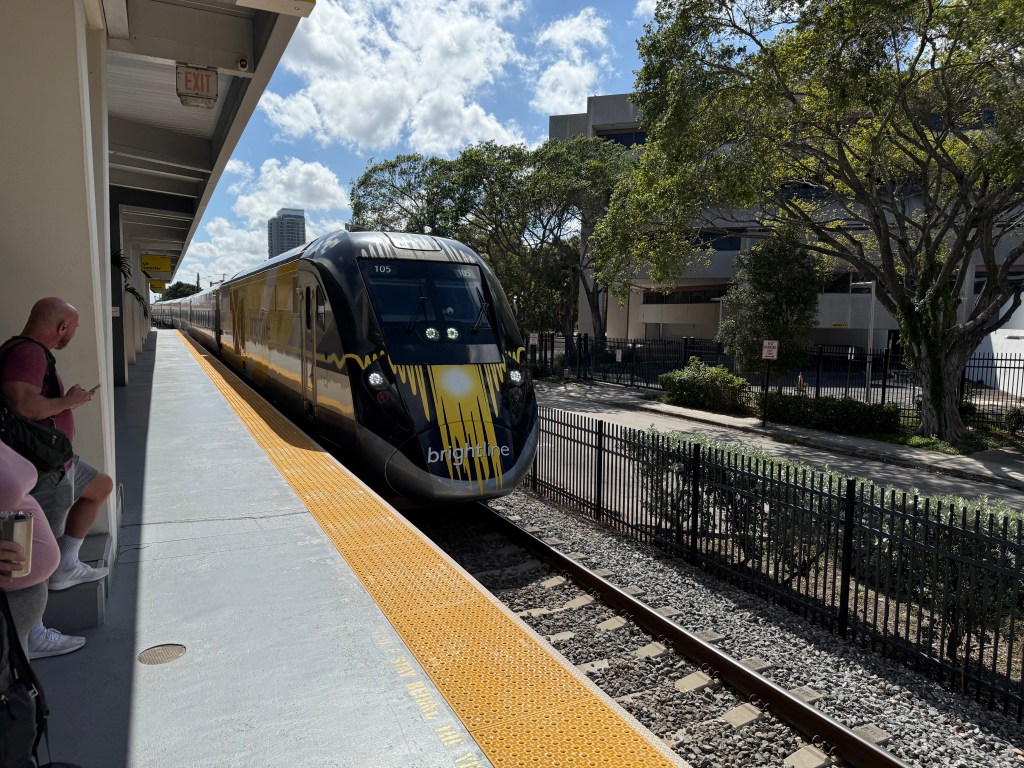
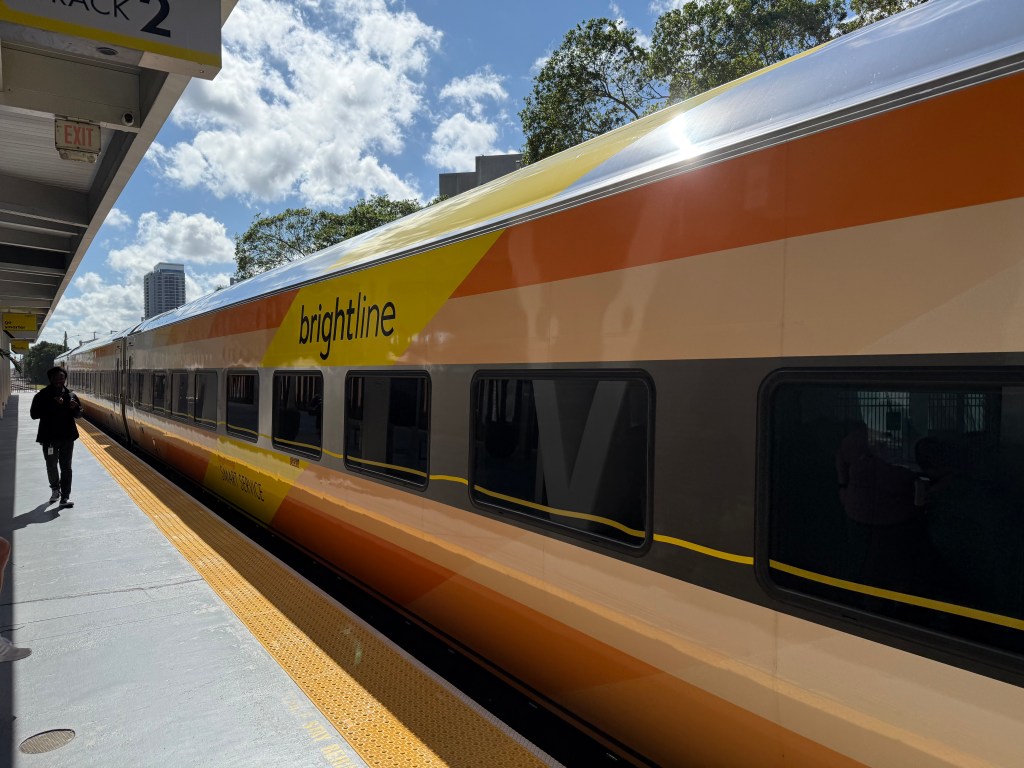
Private intercity rail: Brightline (Florida + West)

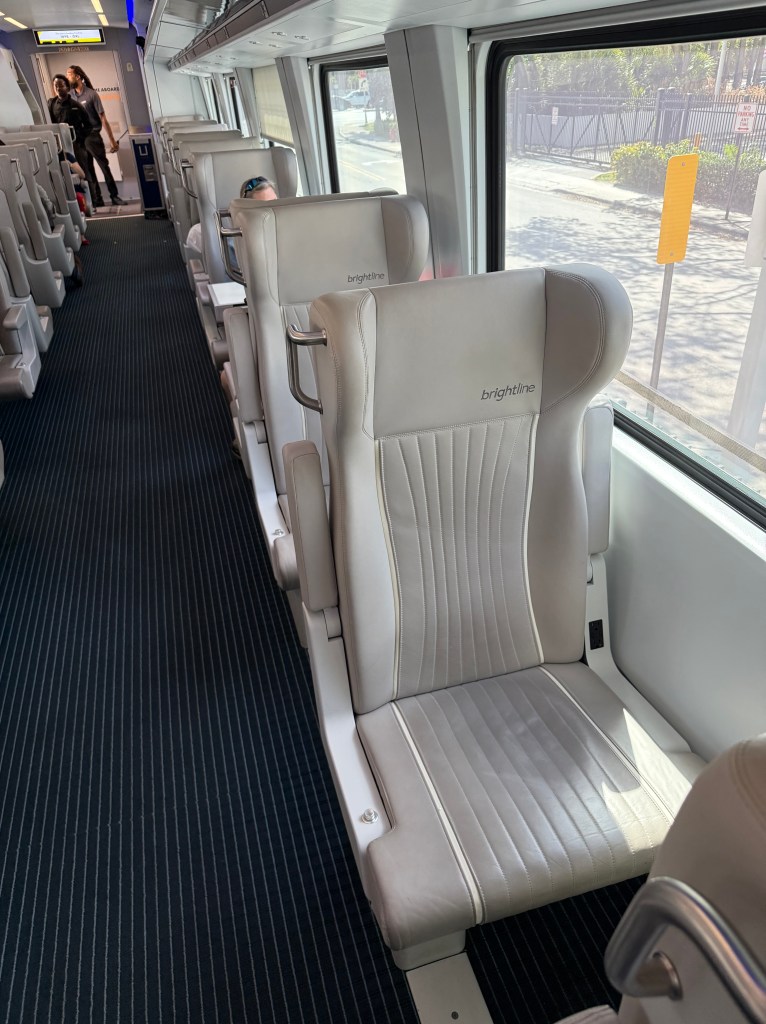
Brightline matters because it proves there is U.S. consumer willingness to adopt modern intercity rail when the product is easy to use and reasonably frequent. It also shows the power of good stations, clear branding, and a travel experience that feels designed rather than inherited.

Florida: Miami–Orlando as a real mode-shift experiment

Florida demonstrates what happens when intercity rail is treated as a mainstream product: clear schedules, clear stations, and a service cadence that makes the train a “default option” rather than a special occasion.

Brightline West: the highest-profile “new-build” intercity project

Brightline West (Las Vegas to Southern California) is the most visible attempt to deliver a new high-speed-ish intercity corridor outside the NEC. If execution holds, it could become a national proof point for new-build delivery—especially on a market where driving is painful and flying is short but inefficient door-to-door.


True high-speed rail: California’s long arc

California’s high-speed rail effort remains the most ambitious U.S. attempt at true HSR scale. Progress is real—but so are structural challenges of cost, governance, right-of-way complexity, and sustained funding. Whether it becomes the backbone of a statewide network or a high-quality “initial segment” depends on the next decade’s delivery discipline.

Regardless of the final form, California is already functioning as a national learning program for American HSR delivery: procurement, labor, environmental clearance, utility relocation, and complex civil works at scale.


Customer experience: what “modern rail” actually means

“Better trains” is not just speed. It’s a bundle of reliability + comfort + accessibility. The new generation of intercity rolling stock is pushing toward a baseline that travelers increasingly consider non-negotiable:

  • Accessible boarding and interiors designed for real mobility needs
  • Modern restrooms that are touchless, spacious, and usable (including family needs)
  • Seat-level power, lighting, and work-friendly tray solutions
  • Clear wayfinding and calmer interior design choices
  • Operational consistency (the same experience on Tuesday as on Saturday)

This is how rail wins back travelers from cars and short-haul flights: not by being “cool,” but by being dependable, comfortable, and human-centered.

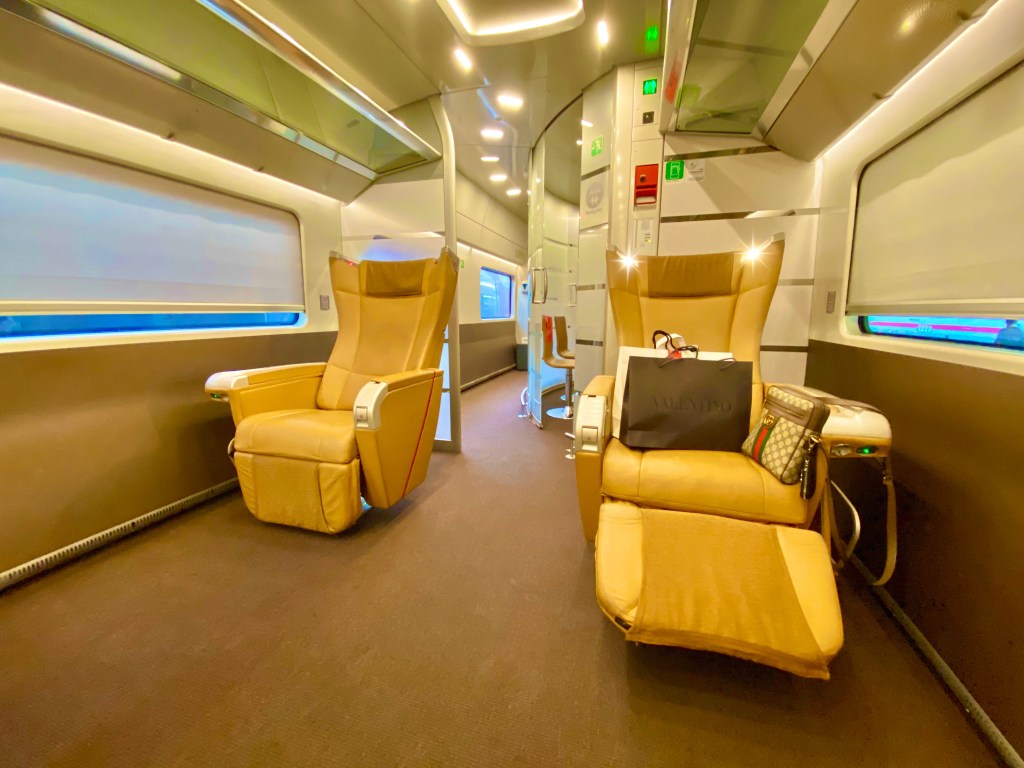
Trenitalia’s Frecciarossa Executive class is probably one of the best high speed product in Europe

What could still derail the rail comeback

This is the part most “rail renaissance” narratives underweight: rail’s constraints are operational and institutional as much as they’re financial.

1) Infrastructure is necessary but not sufficient

Without dispatching priority (or at least enforceable on-time performance regimes) on shared freight corridors, new trains will still sit behind long freights. Track upgrades must come with operating agreements that protect passenger reliability.

2) Maintenance facilities and workforce readiness

New fleets require upgraded maintenance bases, parts supply chains, and technician pipelines. If facilities lag, availability collapses and “new trains” become “stored trains.”

3) Funding continuity and political volatility

Multi-year rail programs need multi-year political commitment. Stop-and-go funding adds cost, delays, and contractor risk premiums—exactly the opposite of what rail needs.

4) Station experience and first/last-mile integration

Intercity rail wins when the station is an asset (central, safe, connected). It loses when stations are peripheral, unpleasant, or disconnected from local mobility.


The 10-year outlook (2026–2036): what a realistic win looks like

Let’s define “win” in a way that matches how transportation systems actually shift behavior.

What success likely looks like by the mid-2030s

  • Northeast Corridor reliability step-change through tunnel and key segment renewals (Hudson + Baltimore region), enabling tighter schedules and higher frequency.
  • Fleet renewal at scale across multiple corridors, making “modern train” a default expectation rather than a novelty.
  • 10–20 corridors upgraded into true “frequency networks” with more daily round trips and better span of service.
  • At least one headline new-build high-speed corridor outside the NEC becoming operational or meaningfully de-risked (Brightline West and/or a California initial segment).
  • More state-led wins where 90–110 mph + frequency beats 2-hour highway slogs.

The reachable prize

Make intercity rail the default choice in a growing set of 200–500 mile markets by combining frequency, reliability, and a modern onboard product—then let demand justify the next wave of upgrades.


Conclusion: a “new era of rail” is real—if the U.S. stays disciplined

The new trains are exciting not because they’re futuristic, but because they’re normal—normal for what intercity rail should feel like in 2026.

The next decade is where the U.S. either turns today’s funding moment into durable corridor systems—or repeats the historical cycle of big announcements, partial delivery, and degraded assets.

My take: the ingredients are finally on the table. The winners will be the corridors that combine (1) capital discipline, (2) operating agreements, (3) service frequency, and (4) customer experience that people actually want to repeat.

From “No Frills” to “Choice Architecture”: How Low-Cost Carriers Are Redesigning Customer Experience — and What Southwest’s Assigned-Seating Turbulence Reveals

Low-Cost Carriers (LCCs) and Ultra Low-Cost Carriers (ULCCs) didn’t just lower fares. They rewired the “customer experience” model: fewer bundled promises, more explicit tradeoffs, and a digitally mediated journey where control is available—at a price. Southwest Airlines’ rocky transition to assigned seating is a live case study of what happens when an airline changes its CX operating system while the rest of the product (bins, boarding, family seating expectations) still behaves like the old one.

Table of contents

  1. The great CX rewrite: what LCCs/ULCCs changed (and why it stuck)
  2. Unbundling as a CX design principle (not just a pricing trick)
  3. The “self-service airline”: digital first, humans last
  4. The new battleground: fairness, transparency, and “bin economics”
  5. Southwest’s assigned seating: a controlled experiment with real passengers
  6. Overhead bins as the hidden constraint that breaks the experience
  7. Families, adjacency, and the reputational cost of “random assignment”
  8. The strategic tradeoff: efficiency vs. monetization vs. brand identity
  9. A CX playbook for airlines navigating the LCC/ULCC era
  10. What happens next: the next wave of airline CX competition

The great CX rewrite: what LCCs/ULCCs changed (and why it stuck)

For decades, “airline customer experience” meant a fairly stable bundle: one ticket, a seat (implicitly), a carry-on expectation, some level of assistance, and a set of policies that felt like part of the brand’s promise. LCCs and ULCCs reframed that model with a blunt proposition:

  • We’ll sell the transportation efficiently.
  • Everything else becomes a choice. (Seat, bag, priority, flexibility, comfort, snacks, even “less uncertainty.”)
  • And choices have prices.

The result is not simply “worse service.” It’s a different architecture: a base product optimized for cost and utilization, plus a menu of paid options designed to match distinct willingness-to-pay. This is why the model persisted even as some customers complained: it aligns cost structure, revenue levers, and operational standardization.

But the deeper change is psychological. LCCs/ULCCs normalized the idea that the passenger is not buying an “experience bundle.” They are assembling an experience—step by step—through decisions, fees, and digital flows. That changes what customers expect from every airline, including “hybrids” like Southwest.

Unbundling as a CX design principle (not just a pricing trick)

In mature LCC/ULCC models, unbundling is a form of experience design. It forces clarity—sometimes brutally:

  • Priority becomes a product (early boarding, better seat, faster service recovery).
  • Certainty becomes a product (assigned seating, guaranteed overhead space, change flexibility).
  • Comfort becomes a product (extra legroom, blocked middle, “preferred” zone).

Airlines that master unbundling do two things well:

  1. They define the base experience with discipline. The cheapest fare is intentionally spartan, but coherent.
  2. They engineer “upgrade moments” along the journey. The customer is repeatedly offered ways to reduce friction—at a price—often when anxiety peaks (check-in, boarding, disruptions).

When it works, customers don’t feel “nickel-and-dimed.” They feel in control: “I paid for what matters to me.” When it fails, the experience feels like a trap: the base product is engineered to be uncomfortable, and upgrades look like ransom.

A quick maturity model

Unbundling maturityCustomer perceptionTypical outcomes
Ad hoc fees“They’re charging me for everything.”Complaints spike; loyalty weakens
Structured menu“I can choose what I want.”Ancillary growth; better NPS segmentation
Experience engineering“I can buy less stress.”Higher conversion, fewer service calls
Operationally synchronized“It just works.”On-time performance + revenue lift + fewer conflict points

The “self-service airline”: digital first, humans last

LCCs/ULCCs pioneered a digital operating model that legacy airlines later adopted—sometimes reluctantly:

  • Apps as the primary interface: rebooking, vouchers, upsells, boarding pass, “service recovery” messaging.
  • Policy-driven automation: fewer discretionary exceptions, more consistent enforcement (which can feel harsh).
  • Lean airport footprint: fewer agents, more kiosks, more self-tagging, more “gate is the new customer service desk.”

This shifts the definition of customer experience from “how friendly are the people?” to “how predictable is the system?” In other words: the UX of policies and digital flows becomes the brand.

That’s also why transitions are perilous. When you change one major system component—like seating allocation—you must re-tune the entire journey: check-in rules, boarding logic, bin availability, family seating policies, staff scripts, and escalation pathways.

The new battleground: fairness, transparency, and “bin economics”

Once airlines monetize “certainty” (seat selection, priority boarding, extra legroom), the core CX question becomes fairness. Not moral fairness—perceived fairness.

Passengers will accept fewer freebies if the rules are clear and outcomes feel logical. They revolt when outcomes feel random or inconsistent—especially when money or loyalty status is involved.

The hidden economics of overhead bins

Cabin storage is a finite resource that is poorly “priced” and inconsistently enforced across the industry. In open seating models, early boarding implicitly secured bin space. In assigned seating models, customers expect the seat they paid for (or status they earned) to correlate with a reasonable chance of storing a bag near that seat.

When that correlation breaks, you trigger a specific kind of anger: “I did everything right and still lost.” That’s the emotional core of Southwest’s current friction.

Southwest’s assigned seating: a controlled experiment with real passengers

Southwest’s shift away from its iconic open seating is more than a tactical tweak. It is a strategic migration toward the industry norm: seat choice as a monetizable product, and boarding as a hierarchy informed by fare, status, and paid add-ons.

Southwest publicly framed the decision as aligned with customer preference and modernization. But modernization is not a single switch. It’s a system redesign—and the first weeks of operation revealed where the system is brittle.

What passengers are reporting (and what the airline acknowledges): assigned seating can produce outcomes that feel misaligned with expectations—especially when the “premium” customer ends up separated from their bag, their travel party, or the experience they believed they purchased.

Importantly, Southwest is not a typical ULCC. Its brand equity historically came from simplicity: a distinctive boarding culture, a perception of “less gotchas,” and an airline that felt human. When you introduce monetized hierarchy, you must manage the cultural shock—because customers are not only buying a seat. They’re buying what the brand used to represent.

Overhead bins as the hidden constraint that breaks the experience

The most telling issue surfacing in early feedback is not the assigned seat itself—it’s overhead bin access. Customers in forward rows (including loyalty members and extra-legroom purchasers) report storing bags far behind their seats because early boarders fill the front bins first.

Why this matters:

  • It breaks the “premium promise.” If a customer pays for a better seat, they expect fewer hassles, not a scavenger hunt for storage.
  • It slows the operation. Walking bags backwards (and later walking forward against the flow) degrades boarding and deplaning time.
  • It creates conflict. Bin disputes are high-emotion, public, and contagious—exactly what airlines try to avoid.

What LCCs/ULCCs learned earlier

Many ULCCs reduced carry-on expectations by charging for larger cabin bags, incentivizing smaller personal items and shifting volume to the hold. Whether you like it or not, it is a coherent operational response to finite bins. Southwest is now experiencing a version of that physics: once boarding hierarchy changes, bin scarcity becomes visible and political.

Core insight: You can’t redesign seating without redesigning the storage “contract.” If the passenger’s mental model is “my seat implies nearby storage,” then your process must support that—or you must explicitly sell/guarantee storage as a product.

Families, adjacency, and the reputational cost of “random assignment”

Another flashpoint is family seating—particularly cases where children are assigned seats away from parents when the family declines paid seat selection. Even if the airline ultimately resolves such cases at the gate, the reputational damage occurs before resolution: the customer experiences stress, social judgment, and uncertainty.

This is where customer experience intersects with public policy debates and brand risk. A few principles have emerged across the industry:

  • Family adjacency is not just “a nice to have.” It is a safety, ethics, and PR issue.
  • Gate-based fixes don’t scale. They create delays and put frontline staff in conflict with passengers.
  • Algorithmic assignment must encode adjacency rules. If you sell seat choice, you still need baseline protections for minors traveling with guardians.

LCC/ULCC carriers have experimented with multiple approaches—some better than others. The best approaches are explicit: clear policies, clear boundaries, and predictable outcomes.

The strategic tradeoff: efficiency vs. monetization vs. brand identity

Why is this happening now—across the industry? Because airline economics increasingly depend on ancillary revenue and product segmentation, even as capacity, labor costs, and operational complexity rise.

Southwest’s transition highlights a broader truth: customer experience is not the opposite of revenue optimization. In modern airlines, CX is the mechanism through which revenue optimization is delivered—via choices, tiers, and “paid certainty.”

But there is a brand identity risk

Southwest’s brand historically signaled:

  • “We’re different.”
  • “We’re simple.”
  • “We’re fair (enough).”

Assigned seating and monetized hierarchy can still be consistent with those values—but only if the airline makes the system feel transparent, coherent, and operationally smooth. Otherwise, the airline risks becoming “like everyone else,” without the premium network advantages that larger carriers have.

The LCC/ULCC lesson for everyone

The winners are not the airlines that offer the most perks. They are the airlines that offer the cleanest tradeoffs:

  • If you pay, the benefit is real and reliable.
  • If you don’t pay, the base product is still workable and predictable.
  • Rules are enforced consistently, with minimal discretionary drama.

A CX playbook for airlines navigating the LCC/ULCC era

Here is a practical set of moves airlines can apply when shifting CX “operating systems” (seating, boarding, tiers, fees):

1) Treat overhead bins as a product and a process

  • Define the storage promise. Is bin space “best effort,” or tied to fare/seat?
  • Align boarding to storage logic. If premium customers sit forward, then premium boarding must protect forward bin availability.
  • Enforce bag size consistently. Inconsistent enforcement destroys perceived fairness.

2) Encode family adjacency into assignment algorithms

  • Guarantee adjacency for minors with guardians within reasonable constraints.
  • Prefer pre-assignment solutions over gate interventions.
  • Communicate clearly before purchase and at check-in.

3) Reduce “surprise moments”

In modern airline CX, surprises are the enemy. Customers tolerate constraints; they do not tolerate feeling tricked.

  • Show seat outcomes earlier.
  • Explain why a seat is what it is (fare tier, late check-in, aircraft change).
  • Offer a “fix” path inside the app, not at the gate.

4) Make upgrades feel like value, not ransom

  • Bundle upgrades around customer jobs-to-be-done: certainty, speed, comfort, flexibility.
  • Keep the base product coherent. If base is punitive, social media will do the marketing for you—in the worst way.

5) Script the frontline experience

When systems change, frontline staff become the UX. Equip them:

  • Clear rules + escalation paths
  • Short, consistent explanations
  • Discretionary tools for edge cases (especially families)

6) Measure the right things

MetricWhat it revealsWhy it matters now
Boarding time varianceProcess stabilityVariance indicates conflict points (bins, scanning, group logic)
Gate interventions per flightSystem failures that humans must patchHigh levels predict delays and staff burnout
Seat-change requestsMismatch between assignment logic and customer needsEspecially important for families and status customers
Complaint clustering (social + direct)Reputation riskClusters often precede mainstream media stories
Ancillary conversion by journey momentWhere customers buy certaintyGuides UX improvements without harming trust

What happens next: the next wave of airline CX competition

The next phase of airline customer experience competition is not about adding amenities. It’s about reducing friction through system design while preserving profitable segmentation.

Expect the industry to double down on:

  • More explicit tiering: basic fares that are truly basic, and premium economy-like zones on narrowbodies.
  • Paid certainty bundles: seat + boarding + storage guarantees packaged together.
  • Algorithmic personalization: upsells tuned to traveler context (family, business trip, tight connection).
  • Operationally aware CX: real-time messaging and re-accommodation that prevents lines and gate chaos.

Southwest’s assigned-seating turbulence should be read as a signal, not an anomaly. When an airline changes a foundational ritual (like open seating), it must redesign the “physics” around it—bins, boarding, family adjacency, and fairness cues. LCCs/ULCCs taught the market how to monetize choice. Now the strategic challenge is doing so without eroding trust.

Bottom line: In 2026, the winning customer experience is not the most generous. It’s the most legible—where rules are clear, outcomes make sense, and paid upgrades reliably remove stress rather than merely shifting it onto someone else.

Summer 2026 Transatlantic Strategy: Business Class Overcapacity Risk, Premium-Leisure Playbooks, and the Air France New York Signal

For the last three summers, the transatlantic market has been the airline industry’s cash engine: high load factors, strong yields, and a premium cabin that kept surprising on the upside. Summer 2026, however, looks like a more complex equation. Capacity is still climbing, premium seat counts are structurally higher than they were pre-2020, and corporate travel—while healthier than in 2021–2022—remains more volatile and more “optional” than it used to be.

The biggest strategic risk is not “transatlantic demand collapsing.” It’s more subtle: Business Class overcapacity on key city pairs during peak weeks, causing discounting pressure, dilution via upgrades, and a forced pivot toward leisure-oriented premium demand (“premium leisure” / “affordable luxury” / “treat-yourself travel”).

And then, Air France drops a signal that matters: up to 11 daily flights between Paris-CDG and New York (JFK + Newark), including a stronger Newark schedule with a second daily frequency in June–October 2026, deployed on A350-900 aircraft featuring the latest Business seat with a sliding door—explicitly framed as flexibility for business travelers and leisure customers alike. This is not a timid bet; it’s a calibrated bet. And it captures the Summer 2026 playbook in one move: more frequency, more premium product consistency, and more leisure-friendly scheduling.


Key Takeaways (If You Only Read One Section)

  • Premium capacity is structurally up (fleet gauge, cabin densification, premium-economy growth, and more business-class seats per aircraft) while demand signals are normalizing compared to post-pandemic peaks.
  • Business Class overcapacity risk is highest on high-frequency trunk routes (NYC–London/Paris, BOS–Europe, IAD/EWR–Europe) during shoulder weeks and late-booking windows.
  • Airlines are mitigating via premium leisure stimulation: sharper segmentation, bundles, co-branded card levers, loyalty/status accelerators, corporate-lite products for SMEs, and “experience-led” premium differentiation.
  • Network strategy is shifting from pure growth to quality growth: frequency and schedule convenience, rather than just new dots on the map, to protect yields.
  • Premium Economy is the pressure valve: it absorbs aspirational demand, protects Business pricing integrity, and offers inventory management flexibility.

1) Why Summer 2026 Is Different: The Overcapacity Setup

1.1 Premium seat counts have quietly exploded

Premium capacity is not just a function of “how many flights.” It’s increasingly a function of seat mix. Many carriers have moved to:

  • More 1-2-1 Business Class cabins (often with more seats than older layouts).
  • Rapid expansion of Premium Economy (which changes the upsell ladder and protects long-haul economics).
  • Higher premium density on new-generation widebodies (A350, 787) and retrofits.

This is rational: premium seats are where the margin lives, especially when fuel, labor, and airport costs remain elevated. Industry macro outlooks have also highlighted resilient premium demand as a yield-supporting factor in 2026 projections. Still, resilience does not mean immunity—especially when supply rises faster than willingness-to-pay on marginal trips.

1.2 Demand is strong, but “less irrationally strong”

By early 2026, multiple travel-data narratives point to a scenario airlines know too well: capacity up modestly while bookings soften for peak Summer 2026 compared to Summer 2025 on certain transatlantic flows—an early warning that pricing power could weaken if inventory is not managed aggressively.

In other words: the market is not “bad.” It’s just returning to being a market—where revenue management must work for its living again.


2) The Air France New York Move: A Micro-Case Study of the Macro Strategy

Air France’s announcement is a perfect case study because it bundles together the three levers airlines are prioritizing for Summer 2026: frequency, premium product, and premium leisure relevance.

2.1 Up to 11 daily flights: frequency as a premium product

Air France will offer up to 11 daily flights between Paris-CDG and New York, split between JFK and Newark, together with Delta within the transatlantic joint venture. On JFK alone, Air France is positioned at up to 6 daily frequencies, with multiple flights operated by 777-300ER aircraft equipped with La Première, and JV complementarity through Delta-operated flights.

Strategic point: In premium, frequency is a product. Convenience drives share, and share protects yields.

2.2 Newark strengthened June–October: leisure-friendly schedule design

The Newark route is strengthened from June 1, 2026, with up to two daily flights rather than one, operated by A350-900 aircraft with the latest cabins, including the Business seat with a sliding door—explicitly marketed to both business travelers and leisure customers. Flight timings are also “day-shape” friendly for leisure (and for premium customers who value predictable departure windows).

Strategic point: Newark is not just about corporate contracts. It is also a premium leisure gateway, and schedule design can stimulate higher-yield leisure demand (especially for couples/families who will buy premium when it is convenient and framed as a “once-a-year upgrade”).

2.3 The Cannes Lions Nice flights: event-driven premium leisure

Air France also highlights special flights between New York-JFK and Nice for Cannes Lions in June 2026—an example of event-driven premium leisure where willingness-to-pay is temporarily elevated and inventory can be managed as a scarcity product.

Strategic point: When premium overcapacity looms, airlines manufacture “peak willingness-to-pay moments” through targeted capacity and storytelling.

Source: Air France corporate release (Feb 9, 2026). Summer 2026: Air France strengthens its New York service


3) Where Business Class Overcapacity Hits First

Overcapacity rarely shows up evenly. It usually appears in predictable pockets:

  • Trunk premium corridors: NYC–London, NYC–Paris, NYC–Frankfurt, BOS–London/Paris, EWR–Europe hubs.
  • Shoulder weeks inside “peak season”: early June and late August/September patterns where leisure still travels but corporate is inconsistent.
  • Late-booking windows: when the “business traveler last-minute premium purchase” is weaker than forecast, leaving a premium cabin with seats that must be monetized.
  • Competitive JV markets: where joint ventures rationalize capacity to a degree, but each brand still wants share and visibility.

The challenge is amplified because premium cabins are not like economy: you cannot “hide” a lie-flat seat. If you don’t sell it, you either (a) upgrade into it, (b) discount it, or (c) accept spoilage. Every option impacts yield quality and brand signals.


4) The Summer 2026 Mitigation Playbook: How Airlines Stimulate Leisure Business Class Demand

4.1 Precision segmentation and “premium leisure personas”

Airlines are getting sharper at identifying leisure segments that behave like corporate segments:

  • Affluent couples traveling for milestone trips (anniversaries, bucket list).
  • Family premium (one parent buys up for comfort/health reasons; family follows via upgrades or points).
  • SME / “corporate-lite” travelers (self-booking founders/partners who want Business but lack managed programs).
  • Bleisure extensions (corporate ticket + leisure add-on where one leg upgrades).

Instead of generic “sale fares,” airlines increasingly deploy targeted offers through CRM, loyalty, and distribution partners—protecting brand integrity while moving inventory.

4.2 Bundling and soft-fencing (protecting list price optics)

To avoid blatant Business Class discounting, airlines use:

  • Bundles (seat + lounge + chauffeur/transfer + flexible change) that justify price while improving perceived value.
  • Fare families (semi-flex leisure premium vs full-flex corporate) to separate willingness-to-pay.
  • Ancillary inclusion (Wi-Fi, premium dining, lounge upgrades) to reduce “price-only” comparisons.

4.3 Loyalty levers: points, status, and upgrade marketplaces

Loyalty programs have become the “liquidity engine” for premium cabins:

  • More dynamic award pricing to match demand conditions.
  • Upgrade auctions / paid-upgrade prompts to monetize empty J seats late in the booking curve.
  • Status accelerators and co-branded card promos aimed at aspirational premium travelers.

In overcapacity scenarios, loyalty is not only a reward mechanism; it is a yield management tool that monetizes seats without publicly collapsing price anchors.

4.4 Premium Economy as the shock absorber

Premium Economy is the “pressure valve” that helps airlines:

  • Capture aspirational demand that won’t pay for Business.
  • Create a credible step-up ladder (Economy → Premium Economy → Business).
  • Limit Business dilution by offering an attractive alternative.

From a strategy lens, Premium Economy reduces the need to dump Business fares at the margin.

4.5 Schedule and frequency optimization (the underrated lever)

Air France’s NYC move illustrates this: airlines can protect premium revenue not only by “adding routes” but by adding the right departures at the right times, maximizing convenience and recapture. Frequency is a hedge against corporate volatility because it also sells strongly to leisure customers who value flexibility.


5) Network Strategy for Summer 2026: Growth, but with Guardrails

Transatlantic is still strategically attractive, but carriers are becoming more selective about where they grow and how they present that growth.

5.1 Joint ventures: disciplined on paper, competitive in practice

JVs (e.g., immunized alliances) can coordinate capacity and pricing more effectively than pure competitors. Yet each member still fights for brand preference, distribution strength, and loyalty capture. Summer 2026 will test JV discipline, especially when one partner has more premium capacity exposure than another.

5.2 Secondary cities: premium leisure gold, but fragile economics

New or expanded services to secondary European cities can be profitable when they unlock premium leisure (think “direct-to-destination” travel). However, they can also be the first to suffer if load factors soften. Expect airlines to:

  • Use narrowbody long-range aircraft where viable (risk containment).
  • Seasonalize more aggressively.
  • Prioritize destinations with event-driven peaks and strong inbound tourism.

5.3 Product consistency: doors, Wi-Fi, lounges, and the premium narrative

Premium leisure customers are more influenced by “product story” than traditional managed corporate. Hence the focus on:

  • Suite-like Business seats (doors, privacy).
  • Connectivity as a default expectation.
  • Lounge upgrades and curated ground experiences.

6) The Real Battlefield: Revenue Management Under Premium Pressure

When Business Class demand is uncertain, airline profitability hinges on three RM principles:

  • Protect the price anchor: avoid public fare collapses that retrain customers to wait.
  • Control dilution: upgrades are inevitable, but unmanaged upgrades destroy the perceived scarcity of premium.
  • Exploit micro-peaks: holidays, events, shoulder-week patterns, and city-level demand asymmetries.

Expect Summer 2026 to deliver more visible “deal cycles” in premium—but increasingly through private channels (targeted offers, loyalty pricing, bundles) rather than billboard sales.


7) What This Means for Airlines: A Strategic Scorecard

7.1 Winners will do “quality growth”

The best Summer 2026 strategies will not be the ones that grow the most ASKs. They will be the ones that:

  • Grow frequency where it increases premium share.
  • Use Premium Economy to protect Business integrity.
  • Deploy loyalty and CRM as inventory monetization tools.
  • Invest in the premium narrative (hard + soft product) that persuades leisure travelers to pay up.

7.2 Losers will chase volume and then “sell their way out”

Overcapacity is not fatal. Poor discipline is. Airlines that chase share without guardrails often end up discounting Business, over-upgrading elites, and eroding their own premium willingness-to-pay for future seasons.


8) What This Means for Travelers (and Why This Matters)

  • If you’re a traveler paying cash: expect more targeted premium deals (but less obvious public discounting).
  • If you’re a loyalty traveler: Summer 2026 may offer better upgrade opportunities and more dynamic award inventory on certain weeks.
  • If you’re corporate/SME: airlines will keep building “corporate-lite” propositions (flexibility bundles, SME programs) to stabilize premium demand.

9) Conclusion: Air France’s NYC Expansion Is a Signal, Not an Outlier

Air France increasing New York frequency for Summer 2026 is not a simple capacity story. It is a strategic statement: transatlantic remains the arena where premium product, schedule convenience, and leisure-driven demand stimulation converge.

Summer 2026 will likely reward airlines that accept a new reality: Business Class demand is broader than corporate—but it must be activated. The carriers that master premium leisure stimulation without destroying price anchors will protect margins. The others will discover, again, that premium overcapacity is not a capacity problem—it’s a strategy problem.

STARLUX Airlines: Genesis, Strategy, and the A350-1000 Moment That Changes the Game

In just a few years, STARLUX Airlines has moved from “bold startup” to a carrier with a credible long-haul blueprint. The moment that crystallizes this shift is the arrival—and global debut—of Taiwan’s first Airbus A350-1000, a flagship designed to unlock network range, premium monetization, and scale economics without abandoning the brand’s boutique DNA.

This article is a strategic deep dive into: (1) STARLUX’s genesis and positioning, (2) why an all-Airbus fleet is not just a procurement choice but a business model, (3) what the A350-1000 enables (and what it does not), and (4) how the airline’s next expansion wave could play out across North America and Europe.


1) The STARLUX origin story: a premium airline built “in reverse”

Most airlines either start with volume and later layer premium, or they start premium but remain boutique due to limited scale economics. STARLUX is trying something rarer: building a premium brand from day one, while designing the operating model to scale into long-haul relevance.

Founded by aviation executive and trained pilot Chang Kuo-wei, STARLUX launched operations in 2020 as Taiwan’s newest full-service airline, entering a market already served by strong incumbents.

That makes the strategic problem less about “how to fly planes” and more about “how to create a differentiated premium proposition from a hub that already has established competitors.” STARLUX’s bet is that a curated product, paired with modern fleet economics and a connective hub logic in Taipei, can carve a sustainable niche—especially on long-haul routes where premium demand and brand perception carry disproportionate yield impact.

1.1 Premium as a system, not a cabin

STARLUX treats premium not as an isolated business-class seat, but as an end-to-end system: cabin design language, service choreography, consistent hardware, and a “luxury-forward” brand signature. On long-haul aircraft, it uses a four-cabin configuration—including a small First Class—signaling an intent to compete at the top end rather than “premium-ish.”

That approach is expensive if your network is thin and your fleet is fragmented. Which leads to the second foundational choice: fleet strategy.


2) The all-Airbus fleet strategy: commonality as the hidden growth engine

STARLUX has built an all-Airbus fleet across narrowbody and widebody families and reinforced this approach with additional orders across the A330neo and A350 families, including freighter capacity via the A350F.

To many observers, “all-Airbus” can sound like brand preference. Strategically, it is closer to an operating model: cockpit commonality, training pipelines, maintenance and spares rationalization, vendor ecosystem simplification, and more predictable operational performance as you grow.

2.1 Why commonality matters more for a young airline

Legacy carriers often carry fleet complexity as historical baggage. Young airlines can build a clean fleet architecture that allows them to grow without exploding their fixed-cost base.

When an airline adds a new aircraft type, it doesn’t just buy airframes; it buys complexity: additional crew qualification paths, simulator capacity, parts inventories, maintenance programs, and reliability learning curves. Commonality reduces the “organizational drag” of growth—especially important when you are simultaneously building network breadth, brand, and operational maturity.

This is why the A350-1000 is not merely “a bigger A350.” It is a scale step within the same family—meaning STARLUX gets capacity and performance without resetting the operational playbook.


3) The A350-1000 moment: Taiwan’s first, and STARLUX’s flagship pivot

In early 2026, STARLUX took delivery of its first A350-1000—Taiwan’s first of the type—handed over in Toulouse and flown nonstop to Taipei. Shortly after, the airline showcased the aircraft at the Singapore Airshow before entry into commercial service, positioning the jet not only as a network tool but as a brand statement on an international stage.

3.1 The aircraft configuration tells you the strategy

STARLUX’s A350-1000 is configured as a four-class, 350-seat aircraft: 4 First Class suites, 40 Business Class seats, 36 Premium Economy, and 270 Economy.

This split matters:

  • It preserves premium density (First + Business + Premium Economy) rather than maximizing total seats—consistent with a yield-first model.
  • It creates monetization ladders that are critical for a hub-and-spoke connector: upgrades, corporate contracts, premium leisure, and high-value redemption flows.
  • It increases payload-range flexibility for long sectors while keeping unit costs competitive against other premium-oriented widebodies.

3.2 Range and economics: what the A350-1000 unlocks

Public materials emphasize a near-9,700-mile range (15,600 km), Rolls-Royce Trent XWB engines, and efficiency gains (fuel burn, noise, emissions). Strategically, this enables three things:

  1. Longer nonstop reach from Taipei with fewer compromises on payload, expanding feasible route options and seasonal resilience.
  2. Better unit costs at premium-friendly capacity—the airline can grow supply without a pure “volume bet.”
  3. Brand consistency at scale—a flagship aircraft type becomes a rolling showroom for premium design, which matters disproportionately for newer brands building global awareness.

4) The network logic: Taipei as a connector hub (and why the U.S. matters first)

STARLUX’s visible network messaging centers on: easy transfers in Taipei and a growing North American footprint. The U.S. growth phase is the first big test of the long-haul model because transpacific flying is where aircraft economics and premium monetization collide.

4.1 The competitive reality: strong incumbents and a mature hub

Taipei is not an empty playing field. It is a mature aviation market with established operators. STARLUX cannot win by being simply “another carrier with decent service.” It needs either:

  • Product differentiation that pulls premium share, and/or
  • Network convenience (schedules, connections, frequency) that creates habit and corporate relevance.

The A350-1000 primarily supports the second, while reinforcing the first.

4.2 Why the A350-1000 fits the U.S. growth phase

  • Stage lengths are long enough that fuel efficiency and reliability become major profitability determinants.
  • Premium cabins become materially important: the difference between “good demand” and “great economics” often sits in Business Class and Premium Economy performance.
  • Operational resilience matters: irregular operations harm a young premium brand more than an established one.

5) The brand layer: turning aircraft delivery into a global visibility strategy

STARLUX has been deliberate at turning fleet events into brand events. Showcasing the A350-1000 at a major international airshow before commercial entry is a signal to multiple audiences at once: passengers, industry partners, suppliers, and future talent.

The airline has also invested in cultural branding through the “AIRSORAYAMA” collaboration with Japanese artist Hajime Sorayama, designed to transform two A350-1000 aircraft into flying art pieces scheduled to enter service in 2026.

This is not just marketing. It’s a strategic response to a real constraint: a young airline must accelerate awareness and premium credibility faster than network scale naturally allows.


6) Fleet roadmap: A350-1000s, A330neos, and the cargo pivot

STARLUX’s broader fleet plan signals ambition beyond passenger growth. The A330neo supports flexible medium-to-long-haul scaling; the A350-1000 is the long-haul flagship platform; and the A350F order signals a serious cargo thesis connected to Taiwan’s role in global logistics flows.

6.1 Why cargo matters (even for a “luxury” airline)

  • It diversifies revenue away from passenger cyclicality.
  • It can improve long-haul route economics through belly + freighter optimization.
  • It leverages Taiwan’s geography and logistics ecosystem.

7) The A350-1000 in practice: where STARLUX can deploy it (and why)

Public communications link the A350-1000 to North American and European expansion ambitions, but the most useful way to assess deployment is scenario-based, rooted in constraints and advantages.

Likely deployment patterns (scenario-based)

Scenario A: Upgauge on existing U.S. trunk routes.
Replace or complement A350-900 flying on top routes to add capacity and premium seats without adding new city complexity.

Scenario B: Unlock new long-range markets with payload resilience.
Use the aircraft’s range/performance to make certain long sectors more feasible year-round.

Scenario C: The European “credibility route.”
A first European destination can be as much about brand signal as economics—especially for a young carrier establishing global premium relevance.


8) Competitive differentiation: what STARLUX gets right—and where the risks are

8.1 What looks structurally strong

  • Coherent brand + hardware strategy: premium positioning is consistent across the customer journey.
  • Fleet architecture designed for scale: commonality reduces friction as the airline grows.
  • Hub logic with international relevance: Taipei can play connector across North America and Asia when schedules and reliability are right.

8.2 Strategic risks to watch

  • Premium monetization discipline: a four-cabin layout is a statement, but it also requires careful revenue management and corporate traction.
  • Network depth vs. brand promise: premium brands are judged harshly when irregular operations occur, especially on long-haul.
  • Competitive response: incumbents can respond with frequency, loyalty levers, and corporate deals that are hard for a young airline to match quickly.

9) Why the Singapore Airshow debut is strategically smart

Displaying the A350-1000 at the Singapore Airshow before commercial entry is a “visibility stacking” move: it compresses the timeline for global awareness, reinforces premium credibility, and positions STARLUX as a serious long-haul player—not merely a regional newcomer.


10) What comes next: STARLUX’s likely extension path (2026–2031)

Based on publicly visible fleet and strategy signals, STARLUX’s next chapter is defined by three expansions:

  • Passenger long-haul growth: increased North America depth and selective new markets as additional widebodies arrive.
  • A350-1000 scale-up: using the flagship platform to grow capacity while maintaining premium positioning.
  • Cargo build-out: maturing a dedicated freight strategy as a margin and resilience lever.

Conclusion: the A350-1000 is the hinge between boutique and contender

STARLUX’s story is not “a new airline bought a new airplane.” It’s closer to: a young premium carrier is using fleet architecture and flagship deployment to compress the timeline from boutique launch to global long-haul relevance.

The A350-1000 matters because it is simultaneously:

  • a capacity and performance tool for long-haul economics,
  • a brand amplifier that reinforces premium credibility, and
  • a scalable step inside an all-Airbus operating model.

If STARLUX executes well—route selection, schedule reliability, premium revenue discipline—this fleet move could mark the point where the airline stops being a curiosity and becomes a true competitive force across the Pacific (and eventually beyond).


American Airlines’ FY2025 Results, in Context: How AAL Stacks Up Against Delta and United

American Airlines closed FY2025 with record revenue—but far slimmer profitability than its two largest U.S. network peers. Delta and United, meanwhile, translated “premium + loyalty + operational reliability” into meaningfully stronger earnings and cash flow.


At-a-glance: FY2025 snapshot (AAL vs DAL vs UAL)

Metric (FY2025)American (AAL)Delta (DAL)United (UAL)
Revenue / Operating revenue$54.6B (record)$63.4B operating revenue (record)$59.1B total operating revenue (record)
Profitability headlineGAAP net income: $111MGAAP operating margin: 9.2% (op income $5.8B)Pre-tax earnings: $4.3B (pre-tax margin 7.3%)
EPS (headline)GAAP EPS: $0.17GAAP EPS: $7.66Diluted EPS: $10.20
Free cash flow (FCF)FY2026E: >$2B (guidance)$4.6B (FY2025)$2.7B (FY2025)
Leverage / debt (selected disclosures)Total debt: $36.5B; net debt: $30.7BTotal debt & finance leases: $14.1B; adjusted debt/EBITDAR: 2.4xTotal debt: $25B; net leverage: 2.2x
2026 EPS guidance (selected)Adjusted EPS: $1.70–$2.70EPS: $6.50–$7.50Market-reported FY2026 adj. EPS: $12–$14

Important note on comparability: airlines mix GAAP and non-GAAP measures (adjusted EPS, adjusted debt/EBITDAR, etc.). Treat cross-carrier comparisons as directional unless you normalize definitions and one-time items.


1) American Airlines (AAL): record revenue, but profitability still lagging

What AAL reported

  • Record revenue: $14.0B in Q4 and $54.6B for FY2025.
  • Profitability: GAAP net income of $99M (Q4) and $111M (FY). Excluding special items, net income of $106M (Q4) and $237M (FY).
  • Disruption impact: management cited an approximate $325M negative revenue impact in Q4 tied to a government shutdown.
  • Deleveraging progress: total debt reduced by $2.1B in 2025; year-end total debt of $36.5B and net debt of $30.7B.

Why margins are the real story

American’s record top line did not translate into commensurate earnings. That gap versus Delta and United reflects a few structural issues that AAL has been actively working to close:

  • Domestic unit revenue pressure (with part of Q4 pressure attributed to the shutdown’s impact on domestic performance).
  • Higher relative leverage than peers, which matters in a capital-intensive, operationally volatile industry.
  • Operational volatility (weather and air traffic constraints hit everyone, but the financial sensitivity differs by network design, schedule padding, and disruption recovery playbooks).

Strategy moves AAL is leaning into (and why they matter)

American’s narrative for 2026 is consistent with the industry playbook—premium, loyalty, reliability—but it’s also more “catch-up mode” than “defend-the-lead mode.” Key initiatives highlighted include:

  • Premium product: Flagship Suite rollout (introduced mid-2025) and continued investment in premium lounges.
  • Connectivity as a loyalty lever: free high-speed Wi-Fi for AAdvantage members sponsored by AT&T.
  • Operational reliability: schedule strengthening and re-banking DFW to a 13-bank structure to reduce misconnections and cascading delays.
  • Network and fleet: upgrades at DFW (Terminal F), aircraft retrofits, and premium seating growth via 787-9 and A321XLR deliveries.
  • Loyalty engine: AAdvantage enrollments +7% YoY; co-brand credit card spending +8% YoY; and a channel transition to Citi in inflight/airport acquisition as the partnership expanded.

What AAL guided for 2026

  • FY2026 adjusted EPS: $1.70–$2.70
  • FY2026 free cash flow: >$2B
  • Q1 2026: revenue up 7%–10% YoY; ASMs up 3%–5%; adjusted loss per share ($0.10)–($0.50)

Bottom line for AAL: the strategy is directionally right. The execution challenge is to convert premium and loyalty improvements into durable margin expansion while continuing to de-risk the balance sheet.


2) Delta (DAL): “premium + diversified revenues + cash flow” at scale

What DAL reported

Delta’s full-year numbers underline why it’s often viewed as the profitability benchmark among U.S. network carriers:

  • FY2025 operating revenue: $63.4B
  • FY2025 operating income: $5.8B (GAAP operating margin 9.2%)
  • FY2025 pre-tax income: $6.2B (pre-tax margin 9.8%)
  • FY2025 EPS: $7.66 (GAAP)
  • Cash generation: operating cash flow $8.3B; free cash flow $4.6B

Delta’s structural advantage: the “60% diversified revenue” model

Delta emphasizes that high-margin, diversified revenue streams—premium, loyalty, cargo, and MRO—collectively represent a large share of total revenue and are growing faster than the base ticket business. This matters because it lowers earnings volatility and makes margin resilience more achievable even when economy leisure demand is uneven.

What DAL guided for 2026

  • FY2026 EPS: $6.50–$7.50
  • FY2026 free cash flow: $3–$4B
  • Q1 2026 revenue growth: +5% to +7% YoY (with operating margin 4.5%–6%)

Bottom line for DAL: Delta’s 2025 results show a mature “premium airline economics” model: strong cash flow, controlled leverage, and commercial strength that’s not solely reliant on base fares.


3) United (UAL): record revenue, improving operation, and aggressive premium/network expansion

What UAL reported

  • FY2025 total operating revenue: $59.1B (+3.5% YoY)
  • FY2025 profitability: pre-tax earnings $4.3B (pre-tax margin 7.3%); net income $3.4B
  • FY2025 EPS: $10.20 diluted (adjusted $10.62)
  • Cash generation: operating cash flow $8.4B; free cash flow $2.7B
  • Customer mix: premium revenue +11% YoY for the full year; loyalty revenue +9% YoY for the full year (per company disclosure).

Operational reliability as a commercial weapon

United has been explicit that reliability (cancellations, misconnections, recovery speed) is not just a cost topic—it’s a revenue topic. In a world where business travelers and premium leisure travelers pay for certainty, operational performance becomes a pricing and loyalty advantage.

Fleet and product investments

  • Starlink Wi-Fi: rolling out across regional and starting on mainline, positioned as a loyalty/experience differentiator.
  • Premium capacity growth: continued investment in premium cabins and new interiors.
  • 2026 deliveries: plans to take delivery of 100+ narrowbodies and ~20 Boeing 787s (a major capacity and product lever if executed on time).

2026 outlook (market-reported)

United’s earnings materials reference an investor update for detailed guidance; market reporting following the release pointed to an FY2026 adjusted EPS outlook of $12–$14 and a positive Q1 profitability range—signaling confidence in ongoing premium and corporate demand.

Bottom line for UAL: United looks like a carrier still in “profitable growth mode” (capacity, international breadth, premium upsell), while continuing to tighten the operation.


What the comparison really says (beyond the headlines)

1) Premiumization is the industry’s center of gravity—but starting points differ

All three carriers are chasing high-yield demand. The difference is how much of that premium flywheel is already embedded in performance:

  • Delta: premium + diversified streams already underpin margins and cash flow.
  • United: premium + network expansion is translating into strong EPS and record revenue.
  • American: product investments are real, but the financial conversion into margins is still catching up.

2) Balance sheet flexibility matters more than ever

When disruptions hit (weather, ATC constraints, supply chain, geopolitical shocks), liquidity and leverage shape how quickly an airline can adapt—whether through schedule changes, fleet decisions, or opportunistic investments. American’s deleveraging progress is meaningful, but the gap remains visible versus peers.

3) Operational reliability is no longer “nice to have”

Reliability is becoming a core commercial KPI: it supports NPS, corporate share, premium upsell, and ultimately pricing power. Each airline is investing here, but consistency is what turns that into sustainable revenue quality.


What to watch in 2026

  • Corporate demand durability: does the rebound persist across sectors, or remain uneven?
  • Premium cabin supply: how quickly does added premium capacity dilute yields (or does it unlock incremental demand)?
  • Fleet delivery risk: aircraft availability and retrofit timelines can make or break growth plans.
  • Cost creep: labor, airport costs, MRO, and irregular operations can erode margin gains fast.
  • Distribution and revenue management: restoring/defending indirect channel economics while pushing modern retailing (and doing it without demand leakage).

Conclusion

American’s FY2025 headline is “record revenue, modest profits”—and that combination is exactly why 2026 execution matters. AAL is investing in the right pillars (premium product, loyalty, reliability, fleet) and making progress on debt reduction, but investors will look for visible margin expansion and more resilient cash generation to narrow the gap with Delta and United.

Delta remains the cash-flow and durability benchmark; United continues to combine growth with strong earnings momentum. For American, the opportunity is real—but the standard it’s chasing is being set by peers that are already operating closer to “premium airline economics” at scale.

Disclosure: This is an independent analysis based on public company disclosures and market reporting. It is not investment advice.

Edelweiss’ New A350 Cabin: When a Leisure Airline Outruns “Business Class” in the Lufthansa Group

In airline groups, product hierarchy is supposed to be simple: the “premium” brands set the standard, and the leisure subsidiaries optimize for cost, density, and seasonality. The Lufthansa Group has historically followed that playbook—Lufthansa and SWISS carry the premium narrative, while leisure-focused operators concentrate on holiday demand.

And yet, Edelweiss—SWISS’ leisure sister company within the Lufthansa Group—just unveiled an Airbus A350 cabin concept that will feel decisively more modern than the Business Class experience still offered on a meaningful share of the Group’s long-haul fleet.

The announcement is not incremental. It’s a full cabin rethink: direct-aisle-access Business Class in a consistent 1-2-1 layout, a “Business Suite” with privacy doors and a 32-inch screen, a new Premium Economy cabin with upgraded service rituals, and a technology stack—Starlink, 4K IFE, Bluetooth audio connectivity, and USB-C power up to 60W—that many network carriers still treat as “future rollouts.”

This is a case study in how product strategy, fleet opportunity, and brand positioning can combine to produce a surprisingly premium outcome—even in a leisure airline.

Context: Edelweiss, SWISS, and the Lufthansa Group “Brand Ladder”

Edelweiss positions itself as Switzerland’s leading leisure travel airline, based at Zurich Airport, and describes itself as a sister company of SWISS and a member of the Lufthansa Group. That “sister-company” relationship is not just corporate structure—it shapes hub expectations and the minimum viable “Swiss quality” bar for long-haul leisure flying out of Zurich.

In practice, Zurich creates a unique pressure: passengers connect, compare, and talk. A holiday airline product that feels materially behind the hub’s premium flagship becomes visible friction—especially when premium leisure travelers increasingly pay for comfort upgrades rather than defaulting to the cheapest fare.

What Edelweiss Announced: A Cabin Designed “Holistically”

Edelweiss framed the A350 cabin as a complete experience redesign under the motto “More room to feel good,” blending calmer aesthetics, premium materials, and a modern onboard tech baseline across all classes. The official release is unusually detailed about both hard product and service cues.

Economy: small changes that matter on long-haul

Edelweiss is adding approximately three centimeters of legroom across Economy seats versus the previous cabin and increasing seat recline angle—minor on paper, meaningful at scale on long flights where comfort degradation is cumulative.

Premium Economy: a real “step-up,” plus service cues that justify price

Edelweiss is introducing a new Premium Economy cabin with 28 seats in a 2-3-2 configuration and roughly one meter of legroom, using a hard-shell seat comparable to those used on other Lufthansa Group airlines.

Commercially, the value proposition is reinforced through “premium cues”: welcome drink before takeoff, expanded food options served on china with a tablecloth, included alcoholic beverages, and noise-canceling headphones.

Business Class: consistent 1-2-1 layout with direct aisle access

The A350 moves Edelweiss Business to a continuous 1-2-1 configuration, giving every passenger direct aisle access and fully flat beds. Edelweiss also keeps a leisure-specific twist: roughly half of the seats are “double seats” designed for couples traveling together.

Business Suite: doors, a 32-inch screen, and a sleep-first design

The headline surprise is the Edelweiss Business Suite: ~1.20m privacy doors, a 32-inch monitor, adjustable divider in the middle suites for companions, a generous open foot area, and upgraded sleep amenities (memory foam pillow + mattress topper).

Technology: Starlink, 4K + Bluetooth, and serious power

Edelweiss bundles a modern tech baseline across all classes: free high-speed internet via Starlink, 4K screens with Bluetooth audio connectivity, 400+ films and series, a 3D flight map and external cameras, and human-centric lighting designed to support circadian rhythm.

It also includes wireless charging (Premium Economy and above) and USB-C/USB-A ports at every seat up to 60W (enough for laptop charging), with additional power outlets in Business and Business Suite.

Why this can feel better than Business Class across much of the Group

Customer perception is shaped less by the “best available seat” and more by the “most common seat people actually fly.” Lufthansa has publicly positioned its next-generation Allegris product as the future baseline, but rollout realities mean fleet experience remains mixed for now. For the official product view, see Lufthansa Allegris Business Class.

Historically, Lufthansa’s long-haul Business Class was widely criticized for older 2-2-2 layouts on parts of the fleet—especially due to the lack of direct aisle access. A representative industry write-up is available here: The Points Guy review.

Against that backdrop, Edelweiss’ A350 proposition is strategically clean: make direct aisle access consistent, add suite-level privacy for those who value it, and modernize tech so the cabin feels current.

What to watch: where the strategy will succeed—or get tested

1) Will customers pay for “Business Suite” as a distinct tier?

The suite concept is a monetization lever: doors, a 32-inch screen, enhanced sleep comfort, and extra storage are tangible. If priced intelligently (not purely as a luxury surcharge), this can drive ancillary revenue while keeping the base Business cabin competitive.

2) Premium Economy: the quiet profit engine

Premium Economy has become one of the most resilient long-haul segments because it captures travelers who self-fund comfort but won’t stretch to Business. Edelweiss’ combination of seat space plus upgraded service rituals is designed to defend the price differential with “felt value.”

3) Operational delivery will define the story

Cabins win headlines, but consistency wins loyalty. Starlink uptime, catering execution, and the real-world wear of premium materials will determine whether the product remains premium at scale. Edelweiss has set expectations high—now it must deliver with leisure-season peaks, high aircraft utilization, and mixed customer profiles.

Timeline: when you can actually fly it

Edelweiss states the first aircraft with the new cabin will enter service in December 2026, with flights bookable from summer 2026. Additional A350s will be converted in waves through January–July 2027, with the full A350 fleet equipped by summer 2027.


Source: Edelweiss Newsroom — “More space to feel good: Edelweiss presents the new cabin in the Airbus A350.” Read here.