
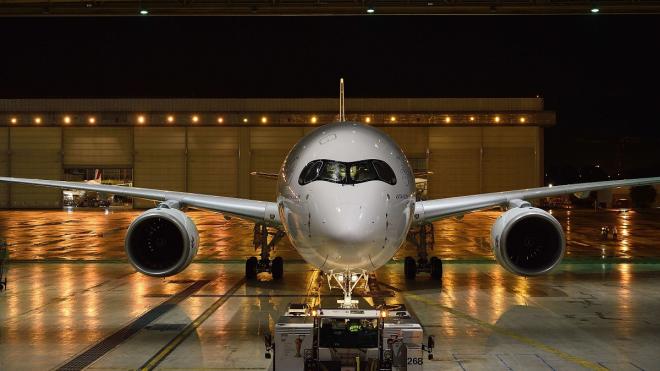
Air France-KLM’s FY2025 results confirm a strategic inflection point: the Group is no longer “only recovering” from the post-COVID shock—it is rebuilding a structurally more profitable model. The most surprising element is not the Group’s performance alone, but the clear outperformance of Air France inside the house, with an operating margin reaching 6.7%, while KLM remains stuck in a lower-margin reality at 3.2%. This is not a vanity comparison: it reshapes investor confidence, labor narratives, the funding capacity for fleet renewal, and the Group’s ability to play offense in a consolidating European market.
This article breaks down what Air France-KLM delivered in 2025, why the French airline is showing unexpectedly strong “business health” in the Group, what KLM needs to accelerate, and how these results compare with the other two European majors—IAG and Lufthansa Group—from a business model standpoint (margin structure, premium exposure, cost transformation, and multi-brand complexity).
Table of contents
- 1) FY2025 headline: Air France-KLM breaks the €2bn operating profit level
- 2) The surprising story: Air France emerges as the Group’s primary profitability engine
- 3) The other side: KLM stabilizes but must accelerate transformation
- 4) Premiumization: from marketing narrative to measurable mix and yield effects
- 5) Maintenance (MRO): the “hidden champion” with industrial-scale economics
- 6) Transavia: temporarily penalized by strategic capacity transfers
- 7) Cargo: normalization after peaks—yet still strategically valuable
- 8) Flying Blue: loyalty as a high-margin operating asset
- 9) Cash, leverage, and financing: what “good health” really means
- 10) Network lens: where the Group is winning (and where it’s exposed)
- 11) Fleet renewal & product upgrades: investments that change the cost curve and the brand
- 12) Sustainability: progress, constraints, and credibility management
- 13) Comparison vs Europe’s other majors: IAG and Lufthansa Group
- 14) What this implies for 2026–2028: consolidation, partnerships, and execution risks
- 15) My 12-point watchlist for the year ahead
1) FY2025 headline: Air France-KLM breaks the €2bn operating profit level
FY2025 is the kind of year that changes the tone of a Group. Air France-KLM delivered:
- Revenue: €33.0bn (+4.9% YoY)
- Operating result: €2.004bn (up +€403m YoY)
- Operating margin: 6.1% (up +1.0pt YoY)
- Passengers carried: 102.8m (+5.0% YoY)
- Capacity (ASK): +4.9% YoY
- Load factor: 87.2% (slightly down vs 87.8% in 2024, reflecting capacity growth)
- Recurring adjusted operating free cash flow: €1.0bn (materially improved)
- Cash at hand: €9.4bn
- Net debt / current EBITDA: 1.7x
Those are not just “recovery numbers.” They are indicators of structural progress: margin expansion, improved cash conversion, a healthier leverage profile, and (most importantly) a segmented portfolio where multiple engines contribute—Passenger Network, Maintenance, and Loyalty—while lower-cost operations are being repositioned (Transavia at Orly).
In plain terms: Air France-KLM is now much closer to behaving like an industrial airline group with diversified profit pools—similar in spirit (not identical in structure) to what IAG and Lufthansa have been monetizing for years.
2) The surprising story: Air France emerges as the Group’s primary profitability engine
The core of your question is in the internal split of performance.
In FY2025, Air France delivered:
- Revenues: €20.242bn (+5.3% YoY)
- Operating result: €1.362bn (up +€382m YoY)
- Operating margin: 6.7% (up +1.6pt YoY)
- Capacity change: +4.9% YoY
Why is this “surprising good health” relative to prior narratives?
- Because Air France historically carried a reputation of structural fragility (labor rigidity, higher cost base, and periodic social tension). FY2025 confirms that the airline can now operate with a margin profile that is not “anomaly-driven,” but supported by a mix and unit revenue story.
- Because the margin is not achieved through shrinking: capacity is up, premium exposure is increasing, product investments continue, and Maintenance is scaling. This is a “growth with margin” pattern—harder to execute than “cut-to-profit.”
- Because the airline is benefiting from the right combination of levers: premiumization and long-haul strength, operational execution, fleet renewal trajectory, and monetization of group assets (MRO, loyalty, partnerships).
Air France’s FY2025 margin is particularly meaningful in the European context: it places the French airline closer to “major group standards” than many observers would have expected—even if it remains behind the most structurally advantaged peers on certain geographies and cost regimes.
3) The other side: KLM stabilizes but must accelerate transformation
KLM’s FY2025 results are not “bad,” but they tell a different story—one of stabilization rather than step-change.
In FY2025, KLM delivered:
- Revenues: €13.205bn (+3.9% YoY)
- Operating result: €416m (broadly stable: +€1m YoY)
- Operating margin: 3.2% (down -0.1pt YoY)
- Capacity change: +5.0% YoY
The investors presentation is explicit in its storyline: “continued improvement at Air France; KLM needs to accelerate further transformation.”
What typically explains this kind of divergence inside the same Group?
- Different hub constraints and network economics: Schiphol’s capacity and slot dynamics, combined with operational constraints, can make growth less elastic and cost absorption harder.
- Different labor and productivity trajectories: stabilization can still be insufficient when peers are compounding productivity gains and scaling premium revenues faster.
- Different exposure to competitive lanes: depending on long-haul mix, North Atlantic exposure, and the balance between point-to-point vs connecting flows.
Bottom line: KLM remains profitable, but at a margin that does not yet match the Group’s ambition. If Air France is now pulling the Group forward, KLM must ensure it is not becoming the “profitability ceiling.”
4) Premiumization: from marketing narrative to measurable mix and yield effects
“Premiumization” is often used loosely in airline communication. In Air France-KLM’s FY2025, it is operationally visible:
- Group unit revenue (at constant currency): +1.0%
- Passenger Network unit revenue (at constant currency): +2.0%
- Air France margin expansion: +1.6pt YoY to 6.7% (explicitly tied to passenger network premiumization and maintenance contribution)
Premiumization here is not only “more premium seats.” It is a broader revenue quality strategy:
- Cabin segmentation and pricing architecture: better monetization of willingness-to-pay (Business, Premium, Comfort products).
- Product investment flywheel: higher perceived quality supports yield, which funds continued investment (lounges, cabins, ground experience), which reinforces brand preference.
- Network optimization: focusing capacity where premium demand and long-haul economics can carry margin.
Air France’s “surprising health” is strongly correlated with its ability to execute premiumization with credibility. In Europe, the premium airline narrative is often fragile if operational reliability and ground experience do not match. The FY2025 margin suggests Air France is increasingly delivering the full chain, not just the seat.
5) Maintenance (MRO): the “hidden champion” with industrial-scale economics
One of the most underappreciated assets in Air France-KLM is Maintenance—a business whose economics can resemble industrial services more than airline seat selling.
FY2025 Maintenance delivered:
- Revenues: €2.307bn (+10.6% YoY)
- Operating result: €267m (up +€97m YoY)
- Operating margin: 4.8% (up +1.5pt YoY)
- External order book: $10.7bn
Why does this matter for the Group’s resilience?
- Diversification: MRO profits are not perfectly correlated with passenger yield cycles.
- Cash profile and visibility: long-term contracts create backlog and predictability (rare in airlines).
- Strategic leverage: Maintenance scale supports fleet renewal execution and can reinforce partnerships (technical cooperation, supply chain leverage, and even alliance dynamics).
In European comparisons, this is where Air France-KLM starts to look closer to Lufthansa Group (which historically monetized MRO at scale through its own platforms). The difference is that Air France-KLM is clearly accelerating this engine now, and the order book indicates strong external demand for its capabilities.
6) Transavia: temporarily penalized by strategic capacity transfers
Transavia is one of the most “misread” lines in the FY2025 story. Its FY2025 performance is explicitly described as temporarily hampered, largely due to operational takeovers at Orly.
FY2025 Transavia delivered:
- Capacity: +14.9%
- Unit revenue (constant currency): -1.7%
- Revenues: €3.451bn (+12.3% YoY)
- Operating result: -€49m (down -€52m YoY)
- Operating margin: -1.4% (down -1.5pt YoY)
What’s the strategic logic behind “short-term pain”?
- Orly repositioning: absorbing Air France leisure operations into a lower-cost platform can improve the Group’s structural cost position over time—even if integration creates a temporary profitability dip.
- Cost curve modernization: building a robust leisure/low-cost platform is not optional in Europe; it is a defensive necessity against ultra-competitive short-haul markets.
- Brand architecture clarity: premiumization on the mainline side is stronger when leisure point-to-point is clearly priced and costed in a dedicated vehicle.
In other words: Transavia’s FY2025 is a transition year. The question for 2026 is not “will it recover?” but “will it scale without eroding unit revenue further?”
7) Cargo: normalization after peaks—yet still strategically valuable
Cargo is no longer in the “pandemic supercycle.” FY2025 reflects a normalization:
- Group Cargo unit revenue (constant currency): broadly stable on the year, but weak in Q4 as expected
- Operational constraints existed on full freighter capacity due to scheduled and unscheduled maintenance (per the press release)
- Yet the platform is evolving: digital booking adoption reached very high levels (notably 91% of bookings through digital channels)
Strategic value of cargo in a diversified airline group:
- Network economics: belly cargo improves long-haul route contribution and supports frequency decisions.
- Customer intimacy in B2B: cargo relationships (forwarders, integrators, key industries) create network defensibility.
- Operational optionality: in downturns, cargo can stabilize widebody utilization decisions.
In European peer comparisons, cargo quality is often a swing factor: not a permanent profit engine every year, but a critical stabilizer and a strategic lever when capacity is tight and yields behave cyclically.
8) Flying Blue: loyalty as a high-margin operating asset
In FY2025, Flying Blue is not presented as a “marketing function,” but as an economic engine with very strong margin characteristics:
- Revenues: €886m (+9.2% YoY)
- Operating result: €218m (+€18m YoY)
- Operating margin: 24.6% (stable)
That margin profile is meaningful for three reasons:
- It validates the portfolio model: airlines that monetize loyalty well can sustain brand investment even when seat cycles soften.
- It funds premiumization: loyalty economics reinforce the product flywheel (more premium customers, more engagement, better partner monetization).
- It strengthens alliances and partnerships: loyalty interoperability can be a negotiation lever in joint ventures and commercial partnerships.
In the IAG vs Lufthansa vs AF-KLM comparison, loyalty scale and quality are often a silent differentiator of “who can keep investing through the cycle.” FY2025 confirms Flying Blue’s role as an asset—not a cost center.
9) Cash, leverage, and financing: what “good health” really means
Airline results can look strong while balance sheets remain fragile. FY2025 suggests Air France-KLM is improving its financial resilience:
- Recurring adjusted operating free cash flow: €1.0bn
- Cash position: €9.4bn
- Leverage: Net debt / current EBITDA at 1.7x
- Financing activity: the Group refinanced and optimized its instrument mix, including actions on subordinated instruments and bond placements (per press release)
Why this matters specifically for Air France’s “good health” narrative:
- Premium product investment requires capital: cabins, lounges, digital, and ground operations are capex-intensive.
- Fleet renewal is expensive—but changes unit costs: especially on long haul, newer aircraft can reduce fuel burn and maintenance intensity.
- Strategic optionality requires liquidity: the Group is actively shaping its portfolio (see SAS, WestJet stake, etc.). Liquidity is what allows a carrier to act before competitors do.
In short: Air France is not merely “posting a good year.” The Group is building the financial capacity to keep upgrading the product and pursuing consolidation opportunities.
10) Network lens: where the Group is winning (and where it’s exposed)
Air France-KLM’s FY2025 shows the classic European long-haul playbook working when executed with discipline: strong hubs (CDG/AMS), powerful alliance/JV economics, and improved product monetization.
Key network signals embedded in the FY2025 narrative:
- Passenger Network revenue quality: unit revenue +2.0% at constant currency for the year
- Long-haul performance emphasis: Q4 highlights positive passenger unit revenue driven by premium cabins and long haul
- Load factor remains strong: 87%+ despite capacity growth
Where the exposure typically sits for a group like AF-KLM:
- North Atlantic competitiveness: yields can swing quickly with capacity cycles and US carrier strategies.
- Short-haul structural pressure: the low-cost/ultra-low-cost environment forces constant cost repositioning (hence the strategic importance of Transavia).
- Operational reliability: premiumization only works sustainably if operations keep pace—delays, baggage performance, and disruption handling are “premium killers.”
Air France’s improved margin suggests it is currently winning on the premium long-haul equation. The question for 2026 is whether that strength can be maintained if macro demand softens or if competitive capacity returns aggressively on key corridors.
11) Fleet renewal & product upgrades: investments that change the cost curve and the brand
FY2025 communication continues to reinforce an investment thesis: Air France-KLM is not choosing between “profit now” and “product later.” It is trying to do both—because in Europe, product quality and cost curve are deeply intertwined.
Fleet renewal is strategically important because it:
- Reduces fuel intensity and emissions intensity (critical under European regulatory pressure and ETS economics).
- Improves reliability and maintenance profile (which also ties back to MRO scale and planning discipline).
- Enables cabin densification and segmentation (premiumization, comfort products, revenue management flexibility).
Product upgrades (cabins, lounges, premium ground experience) matter because the Group is competing against:
- US majors on the North Atlantic (where corporate travel remains a key profit pool)
- Middle East carriers on connecting long-haul flows
- European peers that have raised the bar in business class and lounges over the last decade
Air France’s improved operating margin indicates that its investments are translating into revenue quality—not only into “brand statements.”
12) Sustainability: progress, constraints, and credibility management
The sustainability section in the press release emphasizes “collective responsibility” and advocacy for a level playing field—language that reflects a real industry constraint: airlines can move faster operationally than the SAF ecosystem can scale.
A tangible indicator reported:
- GHG intensity per RTK: 913 gCO₂eq/RTK in 2025, down 1.6% vs 2024
What matters strategically is not only the metric, but the credibility management framework:
- Investments and actions (fleet renewal, operations, intermodal products)
- Policy positioning (level playing field, industry-wide transformation)
- Customer-facing decarbonization pathways (corporate programs, SAF claims, transparency)
In Europe, sustainability is not only a reputational topic—it is a cost topic. AF-KLM’s ability to keep improving intensity while maintaining margin matters for long-term competitiveness.
13) Comparison vs Europe’s other majors: IAG and Lufthansa Group
When comparing Air France-KLM to the two other European major airline groups, the goal is not to “rank” them based on a single year. It is to understand their profit pool architecture and the strategic choices that create structural advantage.
A) Air France-KLM vs IAG: premium exposure and margin structure
IAG (British Airways, Iberia, Aer Lingus, Vueling, LEVEL) has historically benefited from:
- Strong premium exposure (especially British Airways on the North Atlantic and key business corridors)
- Portfolio balance (Iberia’s improved cost discipline, plus leisure/low-cost presence via Vueling)
- Madrid and London hub economics that can monetize connectivity at scale
What AF-KLM’s FY2025 suggests is that Air France is now operating closer to that “premium-led playbook.” The difference is that AF-KLM still has more visible transformation asymmetry (Air France improving faster than KLM), while IAG tends to show a more stable “group-wide margin narrative” because its portfolio is structured differently.
Key takeaway: AF-KLM is closing the narrative gap versus IAG on premium credibility, but it must ensure KLM does not remain structurally under-margined relative to Group ambition.
B) Air France-KLM vs Lufthansa Group: multi-brand complexity and industrial diversification
Lufthansa Group (Lufthansa, SWISS, Austrian, Brussels Airlines, Eurowings) is defined by:
- Multi-brand complexity with a historically strong premium franchise (notably SWISS)
- Industrial diversification where MRO and aviation services can be meaningful contributors
- A constant tension between premium mainline economics and short-haul/low-cost repositioning (Eurowings)
AF-KLM’s FY2025 highlights a similar logic emerging more clearly:
- Maintenance is scaling fast (strong revenue growth, margin expansion, very large external order book)
- Low-cost repositioning is explicit (Transavia absorbing Orly leisure operations despite short-term losses)
- Premium mainline is strengthening (Air France margin expansion tied to premiumization)
Key takeaway: AF-KLM is increasingly playing the “European airline group” model that Lufthansa has long embodied—diversified profit pools plus premium hub economics—while still needing to complete the transformation of one of its two main hubs (KLM/AMS) to raise the floor.
14) What this implies for 2026–2028: consolidation, partnerships, and execution risks
FY2025 is not only a “results story,” it is a strategic platform. The Group’s actions around portfolio and partnerships reinforce that:
- SAS: the Group announced its intent to initiate proceedings to take a majority stake (moving to 60.5% if conditions are met). This is a consolidation move that strengthens the Group’s Nordic position and adds strategic depth to its European network and SkyTeam coherence.
- WestJet stake: Air France-KLM purchased a stake as part of a broader transaction involving partners, reinforcing a transatlantic partnership ecosystem and connectivity footprint.
Why does Air France’s stronger health matter here?
- Because consolidation requires credibility: regulators, partners, and labor stakeholders look at the “core” airline’s economics to assess execution risk.
- Because consolidation requires capital: stronger margin and cash generation expand strategic optionality.
- Because consolidation is happening with or without you: in Europe, scale and portfolio optimization are increasingly necessary to remain competitive against US carriers and Gulf carriers on long-haul economics.
Execution risks remain real:
- Operational reliability (premiumization is fragile if disruption handling is weak)
- Labor negotiations (productivity gains must be sustained without triggering destabilizing conflict)
- Competitive capacity cycles (especially on the North Atlantic)
- Low-cost unit revenue pressure (Transavia must scale without structurally eroding yield)
15) My 12-point watchlist for the year ahead
If you want to track whether FY2025 represents a one-off “good year” or a durable structural shift, here are the indicators that matter most in 2026:
- Air France premium cabin unit revenue trend (is premiumization still compounding?)
- KLM productivity and unit cost trajectory (does transformation accelerate?)
- Transavia margin recovery path after Orly integration effects normalize
- MRO external revenue growth and margin sustainability
- Flying Blue partner monetization (and redemption economics discipline)
- North Atlantic competitive capacity (especially summer scheduling intensity)
- Operational reliability metrics (IRROPS handling, baggage, customer recovery time)
- Fleet delivery and retrofit execution (does capex translate into product on-time?)
- Fuel and hedging impact (and ability to offset volatility through pricing)
- Regulatory cost exposure (ETS and broader European policy effects)
- SAS integration timeline and synergy realization feasibility
- Balance sheet discipline (leverage, liquidity, and refinancing strategy)
Conclusion: a European consolidation thesis with a stronger French core
Air France-KLM’s FY2025 results confirm a Group moving from recovery to structural rebuild. The headline is strong: €33.0bn revenue, €2.0bn operating result, 6.1% margin, and improved cash generation. But the most strategic signal is internal: Air France is now the profitability engine with a 6.7% operating margin, driven by premiumization and the scaling of Maintenance—while KLM remains profitable but under-margined at 3.2%, needing faster transformation.
Compared with Europe’s other majors, Air France-KLM is increasingly behaving like a mature airline group with diversified profit pools (MRO, loyalty, network) and a clear low-cost repositioning strategy—even if it still needs to raise the floor at one of its two hubs.
If 2024 was the year the European airline industry stabilized, 2025 is the year Air France-KLM demonstrated it can compete structurally. The next test is whether it can sustain premium-led economics through the cycle—and whether KLM can close the margin gap fast enough to turn a “two-speed Group” into a “two-engine Group.”













 Olivier Delestre-Levai