Air France-KLM FY2025 Results: The “French Engine” Outperforms Expectations—and Rebalances the Group’s Narrative vs Europe’s Majors

Air France-KLM’s FY2025 results confirm a strategic inflection point: the Group is no longer “only recovering” from the post-COVID shock—it is rebuilding a structurally more profitable model. The most surprising element is not the Group’s performance alone, but the clear outperformance of Air France inside the house, with an operating margin reaching 6.7%, while KLM remains stuck in a lower-margin reality at 3.2%. This is not a vanity comparison: it reshapes investor confidence, labor narratives, the funding capacity for fleet renewal, and the Group’s ability to play offense in a consolidating European market.

This article breaks down what Air France-KLM delivered in 2025, why the French airline is showing unexpectedly strong “business health” in the Group, what KLM needs to accelerate, and how these results compare with the other two European majors—IAG and Lufthansa Group—from a business model standpoint (margin structure, premium exposure, cost transformation, and multi-brand complexity).


Table of contents


1) FY2025 headline: Air France-KLM breaks the €2bn operating profit level

FY2025 is the kind of year that changes the tone of a Group. Air France-KLM delivered:

  • Revenue: €33.0bn (+4.9% YoY)
  • Operating result: €2.004bn (up +€403m YoY)
  • Operating margin: 6.1% (up +1.0pt YoY)
  • Passengers carried: 102.8m (+5.0% YoY)
  • Capacity (ASK): +4.9% YoY
  • Load factor: 87.2% (slightly down vs 87.8% in 2024, reflecting capacity growth)
  • Recurring adjusted operating free cash flow: €1.0bn (materially improved)
  • Cash at hand: €9.4bn
  • Net debt / current EBITDA: 1.7x

Those are not just “recovery numbers.” They are indicators of structural progress: margin expansion, improved cash conversion, a healthier leverage profile, and (most importantly) a segmented portfolio where multiple engines contribute—Passenger Network, Maintenance, and Loyalty—while lower-cost operations are being repositioned (Transavia at Orly).

In plain terms: Air France-KLM is now much closer to behaving like an industrial airline group with diversified profit pools—similar in spirit (not identical in structure) to what IAG and Lufthansa have been monetizing for years.


2) The surprising story: Air France emerges as the Group’s primary profitability engine

The core of your question is in the internal split of performance.

In FY2025, Air France delivered:

  • Revenues: €20.242bn (+5.3% YoY)
  • Operating result: €1.362bn (up +€382m YoY)
  • Operating margin: 6.7% (up +1.6pt YoY)
  • Capacity change: +4.9% YoY

Why is this “surprising good health” relative to prior narratives?

  • Because Air France historically carried a reputation of structural fragility (labor rigidity, higher cost base, and periodic social tension). FY2025 confirms that the airline can now operate with a margin profile that is not “anomaly-driven,” but supported by a mix and unit revenue story.
  • Because the margin is not achieved through shrinking: capacity is up, premium exposure is increasing, product investments continue, and Maintenance is scaling. This is a “growth with margin” pattern—harder to execute than “cut-to-profit.”
  • Because the airline is benefiting from the right combination of levers: premiumization and long-haul strength, operational execution, fleet renewal trajectory, and monetization of group assets (MRO, loyalty, partnerships).

Air France’s FY2025 margin is particularly meaningful in the European context: it places the French airline closer to “major group standards” than many observers would have expected—even if it remains behind the most structurally advantaged peers on certain geographies and cost regimes.


3) The other side: KLM stabilizes but must accelerate transformation

KLM’s FY2025 results are not “bad,” but they tell a different story—one of stabilization rather than step-change.

In FY2025, KLM delivered:

  • Revenues: €13.205bn (+3.9% YoY)
  • Operating result: €416m (broadly stable: +€1m YoY)
  • Operating margin: 3.2% (down -0.1pt YoY)
  • Capacity change: +5.0% YoY

The investors presentation is explicit in its storyline: “continued improvement at Air France; KLM needs to accelerate further transformation.”

What typically explains this kind of divergence inside the same Group?

  • Different hub constraints and network economics: Schiphol’s capacity and slot dynamics, combined with operational constraints, can make growth less elastic and cost absorption harder.
  • Different labor and productivity trajectories: stabilization can still be insufficient when peers are compounding productivity gains and scaling premium revenues faster.
  • Different exposure to competitive lanes: depending on long-haul mix, North Atlantic exposure, and the balance between point-to-point vs connecting flows.

Bottom line: KLM remains profitable, but at a margin that does not yet match the Group’s ambition. If Air France is now pulling the Group forward, KLM must ensure it is not becoming the “profitability ceiling.”


4) Premiumization: from marketing narrative to measurable mix and yield effects

“Premiumization” is often used loosely in airline communication. In Air France-KLM’s FY2025, it is operationally visible:

  • Group unit revenue (at constant currency): +1.0%
  • Passenger Network unit revenue (at constant currency): +2.0%
  • Air France margin expansion: +1.6pt YoY to 6.7% (explicitly tied to passenger network premiumization and maintenance contribution)

Premiumization here is not only “more premium seats.” It is a broader revenue quality strategy:

  • Cabin segmentation and pricing architecture: better monetization of willingness-to-pay (Business, Premium, Comfort products).
  • Product investment flywheel: higher perceived quality supports yield, which funds continued investment (lounges, cabins, ground experience), which reinforces brand preference.
  • Network optimization: focusing capacity where premium demand and long-haul economics can carry margin.

Air France’s “surprising health” is strongly correlated with its ability to execute premiumization with credibility. In Europe, the premium airline narrative is often fragile if operational reliability and ground experience do not match. The FY2025 margin suggests Air France is increasingly delivering the full chain, not just the seat.


5) Maintenance (MRO): the “hidden champion” with industrial-scale economics

One of the most underappreciated assets in Air France-KLM is Maintenance—a business whose economics can resemble industrial services more than airline seat selling.

FY2025 Maintenance delivered:

  • Revenues: €2.307bn (+10.6% YoY)
  • Operating result: €267m (up +€97m YoY)
  • Operating margin: 4.8% (up +1.5pt YoY)
  • External order book: $10.7bn

Why does this matter for the Group’s resilience?

  • Diversification: MRO profits are not perfectly correlated with passenger yield cycles.
  • Cash profile and visibility: long-term contracts create backlog and predictability (rare in airlines).
  • Strategic leverage: Maintenance scale supports fleet renewal execution and can reinforce partnerships (technical cooperation, supply chain leverage, and even alliance dynamics).

In European comparisons, this is where Air France-KLM starts to look closer to Lufthansa Group (which historically monetized MRO at scale through its own platforms). The difference is that Air France-KLM is clearly accelerating this engine now, and the order book indicates strong external demand for its capabilities.


6) Transavia: temporarily penalized by strategic capacity transfers

Transavia is one of the most “misread” lines in the FY2025 story. Its FY2025 performance is explicitly described as temporarily hampered, largely due to operational takeovers at Orly.

FY2025 Transavia delivered:

  • Capacity: +14.9%
  • Unit revenue (constant currency): -1.7%
  • Revenues: €3.451bn (+12.3% YoY)
  • Operating result: -€49m (down -€52m YoY)
  • Operating margin: -1.4% (down -1.5pt YoY)

What’s the strategic logic behind “short-term pain”?

  • Orly repositioning: absorbing Air France leisure operations into a lower-cost platform can improve the Group’s structural cost position over time—even if integration creates a temporary profitability dip.
  • Cost curve modernization: building a robust leisure/low-cost platform is not optional in Europe; it is a defensive necessity against ultra-competitive short-haul markets.
  • Brand architecture clarity: premiumization on the mainline side is stronger when leisure point-to-point is clearly priced and costed in a dedicated vehicle.

In other words: Transavia’s FY2025 is a transition year. The question for 2026 is not “will it recover?” but “will it scale without eroding unit revenue further?”


7) Cargo: normalization after peaks—yet still strategically valuable

Cargo is no longer in the “pandemic supercycle.” FY2025 reflects a normalization:

  • Group Cargo unit revenue (constant currency): broadly stable on the year, but weak in Q4 as expected
  • Operational constraints existed on full freighter capacity due to scheduled and unscheduled maintenance (per the press release)
  • Yet the platform is evolving: digital booking adoption reached very high levels (notably 91% of bookings through digital channels)

Strategic value of cargo in a diversified airline group:

  • Network economics: belly cargo improves long-haul route contribution and supports frequency decisions.
  • Customer intimacy in B2B: cargo relationships (forwarders, integrators, key industries) create network defensibility.
  • Operational optionality: in downturns, cargo can stabilize widebody utilization decisions.

In European peer comparisons, cargo quality is often a swing factor: not a permanent profit engine every year, but a critical stabilizer and a strategic lever when capacity is tight and yields behave cyclically.


8) Flying Blue: loyalty as a high-margin operating asset

In FY2025, Flying Blue is not presented as a “marketing function,” but as an economic engine with very strong margin characteristics:

  • Revenues: €886m (+9.2% YoY)
  • Operating result: €218m (+€18m YoY)
  • Operating margin: 24.6% (stable)

That margin profile is meaningful for three reasons:

  • It validates the portfolio model: airlines that monetize loyalty well can sustain brand investment even when seat cycles soften.
  • It funds premiumization: loyalty economics reinforce the product flywheel (more premium customers, more engagement, better partner monetization).
  • It strengthens alliances and partnerships: loyalty interoperability can be a negotiation lever in joint ventures and commercial partnerships.

In the IAG vs Lufthansa vs AF-KLM comparison, loyalty scale and quality are often a silent differentiator of “who can keep investing through the cycle.” FY2025 confirms Flying Blue’s role as an asset—not a cost center.


9) Cash, leverage, and financing: what “good health” really means

Airline results can look strong while balance sheets remain fragile. FY2025 suggests Air France-KLM is improving its financial resilience:

  • Recurring adjusted operating free cash flow: €1.0bn
  • Cash position: €9.4bn
  • Leverage: Net debt / current EBITDA at 1.7x
  • Financing activity: the Group refinanced and optimized its instrument mix, including actions on subordinated instruments and bond placements (per press release)

Why this matters specifically for Air France’s “good health” narrative:

  • Premium product investment requires capital: cabins, lounges, digital, and ground operations are capex-intensive.
  • Fleet renewal is expensive—but changes unit costs: especially on long haul, newer aircraft can reduce fuel burn and maintenance intensity.
  • Strategic optionality requires liquidity: the Group is actively shaping its portfolio (see SAS, WestJet stake, etc.). Liquidity is what allows a carrier to act before competitors do.

In short: Air France is not merely “posting a good year.” The Group is building the financial capacity to keep upgrading the product and pursuing consolidation opportunities.


10) Network lens: where the Group is winning (and where it’s exposed)

Air France-KLM’s FY2025 shows the classic European long-haul playbook working when executed with discipline: strong hubs (CDG/AMS), powerful alliance/JV economics, and improved product monetization.

Key network signals embedded in the FY2025 narrative:

  • Passenger Network revenue quality: unit revenue +2.0% at constant currency for the year
  • Long-haul performance emphasis: Q4 highlights positive passenger unit revenue driven by premium cabins and long haul
  • Load factor remains strong: 87%+ despite capacity growth

Where the exposure typically sits for a group like AF-KLM:

  • North Atlantic competitiveness: yields can swing quickly with capacity cycles and US carrier strategies.
  • Short-haul structural pressure: the low-cost/ultra-low-cost environment forces constant cost repositioning (hence the strategic importance of Transavia).
  • Operational reliability: premiumization only works sustainably if operations keep pace—delays, baggage performance, and disruption handling are “premium killers.”

Air France’s improved margin suggests it is currently winning on the premium long-haul equation. The question for 2026 is whether that strength can be maintained if macro demand softens or if competitive capacity returns aggressively on key corridors.


11) Fleet renewal & product upgrades: investments that change the cost curve and the brand

FY2025 communication continues to reinforce an investment thesis: Air France-KLM is not choosing between “profit now” and “product later.” It is trying to do both—because in Europe, product quality and cost curve are deeply intertwined.

Fleet renewal is strategically important because it:

  • Reduces fuel intensity and emissions intensity (critical under European regulatory pressure and ETS economics).
  • Improves reliability and maintenance profile (which also ties back to MRO scale and planning discipline).
  • Enables cabin densification and segmentation (premiumization, comfort products, revenue management flexibility).

Product upgrades (cabins, lounges, premium ground experience) matter because the Group is competing against:

  • US majors on the North Atlantic (where corporate travel remains a key profit pool)
  • Middle East carriers on connecting long-haul flows
  • European peers that have raised the bar in business class and lounges over the last decade

Air France’s improved operating margin indicates that its investments are translating into revenue quality—not only into “brand statements.”


12) Sustainability: progress, constraints, and credibility management

The sustainability section in the press release emphasizes “collective responsibility” and advocacy for a level playing field—language that reflects a real industry constraint: airlines can move faster operationally than the SAF ecosystem can scale.

A tangible indicator reported:

  • GHG intensity per RTK: 913 gCO₂eq/RTK in 2025, down 1.6% vs 2024

What matters strategically is not only the metric, but the credibility management framework:

  • Investments and actions (fleet renewal, operations, intermodal products)
  • Policy positioning (level playing field, industry-wide transformation)
  • Customer-facing decarbonization pathways (corporate programs, SAF claims, transparency)

In Europe, sustainability is not only a reputational topic—it is a cost topic. AF-KLM’s ability to keep improving intensity while maintaining margin matters for long-term competitiveness.


13) Comparison vs Europe’s other majors: IAG and Lufthansa Group

When comparing Air France-KLM to the two other European major airline groups, the goal is not to “rank” them based on a single year. It is to understand their profit pool architecture and the strategic choices that create structural advantage.

A) Air France-KLM vs IAG: premium exposure and margin structure

IAG (British Airways, Iberia, Aer Lingus, Vueling, LEVEL) has historically benefited from:

  • Strong premium exposure (especially British Airways on the North Atlantic and key business corridors)
  • Portfolio balance (Iberia’s improved cost discipline, plus leisure/low-cost presence via Vueling)
  • Madrid and London hub economics that can monetize connectivity at scale

What AF-KLM’s FY2025 suggests is that Air France is now operating closer to that “premium-led playbook.” The difference is that AF-KLM still has more visible transformation asymmetry (Air France improving faster than KLM), while IAG tends to show a more stable “group-wide margin narrative” because its portfolio is structured differently.

Key takeaway: AF-KLM is closing the narrative gap versus IAG on premium credibility, but it must ensure KLM does not remain structurally under-margined relative to Group ambition.

B) Air France-KLM vs Lufthansa Group: multi-brand complexity and industrial diversification

Lufthansa Group (Lufthansa, SWISS, Austrian, Brussels Airlines, Eurowings) is defined by:

  • Multi-brand complexity with a historically strong premium franchise (notably SWISS)
  • Industrial diversification where MRO and aviation services can be meaningful contributors
  • A constant tension between premium mainline economics and short-haul/low-cost repositioning (Eurowings)

AF-KLM’s FY2025 highlights a similar logic emerging more clearly:

  • Maintenance is scaling fast (strong revenue growth, margin expansion, very large external order book)
  • Low-cost repositioning is explicit (Transavia absorbing Orly leisure operations despite short-term losses)
  • Premium mainline is strengthening (Air France margin expansion tied to premiumization)

Key takeaway: AF-KLM is increasingly playing the “European airline group” model that Lufthansa has long embodied—diversified profit pools plus premium hub economics—while still needing to complete the transformation of one of its two main hubs (KLM/AMS) to raise the floor.


14) What this implies for 2026–2028: consolidation, partnerships, and execution risks

FY2025 is not only a “results story,” it is a strategic platform. The Group’s actions around portfolio and partnerships reinforce that:

  • SAS: the Group announced its intent to initiate proceedings to take a majority stake (moving to 60.5% if conditions are met). This is a consolidation move that strengthens the Group’s Nordic position and adds strategic depth to its European network and SkyTeam coherence.
  • WestJet stake: Air France-KLM purchased a stake as part of a broader transaction involving partners, reinforcing a transatlantic partnership ecosystem and connectivity footprint.

Why does Air France’s stronger health matter here?

  • Because consolidation requires credibility: regulators, partners, and labor stakeholders look at the “core” airline’s economics to assess execution risk.
  • Because consolidation requires capital: stronger margin and cash generation expand strategic optionality.
  • Because consolidation is happening with or without you: in Europe, scale and portfolio optimization are increasingly necessary to remain competitive against US carriers and Gulf carriers on long-haul economics.

Execution risks remain real:

  • Operational reliability (premiumization is fragile if disruption handling is weak)
  • Labor negotiations (productivity gains must be sustained without triggering destabilizing conflict)
  • Competitive capacity cycles (especially on the North Atlantic)
  • Low-cost unit revenue pressure (Transavia must scale without structurally eroding yield)

15) My 12-point watchlist for the year ahead

If you want to track whether FY2025 represents a one-off “good year” or a durable structural shift, here are the indicators that matter most in 2026:

  1. Air France premium cabin unit revenue trend (is premiumization still compounding?)
  2. KLM productivity and unit cost trajectory (does transformation accelerate?)
  3. Transavia margin recovery path after Orly integration effects normalize
  4. MRO external revenue growth and margin sustainability
  5. Flying Blue partner monetization (and redemption economics discipline)
  6. North Atlantic competitive capacity (especially summer scheduling intensity)
  7. Operational reliability metrics (IRROPS handling, baggage, customer recovery time)
  8. Fleet delivery and retrofit execution (does capex translate into product on-time?)
  9. Fuel and hedging impact (and ability to offset volatility through pricing)
  10. Regulatory cost exposure (ETS and broader European policy effects)
  11. SAS integration timeline and synergy realization feasibility
  12. Balance sheet discipline (leverage, liquidity, and refinancing strategy)

Conclusion: a European consolidation thesis with a stronger French core

Air France-KLM’s FY2025 results confirm a Group moving from recovery to structural rebuild. The headline is strong: €33.0bn revenue, €2.0bn operating result, 6.1% margin, and improved cash generation. But the most strategic signal is internal: Air France is now the profitability engine with a 6.7% operating margin, driven by premiumization and the scaling of Maintenance—while KLM remains profitable but under-margined at 3.2%, needing faster transformation.

Compared with Europe’s other majors, Air France-KLM is increasingly behaving like a mature airline group with diversified profit pools (MRO, loyalty, network) and a clear low-cost repositioning strategy—even if it still needs to raise the floor at one of its two hubs.

If 2024 was the year the European airline industry stabilized, 2025 is the year Air France-KLM demonstrated it can compete structurally. The next test is whether it can sustain premium-led economics through the cycle—and whether KLM can close the margin gap fast enough to turn a “two-speed Group” into a “two-engine Group.”


Carrefour 2030: an offensive built on price, fresh, loyalty, and “agentic commerce” — and what it signals for retail worldwide

This week, Carrefour paired two messages that matter more together than separately: its FY 2025 results and the launch of “Carrefour 2030”, a multi-year plan positioned as a commercial and technology offensive.

At a time when retail is being squeezed between structurally value-driven consumers, shifting shopping missions, and relentless operating cost pressure, Carrefour’s plan is best read as a blueprint for how large retailers intend to compete through 2030: price credibility + fresh differentiation + loyalty as identity + automation at scale + new profit pools (media/data/services).


Executive summary

Carrefour 2030 makes three big bets:

  • Win the customer through price competitiveness, fresh as the traffic engine, loyalty at scale (“Le Club”), and private label acceleration.
  • Re-ignite store-led growth with targeted expansion (proximity, cash & carry) and a stronger asset-light/franchise operating model.
  • Industrialize performance with AI + data + retail tech, including a “smart store” rollout and a bold move into agentic commerce with Google.

Carrefour also sets clear performance ambitions within the plan, including: €1.0bn annual cost savings by 2030, ROC margin of 3.2% in 2028 and 3.5% in 2030, and €5bn cumulative net free cash flow (2026–2028).


1) Why the timing matters: retail is entering the “post-shock” era

European retail is moving from an inflation shock environment into a new phase: consumers remain value-sensitive, but expectations for convenience, transparency, and quality have not gone down. At the same time, operating costs (labor, energy, logistics) stay elevated, and competition remains intense—especially in grocery where the discounters continue to set the floor on price perception.

In this environment, “publishing results” is no longer enough. Retailers are expected to answer, credibly and with measurable commitments:

  • How do you protect price credibility without destroying margins?
  • How do you keep large formats relevant and productive?
  • How do you modernize stores at scale without over-leveraging?
  • Where do new profit pools come from (media, services, data, financial products)?

Carrefour’s answer is Carrefour 2030: focus the perimeter, modernize the core, and scale automation and data monetization.


2) The perimeter message: focus beats footprint

One of the most important strategic signals is Carrefour’s explicit focus on its core countries: France, Spain, and Brazil. This is not just corporate housekeeping—it is an execution decision.

Grocery is a high-frequency, low-margin business where operational excellence drives financial outcomes. Concentrating leadership attention and investment behind a clear perimeter typically yields faster decision cycles, stronger buying and operating leverage, and better capacity to standardize the operating model.

Industry comparison: Across Europe and globally, we are seeing more retailers de-complexify:

  • fewer banners and formats to manage,
  • fewer “nice-to-have” transformation programs,
  • more investment behind the formats and markets where scale is defendable.

3) Pillar #1 — Winning the customer: price, fresh, loyalty, private label

3.1 Price credibility: from messaging to measurable competitiveness

Carrefour positions price competitiveness as a central pillar, with a clear commitment to continuous improvement in France and maintaining price leadership in Spain and Brazil. This aligns with the market reality: consumers have become structurally more price-sensitive, and in grocery, price perception is often the first filter for store choice.

Industry comparison: The European playbook is converging toward price + personalization rather than blanket discounting:

  • Discounters keep pressure on shelf prices and simplified ranges.
  • Traditional retailers shift promotions from broad campaigns to targeted, loyalty-led offers.
  • Retailers attempt to preserve margin through better promo efficiency and private label mix.

3.2 Fresh: the store’s most defensible moat

Carrefour elevates fresh as a traffic engine and aims to increase penetration—specifically noting an ambition around fruits & vegetables. It also continues to develop “meal solutions” (ready-to-eat, prepared foods), matching the global shift toward convenience and at-home occasions.

What matters most: fresh excellence is operationally hard. It requires supply chain discipline, shrink control, and consistent in-store execution. That is precisely why it remains one of the strongest differentiators against pure e-commerce and why it can justify store visits even in a convenience-led world.

3.3 Loyalty at scale: “Le Club” targeting 60 million members

Carrefour targets 60 million loyalty members as part of Carrefour 2030. In mature retail, loyalty is no longer a points program—it is the identity layer that powers:

  • personalization and “next best offer,”
  • promotion efficiency (less waste, better ROI),
  • retail media monetization,
  • customer lifetime value management.

Industry comparison: This is consistent with what best-in-class grocers are doing globally: loyalty becomes the backbone of data strategy, not an add-on.

3.4 Private label: value shield + margin stabilizer

Carrefour reinforces private label as a strategic pillar and highlights initiatives to defend purchasing power (including entry-price moves in Brazil). Private label is now doing four jobs at once:

  • Value for customers, especially under pressure.
  • Margin defense for retailers.
  • Differentiation (products only you can buy in your ecosystem).
  • Trust and transparency when linked to quality and nutrition.

4) “Health by food” and the transparency era

Carrefour’s plan includes a strong emphasis on health and transparency, including an ambition to lift “healthy products” to 50% of food sales by 2030, and a focus on transparency around ultra-processed ingredients for its own brands.

This is not only CSR positioning. It is also a commercial strategy. In grocery, trust is fragile. Retailers who can credibly combine health + affordability can strengthen loyalty without relying exclusively on price cuts.


5) Pillar #2 — Store growth, but with a modern format logic

5.1 Proximity expansion: 7,500 stores in France + Spain by 2030

Carrefour targets 7,500 proximity stores by 2030 in France and Spain. Proximity is not a “trend”—it has become the default growth format because it aligns with:

  • urban density and time-poor consumers,
  • higher shopping frequency,
  • stronger convenience missions,
  • and more flexible real estate economics than big-box expansion.

Industry comparison: This mirrors what we see across Europe: the “large weekly hyper trip” continues to fragment into multiple missions, and proximity wins share of frequency.

5.2 Brazil cash & carry: +70 Atacadão by 2030

Carrefour continues to anchor Brazil growth in cash & carry, with an ambition of +70 Atacadão stores by 2030. Globally, cash & carry and hybrid wholesale formats benefit from:

  • small business demand (B2B),
  • value-driven bulk purchasing,
  • customers optimizing budgets under macro pressure.

5.3 Making square meters productive again: reallocation, not just renovation

Carrefour highlights modernization and conversion initiatives, including the idea of transforming select hypermarkets into more specialized formats and rebalancing selling space toward categories with stronger growth and margin dynamics. For large formats, this is the only credible route: mix economics determines store relevance more than cosmetic renovation.


6) Pillar #3 — AI, tech, and data: from pilots to operating system

Carrefour’s third pillar is arguably the most structural: industrializing technology into repeatable productivity and scalable new revenues.

6.1 Smart store rollout with Vusion: ESL + rails + cameras at scale

Carrefour announces a strategic partnership with Vusion and the deployment of a complete smart store setup—electronic shelf labels, rails, and cameras—across all hypermarkets and supermarkets in France.

The logic is straightforward: stores remain the largest cost base. Automating low-value tasks and improving execution (price reliability, shelf availability, picking performance, out-of-stock detection) creates capacity for better service, better economics, or both.

6.2 Agentic commerce with Google: a real inflection point

Carrefour highlights an “unprecedented” partnership with Google around agentic commerce—shopping mediated by AI agents. If executed well, agentic commerce can compress the customer journey from discovery to purchase, but it also introduces a major strategic risk: disintermediation.

If “shopping by agent” becomes mainstream, the winners will be retailers who control the foundations the agent relies on:

  • high-quality product data,
  • real-time inventory accuracy,
  • fulfillment reliability (OTIF),
  • loyalty identity and personalization,
  • and strong value perception.

6.3 A committed AI investment envelope

Carrefour indicates an ambition to invest €100m per year connected to AI. This is a meaningful signal because it frames AI not as experimentation but as a sustained industrial program—exactly what retailers need if they want measurable productivity outcomes.

6.4 Data monetization and retail media: scaling the profit pool

Carrefour continues to position retail media and data monetization as a growth driver. Retail media is increasingly a core profit pool globally as ad budgets migrate toward performance channels where retailers can close the loop from impression to purchase.

But there is a ceiling unless retailers also solve:

  • measurement credibility (incrementality),
  • inventory quality,
  • and customer experience guardrails (ads must not degrade trust).

7) Performance ambitions: cost, margin, cash

Carrefour 2030 sets clear objectives, including:

  • €1.0bn annual cost savings by 2030
  • ROC margin of 3.2% in 2028 and 3.5% in 2030
  • €5bn cumulative net free cash flow over 2026–2028
  • market share ambition in core countries (including an objective of 25% in France and 20% in Brazil by 2030, and reinforcing a #2 position in Spain)

This is the retail transformation equation in plain terms:

Margin improvement = commercial resilience + operating productivity + portfolio focus + new profit pools


8) Carrefour vs. the industry: where this plan fits, where it stands out

8.1 Europe: discount gravity is permanent

European grocery remains shaped by the discounters. Carrefour’s plan does not pretend otherwise. The strategy is to remain a scale operator while improving price credibility and differentiating through fresh, loyalty, and execution powered by tech.

8.2 A “retail operating system” mindset

The strongest part of Carrefour 2030 is the shift from “projects” to an operating system logic:

  • loyalty as identity,
  • data as asset,
  • stores as nodes,
  • automation as margin defense.

8.3 Global benchmark shadows: Walmart / Costco logic, European constraints

Even as a European-rooted group, Carrefour is navigating competitive dynamics that increasingly resemble US benchmarks:

  • Walmart: omnichannel scale + automation + retail media
  • Costco: trust + value + membership economics

Carrefour’s plan is a European translation of these principles—adapted to a more fragmented market and different regulatory and real estate constraints.


9) What to watch: the KPIs that will prove or disprove execution

Over the next 12–24 months, I would monitor:

  • France price competitiveness trend (measurable and consistent)
  • Fresh penetration + shrink performance (fresh is operationally fragile)
  • Loyalty growth and, more importantly, personalization ROI
  • Franchise conversion velocity and quality governance
  • Hypermarket productivity (labor hours, sqm productivity, availability)
  • E-commerce economics (picking efficiency, substitution rate, OTIF)
  • Retail media growth with CX guardrails
  • Agentic commerce adoption and retention (not just announcements)

10) Conclusion: Carrefour 2030 is a blueprint for the next retail decade

Carrefour 2030 reads less like a classic “transformation plan” and more like a blueprint for how grocery retail competes in the 2026–2030 environment:

  • Price credibility is mandatory.
  • Fresh differentiation is one of the last scalable store moats.
  • Loyalty becomes the operating system of personalization and media monetization.
  • Franchise/asset-light is a capital discipline lever.
  • AI + automation is the only credible path to scalable productivity.
  • Retail media + data are core new profit pools.
  • Agentic commerce could reshape discovery and convenience faster than most retailers are ready for.

The plan is ambitious. But in retail, ambition is never the hard part. Execution is. And execution is not a slide deck—it is thousands of daily decisions in stores, supply chains, and data pipelines.

If Carrefour can industrialize that execution across its core markets, Carrefour 2030 won’t just be a plan. It will be a case study.

Accor’s FY2025 Results: Solid, Above Guidance—and a Useful Lens on Where Hospitality Goes Next

Hotel groups rarely get the luxury of “clean” financial narratives: performance is a composite of macro demand, regional calendars, currency effects, distribution power, and—most critically—how well an operator has reshaped itself toward an asset-light, fee-driven machine.

Accor’s full-year 2025 results are a strong illustration of that transformation. The headline is simple: Accor delivered results above its 2025 guidance, with particularly strong momentum in Luxury & Lifestyle. The more interesting story is what these results reveal about the hospitality industry’s 2026 operating model—where growth is less about “more demand” and more about “better mix, better distribution, better development economics.”


Executive Takeaways (What Matters Most)

  • Accor’s revenue and profitability outperformed guidance, powered by Luxury & Lifestyle, disciplined development, and improving distribution economics.
  • RevPAR growth is still there, but it’s normalizing. In 2026, the winners will be the groups that can defend pricing while optimizing channel cost.
  • Europe/ENA and parts of MEA remain robust, while the US picture is mixed across the industry and China continues to be uneven.
  • Asset-light + loyalty + tech-enabled direct booking is the strategic trifecta. Accor is leaning harder into ALL Accor and distribution tooling to reduce OTA dependency.
  • Capital returns are back as a core pillar (dividend growth + planned buybacks), but investors still scrutinize “complexity items” like stakes in related entities and timing of disposals.

1) The Accor Scorecard: Above Guidance, With Luxury & Lifestyle Leading

Accor’s FY2025 results confirm something the industry has been living for 24 months: the demand engine hasn’t collapsed—it has segmented. The premium guest, the experience-led traveler, and the “bleisure” customer remain comparatively resilient. The pressure tends to show up first in price-sensitive segments, shorter booking windows, and high-OTA-dependent demand.

Key FY2025 highlights (simplified)

  • RevPAR: Up 4.2% for FY2025 (with a strong +7.0% in Q4)
  • Consolidated revenue: €5,639m
  • Recurring EBITDA: €1,201m, up 13.3% at constant currency (above guidance)
  • Net unit growth: 3.7% (303 hotel openings / ~51,000 rooms added)
  • Network scale: ~5,836 hotels / 881,427 rooms
  • Pipeline: >257,000 rooms across ~1,527 hotels
  • Shareholder returns: Proposed dividend €1.35/share (+7%), and a planned €450m buyback program for FY2026 (timing linked to corporate constraints)

What stands out is not only the absolute numbers—it’s the shape of performance: Accor’s two-division focus (Premium/Midscale/Economy vs Luxury/Lifestyle) is increasingly a portfolio management engine, letting the group push growth where profitability and pricing power are strongest.


2) The RevPAR Story: “Growth” Now Means Different Things by Region

RevPAR is still the easiest industry shorthand, but in 2026 it’s less about the aggregate percentage and more about the underlying drivers (rate vs occupancy) and the mix (urban vs resort, domestic vs international, direct vs OTA).

Accor’s Q4 snapshot: strength where calendars and mix cooperate

  • Premium/Midscale/Economy: Q4 RevPAR up 5.8%, primarily price-driven
  • Luxury & Lifestyle: Q4 RevPAR up 9.5% (both rate and occupancy contributed)

The important nuance: Accor referenced calendar distortions in Europe linked to the Paris Olympics comparison effects, which matters because it shows how quickly “headline volatility” can return even in a steady demand environment. In other words: the industry is past the pure rebound phase. Now it’s operational excellence and revenue strategy, quarter by quarter.


3) Profitability: The Quiet Win Is Margin Structure, Not Just Revenue

Accor’s recurring EBITDA growth above guidance is the kind of “boring good news” investors like—because it suggests that the company is finding operating leverage in a model that is increasingly fee-weighted.

Where profitability improved

  • Recurring EBITDA: €1,201m (+13.3% at constant currency)
  • Premium/Midscale/Economy EBITDA: €836m
  • Luxury & Lifestyle EBITDA: €482m (materially faster growth than PM&E)

One “real life” reminder embedded in the release: provisions tied to operator distress (a hospitality group under judicial administration affecting dozens of hotels) underline that even in asset-light models, hotel groups still carry operational and reputational exposure through managed networks. Asset-light is not risk-free—it’s “risk-shifted.”


4) Development & Pipeline: The Industry’s Real Growth Engine

Across the global hotel sector, 2025–2026 is not primarily a demand story; it’s a supply and brand-scale story. The majors are competing on developer preference: conversion-friendly brands, lower-cost prototypes, stronger loyalty contribution, and distribution efficiency.

Accor’s FY2025 net unit growth of 3.7% is healthy—and its pipeline of more than 257k rooms is a strategic asset. But here’s the key point when comparing to US-centric peers: some competitors are pushing materially higher net unit growth rates (often via franchising-heavy expansion in North America).

So what does Accor do differently? It leans into:

  • Luxury & Lifestyle expansion (where fees and brand pricing power can be more attractive)
  • Resort and experience-led positioning (especially where leisure is resilient)
  • Distribution + loyalty “flywheel” to improve hotel owner economics beyond pure brand naming rights

5) Benchmarking Accor vs the Hospitality Pack (Hilton, Marriott, IHG, Hyatt—and the Franchise Giants)

To understand Accor’s results, it helps to place them against the industry’s current pattern: moderate RevPAR growth, aggressive pipeline development, and heavy capital return programs.

Hilton: Lower RevPAR growth, faster unit growth, massive capital returns

Hilton reported modest RevPAR growth (low single digits), but it continues to scale aggressively: full-year openings were large and net unit growth was strong, with a sizeable development pipeline and ongoing share repurchases. Hilton’s 2026 outlook frames RevPAR as modest, but growth as structural: more rooms, more fees, more loyalty-driven demand capture.

IHG: Global balance (strong EMEAA), and a clear event-driven US thesis

IHG’s 2025 profile shows global RevPAR growth that is positive but uneven by region, with stronger performance in EMEAA and weaker US momentum in parts of the year. Their narrative emphasizes global scale, fee margin expansion, and demand tailwinds from major events (notably the 2026 World Cup) to support a US rebound thesis.

Hyatt: Stronger RevPAR, all-inclusive outperformance, continued portfolio reshaping

Hyatt delivered solid RevPAR growth in 2025, with particularly strong performance in all-inclusive metrics—an important read-across for Accor’s Luxury & Lifestyle momentum and the wider resort category. Hyatt’s development pipeline and net rooms growth reinforce the same sector logic: growth via brand + management/franchise expansion, supported by loyalty and distribution.

Marriott: Scale, system growth, and consistency (the sector’s “baseline”)

Marriott remains the industry’s gravity well: massive system scale, steady RevPAR, and continuous net rooms expansion. For competitors, the strategic question is not “how to beat Marriott everywhere,” but “where to create disproportionate advantage”—luxury/lifestyle ecosystems, region-specific dominance, or tech-enabled distribution edge.

The franchise-heavy giants (Wyndham, Choice): US RevPAR pressure, but durable economics

At the value and midscale end, franchise-heavy groups can show a different pattern: RevPAR pressure in parts of the US, but continued fee resilience, pipeline conversion activity, and strong free cash flow generation. This is where distribution costs and channel mix become existential—because in price-sensitive segments, OTAs can erase margin faster than in luxury.


6) The Real 2026 Playbook: Distribution Economics + Loyalty + Brand Architecture

Accor’s release repeatedly signals the same strategic direction the whole industry is chasing—yet with different degrees of urgency and credibility: reduce distribution leakage and increase the value of the brand-labeled booking.

In practical terms, that means:

  • Loyalty as a margin strategy, not just a marketing program (ALL Accor is positioned as an engine, not an accessory)
  • Tech as a distribution weapon (better direct conversion, smarter pricing, personalization, and lower “cost of sale”)
  • Brand architecture discipline (fewer fuzzy overlaps; clearer owner propositions; more conversion-friendly flags)
  • Experience portfolio expansion to widen the monetization surface beyond rooms (lifestyle F&B concepts, events, membership-like behaviors)

The punchline: 2026 winners won’t be those with the highest RevPAR. They’ll be those with the lowest incremental cost to capture demand, and the best ability to direct that demand to the right products.


7) Risks and Watch-Items (What Could Break the Narrative)

Accor’s results are strong. But the industry remains exposed to a set of “fast-moving variables”:

  • Currency headwinds (particularly for global groups reporting in EUR or USD while demand and costs occur in many currencies)
  • China’s uneven recovery and its knock-on effect on regional occupancy and international travel flows
  • OTA bargaining power (and the temptation to “buy demand” at the cost of long-term margin)
  • Owner economics under higher rates / refinancing cycles (affecting new-build decisions, renovations, and conversions)
  • Portfolio complexity (stakes, disposals, and timing constraints can dilute clarity for investors)

If 2024 was about “post-rebound normalization,” then 2026 becomes about “structural advantage.” The groups that have built defensible distribution + loyalty ecosystems will be better positioned when demand is merely decent instead of spectacular.


Conclusion: Accor’s FY2025 Is a Strong Result—and a Clear Signal

Accor’s FY2025 results support a simple thesis: the group is increasingly operating like a modern hospitality platform—balancing premium scale with a faster-growing Luxury & Lifestyle engine, expanding its network with discipline, and investing in distribution capabilities that can protect margin over time.

Compared with the broader industry, Accor’s story rhymes with the sector’s leading practices (asset-light fees, loyalty leverage, capital returns), while retaining a distinctive emphasis on lifestyle ecosystems and experience-led hospitality.

For 2026, the key question is not whether hotel demand will exist—it will. The question is: who captures that demand most efficiently, with the strongest mix, and the lowest cost of sale. Accor’s FY2025 suggests it intends to be in that winner circle.

The Great Retail Customer Service Pivot Since COVID: Why Policies Are Tightening Everywhere (and What Costco’s Shift Really Signals)

Since COVID, retail customer service has been quietly rewritten. The “always say yes” era (frictionless returns, endless exceptions, generous goodwill credits) is being replaced by a more controlled model: shorter return windows, stricter eligibility, more verification, more self-service, and less discretionary flexibility in-store. Costco—historically the poster child of ultra-lenient satisfaction guarantees—tightening its approach is a watershed moment, not an anecdote.


Why this matters now

Retail leaders spent decades treating customer service as a brand amplifier: remove friction, absorb exceptions, and let frontline staff “make it right.” COVID changed the economics underneath that philosophy. The shift wasn’t ideological—it was structural:

  • E-commerce acceleration pushed return rates up (and made reverse logistics a core P&L line, not an operational footnote).
  • Labor constraints and churn increased the cost of service delivery while reducing the experience consistency customers used to take for granted.
  • Inflation forced margin defense, and customer service policies became a margin lever.
  • Fraud, “policy arbitrage,” and abuse scaled with digital receipts, marketplaces, and social sharing of loopholes.
  • Shrink + ORC (organized retail crime) broadened the security lens: verification, controls, and exception governance.

The result is a new customer service doctrine: “yes, but with guardrails.” And those guardrails are spreading across mass retail, specialty retail, and even luxury—segments that used to differentiate precisely through leniency.


The Costco signal: when the most forgiving retailer stops being forgiving

Costco has long benefited from a near-mythical customer promise: satisfaction guaranteed, with a reputation for unusually flexible returns and minimal interrogation. That reputation is also a magnet for edge cases—returns that feel more like “rental behavior” than dissatisfaction resolution.

According to recent reporting, Costco members are observing a tightening of the experience: more frequent requests for proof of purchase, more scrutiny, and signals that the warehouse is narrowing what qualifies under the broad satisfaction umbrella. The emotional reaction (“the easy days are over”) matters because it shows something deeper than a policy tweak:

  • Costco is protecting the membership model (value perception for paying members depends on controlling abuse and costs).
  • Costco is normalizing verification (proof, history checks, and consistency across stores—less frontline discretion, more system rule).
  • Costco is treating returns as a managed risk domain, not a marketing message.

In parallel, the wider industry context is stark: retail returns represent an enormous cost pool, and return/claims fraud is measured in the tens (and hundreds) of billions. Once you accept those numbers as real, policy tightening becomes less a “customer service choice” and more a “business continuity choice.”


From “delight at any cost” to “service as a controlled operating system”

Pre-COVID, customer service was often a brand theater: the store manager could override; exceptions were part of the charm; a generous policy signaled confidence. Since 2020, the playbook is shifting toward a controlled operating system with five recurring moves:

1) Shorter windows and tighter eligibility

The easiest way to reduce return cost is to reduce the time (and condition variability) of what comes back.

  • Shorter refund windows (30 days becomes the new default in many categories).
  • Category exclusions (electronics, high-theft items, consumables, seasonal goods).
  • Condition enforcement (packaging, tags, “unused,” hygiene rules).

2) More verification, less discretion

Verification is replacing trust-by-default.

  • Receipt/proof requirements are more consistently enforced.
  • Identity verification for returns (especially no-receipt returns).
  • System flags for unusually frequent returns (“pattern detection”).

3) Monetary friction: fees, restocking, and store credit

Retailers learned that customers respond to small friction. Not enough to kill conversion—but enough to discourage bracketing and impulse over-ordering.

  • Mail return fees for online orders.
  • Restocking fees for large items or electronics.
  • Store credit beyond a certain window, rather than original tender refunds.

4) Self-service everywhere (and fewer humans when it’s “non-value add”)

Service has been “productized” into flows, portals, kiosks, and chat.

  • Portals for returns, cancellations, and order changes.
  • Chatbots for triage (humans reserved for escalations).
  • Appointments for high-touch categories (beauty consultations, luxury repairs, alterations).

5) A new metric stack: margin + abuse control + customer lifetime value

The metric conversation is maturing. “NPS at all costs” is being replaced by segmentation and lifetime value logic:

  • Different rules for different tiers (memberships, loyalty levels).
  • Exceptions are governed, documented, and audited.
  • Service recovery is still possible—but increasingly conditional.

Segment-by-segment: how the pivot looks in mass, specialty, and luxury

Mass retail: tightening at scale without breaking trust

Mass retailers must preserve convenience because they compete on frequency and breadth. Their challenge is to tighten policies without triggering a perception of hostility.

What’s changing most visibly:

  • Returns as an “industrial process”: automation, scanning, routing, liquidation optimization.
  • More “policy clarity” signage: fewer ambiguous promises, more standardized rules.
  • Membership and account economics: perks remain, but increasingly sit behind a login, a tier, or an identity check.

Strategic rationale: mass retail can’t out-luxury luxury—but it can out-operate everyone. Returns and customer service are now part of operational excellence, not just store friendliness.

Specialty retail: where returns, try-ons, and “bracketing” collided

Specialty retail (apparel, beauty, consumer electronics, sporting goods) is ground zero for the post-COVID returns debate. Digital shopping made try-on behavior explode, and social media normalized bracketing (“buy three sizes, return two”).

Common moves:

  • Reduced windows (especially for beauty and electronics).
  • More rigid “used vs unused” definitions.
  • Mail return friction and incentives to return in-store (because it’s cheaper and can save the sale).
  • Exchange-first flows (“store credit” nudges, bonus credit, faster exchange shipping).

Strategic rationale: specialty retailers often live in lower gross margin reality than consumers assume—especially once shipping, promotions, and reverse logistics are counted.

Luxury: the most surprising pivot—because “exception” used to be the product

Luxury customer service traditionally weaponized flexibility: you weren’t buying a product, you were buying reassurance, relationship, and effortless problem resolution. So why tighten now?

  • Higher ticket fraud risk: returns and chargebacks become materially expensive, materially fast.
  • Grey market leakage: returns and exchanges can be exploited to move product into resale channels.
  • Brand protection: condition standards, authenticity chain-of-custody, and packaging rules become stricter.
  • Clienteling modernization: service is increasingly tied to profiles, purchase history, and relationship ownership.

Luxury isn’t “becoming mass retail.” It is becoming more explicit about what was previously implicit: service is exceptional when the relationship is real, and controlled when behavior looks transactional or abusive.


The hidden engine behind stricter policies: reverse logistics economics

Returns are not just “items coming back.” They are a multi-step cost cascade:

  • Inbound shipping or carrier consolidation
  • Receiving labor
  • Inspection and grading
  • Repackaging / refurb / cleaning
  • Re-stocking or re-routing
  • Markdown risk (inventory aging)
  • Liquidation / secondary market recovery
  • Fraud investigation and dispute handling

And the critical insight: many returned items cannot be resold at full price—or at all. For categories like cosmetics, intimate apparel, seasonal fashion, and certain electronics, the resale value drops sharply. Generous return policies were effectively a silent subsidy—one that looked acceptable when growth was the primary story, and looks unacceptable in a margin-defense era.


Customer expectations didn’t shrink—so the “service contract” is being renegotiated

Here’s the tension: customers got used to frictionless everything during the pandemic years—easy returns, liberal exceptions, quick refunds, free shipping, and instant support. Retailers can’t fully sustain that model anymore, but they also can’t revert to “old retail” without losing loyalty.

So we’re watching a renegotiation of the service contract built around three ideas:

1) Transparency beats surprise

Customers will tolerate stricter rules if they’re clearly stated at the right moment (product page, checkout, receipt) and enforced consistently.

2) Good friction is targeted friction

Friction should deter abuse, not punish legitimate customers. That requires segmentation and data—not blanket policies applied bluntly.

3) Membership is the new “exception engine”

Retailers are increasingly saying: if you want the “old world” of ease, enroll. Memberships (paid or loyalty-based) are how companies fund better service and keep it economically rational.


What the best retailers are doing instead of just saying “no”

The strongest operators aren’t simply tightening. They’re replacing generosity with smarter design:

  • Pre-purchase confidence tools: sizing intelligence, fit prediction, richer product data, better photography, reviews you can trust.
  • Exchange-first UX: make the “keep the customer” path smoother than the “refund” path.
  • Instant credit for compliant returns: faster store credit when rules are followed; slower refunds when risk is higher.
  • Human support for high-value moments: premium SKUs, loyalty tiers, complex issues—humans where it matters.
  • Fraud prevention that doesn’t feel accusatory: quiet controls, not public conflict at the counter.

This is the pivot in one sentence: design out returns and disputes, instead of absorbing them.


A practical framework: how to tighten policies without destroying your brand

If you run retail, here is a pragmatic blueprint I see working across segments:

Step 1: Segment customers and incidents

  • Separate high-LTV customers from one-time opportunists.
  • Separate defect-related returns from preference-related returns.
  • Separate “new condition” from “degraded condition” pathways.

Step 2: Define a clear “exception governance” model

  • Who can override policies?
  • When should they override?
  • How is it recorded and audited?

Step 3: Make compliance easy

  • Simple instructions, QR codes, proactive reminders.
  • In-store return lanes and clear receipts.
  • Instant resolution when the customer follows the rules.

Step 4: Add friction only where abuse concentrates

  • No-receipt returns
  • High-risk SKUs
  • High-frequency returners
  • Unusual claims patterns

Step 5: Communicate the “why” in customer language

Cost, fairness, member value, safety, and sustainability resonate more than “policy changes.”


My take: Costco is not “becoming harsh”—it’s becoming economically honest

Costco’s brand has always been built on trust and value. Tightening return behavior enforcement doesn’t contradict that—if it’s executed well. In fact, there’s an argument that it protects the promise for the majority of members by preventing a minority from subsidizing their lifestyle through policy loopholes.

The winners in the next retail chapter will be the companies that manage a delicate balance:

  • Firm rules that protect the business
  • Fast resolution for compliant customers
  • Selective humanity when the moment justifies it

Customer service isn’t disappearing. It’s being redesigned—from a discretionary art to an engineered system.

America Is Rebuilding Intercity Rail: Faster Trains, Better Corridors, and a New Decade of Reliability

For decades, U.S. intercity passenger rail has lived in a paradox: a globally competitive product on a handful of corridors (hello Northeast Corridor), and a fragile, delay-prone experience almost everywhere else—largely because passenger trains share constrained infrastructure with freight, and because “state of good repair” got deferred too long.

That’s changing—slowly, unevenly, but materially. Over the last five years, the U.S. has stacked three forces on top of each other:

  • Unprecedented federal rail funding (and new program structures) under the Infrastructure Investment and Jobs Act / Bipartisan Infrastructure Law (IIJA/BIL).
  • A corridor-centric strategy (Corridor ID) designed to turn “nice ideas” into bankable, phased intercity rail programs.
  • A long-overdue fleet refresh that starts to modernize the customer experience at scale (NextGen Acela, Airo—and more to come).

This article looks back at the most important initiatives of the past five years—and, more importantly, what the next ten years could deliver if the U.S. executes on the hard parts: infrastructure, dispatching, maintenance facilities, and operating models.


Table of contents


Why this is happening now

The IIJA/BIL created a funding environment passenger rail advocates have been chasing for decades: multi-year, programmatic money at a national scale. But money alone isn’t the story. The bigger shift is structural: the U.S. is moving from “one-off projects” to “corridor development” as the unit of delivery—where service plans, capital packages, phased upgrades, and operating agreements get developed together.

In plain terms: the U.S. is building the bureaucracy and financing rails needed to behave (a bit more) like countries that routinely deliver incremental upgrades into a coherent network.


The fleet revolution: new trains as a “confidence signal”

Rail is one of the rare transport sectors where the hardware is part of the trust contract. Riders don’t read grant announcements. They notice:

  • whether the seats are ergonomic
  • whether the restrooms are usable (and accessible)
  • whether power outlets and lighting work
  • whether the train feels like it belongs in this decade

NextGen Acela: modernizing the flagship

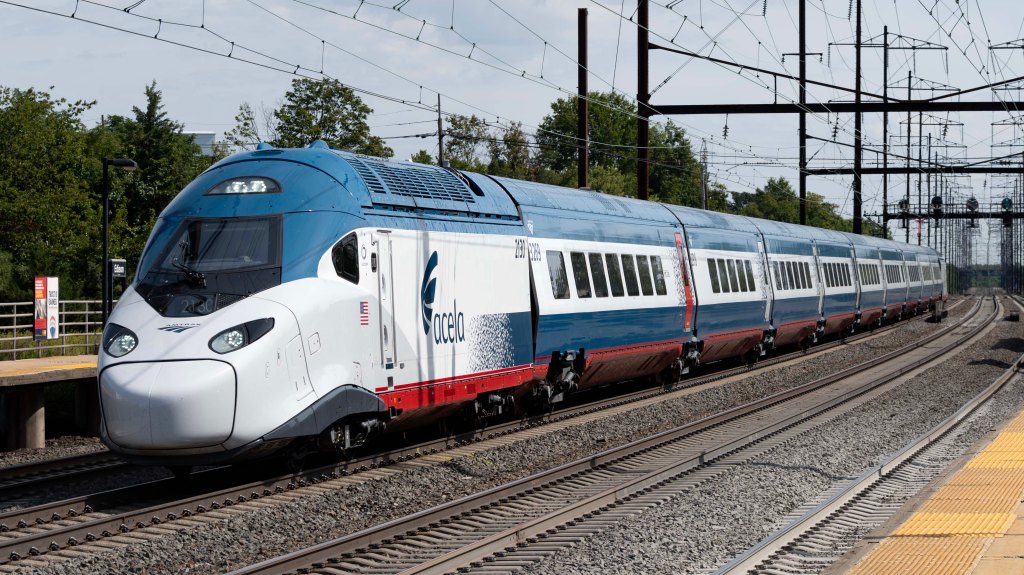
Amtrak’s high-speed brand is being refreshed through the NextGen Acela program—new trainsets, higher capacity, and a more modern onboard experience on the Northeast Corridor. It’s a foundational upgrade to the corridor’s premium offer and an important signal that Amtrak intends to keep growing NEC ridership against air and car alternatives.

Airo: the “regional train” finally becomes a product

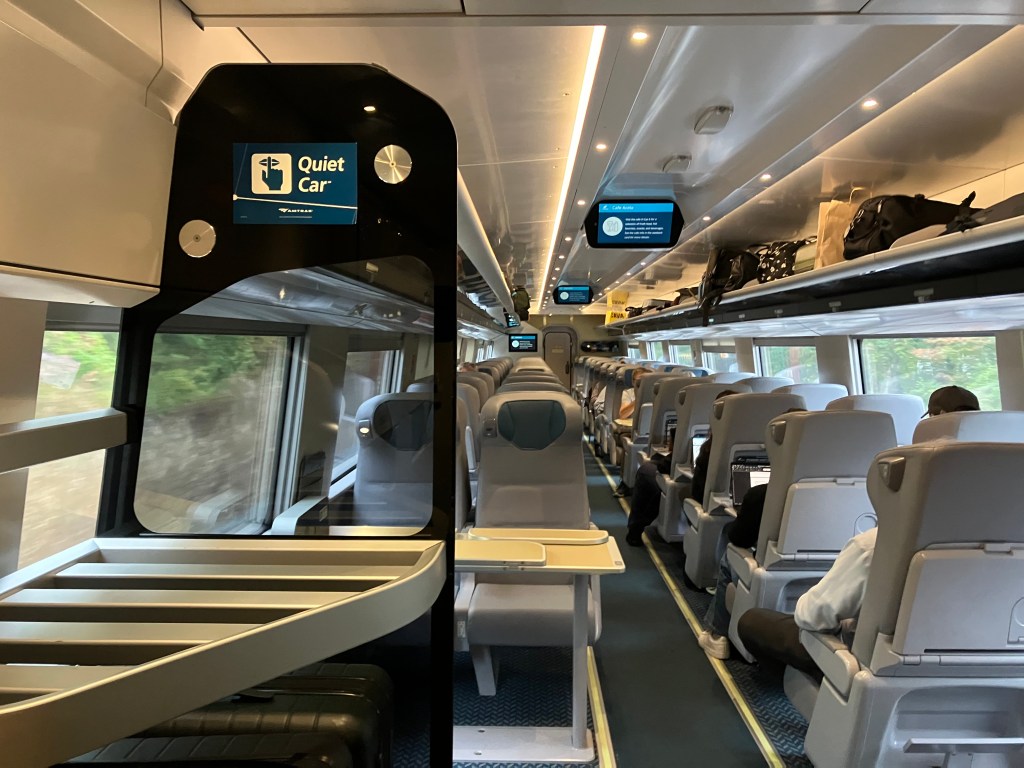
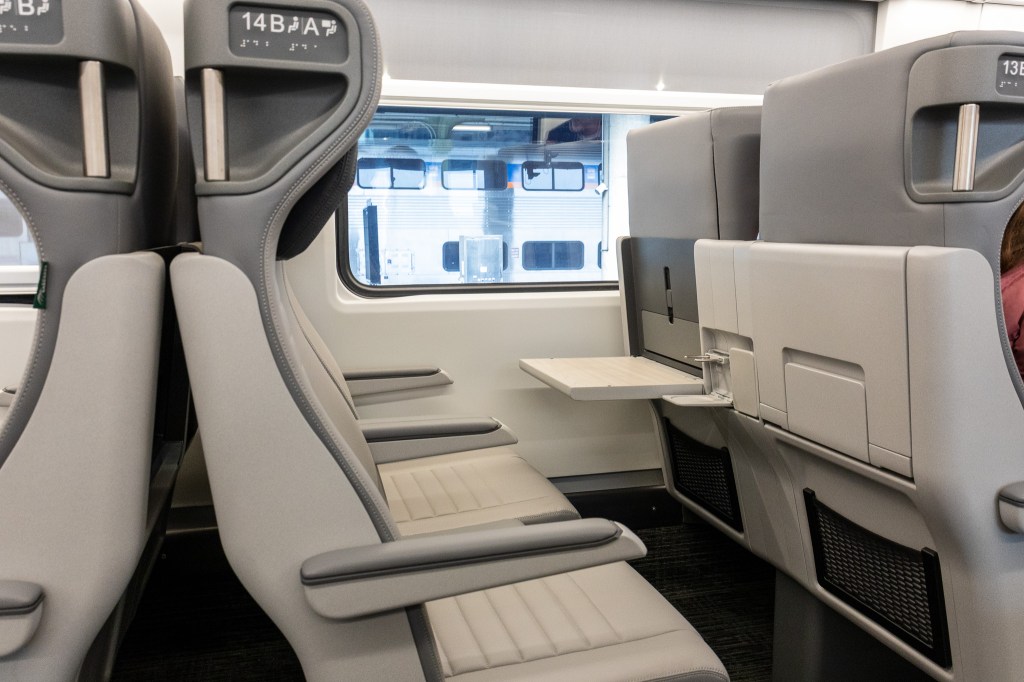
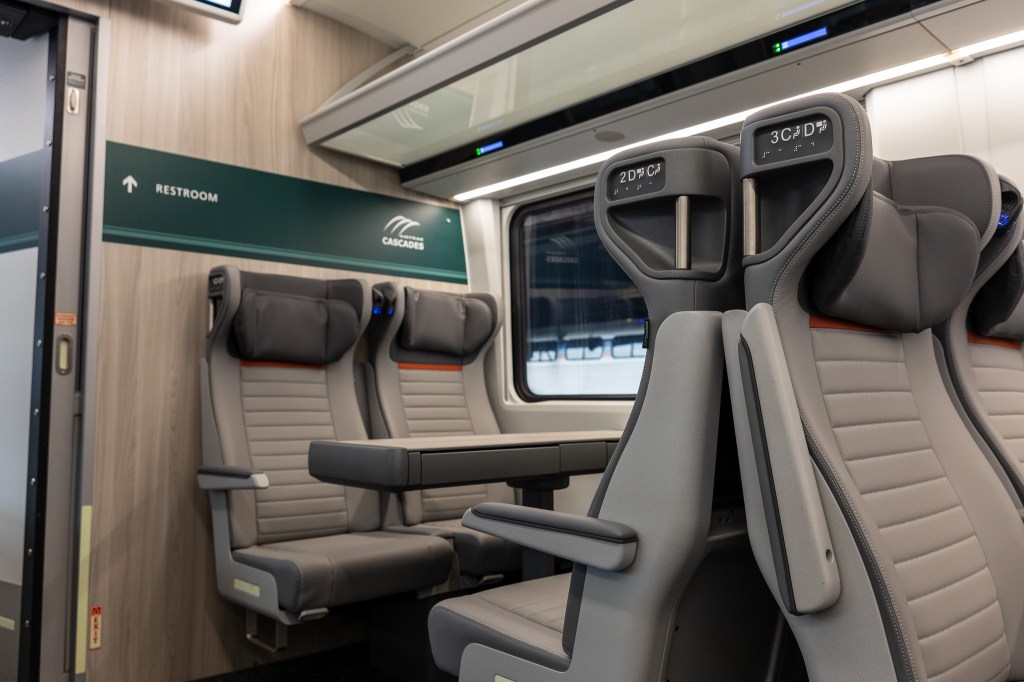
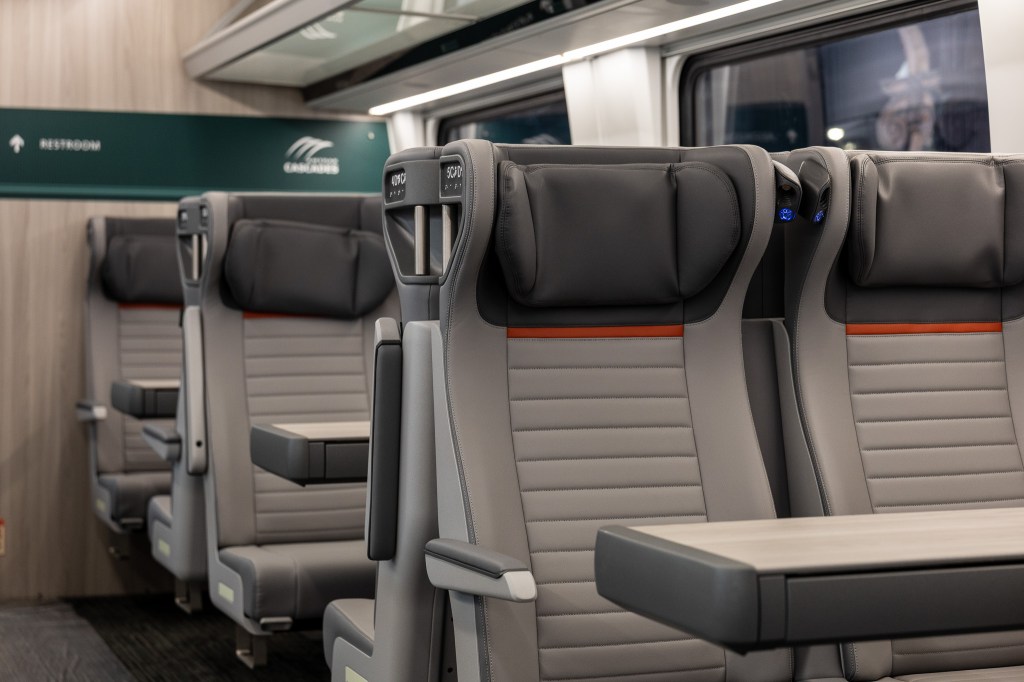
The most consequential fleet story for the broader network is Amtrak Airo: a large-scale replacement of aging equipment with trains designed around modern accessibility, better interiors, and a calmer, more ergonomic experience.

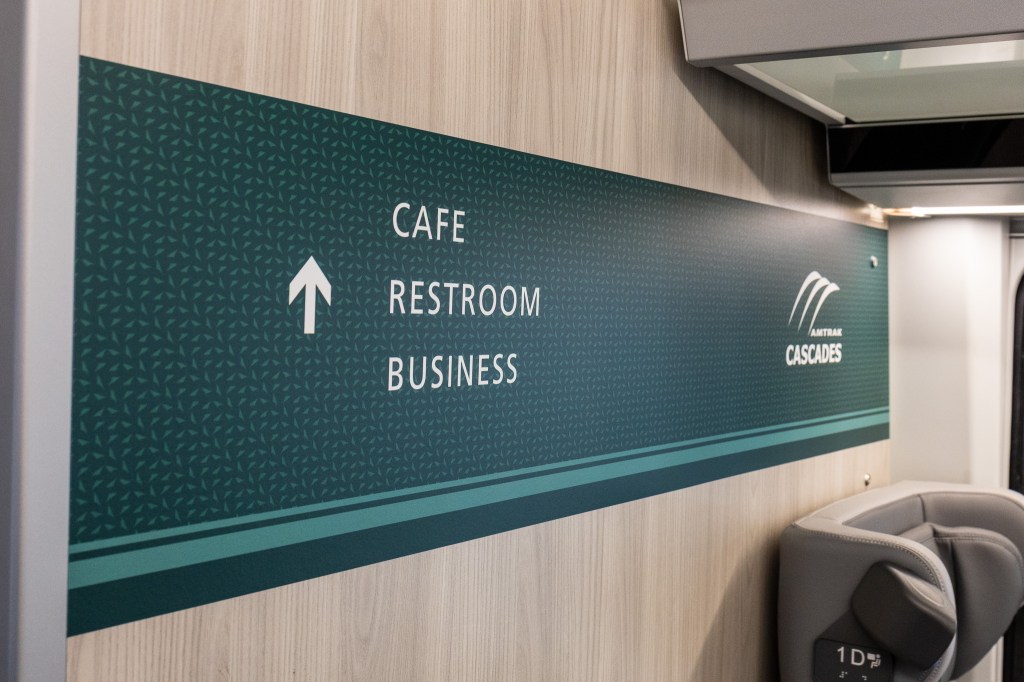
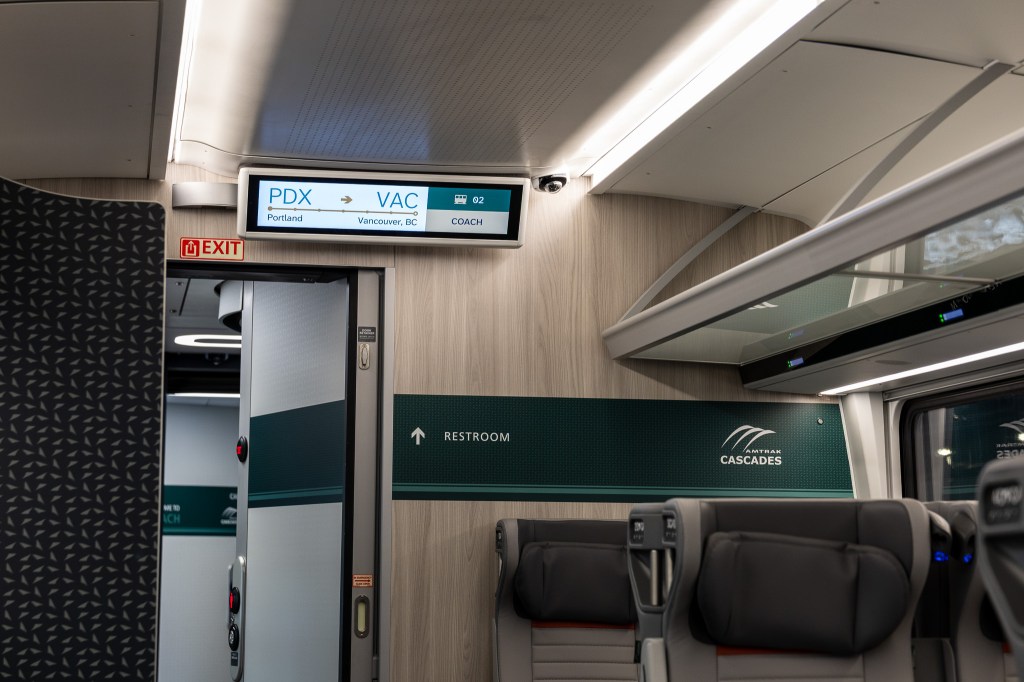
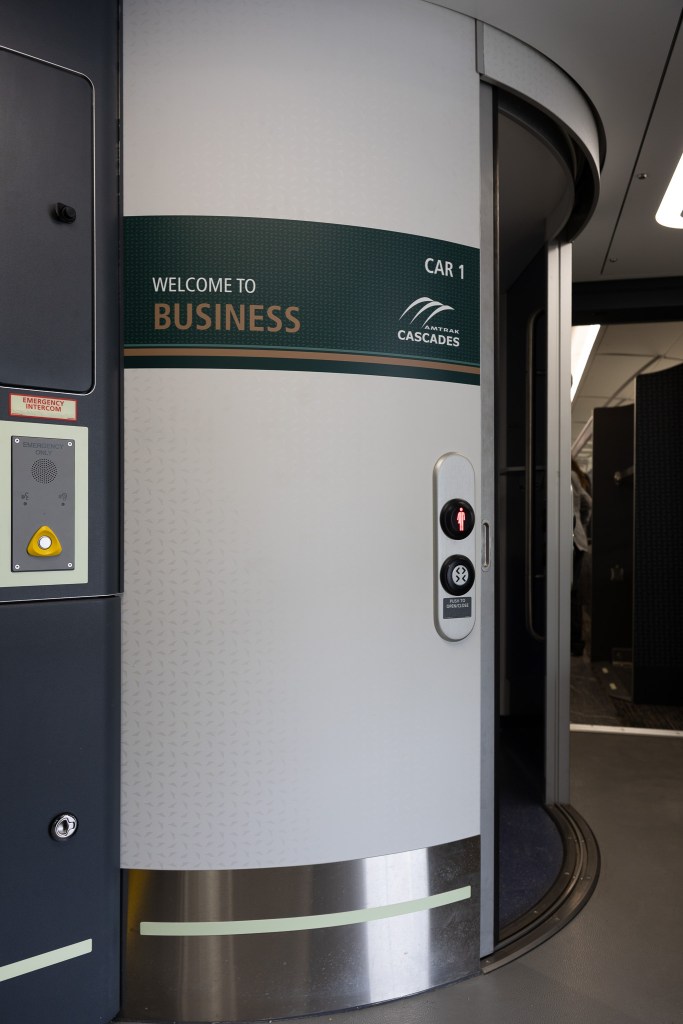
Based on the recent public previews and reporting, Amtrak plans to roll out Airo service starting with the Cascades in the Pacific Northwest, then expand across corridors from North Carolina to Maine, with plans to integrate Airo into Northeast Regional service by 2027. The details that matter are not “luxury”—they are the basics executed well: reliable power, thoughtful tray design, spacious and touchless restrooms, and accessibility integrated into the experience rather than bolted on.

Strategic point: Fleet modernization does two things at once: it improves the experience and strengthens the political and financial case for infrastructure upgrades. Trains are visible proof that rail investment isn’t theoretical.


Corridors, not slogans: the program machinery that matters

Corridor development is unglamorous—but it’s the “operating system” for passenger rail expansion. Over the past five years, the U.S. has pushed toward a model where corridors are advanced as programs: early-stage planning and governance, then incremental infrastructure and service upgrades, then repeat. This is how you get from “we should have trains” to “here is a credible service plan, capital plan, phasing, and operating agreement.”

Why it matters: the U.S. historically struggled with a missing middle—projects were either too early to fund or too under-defined to execute. A corridor-based pipeline is meant to standardize the path from concept into delivery.


The Northeast Corridor: megaprojects that unlock reliability

The NEC is where intercity rail already competes with air on door-to-door time for many city pairs. But the NEC is also the most fragile: century-old tunnels, bridge bottlenecks, constrained capacity, and cascading delays that ripple across the whole system.

Hudson River tunnel capacity: the single biggest choke point

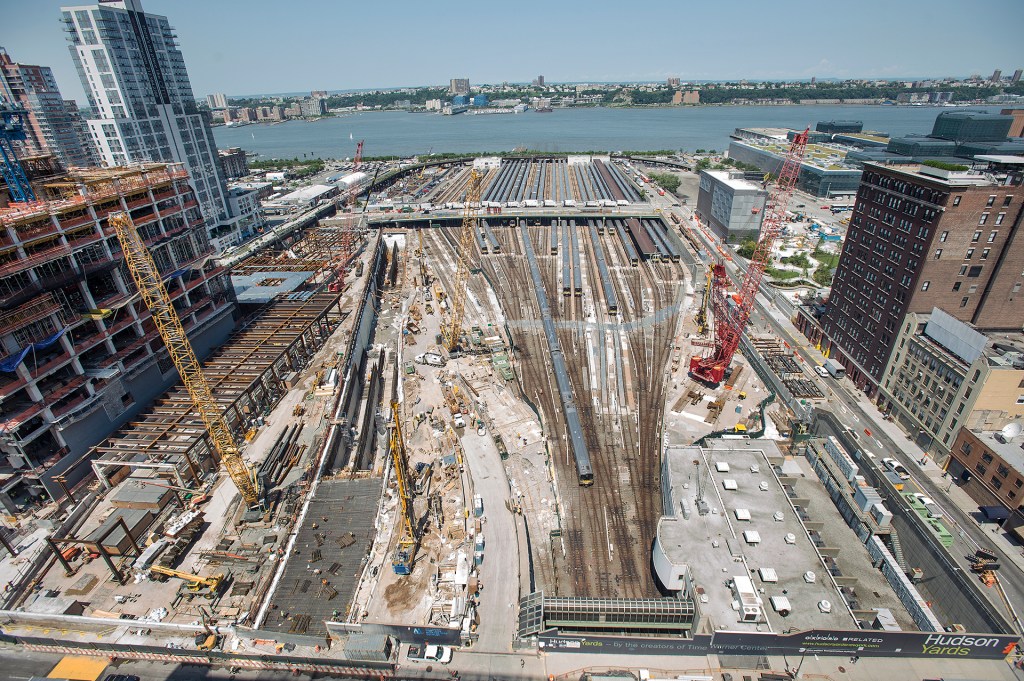
New York–New Jersey rail capacity (and resilience) hinges on adding and modernizing tunnel capacity under the Hudson River. This is not just a New York project; it is a Northeast economy project. In reliability terms, it’s the difference between a resilient network and a network where one aging asset can trigger region-wide disruption.

Baltimore tunnel replacement: speed + resilience

Baltimore’s long-standing tunnel constraints are another classic “small geography, huge impact” problem. Tunnel replacement and alignment improvements are the kind of infrastructure that riders don’t celebrate—but that quietly make the timetable trustworthy.

What these projects really do: they don’t just shave minutes. They reduce cascading delays—turning rail from “sometimes great” into “predictably reliable,” which is what converts car and short-haul air demand.


State corridors: the quiet winners (Midwest, Southeast, Virginia)

If the NEC is the flagship, the real volume story is in state-supported corridors: incremental frequency, improved schedules, and better stations—often at modest top speeds (79–110 mph) but with strong door-to-door competitiveness.

Midwest: “more trains” is the killer feature

One of the smartest corridor tactics is simply adding useful frequency on routes where demand already exists. A second daily round trip can change a corridor from “nice idea” to “practical default,” especially for business travel, weekend travel, and students.

Virginia: a blueprint for passenger rail expansion on shared tracks

Virginia has demonstrated a pragmatic model: invest in capacity, negotiate operating realities, and deliver incremental service improvements without waiting for a moonshot high-speed program. It’s not glamorous, but it’s how you build ridership—trip by trip, timetable by timetable.

Southeast Corridor: the Raleigh–Richmond logic

The Raleigh–Richmond market (and broader Southeast corridor) is one of the most strategically logical intercity rail plays in the U.S.: population growth, highway congestion, and short-haul air friction create the conditions where reliable rail can win—if the corridor is treated as a program, not a press release.


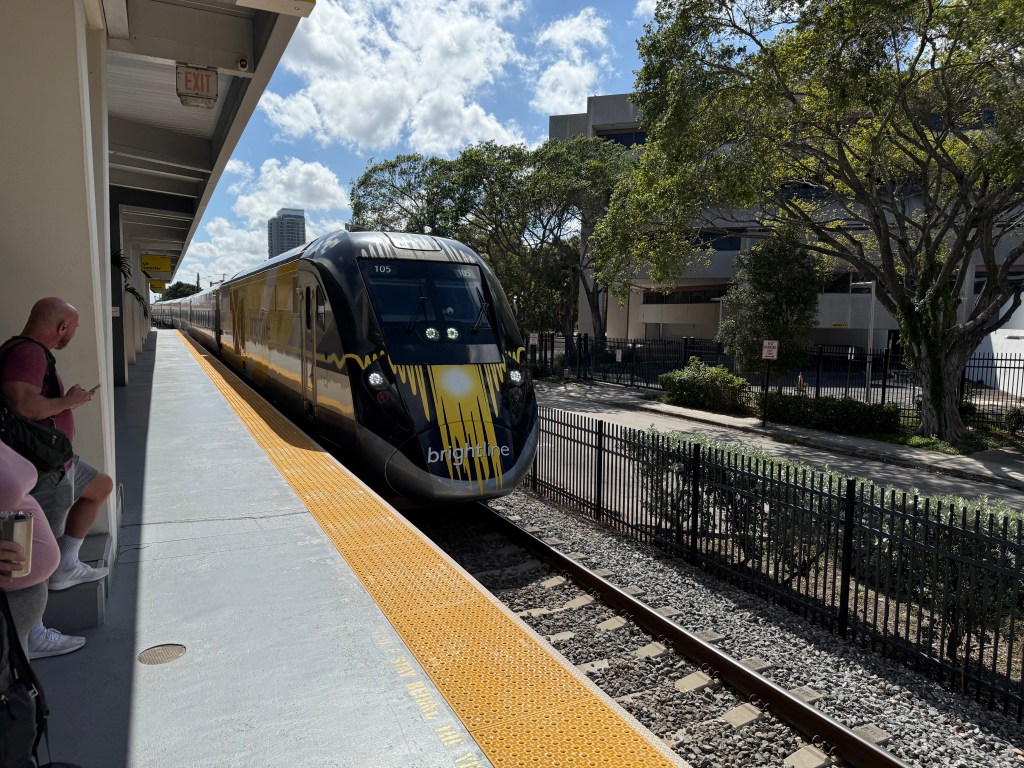
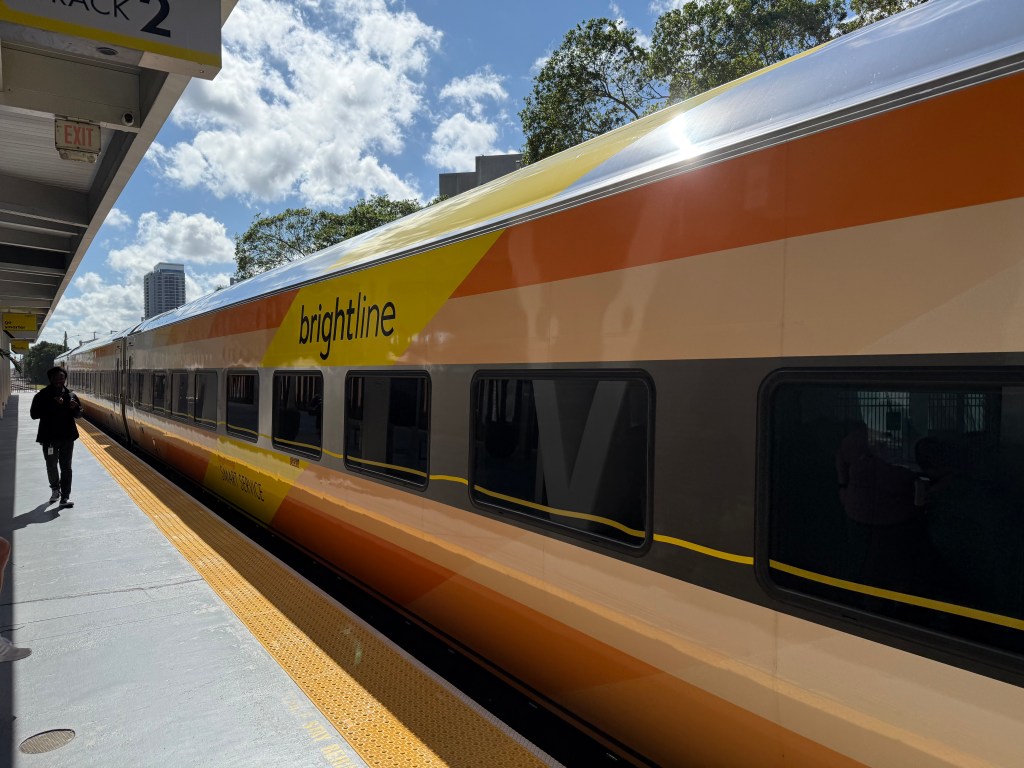
Private intercity rail: Brightline (Florida + West)

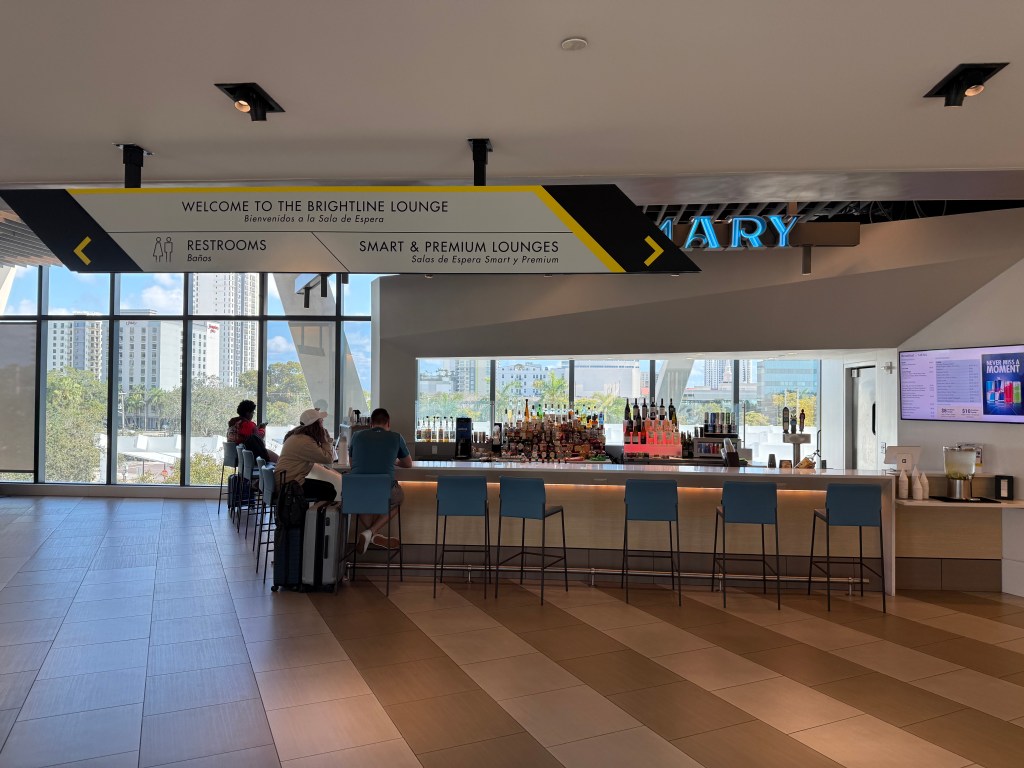
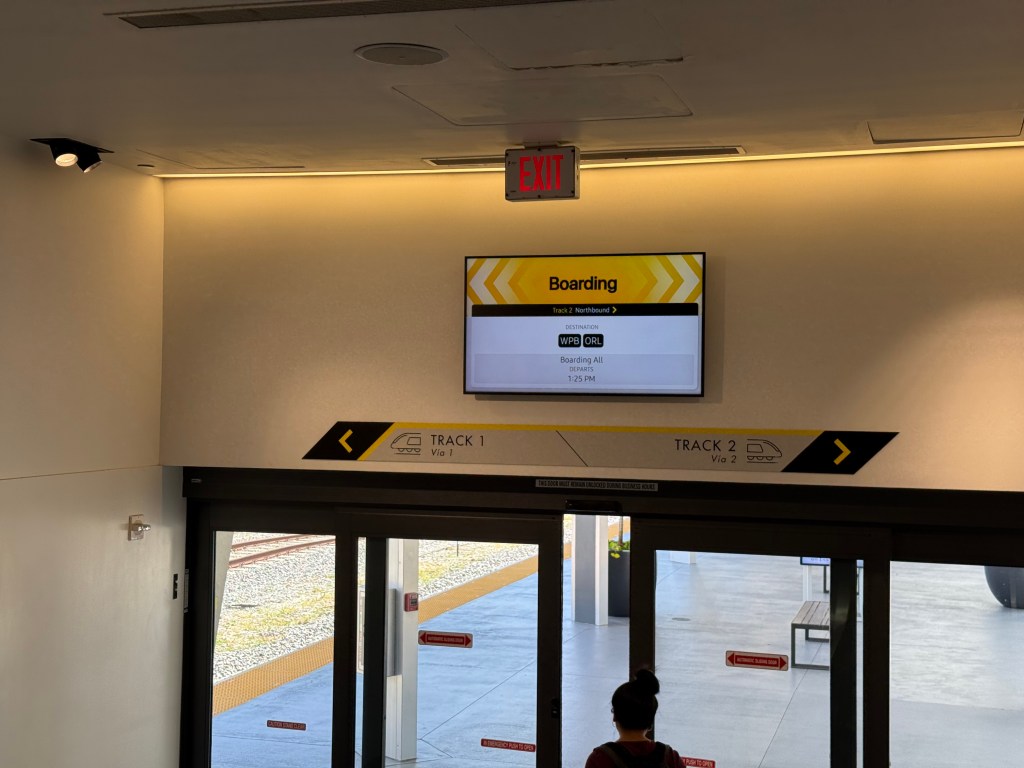
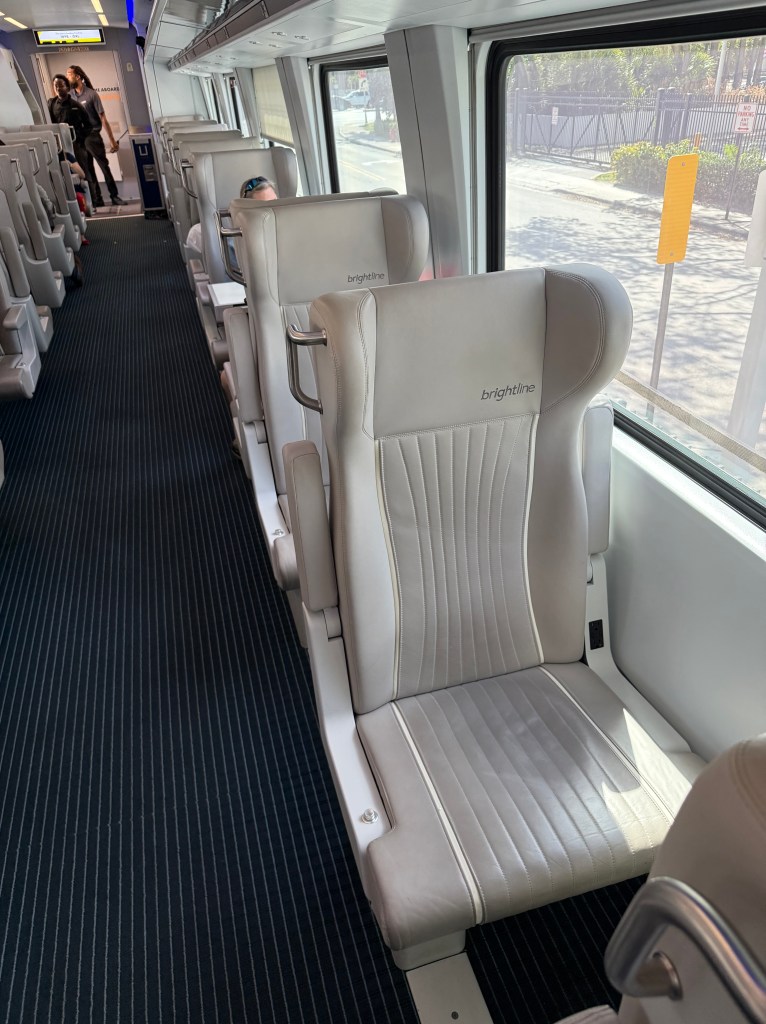
Brightline matters because it proves there is U.S. consumer willingness to adopt modern intercity rail when the product is easy to use and reasonably frequent. It also shows the power of good stations, clear branding, and a travel experience that feels designed rather than inherited.

Florida: Miami–Orlando as a real mode-shift experiment

Florida demonstrates what happens when intercity rail is treated as a mainstream product: clear schedules, clear stations, and a service cadence that makes the train a “default option” rather than a special occasion.

Brightline West: the highest-profile “new-build” intercity project

Brightline West (Las Vegas to Southern California) is the most visible attempt to deliver a new high-speed-ish intercity corridor outside the NEC. If execution holds, it could become a national proof point for new-build delivery—especially on a market where driving is painful and flying is short but inefficient door-to-door.


True high-speed rail: California’s long arc

California’s high-speed rail effort remains the most ambitious U.S. attempt at true HSR scale. Progress is real—but so are structural challenges of cost, governance, right-of-way complexity, and sustained funding. Whether it becomes the backbone of a statewide network or a high-quality “initial segment” depends on the next decade’s delivery discipline.

Regardless of the final form, California is already functioning as a national learning program for American HSR delivery: procurement, labor, environmental clearance, utility relocation, and complex civil works at scale.


Customer experience: what “modern rail” actually means

“Better trains” is not just speed. It’s a bundle of reliability + comfort + accessibility. The new generation of intercity rolling stock is pushing toward a baseline that travelers increasingly consider non-negotiable:

  • Accessible boarding and interiors designed for real mobility needs
  • Modern restrooms that are touchless, spacious, and usable (including family needs)
  • Seat-level power, lighting, and work-friendly tray solutions
  • Clear wayfinding and calmer interior design choices
  • Operational consistency (the same experience on Tuesday as on Saturday)

This is how rail wins back travelers from cars and short-haul flights: not by being “cool,” but by being dependable, comfortable, and human-centered.

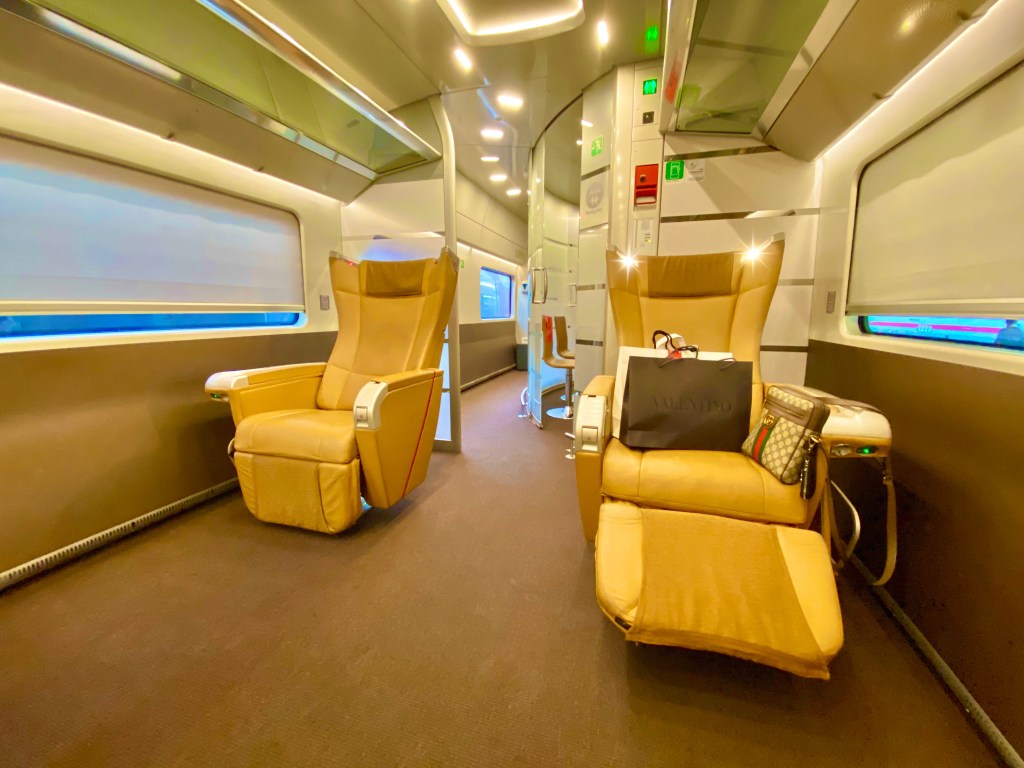
Trenitalia’s Frecciarossa Executive class is probably one of the best high speed product in Europe

What could still derail the rail comeback

This is the part most “rail renaissance” narratives underweight: rail’s constraints are operational and institutional as much as they’re financial.

1) Infrastructure is necessary but not sufficient

Without dispatching priority (or at least enforceable on-time performance regimes) on shared freight corridors, new trains will still sit behind long freights. Track upgrades must come with operating agreements that protect passenger reliability.

2) Maintenance facilities and workforce readiness

New fleets require upgraded maintenance bases, parts supply chains, and technician pipelines. If facilities lag, availability collapses and “new trains” become “stored trains.”

3) Funding continuity and political volatility

Multi-year rail programs need multi-year political commitment. Stop-and-go funding adds cost, delays, and contractor risk premiums—exactly the opposite of what rail needs.

4) Station experience and first/last-mile integration

Intercity rail wins when the station is an asset (central, safe, connected). It loses when stations are peripheral, unpleasant, or disconnected from local mobility.


The 10-year outlook (2026–2036): what a realistic win looks like

Let’s define “win” in a way that matches how transportation systems actually shift behavior.

What success likely looks like by the mid-2030s

  • Northeast Corridor reliability step-change through tunnel and key segment renewals (Hudson + Baltimore region), enabling tighter schedules and higher frequency.
  • Fleet renewal at scale across multiple corridors, making “modern train” a default expectation rather than a novelty.
  • 10–20 corridors upgraded into true “frequency networks” with more daily round trips and better span of service.
  • At least one headline new-build high-speed corridor outside the NEC becoming operational or meaningfully de-risked (Brightline West and/or a California initial segment).
  • More state-led wins where 90–110 mph + frequency beats 2-hour highway slogs.

The reachable prize

Make intercity rail the default choice in a growing set of 200–500 mile markets by combining frequency, reliability, and a modern onboard product—then let demand justify the next wave of upgrades.


Conclusion: a “new era of rail” is real—if the U.S. stays disciplined

The new trains are exciting not because they’re futuristic, but because they’re normal—normal for what intercity rail should feel like in 2026.

The next decade is where the U.S. either turns today’s funding moment into durable corridor systems—or repeats the historical cycle of big announcements, partial delivery, and degraded assets.

My take: the ingredients are finally on the table. The winners will be the corridors that combine (1) capital discipline, (2) operating agreements, (3) service frequency, and (4) customer experience that people actually want to repeat.

From “No Frills” to “Choice Architecture”: How Low-Cost Carriers Are Redesigning Customer Experience — and What Southwest’s Assigned-Seating Turbulence Reveals

Low-Cost Carriers (LCCs) and Ultra Low-Cost Carriers (ULCCs) didn’t just lower fares. They rewired the “customer experience” model: fewer bundled promises, more explicit tradeoffs, and a digitally mediated journey where control is available—at a price. Southwest Airlines’ rocky transition to assigned seating is a live case study of what happens when an airline changes its CX operating system while the rest of the product (bins, boarding, family seating expectations) still behaves like the old one.

Table of contents

  1. The great CX rewrite: what LCCs/ULCCs changed (and why it stuck)
  2. Unbundling as a CX design principle (not just a pricing trick)
  3. The “self-service airline”: digital first, humans last
  4. The new battleground: fairness, transparency, and “bin economics”
  5. Southwest’s assigned seating: a controlled experiment with real passengers
  6. Overhead bins as the hidden constraint that breaks the experience
  7. Families, adjacency, and the reputational cost of “random assignment”
  8. The strategic tradeoff: efficiency vs. monetization vs. brand identity
  9. A CX playbook for airlines navigating the LCC/ULCC era
  10. What happens next: the next wave of airline CX competition

The great CX rewrite: what LCCs/ULCCs changed (and why it stuck)

For decades, “airline customer experience” meant a fairly stable bundle: one ticket, a seat (implicitly), a carry-on expectation, some level of assistance, and a set of policies that felt like part of the brand’s promise. LCCs and ULCCs reframed that model with a blunt proposition:

  • We’ll sell the transportation efficiently.
  • Everything else becomes a choice. (Seat, bag, priority, flexibility, comfort, snacks, even “less uncertainty.”)
  • And choices have prices.

The result is not simply “worse service.” It’s a different architecture: a base product optimized for cost and utilization, plus a menu of paid options designed to match distinct willingness-to-pay. This is why the model persisted even as some customers complained: it aligns cost structure, revenue levers, and operational standardization.

But the deeper change is psychological. LCCs/ULCCs normalized the idea that the passenger is not buying an “experience bundle.” They are assembling an experience—step by step—through decisions, fees, and digital flows. That changes what customers expect from every airline, including “hybrids” like Southwest.

Unbundling as a CX design principle (not just a pricing trick)

In mature LCC/ULCC models, unbundling is a form of experience design. It forces clarity—sometimes brutally:

  • Priority becomes a product (early boarding, better seat, faster service recovery).
  • Certainty becomes a product (assigned seating, guaranteed overhead space, change flexibility).
  • Comfort becomes a product (extra legroom, blocked middle, “preferred” zone).

Airlines that master unbundling do two things well:

  1. They define the base experience with discipline. The cheapest fare is intentionally spartan, but coherent.
  2. They engineer “upgrade moments” along the journey. The customer is repeatedly offered ways to reduce friction—at a price—often when anxiety peaks (check-in, boarding, disruptions).

When it works, customers don’t feel “nickel-and-dimed.” They feel in control: “I paid for what matters to me.” When it fails, the experience feels like a trap: the base product is engineered to be uncomfortable, and upgrades look like ransom.

A quick maturity model

Unbundling maturityCustomer perceptionTypical outcomes
Ad hoc fees“They’re charging me for everything.”Complaints spike; loyalty weakens
Structured menu“I can choose what I want.”Ancillary growth; better NPS segmentation
Experience engineering“I can buy less stress.”Higher conversion, fewer service calls
Operationally synchronized“It just works.”On-time performance + revenue lift + fewer conflict points

The “self-service airline”: digital first, humans last

LCCs/ULCCs pioneered a digital operating model that legacy airlines later adopted—sometimes reluctantly:

  • Apps as the primary interface: rebooking, vouchers, upsells, boarding pass, “service recovery” messaging.
  • Policy-driven automation: fewer discretionary exceptions, more consistent enforcement (which can feel harsh).
  • Lean airport footprint: fewer agents, more kiosks, more self-tagging, more “gate is the new customer service desk.”

This shifts the definition of customer experience from “how friendly are the people?” to “how predictable is the system?” In other words: the UX of policies and digital flows becomes the brand.

That’s also why transitions are perilous. When you change one major system component—like seating allocation—you must re-tune the entire journey: check-in rules, boarding logic, bin availability, family seating policies, staff scripts, and escalation pathways.

The new battleground: fairness, transparency, and “bin economics”

Once airlines monetize “certainty” (seat selection, priority boarding, extra legroom), the core CX question becomes fairness. Not moral fairness—perceived fairness.

Passengers will accept fewer freebies if the rules are clear and outcomes feel logical. They revolt when outcomes feel random or inconsistent—especially when money or loyalty status is involved.

The hidden economics of overhead bins

Cabin storage is a finite resource that is poorly “priced” and inconsistently enforced across the industry. In open seating models, early boarding implicitly secured bin space. In assigned seating models, customers expect the seat they paid for (or status they earned) to correlate with a reasonable chance of storing a bag near that seat.

When that correlation breaks, you trigger a specific kind of anger: “I did everything right and still lost.” That’s the emotional core of Southwest’s current friction.

Southwest’s assigned seating: a controlled experiment with real passengers

Southwest’s shift away from its iconic open seating is more than a tactical tweak. It is a strategic migration toward the industry norm: seat choice as a monetizable product, and boarding as a hierarchy informed by fare, status, and paid add-ons.

Southwest publicly framed the decision as aligned with customer preference and modernization. But modernization is not a single switch. It’s a system redesign—and the first weeks of operation revealed where the system is brittle.

What passengers are reporting (and what the airline acknowledges): assigned seating can produce outcomes that feel misaligned with expectations—especially when the “premium” customer ends up separated from their bag, their travel party, or the experience they believed they purchased.

Importantly, Southwest is not a typical ULCC. Its brand equity historically came from simplicity: a distinctive boarding culture, a perception of “less gotchas,” and an airline that felt human. When you introduce monetized hierarchy, you must manage the cultural shock—because customers are not only buying a seat. They’re buying what the brand used to represent.

Overhead bins as the hidden constraint that breaks the experience

The most telling issue surfacing in early feedback is not the assigned seat itself—it’s overhead bin access. Customers in forward rows (including loyalty members and extra-legroom purchasers) report storing bags far behind their seats because early boarders fill the front bins first.

Why this matters:

  • It breaks the “premium promise.” If a customer pays for a better seat, they expect fewer hassles, not a scavenger hunt for storage.
  • It slows the operation. Walking bags backwards (and later walking forward against the flow) degrades boarding and deplaning time.
  • It creates conflict. Bin disputes are high-emotion, public, and contagious—exactly what airlines try to avoid.

What LCCs/ULCCs learned earlier

Many ULCCs reduced carry-on expectations by charging for larger cabin bags, incentivizing smaller personal items and shifting volume to the hold. Whether you like it or not, it is a coherent operational response to finite bins. Southwest is now experiencing a version of that physics: once boarding hierarchy changes, bin scarcity becomes visible and political.

Core insight: You can’t redesign seating without redesigning the storage “contract.” If the passenger’s mental model is “my seat implies nearby storage,” then your process must support that—or you must explicitly sell/guarantee storage as a product.

Families, adjacency, and the reputational cost of “random assignment”

Another flashpoint is family seating—particularly cases where children are assigned seats away from parents when the family declines paid seat selection. Even if the airline ultimately resolves such cases at the gate, the reputational damage occurs before resolution: the customer experiences stress, social judgment, and uncertainty.

This is where customer experience intersects with public policy debates and brand risk. A few principles have emerged across the industry:

  • Family adjacency is not just “a nice to have.” It is a safety, ethics, and PR issue.
  • Gate-based fixes don’t scale. They create delays and put frontline staff in conflict with passengers.
  • Algorithmic assignment must encode adjacency rules. If you sell seat choice, you still need baseline protections for minors traveling with guardians.

LCC/ULCC carriers have experimented with multiple approaches—some better than others. The best approaches are explicit: clear policies, clear boundaries, and predictable outcomes.

The strategic tradeoff: efficiency vs. monetization vs. brand identity

Why is this happening now—across the industry? Because airline economics increasingly depend on ancillary revenue and product segmentation, even as capacity, labor costs, and operational complexity rise.

Southwest’s transition highlights a broader truth: customer experience is not the opposite of revenue optimization. In modern airlines, CX is the mechanism through which revenue optimization is delivered—via choices, tiers, and “paid certainty.”

But there is a brand identity risk

Southwest’s brand historically signaled:

  • “We’re different.”
  • “We’re simple.”
  • “We’re fair (enough).”

Assigned seating and monetized hierarchy can still be consistent with those values—but only if the airline makes the system feel transparent, coherent, and operationally smooth. Otherwise, the airline risks becoming “like everyone else,” without the premium network advantages that larger carriers have.

The LCC/ULCC lesson for everyone

The winners are not the airlines that offer the most perks. They are the airlines that offer the cleanest tradeoffs:

  • If you pay, the benefit is real and reliable.
  • If you don’t pay, the base product is still workable and predictable.
  • Rules are enforced consistently, with minimal discretionary drama.

A CX playbook for airlines navigating the LCC/ULCC era

Here is a practical set of moves airlines can apply when shifting CX “operating systems” (seating, boarding, tiers, fees):

1) Treat overhead bins as a product and a process

  • Define the storage promise. Is bin space “best effort,” or tied to fare/seat?
  • Align boarding to storage logic. If premium customers sit forward, then premium boarding must protect forward bin availability.
  • Enforce bag size consistently. Inconsistent enforcement destroys perceived fairness.

2) Encode family adjacency into assignment algorithms

  • Guarantee adjacency for minors with guardians within reasonable constraints.
  • Prefer pre-assignment solutions over gate interventions.
  • Communicate clearly before purchase and at check-in.

3) Reduce “surprise moments”

In modern airline CX, surprises are the enemy. Customers tolerate constraints; they do not tolerate feeling tricked.

  • Show seat outcomes earlier.
  • Explain why a seat is what it is (fare tier, late check-in, aircraft change).
  • Offer a “fix” path inside the app, not at the gate.

4) Make upgrades feel like value, not ransom

  • Bundle upgrades around customer jobs-to-be-done: certainty, speed, comfort, flexibility.
  • Keep the base product coherent. If base is punitive, social media will do the marketing for you—in the worst way.

5) Script the frontline experience

When systems change, frontline staff become the UX. Equip them:

  • Clear rules + escalation paths
  • Short, consistent explanations
  • Discretionary tools for edge cases (especially families)

6) Measure the right things

MetricWhat it revealsWhy it matters now
Boarding time varianceProcess stabilityVariance indicates conflict points (bins, scanning, group logic)
Gate interventions per flightSystem failures that humans must patchHigh levels predict delays and staff burnout
Seat-change requestsMismatch between assignment logic and customer needsEspecially important for families and status customers
Complaint clustering (social + direct)Reputation riskClusters often precede mainstream media stories
Ancillary conversion by journey momentWhere customers buy certaintyGuides UX improvements without harming trust

What happens next: the next wave of airline CX competition

The next phase of airline customer experience competition is not about adding amenities. It’s about reducing friction through system design while preserving profitable segmentation.

Expect the industry to double down on:

  • More explicit tiering: basic fares that are truly basic, and premium economy-like zones on narrowbodies.
  • Paid certainty bundles: seat + boarding + storage guarantees packaged together.
  • Algorithmic personalization: upsells tuned to traveler context (family, business trip, tight connection).
  • Operationally aware CX: real-time messaging and re-accommodation that prevents lines and gate chaos.

Southwest’s assigned-seating turbulence should be read as a signal, not an anomaly. When an airline changes a foundational ritual (like open seating), it must redesign the “physics” around it—bins, boarding, family adjacency, and fairness cues. LCCs/ULCCs taught the market how to monetize choice. Now the strategic challenge is doing so without eroding trust.

Bottom line: In 2026, the winning customer experience is not the most generous. It’s the most legible—where rules are clear, outcomes make sense, and paid upgrades reliably remove stress rather than merely shifting it onto someone else.

Disney’s New CEO in a Soft Tourism Cycle: The Stakes for Josh D’Amaro

Disney just picked a Parks operator—Josh D’Amaro—to run a company whose brand power was historically built on storytelling. That choice is logical (Parks/Experiences is the cash engine), but it is also risky: if global tourism demand is cooling and discretionary spend is under pressure, Disney can’t “price its way” through the next cycle without eroding trust. D’Amaro’s mandate is therefore not simply to keep building rides—it’s to rebuild the guest value equation while protecting margins, modernize the Parks operating model without turning the experience into a spreadsheet, and re-balance a company where the creative engine and the monetization engine must re-learn how to collaborate.


Table of contents

  1. A softer tourism backdrop changes the CEO playbook
  2. Why Disney picked a Parks CEO—why it makes sense
  3. Why Parks fans are anxious (and why it matters financially)
  4. The microtransaction problem: when “yield management” becomes distrust
  5. The $60B question: investment discipline vs. creative ambition
  6. Brand erosion is real: “Disney killed Kermie” and the symbolism problem
  7. Hotels & cruise: growth engines—or experience liabilities?
  8. Operating model: the org chart won’t save you—product governance might
  9. A pragmatic 100-day plan for D’Amaro
  10. Three scenarios for Disney Experiences through 2026–2028

1) A softer tourism backdrop changes the CEO playbook

When demand is strong, theme parks can behave like premium airlines: push price, segment aggressively, and monetize convenience. When demand softens—even modestly—the same playbook becomes fragile. The guest is more price-sensitive, less tolerant of friction, and far more likely to compare Disney not to “other theme parks” but to every other discretionary spend option: a beach week, a cruise, a long weekend in New York, or simply staying home.

That’s why the “new CEO stakes” are unusually high in 2026. D’Amaro inherits a Parks ecosystem that has optimized for monetization under capacity constraints—while simultaneously training guests to feel nickel-and-dimed. In a weak demand cycle, the elasticity changes: you can protect revenue short term, but you risk accelerating long-term brand and loyalty degradation.

Translation: the next CEO’s success will be judged less by headline attendance and more by the quality of demand—repeat intent, satisfaction, net promoter score, spend composition (ticket vs. add-ons), and whether families still see Disney as “worth it.”


2) Why Disney picked a Parks CEO—why it makes sense

Disney is telling the market something with this succession choice: Experiences is the ballast. Parks, resorts, cruise, and consumer products are where the company can still deliver predictable cash generation at scale—especially as linear TV continues its structural decline and streaming economics remain a work-in-progress.

D’Amaro also brings two CEO-grade traits that Hollywood leaders sometimes don’t:

  • Operational cadence: daily execution at industrial scale (crowds, labor, safety, uptime, food & beverage, hotels, transport).
  • Capital deployment discipline: multi-year capex programs, ROI sequencing, capacity modeling, and construction risk management.

Disney’s board is effectively betting that the next era requires a builder-operator who can keep the cash engine stable while the entertainment machine adapts.

But there’s a catch: an operator CEO can over-optimize the measurable (throughput, utilization, ARPU) at the expense of the emotional contract (magic, spontaneity, delight). In a soft tourism cycle, that emotional contract becomes the differentiator.


3) Why Parks fans are anxious (and why it matters financially)

Fan anxiety isn’t noise—it’s an early-warning system for brand health. The critique is consistent: Disney has moved from “premium but fair” to “premium and transactional.” Two symbolic examples circulating in the Parks community illustrate the point:

  • “Disney killed Kermie”: the decision to remove Muppet*Vision 3D—Jim Henson’s final completed work—from Disney’s Hollywood Studios, replacing it with a Monsters, Inc.-themed attraction. For many fans, that reads as “historical trust and craft are expendable if a more monetizable IP fits the spreadsheet.”
  • “Avengers Campus is a travesty”: a perception that major new lands can feel like concrete retail districts—strong logos, weak atmosphere—built to monetize IP rather than transport guests into a world.

These critiques aren’t just about taste. They point to a strategic risk: if Disney becomes “a very expensive theme park that also sells you line-skipping,” then Disney loses its moat. Plenty of companies can build rides. Fewer can build deep emotional belonging.


4) The microtransaction problem: when “yield management” becomes distrust

The sharpest complaint today is not prices alone—it’s friction + price + opacity. Historically, Disney’s FastPass system (and its evolution) created a feeling of earned mastery: guests who learned the system could have a better day. The newer era replaces that with a pay-to-reduce-friction model that can feel punitive.

Some of the current guest-facing pain points:

  • Pay-to-skip becomes default behavior, not an occasional upgrade—especially when standby waits are long and itinerary planning feels mandatory.
  • Layered paid products (multi-pass, single-pass, premium passes) create decision fatigue and a sense that the “real Disney day” is behind a paywall.
  • Smartphone dependency converts a vacation into a booking competition—refreshing, scheduling, and optimizing rather than wandering and discovering.
  • Perception of engineered scarcity: guests suspect the system is designed to make the baseline experience worse to sell relief.

In strong demand, Disney can absorb this criticism. In soft demand, it becomes a conversion killer—especially for first-time or occasional families who feel they can’t “do Disney right” without paying extra and studying a playbook.

The CEO-level challenge: D’Amaro must protect yield without letting monetization become the experience. The path forward is not “cheaper Disney.” It’s cleaner Disney: fewer layers, more transparency, less planning tax, and a baseline day that still feels generous.


5) The $60B question: investment discipline vs. creative ambition

Disney has telegraphed large-scale investment ambitions for Parks. That is necessary—new capacity, new lands, new cruise ships, refreshed hotels. But capex doesn’t automatically buy love. In fact, in a soft tourism cycle, capex has to clear a higher bar:

  • Capacity that improves the baseline (more things to do, shorter waits, better flow), not just new monetization nodes.
  • World-building quality that feels timeless, not “IP slapped on architecture.”
  • Operational resilience: weather, staffing variability, maintenance, and guest recovery when things go wrong.

D’Amaro’s risk is building the wrong kind of new. The Parks fan critique is essentially a product critique: “We can feel when cost-cutting and monetization came first.” That perception, once established, is hard to reverse.

What success looks like: new investments that visibly improve the whole day, not just the headline attraction. Think shade, seating, acoustics, crowd pinch points, transportation, hotel arrival experience, food value, and the “small magic” that doesn’t show up in a quarterly deck but determines repeat intent.


6) Brand erosion is real: why “Disney killed Kermie” is more than nostalgia

The Muppets example matters because it’s symbolic: it frames Disney as willing to erase a piece of cultural heritage for IP optimization. Even if the business logic is defensible, the decision communicates something about priorities.

Brand health at Disney is not just a marketing issue. It is a pricing power issue. Guests accept premium pricing when they believe the company is a steward of wonder. When they believe the company is a steward of extraction, they become transactional—and price sensitivity rises sharply.

D’Amaro’s leadership test is therefore cultural as much as financial:

  • Can Disney honor legacy while modernizing the product?
  • Can it scale IP without turning every creative choice into an ROI spreadsheet?
  • Can it restore the feeling that Imagineering is trusted, not throttled?

One of the most important “soft” levers a CEO has is what the organization celebrates. If the heroes are only the people who monetize, you get a monetization company. If the heroes include craft, story, and guest recovery, you get Disney.


7) Hotels & cruise: growth engines—or experience liabilities?

Disney’s resorts and cruise lines are often framed as growth engines—more rooms, more ships, more bundled spend. But in a soft demand cycle, they can also become liabilities if product quality doesn’t match price positioning.

Two risks stand out:

  • Hotel “premiumization” without premium detail: if renovations and refreshes feel generic, guests quickly compare Disney resort pricing to luxury and upper-upscale competitors that deliver sharper design, better bedding, better F&B, and fewer hidden fees.
  • Cruise expansion outpacing service culture: ships are floating cities. Growth is not just hulls—it’s training, entertainment quality, culinary consistency, maintenance, and guest recovery at sea.

The opportunity is real, though. If Disney can make the resort and cruise experience feel like a coherent extension of storytelling—not a lodging product attached to a ticket funnel—then it becomes a defensible premium ecosystem even in softer cycles.


8) Operating model: the org chart won’t save you—product governance might

Disney’s structural tension is obvious: the creative engine (studios, storytelling, characters) and the monetization engine (Parks, consumer products) have to move in lockstep without one cannibalizing the other.

D’Amaro’s advantage is that he understands the monetization engine intimately. His risk is assuming the creative engine will “just deliver content” that the Parks machine can monetize. In reality, the best Disney eras were when:

  • Imagineering had trust and autonomy within guardrails
  • Creative leaders obsessed over detail and continuity
  • Commercial discipline existed, but not as the only language

A CEO can’t personally manage every creative choice, but he can build governance that prevents predictable failure modes:

  • Greenlight criteria that include guest emotion, not only projected spend
  • “No friction by design” rules for park-day products (planning burden is a product defect)
  • Experience integrity reviews that flag “IP wallpaper” and insist on world-building standards

9) A pragmatic 100-day plan for D’Amaro

If I were advising D’Amaro entering this role in a softer tourism environment, I’d push for a 100-day plan that signals: “We will protect the business and the magic.”

9.1 Fix the value narrative (without pretending prices will drop)

  • Simplify the line-skipping / planning products into fewer tiers with clearer value.
  • Publish plain-language explanations: what is paid, what is included, what you can expect.
  • Guarantee a baseline “good day” experience: fewer moments where the guest feels punished for not paying.

9.2 Reduce the planning tax

  • Re-balance inventory so spontaneity is possible (especially for families).
  • Design for “walk-up joy”: streetmosphere, mini-shows, shade, seating, and low-wait capacity.
  • Measure success by phone time per guest and make that KPI go down.

9.3 Announce a creative trust signal

  • Publicly empower Imagineering with a clear mandate: “detail matters again.”
  • Protect at least one heritage/legacy asset as a symbol of stewardship.
  • Choose one near-term project to “overdeliver” on craftsmanship and atmosphere—make it a statement.

9.4 Labor and service culture: don’t squeeze the last ounce

  • In soft demand cycles, service becomes the differentiator.
  • Invest in frontline training, empowerment, and recovery tools.
  • Reduce policies that create conflict at the point of service (complex rules create angry moments).

9.5 Build a tourism-cycle dashboard

  • Track forward bookings, cancellation behavior, mix shifts, and guest intent.
  • Act early with targeted value offers that don’t cheapen the brand (bundled perks, not deep discounting).
  • Use dynamic pricing thoughtfully—but avoid making the guest feel like a mark.

10) Three scenarios for Disney Experiences (2026–2028)

Scenario A: “Value Reset” (best case)

D’Amaro simplifies the monetization stack, reduces friction, and invests in high-craft additions that improve the full-day experience. Guest sentiment recovers, repeat intent rises, and Disney protects premium pricing because the experience feels premium again.

Scenario B: “Margin Defense” (base case)

Disney maintains layered add-ons and pushes yield management harder. Attendance holds but guest sentiment continues to deteriorate. The company remains profitable, but the brand becomes more transactional. It works—until a sharper downturn exposes elasticity.

Scenario C: “Extraction Spiral” (risk case)

In a weak demand environment, Disney doubles down on microtransactions, reduces perceived generosity, and under-invests in atmospheric quality. Fans become critics, occasional guests drop out, and pricing power erodes. Recovery becomes expensive and slow.


Conclusion: the CEO bet is not “Parks vs. Entertainment”—it’s trust vs. friction

Disney didn’t pick Josh D’Amaro because it wants a theme park manager. It picked him because it needs a leader who can stabilize the most dependable cash engine while the rest of the company adapts. But in a soft tourism cycle, the Parks engine can’t run on pricing power alone. It needs trust.

If D’Amaro can rebuild the guest value equation—simpler products, less friction, higher craft, clearer generosity—he will earn the right to keep Disney premium. If he can’t, the company may protect margins for a while, but at the cost of the one asset that actually compounds: belief.

My take: this is a rare moment where operational excellence and creative stewardship must be fused at the CEO level. D’Amaro’s upside is that he already understands the machine. His challenge is to make it feel like Disney again—especially when families are watching every dollar.

Travel Demand 2026: Resilient Globally, Uneven in North America — What Marriott’s FY2025 Results Reveal

Today’s Marriott FY2025 announcement is a useful “industry barometer” because Marriott sits across almost every chain scale and geography: luxury to select-service, business transient to leisure, global gateway cities to secondary markets. The headline is not “travel is collapsing.” The story is more nuanced—and more strategic:

  • Worldwide demand is still resilient (especially cross-border), but it softened toward year-end in several markets.
  • North America is becoming K-shaped: premium holds up; value-oriented demand is more fragile.
  • Pricing power is increasingly segmented: luxury and experience-led destinations outperform while select-service faces pressure.
  • 2026 is shaping up as a “moderation year”: lower growth, higher dispersion, and sharper execution requirements.

This article breaks down the current state of travel/hotel demand worldwide with a focus on North America—using Marriott’s FY2025 results as the starting point, and then zooming out to what the data implies for operators, investors, destinations, and travelers.


1) The global picture: travel demand is still structurally strong

Globally, the travel engine is still running. International tourism continued to grow in 2025, supported by improved air connectivity, the continued rebound of Asia-Pacific destinations, and ongoing appetite for experiences—even with inflation in tourism services and a challenging geopolitical backdrop.

Two macro signals matter here:

  • Cross-border travel remains the “growth flywheel”, particularly for gateway cities and resort corridors that benefit from long-haul and premium leisure.
  • Spending is increasingly “value-optimized”: travelers still travel, but they trade off (length of stay, booking window, destination choice, and product tier) more actively than in the post-pandemic rebound surge.

Strategic takeaway: Global demand is not falling off a cliff. But “easy growth” is over. The industry is moving from rebound mode to competitive allocation mode: which segments, channels, and destinations win the next marginal traveler?

Sunlit hotel lobby with guests
Global travel is still “on”, but the demand mix is changing—fast. (Image: Unsplash)

2) Marriott’s FY2025 results: strong platform, uneven demand mix

Marriott’s FY2025 release confirms the pattern many operators have been feeling on the ground: growth exists, but it is increasingly uneven by region and chain scale.

Key read-across from Marriott’s announcement

  • Full year 2025: worldwide RevPAR increased ~2%, and net rooms grew ~4.3%, illustrating continued expansion of branded supply and the strength of the fee-based model.
  • Q4 2025: worldwide RevPAR rose ~1.9%, with international RevPAR up ~6% while U.S. & Canada were roughly flat.
  • Luxury outperformed (RevPAR up ~6%+), while performance moderated down the chain scales—a polite way to describe softness in more price-sensitive segments.
  • Development remained a growth engine: a global pipeline near ~610k rooms reinforces that owners still value the distribution + loyalty stack.

What makes Marriott especially useful as a lens is that their portfolio spans the “travel income distribution.” When Marriott says luxury is outperforming and select-service is under pressure, they are effectively describing a consumption reality: high-income travel demand is intact; lower- and middle-income demand is more constrained.


3) North America: travel demand is not weak — it’s fragmented

In North America, the best way to describe travel/hotel demand right now is: fragmented.

A K-shaped travel economy is showing up in hotels

North America is increasingly a tale of two travelers:

  • Affluent leisure continues to buy premium experiences (luxury resorts, iconic urban luxury, “special trips”), supporting ADR and premium upsell.
  • Budget-conscious travelers are more elastic: they shorten trips, shift dates, drive instead of fly, choose lower tiers, or delay discretionary travel.

Marriott’s own mix commentary reflects this: select-service in the U.S. saw declines while luxury grew, pointing to a widening performance gap across chain scales.

Business travel: stable, but cautious and “optimized”

Business travel in North America is not disappearing, but it is structurally more scrutinized than pre-2020:

  • More trip approval discipline; fewer “nice-to-have” trips
  • Shorter stays; tighter meeting agendas; more shoulder-night optimization
  • Higher expectations of ROI (customer outcomes, deal velocity, project delivery)

When business travel softens, it does not uniformly hit all markets. It hits weekday urban cores more than destination leisure, and it hits midscale/select-service differently than upper-upscale/luxury.


4) The U.S. hotel demand baseline: “flat-ish” volume, pressure on occupancy, ADR doing the heavy lifting

Across the U.S., the industry’s recent pattern can be summarized as:

  • Room nights are not collapsing, but growth is harder.
  • Occupancy is under pressure in several markets (especially where supply and alternative lodging compete aggressively).
  • ADR remains the primary lever—but only where the product is differentiated enough to sustain price integrity.

This matters because it changes how hotels should run their revenue strategy:

  • In a rebound, “rate up, volume follows.”
  • In a moderated cycle, “rate integrity versus share capture” becomes a daily trade-off.

5) The shadow competitor: short-term rentals keep reshaping demand

Short-term rentals are no longer a niche. They are a mainstream substitute—and in many markets, they are absorbing a meaningful share of leisure demand that historically fed hotels.

This is not just a leisure story. It’s also about:

  • Space arbitrage (families and groups choosing kitchens / multi-bedroom options)
  • Length-of-stay economics (weekly rates, cleaning fee structures, “work-from-anywhere” patterns)
  • Location convenience (neighborhood travel vs. central business districts)

Strategic takeaway: Hotels that win against short-term rentals are not the cheapest. They are the ones that make the “hotel value proposition” undeniable: consistency, service recovery, loyalty value, and experience design.


6) International markets: the growth story Marriott is pointing to

Marriott’s international RevPAR outperformance highlights where demand is still expanding more cleanly:

  • Europe (EMEA): strong cross-border flows and high willingness-to-pay in key destinations
  • APEC: continuing recovery and renewed momentum in major travel corridors
  • Premium long-haul leisure: travelers who “saved up” for major trips keep supporting higher-tier products

The implication: global network effects matter again. Brands with broad footprints, loyalty ecosystems, and multi-market negotiating power with owners have a structural advantage in capturing cross-border demand.


7) A simple dashboard: what the industry is signaling right now

SignalWhat it suggestsWhy it matters
Luxury outperformingAffluent demand remains intactPricing power exists—but is concentrated at the top
Select-service softnessBudget-conscious travelers are trading down or reducing tripsPromotions and loyalty offers become essential, but risk rate dilution
International RevPAR strongerCross-border travel is still the growth leverGateway assets and global brands capture disproportionate upside
Business travel cautiousTrips are optimized, not eliminatedWeekday/urban performance depends on events and corporate confidence
Alternative lodging pressureHotels compete for leisure share more directlyProduct differentiation and experience design become core strategy

8) What this means for hotel operators: execution beats macro

If you operate hotels in North America right now, the winners are typically not those with the best “macro story.” They are those with the best execution system. Here are the playbooks that matter in a fragmented demand environment:

(A) Segment precision in revenue management

  • Stop treating “leisure” as one segment: separate affluent leisure, value leisure, group leisure, event-driven leisure.
  • Use more dynamic offer design: bundles (breakfast/parking), value-adds, and targeted fenced offers.
  • Protect rate integrity in premium tiers; use tactical value levers in lower tiers without breaking the long-term ADR curve.

(B) Loyalty economics as a demand stabilizer

  • In a moderated cycle, loyalty is not just marketing; it is demand insurance.
  • Use member-only rates strategically, but ensure you are not simply shifting OTA demand into discounted member demand.
  • Invest in on-property recognition: if the experience is flat, loyalty becomes a commodity.

(C) Operational excellence is now a commercial strategy

  • When pricing power tightens, service recovery and consistency protect review scores—and review scores protect conversion.
  • Labor pressures remain real; smart scheduling and productivity tooling matter.
  • Food & beverage is either a margin drag or a differentiation lever—rarely both. Be intentional.

9) What this means for owners and investors: dispersion is the opportunity

The biggest investment mistake in 2026 is to think in averages. A “low-growth” year can still produce excellent outcomes if you are positioned in the right micro-markets with the right product.

Where outperformance is more likely

  • Experience-led leisure destinations with sustained demand drivers
  • Gateway cities where cross-border travel is strong and event calendars are dense
  • Luxury and upper-upscale assets with defensible pricing power
  • Well-branded conversions where distribution + loyalty can quickly lift performance

Where risk is higher

  • Undifferentiated select-service corridors with heavy supply and price-sensitive demand
  • Markets reliant on a single corporate driver (especially where office recovery is weak)
  • Assets competing head-to-head with short-term rentals without a clear hotel advantage

10) What this means for travelers: expect “better deals” in the middle, not at the top

If you are booking travel in 2026, the market structure suggests a clear pattern:

  • Luxury will stay expensive in top destinations because affluent demand is still there.
  • Upper-midscale and upscale will be promotional in many markets—especially in shoulder periods and weekends in business-heavy cities.
  • Flexibility is a superpower: shifting dates by a few days can dramatically change pricing in a fragmented demand environment.

Practical traveler tactics:

  • Use loyalty programs for targeted value (breakfast, late checkout, upgrades), not just points.
  • For North American cities: watch weekends for deals in business-heavy downtowns.
  • For resort/leisure: book earlier for premium inventory; last-minute is less reliable.

11) The 2026 outlook: moderation + volatility + big events

Marriott’s guidance implies a “moderate growth” year ahead. That aligns with the broader reality:

  • Demand is stable, but not accelerating in North America.
  • International flows remain important—and can swing quickly with policy, sentiment, and connectivity.
  • Event-driven spikes (major sports, conventions, destination festivals) will matter more than ever for market-level results.

My view: 2026 will reward operators and brands that manage dispersion—by segment, by channel, by market, by week. The “average traveler” is no longer the center of gravity. The winners will be those who design offers and experiences for specific travelers—and do it repeatedly, with discipline.


Conclusion: Marriott is not warning about demand collapse—it’s warning about demand composition

Marriott’s FY2025 results are fundamentally a composition story:

  • Global travel continues to grow, but the post-rebound “everyone travels everywhere” dynamic has normalized.
  • North America is not weak; it is fragmented and more price-sensitive at the bottom of the income distribution.
  • Luxury and international travel are carrying the industry’s growth narrative.
  • In 2026, execution is the strategy: segmentation, loyalty economics, and operational consistency will separate winners from everyone else.

If you are a hotel operator: segment ruthlessly and protect rate integrity.
If you are an owner/investor: focus on micro-market fundamentals and brand-enabled demand engines.
If you are a traveler: look for value in the middle tiers and in date flexibility—don’t expect luxury to get cheaper.

North American Pharmacy in 2026: CVS’s “Stabilization Quarter” and the Real Economics of a Sector Under Stress

North American pharmacy is one of those industries that looks deceptively simple from the outside: a counter, prescriptions, a few aisles of consumer goods, and a familiar logo on the corner. But financially, it is a multi-layered system of spread economics, contract timing, regulatory shockwaves, and scale advantages—where “volume up” can still coexist with “profit down.”

Today’s CVS reporting is useful precisely because CVS sits at the center of the modern pharmacy stack: retail dispensing, a major PBM (Caremark), specialty pharmacy capabilities, and an insurance arm (Aetna). When CVS says a part of the machine is improving or deteriorating, it often signals where the broader market is headed—especially in a period of heightened scrutiny on drug pricing and PBM practices, and after years of margin compression in brick-and-mortar dispensing.

This article uses CVS’s latest results as a prism to explain the current financial situation of the North American pharmacy business, why the sector is still under pressure despite rising prescription volumes, and which strategic moves are most likely to define winners and losers through 2026–2028.


1) The CVS print: what matters (and why it matters beyond CVS)

CVS reported fourth-quarter and full-year 2025 results today. The headline tells a familiar story: revenue growth and prescription volume strength, paired with a more complicated profitability picture driven by reimbursement dynamics, mix shift, and policy changes in government programs.

Key takeaways from today’s CVS reporting

  • Scale is still generating revenue momentum: CVS reported Q4 revenue of $105.7B (+8.2% YoY) and full-year revenue of $402.1B (+7.8% YoY).
  • Adjusted EPS is resilient, but pressured: Q4 adjusted EPS was $1.09, reflecting that operational improvements can be partially offset by policy and mix effects.
  • “Pharmacy is back” is the signal: commentary and external coverage emphasize improved performance in pharmacy-related activities and higher prescription volumes.
  • Guidance discipline: CVS maintained 2026 adjusted EPS guidance ($7.00–$7.20) and reaffirmed a revenue target around $400B+, which the market interpreted as cautious.

Two reasons these points matter for the entire sector:

  1. CVS is the best “system integrator” proxy for North American pharmacy economics—retail dispensing, PBM contracting, specialty, and insurance risk all under one roof.
  2. Policy changes are now showing up in P&L line items faster than before, especially in Medicare-related programs. The distance between Washington and the pharmacy counter is shrinking.

Bottom line: CVS’s reporting supports a broader thesis: North American pharmacy is not collapsing, but it is being re-priced. That re-pricing is uneven across the value chain—and brutally visible at the retail store level.


2) The sector’s paradox: prescriptions rise, but margins don’t follow

Prescription volumes are structurally supported by demographics (aging population), chronic disease prevalence, and higher diagnosis and treatment rates. Yet retail pharmacy profitability has been persistently weak. Why?

Because dispensing has become a “low-margin fulfillment business”

The simplest way to think about retail pharmacy today is to compare it to parcel delivery:

  • The unit count (scripts) can rise steadily…
  • …while the reimbursement per unit declines…
  • …and the labor intensity remains non-trivial…
  • …making incremental volume less valuable than it appears.

Retail pharmacy used to benefit from a more balanced model: acceptable gross margin on dispensing plus high-margin front-store categories. That model has been undermined by:

  • Reimbursement compression (especially in generics and preferred networks)
  • PBM network steering that rewards the lowest net cost, not the retailer’s margin
  • Front-store erosion (mass retail, e-commerce, and consumer trade-down)
  • Higher wage expectations for pharmacists and technicians in a tight labor market

So yes: volumes can increase, but the “per-script contribution” can shrink, sometimes faster than the volume growth. That is why the industry feels like it is always “busy,” but not always “healthy.”


3) The modern pharmacy value chain: where the money is (and isn’t)

To understand the financial situation, we need to stop treating “pharmacy” as one business. It’s at least four businesses:

A) Retail dispensing (the store network)

This is the most visible part—and often the most financially stressed. It carries:

  • High fixed costs (rent, staffing, shrink)
  • Regulatory requirements (pharmacist coverage, controlled substances compliance)
  • Limited pricing power (reimbursement dictated by plan/PBM contracts)

B) PBMs (pharmacy benefit managers)

PBMs are the economic “traffic controllers” of the system. They influence:

  • Formulary placement
  • Prior authorization and utilization management
  • Network design (who gets volume)
  • Rebate flows and admin fees

PBMs are also where political and regulatory scrutiny is intensifying, with employers and states demanding more transparency on pricing and rebate mechanics.

C) Specialty pharmacy (the profit pool magnet)

Specialty drugs are expensive, complex, and growing. Specialty pharmacy tends to offer:

  • Higher revenue per patient
  • More service intensity (adherence programs, cold chain, clinical support)
  • Stronger strategic defensibility through payer/provider integration

But specialty economics are also contested—between PBMs, health systems, pharma manufacturers, and specialty distributors.

D) Health insurance (risk + policy exposure)

Integrated players like CVS (Aetna) and UnitedHealth (Optum + insurance) face a different reality: insurance margins can swing rapidly when medical cost trends move or when policy changes alter benefit design economics.


4) Why the retail corner store is shrinking: closures are not a “temporary cycle”

Over the past few years, store closures have shifted from isolated rationalizations to a structural redesign of the footprint.

The drivers

  • Front-store economics deteriorated (lower discretionary spending, price competition, and shifting shopping behavior)
  • Labor model strain (pharmacist burnout, technician shortages, higher wage pressure)
  • Lower margin scripts due to network pricing and aggressive reimbursement rates
  • More prescriptions moving to mail or 90-day where allowed and incentivized

There is also a geographic equity issue: closures often hit communities where the pharmacy is not “nice to have,” but a healthcare access point. That makes the sector politically sensitive, which can create regulatory friction for the chains—even as the economics push them to consolidate further.


5) CVS vs Walgreens: two different problems wearing the same uniform

The market often bundles CVS and Walgreens together because both operate large retail pharmacy networks. But their financial engines are fundamentally different.

DimensionCVS (integrated model)Walgreens-style model (retail-heavy)
Core advantagePBM + insurance + retail + specialty synergiesRetail scale + convenience footprint
Main vulnerabilityPolicy risk in Medicare/insurance + PBM scrutinyDispensing margin compression + front-store erosion
Strategic leverOptimize across the stack (payer + pharmacy)Reinvent store economics and diversify services
What “good news” looks likeStabilized medical cost trend + strong pharmacy servicesImproved reimbursement + higher-margin services

CVS’s latest reporting reinforces why integration is attractive: when retail is under pressure, PBM/specialty scale can partially offset. A retail-heavy model has fewer internal shock absorbers.


6) Medicare Part D and the new reality: policy is now a margin line item

The Inflation Reduction Act (IRA) continues to reshape the Medicare drug benefit landscape. Even without diving into every provision, the practical outcome is clear for operators:

  • Benefit design changes can shift costs across stakeholders (plans, pharmacies, manufacturers, patients).
  • Timing effects (when costs are recognized) can distort quarter-to-quarter profitability comparisons.
  • Medicare Advantage and Medicare-related businesses are facing tighter economics, which feeds back into contracting behavior.

For pharmacy, the second-order effects matter: when payer margins tighten, payers and PBMs become more aggressive in seeking savings—often pressuring retail reimbursement and intensifying utilization controls.


7) PBM scrutiny and “transparency pressure”: the center of gravity is moving

North American pharmacy economics cannot be discussed without acknowledging PBMs. The PBM value proposition is real (negotiating leverage, formulary management, utilization controls), but the model has become controversial because of perceived opacity in:

  • Rebate flows
  • Spread pricing
  • Pharmacy reimbursement methodology
  • Audit practices and network contract complexity

Two strategic trends are accelerating:

A) Employers experimenting with alternative PBM models

Large employers are increasingly testing transparent or pass-through PBM models, carve-outs, and independent audits, especially for specialty and GLP-1 spend control.

B) Government pressure at state and federal levels

Regulators are pushing for clearer reporting and fairness standards, often driven by independent pharmacy viability and patient access concerns.

If PBM economics are forced to become more transparent, the key question becomes: where does the margin go? It will not disappear; it will be redistributed among plans, pharmacies, manufacturers, and patients—depending on the exact regulatory outcomes.


8) The growth engine that changes everything: specialty + GLP-1 + chronic complexity

Specialty pharmacy is the most important growth engine in the sector—and also the biggest battleground. The forces at play:

  • Specialty drug pipeline strength (oncology, immunology, rare disease)
  • GLP-1 expansion (diabetes and weight management) driving both demand and payer pushback
  • Adherence + outcomes focus pushing pharmacies to prove they can reduce total cost of care

Specialty economics favor scale, data, and integration. That is why CVS’s “pharmacy performance” narrative matters: it typically includes the parts of pharmacy that have strategic gravity—PBM contracting and specialty fulfillment—not only the physical store.


9) So what is the sector’s “current financial situation” in one sentence?

North American pharmacy is financially stable in aggregate revenue terms, but structurally stressed at the retail dispensing layer, with profitability increasingly migrating to integrated, data-driven, specialty-oriented models.

This is why you see, simultaneously:

  • Strong top-line numbers at the largest players
  • Footprint reductions and store closures
  • Independent pharmacy distress in many markets
  • A surge in specialty capabilities and payer controls
  • Political attention on “who captures the savings”

10) The strategic playbook for 2026–2028: what operators must do

Whether you are a large chain, a regional operator, an independent pharmacy, or a healthcare-adjacent investor, the winning playbook is converging around five imperatives.

1) Treat retail as a healthcare access node, not a convenience store

If front-store retail economics continue to weaken, the store must monetize healthcare services: immunizations, point-of-care testing, chronic programs, and tightly integrated digital refill journeys. Retail square footage must justify itself with healthcare value, not only product merchandising.

2) Optimize network footprint with brutal realism

Not every store can be saved. The winning approach is to redesign the network around:

  • Prescription density
  • Local payer mix and reimbursement quality
  • Proximity to clinics/health systems
  • Labor availability

3) Master specialty execution and payer requirements

Specialty requires operational excellence (cold chain, adherence, clinical coordination) and contract sophistication (limited distribution drugs, outcomes-based models, prior auth navigation). This is where scale and data outperform brand recognition.

4) Build “trust architecture” around pricing and contracting

PBM scrutiny will not fade. Transparent reporting, auditable contract constructs, and clearer patient/employer narratives become competitive advantages—especially as employers seek alternatives.

5) Invest in automation and workflow redesign

Dispensing workflows must be industrialized: central fill, robotics, improved adjudication, better exception handling, and technician upskilling. Without workflow transformation, labor costs will keep squeezing already thin per-script contribution.


11) What to watch next (a pragmatic checklist)

  • CVS guidance revisions: do they stay cautious, or do they gain confidence as pharmacy performance improves?
  • Retail closure pace: how quickly do major chains rationalize footprints in 2026?
  • PBM transparency moves: employer carve-outs, state actions, and any federal momentum.
  • Specialty competition: payer-owned vs provider-owned vs PBM-owned specialty channels.
  • GLP-1 management: utilization controls, formulary decisions, and outcomes evidence shaping access.

Conclusion: CVS’s print is not “a CVS story”—it’s a sector story

Today’s CVS reporting is best read as an updated map of North American pharmacy economics. The system is not short of demand. It is short of economic balance—because the cost of operating the last mile (retail dispensing) is rising while reimbursement is structurally constrained.

The sector’s future belongs to organizations that can do three things at once: (1) run retail with industrial efficiency, (2) win in specialty where complexity is monetizable, and (3) operate with enough transparency to survive the political cycle around PBMs and drug costs.

In other words: pharmacy is becoming less of a “store business” and more of a healthcare logistics + data + contracting business. CVS is positioned for that world—yet still exposed to the policy and insurance volatility that comes with being at the center of the system.

If you want one mental model for 2026: the pharmacy sector is not dying. It is consolidating, re-priced, and re-architected—script by script.

Summer 2026 Transatlantic Strategy: Business Class Overcapacity Risk, Premium-Leisure Playbooks, and the Air France New York Signal

For the last three summers, the transatlantic market has been the airline industry’s cash engine: high load factors, strong yields, and a premium cabin that kept surprising on the upside. Summer 2026, however, looks like a more complex equation. Capacity is still climbing, premium seat counts are structurally higher than they were pre-2020, and corporate travel—while healthier than in 2021–2022—remains more volatile and more “optional” than it used to be.

The biggest strategic risk is not “transatlantic demand collapsing.” It’s more subtle: Business Class overcapacity on key city pairs during peak weeks, causing discounting pressure, dilution via upgrades, and a forced pivot toward leisure-oriented premium demand (“premium leisure” / “affordable luxury” / “treat-yourself travel”).

And then, Air France drops a signal that matters: up to 11 daily flights between Paris-CDG and New York (JFK + Newark), including a stronger Newark schedule with a second daily frequency in June–October 2026, deployed on A350-900 aircraft featuring the latest Business seat with a sliding door—explicitly framed as flexibility for business travelers and leisure customers alike. This is not a timid bet; it’s a calibrated bet. And it captures the Summer 2026 playbook in one move: more frequency, more premium product consistency, and more leisure-friendly scheduling.


Key Takeaways (If You Only Read One Section)

  • Premium capacity is structurally up (fleet gauge, cabin densification, premium-economy growth, and more business-class seats per aircraft) while demand signals are normalizing compared to post-pandemic peaks.
  • Business Class overcapacity risk is highest on high-frequency trunk routes (NYC–London/Paris, BOS–Europe, IAD/EWR–Europe) during shoulder weeks and late-booking windows.
  • Airlines are mitigating via premium leisure stimulation: sharper segmentation, bundles, co-branded card levers, loyalty/status accelerators, corporate-lite products for SMEs, and “experience-led” premium differentiation.
  • Network strategy is shifting from pure growth to quality growth: frequency and schedule convenience, rather than just new dots on the map, to protect yields.
  • Premium Economy is the pressure valve: it absorbs aspirational demand, protects Business pricing integrity, and offers inventory management flexibility.

1) Why Summer 2026 Is Different: The Overcapacity Setup

1.1 Premium seat counts have quietly exploded

Premium capacity is not just a function of “how many flights.” It’s increasingly a function of seat mix. Many carriers have moved to:

  • More 1-2-1 Business Class cabins (often with more seats than older layouts).
  • Rapid expansion of Premium Economy (which changes the upsell ladder and protects long-haul economics).
  • Higher premium density on new-generation widebodies (A350, 787) and retrofits.

This is rational: premium seats are where the margin lives, especially when fuel, labor, and airport costs remain elevated. Industry macro outlooks have also highlighted resilient premium demand as a yield-supporting factor in 2026 projections. Still, resilience does not mean immunity—especially when supply rises faster than willingness-to-pay on marginal trips.

1.2 Demand is strong, but “less irrationally strong”

By early 2026, multiple travel-data narratives point to a scenario airlines know too well: capacity up modestly while bookings soften for peak Summer 2026 compared to Summer 2025 on certain transatlantic flows—an early warning that pricing power could weaken if inventory is not managed aggressively.

In other words: the market is not “bad.” It’s just returning to being a market—where revenue management must work for its living again.


2) The Air France New York Move: A Micro-Case Study of the Macro Strategy

Air France’s announcement is a perfect case study because it bundles together the three levers airlines are prioritizing for Summer 2026: frequency, premium product, and premium leisure relevance.

2.1 Up to 11 daily flights: frequency as a premium product

Air France will offer up to 11 daily flights between Paris-CDG and New York, split between JFK and Newark, together with Delta within the transatlantic joint venture. On JFK alone, Air France is positioned at up to 6 daily frequencies, with multiple flights operated by 777-300ER aircraft equipped with La Première, and JV complementarity through Delta-operated flights.

Strategic point: In premium, frequency is a product. Convenience drives share, and share protects yields.

2.2 Newark strengthened June–October: leisure-friendly schedule design

The Newark route is strengthened from June 1, 2026, with up to two daily flights rather than one, operated by A350-900 aircraft with the latest cabins, including the Business seat with a sliding door—explicitly marketed to both business travelers and leisure customers. Flight timings are also “day-shape” friendly for leisure (and for premium customers who value predictable departure windows).

Strategic point: Newark is not just about corporate contracts. It is also a premium leisure gateway, and schedule design can stimulate higher-yield leisure demand (especially for couples/families who will buy premium when it is convenient and framed as a “once-a-year upgrade”).

2.3 The Cannes Lions Nice flights: event-driven premium leisure

Air France also highlights special flights between New York-JFK and Nice for Cannes Lions in June 2026—an example of event-driven premium leisure where willingness-to-pay is temporarily elevated and inventory can be managed as a scarcity product.

Strategic point: When premium overcapacity looms, airlines manufacture “peak willingness-to-pay moments” through targeted capacity and storytelling.

Source: Air France corporate release (Feb 9, 2026). Summer 2026: Air France strengthens its New York service


3) Where Business Class Overcapacity Hits First

Overcapacity rarely shows up evenly. It usually appears in predictable pockets:

  • Trunk premium corridors: NYC–London, NYC–Paris, NYC–Frankfurt, BOS–London/Paris, EWR–Europe hubs.
  • Shoulder weeks inside “peak season”: early June and late August/September patterns where leisure still travels but corporate is inconsistent.
  • Late-booking windows: when the “business traveler last-minute premium purchase” is weaker than forecast, leaving a premium cabin with seats that must be monetized.
  • Competitive JV markets: where joint ventures rationalize capacity to a degree, but each brand still wants share and visibility.

The challenge is amplified because premium cabins are not like economy: you cannot “hide” a lie-flat seat. If you don’t sell it, you either (a) upgrade into it, (b) discount it, or (c) accept spoilage. Every option impacts yield quality and brand signals.


4) The Summer 2026 Mitigation Playbook: How Airlines Stimulate Leisure Business Class Demand

4.1 Precision segmentation and “premium leisure personas”

Airlines are getting sharper at identifying leisure segments that behave like corporate segments:

  • Affluent couples traveling for milestone trips (anniversaries, bucket list).
  • Family premium (one parent buys up for comfort/health reasons; family follows via upgrades or points).
  • SME / “corporate-lite” travelers (self-booking founders/partners who want Business but lack managed programs).
  • Bleisure extensions (corporate ticket + leisure add-on where one leg upgrades).

Instead of generic “sale fares,” airlines increasingly deploy targeted offers through CRM, loyalty, and distribution partners—protecting brand integrity while moving inventory.

4.2 Bundling and soft-fencing (protecting list price optics)

To avoid blatant Business Class discounting, airlines use:

  • Bundles (seat + lounge + chauffeur/transfer + flexible change) that justify price while improving perceived value.
  • Fare families (semi-flex leisure premium vs full-flex corporate) to separate willingness-to-pay.
  • Ancillary inclusion (Wi-Fi, premium dining, lounge upgrades) to reduce “price-only” comparisons.

4.3 Loyalty levers: points, status, and upgrade marketplaces

Loyalty programs have become the “liquidity engine” for premium cabins:

  • More dynamic award pricing to match demand conditions.
  • Upgrade auctions / paid-upgrade prompts to monetize empty J seats late in the booking curve.
  • Status accelerators and co-branded card promos aimed at aspirational premium travelers.

In overcapacity scenarios, loyalty is not only a reward mechanism; it is a yield management tool that monetizes seats without publicly collapsing price anchors.

4.4 Premium Economy as the shock absorber

Premium Economy is the “pressure valve” that helps airlines:

  • Capture aspirational demand that won’t pay for Business.
  • Create a credible step-up ladder (Economy → Premium Economy → Business).
  • Limit Business dilution by offering an attractive alternative.

From a strategy lens, Premium Economy reduces the need to dump Business fares at the margin.

4.5 Schedule and frequency optimization (the underrated lever)

Air France’s NYC move illustrates this: airlines can protect premium revenue not only by “adding routes” but by adding the right departures at the right times, maximizing convenience and recapture. Frequency is a hedge against corporate volatility because it also sells strongly to leisure customers who value flexibility.


5) Network Strategy for Summer 2026: Growth, but with Guardrails

Transatlantic is still strategically attractive, but carriers are becoming more selective about where they grow and how they present that growth.

5.1 Joint ventures: disciplined on paper, competitive in practice

JVs (e.g., immunized alliances) can coordinate capacity and pricing more effectively than pure competitors. Yet each member still fights for brand preference, distribution strength, and loyalty capture. Summer 2026 will test JV discipline, especially when one partner has more premium capacity exposure than another.

5.2 Secondary cities: premium leisure gold, but fragile economics

New or expanded services to secondary European cities can be profitable when they unlock premium leisure (think “direct-to-destination” travel). However, they can also be the first to suffer if load factors soften. Expect airlines to:

  • Use narrowbody long-range aircraft where viable (risk containment).
  • Seasonalize more aggressively.
  • Prioritize destinations with event-driven peaks and strong inbound tourism.

5.3 Product consistency: doors, Wi-Fi, lounges, and the premium narrative

Premium leisure customers are more influenced by “product story” than traditional managed corporate. Hence the focus on:

  • Suite-like Business seats (doors, privacy).
  • Connectivity as a default expectation.
  • Lounge upgrades and curated ground experiences.

6) The Real Battlefield: Revenue Management Under Premium Pressure

When Business Class demand is uncertain, airline profitability hinges on three RM principles:

  • Protect the price anchor: avoid public fare collapses that retrain customers to wait.
  • Control dilution: upgrades are inevitable, but unmanaged upgrades destroy the perceived scarcity of premium.
  • Exploit micro-peaks: holidays, events, shoulder-week patterns, and city-level demand asymmetries.

Expect Summer 2026 to deliver more visible “deal cycles” in premium—but increasingly through private channels (targeted offers, loyalty pricing, bundles) rather than billboard sales.


7) What This Means for Airlines: A Strategic Scorecard

7.1 Winners will do “quality growth”

The best Summer 2026 strategies will not be the ones that grow the most ASKs. They will be the ones that:

  • Grow frequency where it increases premium share.
  • Use Premium Economy to protect Business integrity.
  • Deploy loyalty and CRM as inventory monetization tools.
  • Invest in the premium narrative (hard + soft product) that persuades leisure travelers to pay up.

7.2 Losers will chase volume and then “sell their way out”

Overcapacity is not fatal. Poor discipline is. Airlines that chase share without guardrails often end up discounting Business, over-upgrading elites, and eroding their own premium willingness-to-pay for future seasons.


8) What This Means for Travelers (and Why This Matters)

  • If you’re a traveler paying cash: expect more targeted premium deals (but less obvious public discounting).
  • If you’re a loyalty traveler: Summer 2026 may offer better upgrade opportunities and more dynamic award inventory on certain weeks.
  • If you’re corporate/SME: airlines will keep building “corporate-lite” propositions (flexibility bundles, SME programs) to stabilize premium demand.

9) Conclusion: Air France’s NYC Expansion Is a Signal, Not an Outlier

Air France increasing New York frequency for Summer 2026 is not a simple capacity story. It is a strategic statement: transatlantic remains the arena where premium product, schedule convenience, and leisure-driven demand stimulation converge.

Summer 2026 will likely reward airlines that accept a new reality: Business Class demand is broader than corporate—but it must be activated. The carriers that master premium leisure stimulation without destroying price anchors will protect margins. The others will discover, again, that premium overcapacity is not a capacity problem—it’s a strategy problem.